- Home
- »
- Clothing, Footwear & Accessories
- »
-
U.S. Trading Cards Market Size, Industry Report, 2033GVR Report cover
![U.S. Trading Cards Market Size, Share & Trends Report]()
U.S. Trading Cards Market (2026 - 2033) Size, Share & Trends Analysis Report By Type (Physical Cards, Autograph Card), By Category (Sports, Gaming, Entertainment), By Time Frame (Vintage, Modern, Contemporary), By Distribution Channel (Offline, Online), And Segment Forecasts
- Report ID: GVR-4-68040-890-1
- Number of Report Pages: 100
- Format: PDF
- Historical Range: 2021 - 2024
- Forecast Period: 2026 - 2033
- Industry: Consumer Goods
- Report Summary
- Table of Contents
- Segmentation
- Methodology
- Download FREE Sample
-
 Download Sample Report
U.S. Trading Cards Market Summary
The U.S. trading cards market size was estimated at USD 10.54 billion in 2025 and is projected to reach USD 17.82 billion by 2033, growing at a CAGR of 6.9% from 2026 to 2033. The market is witnessing strong momentum, driven by a resurgence in collector culture and increasing participation from both new and returning consumers.
Key Market Trends & Insights
- By type, physical cards accounted for a market share of 67.3% in 2025.
- By category, sports trading cards accounted for a market share of 61.3% in 2025.
- By time frame, contemporary trading cards accounted for a market share of 62.3% in 2025.
- By distribution channel, sales through offline channels accounted for a market share of 51.2% in 2025.
Market Size & Forecast
- 2025 Market Size: USD 10.54 Billion
- 2033 Projected Market Size: USD 17.82 Billion
- CAGR (2026-2033): 6.9%
Younger demographics are engaging with trading cards through digital communities, social media trends, and live “card break” events, transforming collecting into a highly interactive, shared experience. At the same time, older collectors are re-entering the market, driven by nostalgia and long-term attachment to sports leagues and entertainment franchises. According to an article published on Sports Illustrated in September 2025, the trading card market recorded its highest-ever monthly sales volume, exceeding USD 300 million, highlighting the scale of renewed demand and sustained consumer activity across the U.S. This surge reflects both increased transaction frequency and higher-value purchases, reinforcing the market’s strong growth trajectory.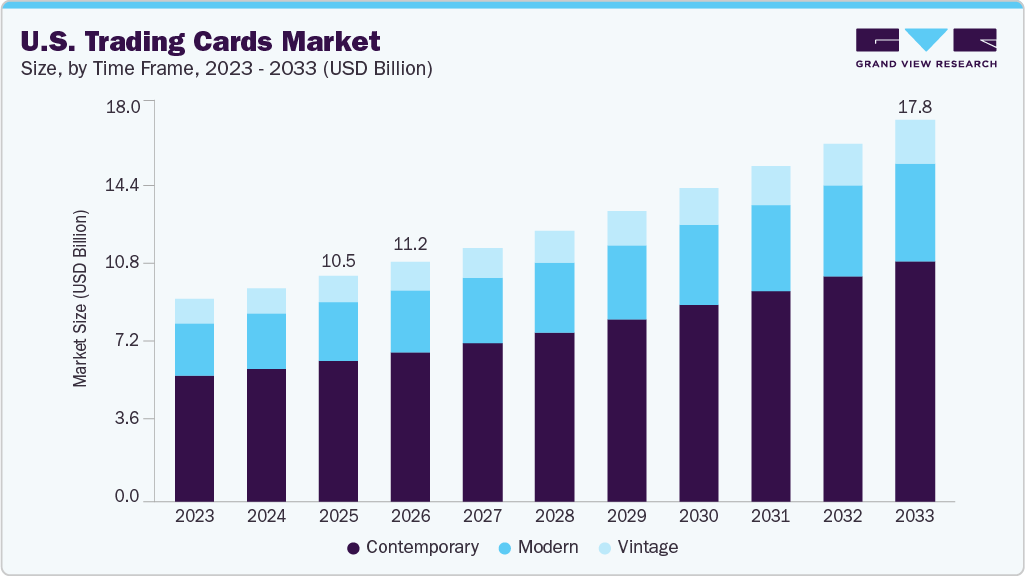
The increasing perception of trading cards as alternative investment assets is also playing a critical role in the expansion of the U.S. trading cards industry. Consumers are increasingly viewing rare and graded cards as stores of value, like collectibles such as sneakers, watches, and art. According to an article published in Sportico in January 2025, Fanatics reported significant year-on-year growth in its collectibles business, supported by rising demand for licensed trading cards, indicating strong commercial momentum and investor participation. Collectors are becoming more strategic in their purchasing decisions, focusing on factors such as scarcity, player performance, grading quality, and long-term appreciation potential. This shift is transforming trading cards from casual hobby items into portfolio-driven assets, attracting both enthusiasts and financially motivated buyers.
Retail expansion and mainstream accessibility are further accelerating growth across the U.S. trading cards market. Major retailers are increasingly allocating shelf space and promotional focus to trading cards, recognizing their growing consumer demand. According to an article published on CNBC in October 2025, retailers such as Walmart and Target have experienced a sharp rise in trading card sales, with demand levels comparable to major sports seasons like the NFL, underscoring the category’s importance in mass retail. This widespread availability across physical stores, combined with strong e-commerce penetration, is enabling greater consumer access and supporting higher purchase frequency. Online platforms, auctions, and peer-to-peer marketplaces are also improving liquidity and price transparency, allowing collectors to buy, sell, and trade cards more efficiently.
The market is further evolving through continuous product innovation and strategic partnerships that expand consumer engagement. Companies are introducing new card formats, exclusive releases, and licensed collaborations to maintain interest and drive repeat purchases. For instance, according to an announcement published on Panini America in January 2026, Panini entered into a multi-year exclusive agreement to develop new trading card products, strengthening its portfolio and market presence. In addition, strong backing from major sports leagues and entertainment properties continues to drive sustained demand, as trading cards associated with popular athletes, teams, and franchises benefit from ongoing media exposure and fan loyalty. This combination of cultural relevance, investment appeal, retail expansion, and product innovation is collectively reinforcing the long-term market growth.
Brand Market Share Insights
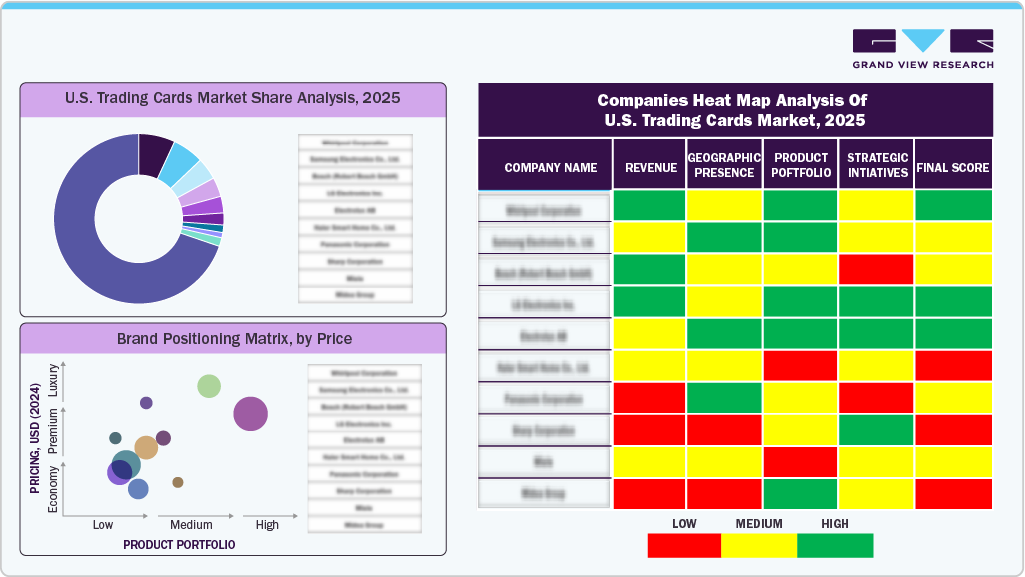
The U.S. trading cards market is highly competitive, driven by the presence of established publishers, sports licensing companies, and entertainment-focused brands alongside emerging niche and digital-first players. Leading companies such as The Pokémon Company, Panini Group, Topps, Fanatics, and Hasbro maintain strong market positions through exclusive licensing agreements, continuous product launches, and well-established collector ecosystems that drive repeat purchases. At the same time, competition is intensifying as independent brands and creators introduce niche themes and innovative formats, while the expansion of e-commerce, live card breaks, and direct-to-consumer platforms is enabling broader reach, real-time engagement, and increased resale activity, collectively strengthening market dynamics in the U.S. trading cards industry.
Consumer Insights
Consumer behavior in the U.S. trading cards market is increasingly influenced by a strong culture of organized collecting and event-driven participation, where consumers actively engage through card shows, conventions, and in-store tournaments. These events serve as key touchpoints for product discovery, trading, and community interaction, encouraging repeat purchases and deeper involvement in the hobby. U.S. consumers strongly prefer professionally graded cards, with grading seen as a standard step in the ownership cycle to enhance authenticity, protect condition, and increase resale value. This has led to growing reliance on third-party grading services, shaping purchasing decisions toward cards with clear certification and investment potential.
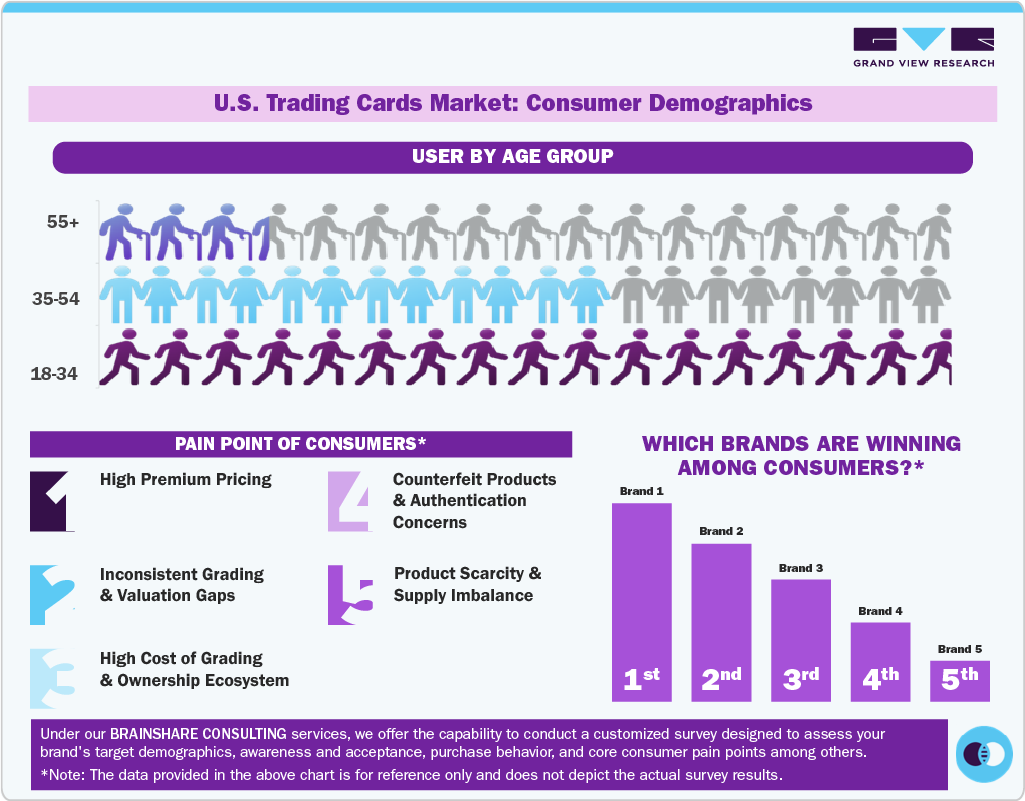
In addition, U.S. consumers exhibit a strong inclination toward sealed products, such as booster boxes and packs, driven by the appeal of “pull value” and the excitement of discovering rare or high-value cards. This behavior is further amplified by the popularity of live streaming and group breaks, where participants purchase and open packs in real time, creating a shared experience that blends entertainment with collecting. The market also shows strong responsiveness to player performance and media exposure, with demand for specific cards fluctuating with real-world sports outcomes and trending franchises. These patterns reflect a highly active, engagement-driven consumer base in the U.S., where community participation, entertainment value, short-term market dynamics, and long-term collectability influence purchasing decisions.
Type Insights
Physical cards accounted for the largest market share of 67.3% in 2025, driven by a deeply rooted collector culture and strong engagement with major leagues such as the NFL, NBA, and MLB. Physical cards are widely preferred for their authenticity, rarity, and condition-based grading, with services like Professional Sports Authenticator (PSA) playing a critical role in determining resale value and investment potential. They remain central to hobby shop culture, card shows, and organized trading events across the U.S., supporting consistent engagement and repeat purchases. In addition, limited-edition athlete cards, rookie releases, and licensed franchise collections drive strong demand.
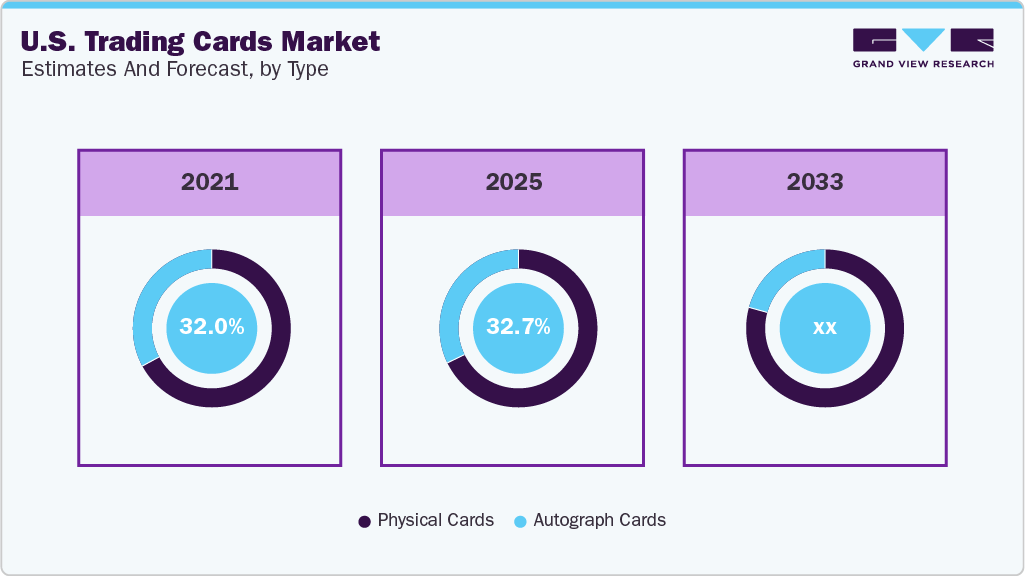
Autograph cards are anticipated to grow at a CAGR of 7.5% from 2026 to 2033, driven by strong collector demand for rare and authenticated collectibles linked to prominent athletes and celebrities. These cards command a premium value due to limited print runs and verified signatures, making them highly attractive to serious collectors and investment-focused buyers. Demand is further supported by the popularity of major leagues such as the NFL, NBA, and MLB, where player performance and rookie signings significantly influence card desirability. In addition, the presence of established grading and authentication services such as Professional Sports Authenticator (PSA) is strengthening buyer confidence and resale potential.
Category Insights
Sports trading cards dominated the U.S. trading cards industry, accounting for 61.3% share in 2025, driven by strong fan engagement across major leagues such as the NFL, NBA, and MLB. These cards are widely collected due to their direct association with star athletes, team performance, and major sporting events, making them a core segment for both casual collectors and serious investors. Demand is further supported by season-based releases, rookie cards, and limited-edition sets that drive frequent purchases and active trading.
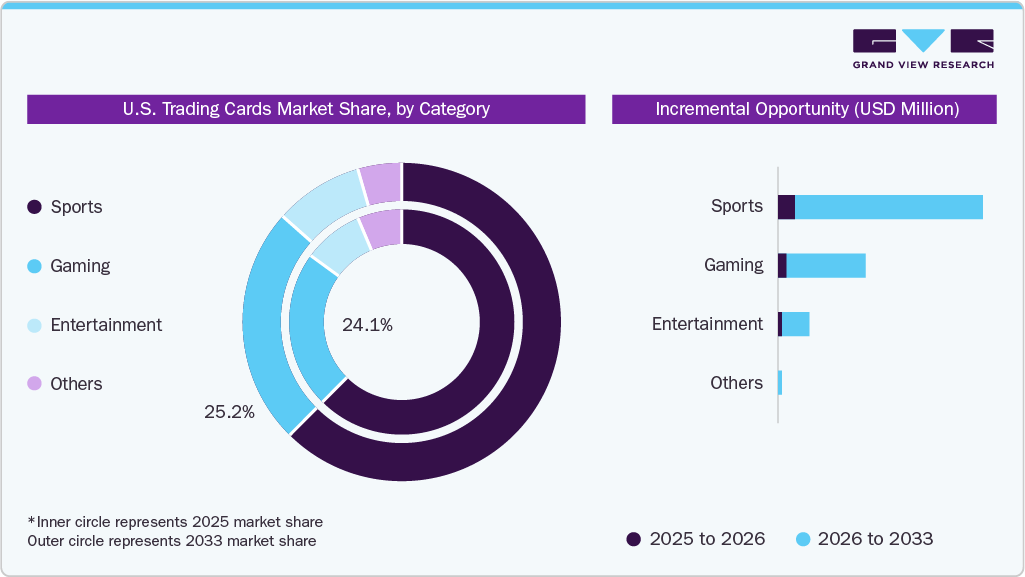
Gaming trading cards are expected to grow at a CAGR of 7.5% from 2026 to 2033, driven by increasing crossover between gaming, entertainment, and collectible culture. Franchises such as Pokémon Trading Card Game, Yu-Gi-Oh! Trading Card Game and Magic: The Gathering are expanding their reach through movies, streaming content, and merchandise, attracting new audiences beyond traditional players. The market is also supported by rising demand for collectible variants, such as foil, holographic, and special-edition cards, which appeal to collectors seeking visual uniqueness and exclusivity. In addition, subscription-based product models and regular card release cycles are encouraging consistent purchasing behavior.
Time Frame Insights
Contemporary trading cards accounted for 62.3% of the U.S. trading cards market in 2025, driven by strong demand for newly released card sets that offer higher pull rates, varied designs, and tiered rarity levels appealing to both casual buyers and serious collectors. These cards benefit from ongoing innovation in packaging formats such as hobby boxes, blaster packs, and retail exclusives, which encourage repeat purchases and pack-opening experiences. The market is also supported by increased interest in short-term value opportunities, where collectors actively seek newly released cards tied to emerging players and breakout performances.
Modern trading cards are expected to grow at a CAGR of 6.7% from 2026 to 2033, driven by increasing demand for era-specific collectibles tied to well-known athletes and franchises from the 2000s and 2010s. These cards appeal to collectors who are well-versed in players from recent decades, creating an emotional connection and sustained buying interest. Growth is further supported by the availability of complete sets and themed collections, which encourage bulk purchases and long-term holding. In addition, rising participation in grading and set-building activities is enhancing engagement, while strong activity across hobby shops, trade shows, and online communities is reinforcing consistent demand.
Distribution Channel Insights
The sale of trading cards through offline channels accounted for 51.2% share of the U.S. trading cards industry in 2025, driven by the strong presence of hobby shops, card shows, and large retail chains that offer immediate access to products. Physical retail formats allow collectors to examine packaging, assess condition, and make on-the-spot purchase decisions, which is particularly important for high-value or limited-edition items. These locations also function as key engagement points, hosting local trading meetups, tournaments, and live pack-opening events that strengthen community participation and encourage repeat visits.
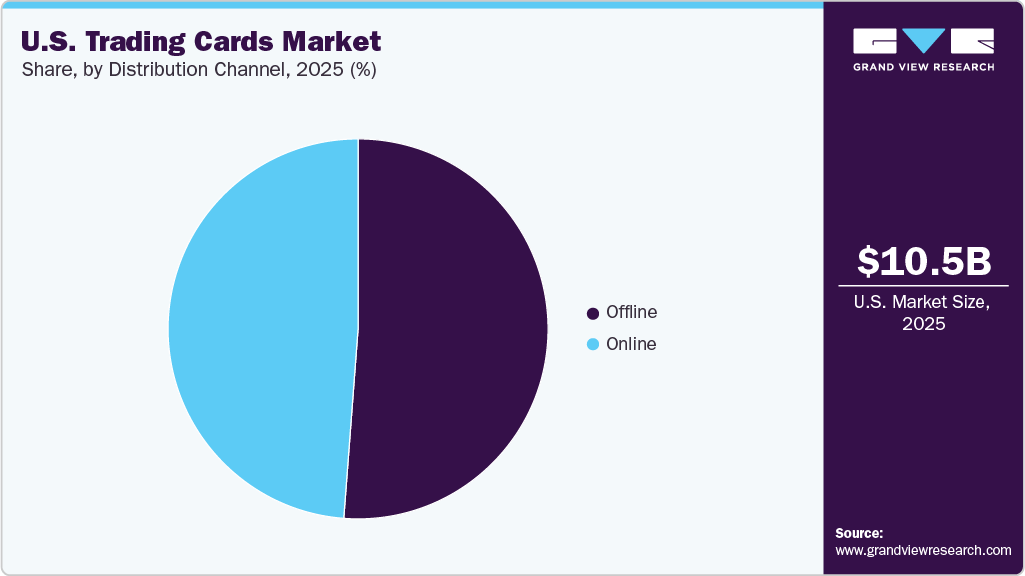
The sale of trading cards through online channels is expected to grow at a CAGR of 7.9% from 2026 to 2033. Online channels enable collectors to source cards from multiple sellers across regions, including exclusive listings, graded inventory, and auction-based deals that are not typically available in physical stores. In addition, features such as real-time bidding, historical price tracking, and seller ratings are improving transparency and supporting more informed purchasing decisions. The growing popularity of live-streamed card breaks, social commerce, and app-based marketplaces is further enhancing engagement, encouraging impulse buying and repeat transactions.
Key U.S. Trading Cards Companies:
- TOPPS
- Panini America, Inc.
- The Upper Deck Company
- Dave and Adam's Card World
- Pokémon
- Fanatics Inc.
- Leaf Trading Cards, LLC
- Beckett Collectibles, LLC
- Sports Cards Direct
- BANDAI CO., LTD.
Recent Developments
-
In March 2026, Oh YAAS signed a five-year exclusive agreement with Bare Knuckle Fighting Championship (BKFC) to produce and distribute official trading cards and experiential collectibles. The partnership goes beyond traditional cards by integrating technology, including unique QR codes that unlock digital content, augmented reality features, and direct fan interactions with fighters.
-
In February 2026, Kayou debuted at the New York Toy Fair as part of its expansion into the U.S. market, presenting a portfolio of licensed trading cards and announcing new product categories. The company highlighted additions across anime and entertainment franchises, and outlined plans to expand into collectibles and accessories to broaden its presence and engagement in the market.
U.S. Trading Cards Market Report Scope
Report Attribute
Details
Market size value in 2026
USD 11.16 billion
Revenue forecast in 2033
USD 17.82 billion
Growth rate
CAGR of 6.9% from 2026 to 2033
Base year for estimation
2025
Historical data
2021 - 2024
Forecast period
2026 - 2033
Quantitative units
Revenue in USD billion and CAGR from 2026 to 2033
Report coverage
Revenue forecast, company ranking, competitive landscape, growth factors, and trends
Segments covered
Type, category, time frame, and distribution channel
Country scope
U.S.
Key companies profiled
TOPPS.; Panini America, Inc.; The Upper Deck Company; Dave and Adam's Card World; Pokémon.; Fanatics Inc.; Leaf Trading Cards, LLC; Beckett Collectibles, LLC.; Sports Cards Direct.; BANDAI CO., LTD.
Customization scope
Free report customization (equivalent up to 8 analysts working days) with purchase. Addition or alteration to country, regional & segment scope. Pricing and purchase options
Avail customized purchase options to meet your exact research needs. Explore purchase options U.S. Trading Cards Market Report Segmentation
This report forecasts revenue growth at the country level and provides an analysis of the latest trends and opportunities in each sub-segment from 2021 to 2033. For this study, Grand View Research has segmented the U.S. trading cards market report based on type, category, time frame, and distribution channel:
-
Type Outlook (Revenue, USD Billion, 2021 - 2033)
-
Physical Cards
-
Autograph card
-
-
Category Outlook (Revenue, USD Billion, 2021 - 2033)
-
Sports
-
Gaming
-
Entertainment
-
Others
-
-
Time Frame Outlook (Revenue, USD Billion, 2021 - 2033)
-
Vintage
-
Modern
-
Contemporary
-
-
Distribution Channel Outlook (Revenue, USD Billion, 2021 - 2033)
-
Offline
-
Specialty Stores
-
Auctions
-
Peer-To-Peer
-
-
Online
-
Frequently Asked Questions About This Report
b. The U.S. trading cards market size was estimated at USD 10.54 billion in 2025 and is expected to reach USD 11.16 billion in 2026.
b. The U.S. trading cards market is expected to grow at a compound annual growth rate of 6.9% from 2026 to 2033 to reach USD 17.82 billion by 2033.
b. Physical cards accounted for the largest market share of 67.3% in 2025, due to strong collector preference for tangible assets with resale and investment value. Continued demand from in-person gameplay, trading communities, and tournaments.
b. Some key players operating in the trading cards market include TOPPS.; Panini America, Inc.; The Upper Deck Company; Dave and Adam's Card World; Pokémon.; Fanatics Inc.; Leaf Trading Cards, LLC; Beckett Collectibles, LLC.; Sports Cards Direct.; BANDAI CO., LTD.
b. The U.S. trading cards market is driven by strong collector culture and nostalgia, along with high participation in competitive card gaming through titles such as Pokémon Trading Card Game and Magic: The Gathering.


Share this report with your colleague or friend.
Need a Tailored Report?
Customize this report to your needs — add regions, segments, or data points, with 20% free customization.


ISO 9001:2015 & 27001:2022 Certified
We are GDPR and CCPA compliant! Your transaction & personal information is safe and secure. For more details, please read our privacy policy.
Trusted market insights - try a free sample
See how our reports are structured and why industry leaders rely on Grand View Research. Get a free sample or ask us to tailor this report to your needs.