- Home
- »
- Medical Devices
- »
-
U.S. Healthcare Staffing Market Size, Industry Report, 2033GVR Report cover
![U.S. Healthcare Staffing Market Size, Share & Trends Report]()
U.S. Healthcare Staffing Market (2026 - 2033) Size, Share & Trends Analysis By Service (Travel Nurse, Per Diem Nurse, Locum Tenens, Allied Healthcare), By End Use (Hospitals, Clinics, Ambulatory Facilities), By Region, And Segment Forecasts
- Report ID: GVR-3-68038-500-7
- Number of Report Pages: 100
- Format: PDF
- Historical Range: 2021 - 2025
- Forecast Period: 2026 - 2033
- Industry: Healthcare
- Report Summary
- Table of Contents
- Segmentation
- Methodology
- Download FREE Sample
-
 Download Sample Report
U.S. Healthcare Staffing Market Summary
The U.S. healthcare staffing market size was estimated at USD 45.48 billion in 2025 and is projected to reach USD 89.71 billion by 2033, growing at a CAGR of 6.98% from 2026 to 2033. This growth is driven by a shortage of healthcare professionals, an aging population, and higher demand for specialized services.
Key Market Trends & Insights
- By service, the travel nurse segment dominated the market with a revenue share of 40.53% in 2025.
- By end use, the clinics are expected to witness lucrative growth during the forecast period.
- By region, the Midwest region in the U.S. is expected to witness substantial growth over the forecast period.
Market Size & Forecast
- 2025 Market Size: USD 45.48 Billion
- 2033 Projected Market Size: USD 89.71 Billion
- CAGR (2026-2033): 6.98%
- North America: Largest Market in 2025
The expanding elderly demographic, especially baby boomers, need long-term care and chronic disease management increases staffing needs in hospitals and care facilities. Moreover, healthcare providers are using staffing agencies and managed service providers for flexibility and efficiency. In addition, digital staffing platforms and telehealth also make hiring faster and support market growth.
Shortage of Healthcare Staff:
The shortage of healthcare staff acts as a key driver of the market, driven by structural and long-term workforce challenges. An aging population, rising burden of chronic diseases, and increased utilization of healthcare services have significantly raised demand for clinicians, while high retirement rates among nurses, physicians, and allied health professionals continue to shrink the available talent pool. Simultaneously, lengthy education, training, and licensing processes limit the speed at which new professionals can enter the workforce. As a result, hospitals and healthcare facilities increasingly rely on temporary, travel, and locum tenens staff to maintain service continuity, manage workload pressures, and meet care delivery standards. This persistent imbalance among healthcare demand and workforce supply has led healthcare organizations to rely heavily on staffing agencies to ensure continuity of care, maintain compliance with patient-to-staff ratios, and manage fluctuating patient volumes efficiently.
According to the American Hospital Association updates in May 2021, the U.S. is projected to register a deficit of nearly 200,000 nurses and 124,000 physicians, driven by an aging population, increased demand for chronic disease management, and workforce burnout. Furthermore, according to the Bureau of Health Workforce, California is projected to experience the largest nursing shortage of any state, with a projected shortfall of 65,000 nurses by 2037. North Carolina and Washington are expected to face the most significant nursing shortages, estimated at 22% by 2037. In contrast, Wyoming is projected to have a surplus of 77% of registered nurses by the same year.
Challenges facing the U.S. health care workforce:
Current shortages: According to National Center for Health Workforce Analysis, as of June 2024, the U.S. continues to face critical shortages across multiple areas of healthcare, with approximately 75 million people living in a primary care Health Professional Shortage Area (HPSA), 58 million in a dental health HPSA, and 122 million in a mental health HPSA. These figures highlight the widespread difficulty many Americans face in accessing timely and quality healthcare services. The problem is further intensified by the uneven distribution of the healthcare workforce, where rural and underserved communities experience the most severe shortages.
Nursing remains the largest healthcare profession in the U.S., comprising more than four million professionals, including registered nurses licensed practical or vocational nurses, and advanced practice registered nurses in 2023. Over the past five years, the overall nursing workforce has grown by 4.6%, reflecting steady expansion in response to rising healthcare needs. However, the growth has not been uniformed across all nursing categories. The number of APRNs particularly nurse practitioners and nurse anesthetists has increased at a significantly faster pace, driven by expanding clinical roles, higher autonomy, and growing demand for primary and specialized care providers. Contrary, the number of LPNs has declined each year consistently, falling by 8.4% over the same period, largely due to shifts toward higher levels of nursing education, evolving care models, and changing state regulations that favor advanced practice roles. This trend underscores the evolving structure of the U.S. nursing workforce, with a stronger emphasis on advanced practice and specialized nursing care.
Enumeration of Nursing Workforce, 2019 - 2023:
Nurse Type
2019
2020
2021
2022
2023
2019-2023 %
Registered Nurses
3,014,280
3,001,270
3,047,530
3,072,700
3,175,390
+5.3%
Licensed Practical/Vocational Nurses
687,930
672,710
641,240
632,020
630,250
-8.4%
Nurse Practitioners
206,800
221,890
234,690
258,230
280,140
+35.5%
Nurse Anesthetists
44,110
44,500
43,950
46,540
47,810
+8.4%
Nurse Midwives
7,160
7,080
7,750
7,950
6,960
-2.8%
Total
3,960,280
3,947,450
3,975,160
4,017,440
4,140,550
+4.6%
Source: National Center for Health Workforce Analysis
Increasing Number of Healthcare Facilities Resulting in Job Creation:
The expansion of hospitals, outpatient centers, urgent care clinics, long-term care facilities, and specialized treatment centers has significantly increased the demand for qualified medical professionals, including physicians, nurses, therapists, and allied health staff. This growth is fueled by factors such as population aging, the rise in chronic diseases, and the shift toward accessible and community-based care models. As new healthcare establishments open or existing ones expand their capacity, there is a corresponding surge in the need for both permanent and temporary healthcare workers to ensure optimal patient care and operational efficiency.
Furthermore, an increasing number of government initiatives to strengthen systems and improve healthcare access in rural areas has resulted in the initiation of various hospital projects. Rising number of healthcare facilities and new construction projects are anticipated to create more jobs for medical professionals. According to the U.S. Bureau of Labor Statistics, employment in professions is anticipated to increase by 16% from 2020 to 2030, substantially faster than the average for all professions/employments, adding almost 2.6 million new jobs. The introduction of new positions in the industry is expected to raise the demand for healthcare staffing services.
The rapidly aging population in the U.S. has created upward pressure on the demand for these services. As per the U.S. Bureau of Labor Statistics, the population aged 65 years and above is expected to grow by 30% from 2020 to 2030 in the country. These demographics are more likely to have long-term hospital stays and are expected to visit physicians twice as much as younger demographics. The age demographic shift affects the demand for healthcare staffing services and affects the skilled labor supply, as more physicians & registered nurses are aging out of the workforce.
Adoption of Workforce Solutions:
Healthcare providers are increasingly utilizing advanced staffing models and digital platforms to tackle ongoing workforce shortages and improve operational efficiencies. Hospitals, clinics, and long-term care facilities implement workforce management technologies, such as vendor management systems (VMS), managed service providers (MSPs), and AI-powered scheduling tools, to enhance staff allocation, reduce administrative workloads, and ensure compliance with labor laws. These solutions enable real-time monitoring of workforce data, streamline hiring processes, and improve the placement of qualified professionals in critical areas such as nursing, allied health, and locum tenens.
In addition, incorporating analytics and predictive tools allows healthcare organizations to anticipate staffing requirements based on patient influx and seasonal patterns. As the U.S. healthcare sector struggles with rising labor costs and persistent clinician burnout, the increasing adoption of these workforce solutions enhances operational efficiency, flexibility, and cost management, all of which contribute to the growth of the healthcare staffing market. Thus, companies are adopting various strategies to cater to the growing demand for healthcare staff. For instance, in September 2024, Jackson Healthcare announced the launch of Jackson HealthPros a new specialized staffing company dedicated to the allied-health segment of the U.S. healthcare workforce. Jackson HealthPros is designed to fill a growing need in specialties such as imaging, radiology, laboratory, respiratory therapy and surgery, offering hospitals, clinics and care facilities across the U.S. access to highly skilled professionals in these fields.
President, Jackson Healthcare, said:
“We are excited to expand our footprint in allied healthcare and what it will mean for both current and future clients,” Jackson HealthPros was born from the evolving needs expressed by clients working with staffing firms across the Jackson Healthcare family of companies. They were seeking focused, expert staffing support in crucial medical specialties - including imaging, radiology, laboratory, respiratory therapy and surgery - and came to us based on the relationships, trust and results they’ve come to know and count on from working with our other allied health companies.”
Case Study: “Operational Efficiency Strategy for Mid-Sized Metal Manufacturer in North America”
Background:
A mid-sized metal manufacturer in North America was facing major operational issues:
-
A 20% shortfall in skilled labor was driving up costs and delaying projects.
-
The external environment was becoming more challenging: increased competition (a ~15% rise in new entrants over two years), changing technological demands, supply-chain disruptions.
-
The strategic objective became to improve operational efficiency and workforce productivity via enhanced job training and technology adoption
Internal Assessment & Competitive Landscape:
-
The company’s strengths included a loyal customer base and a strong brand in its North American market; its weaknesses included outdated operational processes and heavy reliance on manual work.
-
In its competitive analysis: buyer power was high, supplier power moderate, substitute threats moderate, new-entrants low to moderate.
-
Key emerging trends: digitization & automation in manufacturing; increased regulatory/sustainability pressure; supply-chain volatility.
-
Value-chain analysis identified production inefficiencies and supply-chain issues as major pain points.
Strategic Initiatives:
The company rolled out three major initiatives:
-
Advanced Job Training Program: Launch a comprehensive training program focusing on digital skills and efficient manufacturing techniques, including partnerships with educational institutions.
-
Technology Adoption and Automation: Integrate advanced manufacturing technologies, automate manual processes, retrain workforce, apply frameworks such as the Diffusion of Innovations Theory (to manage technology uptake) and the Resource-Based View (to align technology with unique resources/capabilities).
- Supply Chain Optimization: Use the SCOR (Supply Chain Operations Reference) model to map and improve the supply chain; apply Game Theory to supplier negotiation and strategic partner decisions.
Implementation & KPIs:
Key performance indicators (KPIs) established included:
-
Labor productivity increase (to measure training impact)
-
Production error rate reduction (to measure technology/process improvement)
-
Supply chain lead time reduction (to measure supply-chain optimization)
Stakeholder management was highlighted: involving employees, training providers, technology suppliers, supply chain partners, and customers.
Training was evaluated via the Kirkpatrick Model (reaction, learning, behavior, results) and a Competency Framework (mapping required skills) to ensure alignment of workforce capability with strategic goals.
Expansion of Workday as an Enterprise Transformation Platform:
A significant trend emerging in the U.S. enterprise technology landscape is the transformation of Workday from a traditional human resources system into a comprehensive enterprise platform driving financial, operational, and workforce agility. Organizations are increasingly leveraging Workday for HR management and financial visibility, data-driven decision-making, and innovation enablement. The platform’s growing role in economic management is particularly notable, as many companies are replacing legacy systems with Workday financial management to gain real-time insights, enhance planning and analysis, and strengthen the CFO’s strategic influence.
Another defining aspect of this trend is the integration of artificial intelligence (AI) and machine learning (ML) into Workday operations. Enterprises are moving from experimental AI usage to practical, outcome-oriented applications, such as automating workflows, optimizing talent acquisition, and improving operational forecasting. The emergence of agentic AI, capable of executing complex, multi-step tasks such as candidate sourcing and scheduling, is streamlining administrative workloads and increasing efficiency.
Simultaneously, enterprises are adopting skills-based talent strategies, supported by tools such as Workday skills cloud, which enables mapping of workforce capabilities, predicting future skills needs, and creating internal talent marketplaces. This shift promotes greater agility, retention, and employee engagement through personalized digital experiences.
Moreover, Workday’s transition into an open, extensible ecosystem enabled by innovations such as Workday extend and the Workday marketplace is promoting customization, integration, and innovation. This flexibility has led to the emergence of a diverse Workday service ecosystem, enabling enterprises to tailor the platform to their unique industry needs. Overall, this trend highlights Workday’s evolution into a strategic transformation hub, supporting modern enterprise agility, digital innovation, and workforce modernization in the U.S. market.
High Flexibility and Exposure
One of the important factors driving the market is benefits and advantages of becoming a per diem nurse, travel nurse, or locum tenens. In addition to their passion to serve others, physicians and nurses give high importance to flexible work schedules. Temporary staffing solutions enable medical professionals to choose their work hours or their availability to take on new assignments. Higher flexibility of working hours and greater exposure to various systems across different locations are expected to result in an increase in the number of individuals choosing allied healthcare, per diem, travel nurse, or locum tenens as a career option.
Another important factor due to which many nurses consider becoming travel nurses or per diem nurses is compensation. Travel or per diem nurses are rewarded substantially more than normal full-time nurses. For instance, the typical yearly pay of a full-time registered nurse is between USD 50,000 and USD 90,000, whereas per diem nurses might earn between USD 90,000 and USD 100,000. For instance, as per the U.S. Bureau of Labor Statistics data published in May 2024, the average annual salary of a registered nurse in the U.S. is around USD 93,600. Therefore, more nurses are opting for per diem or travel nurse careers, which is driving the market.
Market Concentration & Characteristics
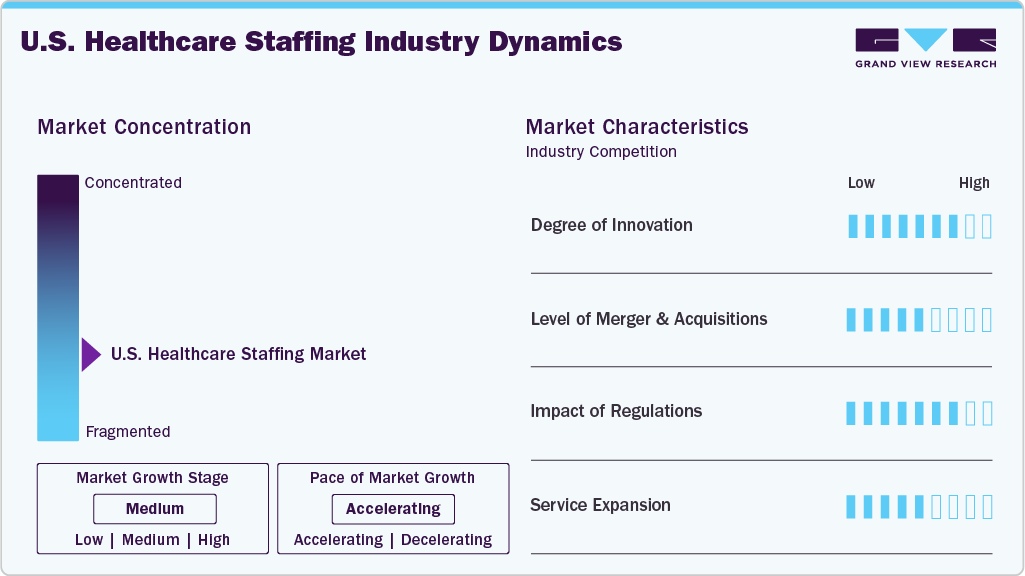
The market is fragmented, with many small players entering the market and launching new innovative services. There is a high degree of innovation, moderate level of merger & acquisition activities, high impact of regulations, and moderate expansion of industry.
The industry is experiencing a high degree of innovation. For instance, in June 2025, Deloitte introduced a new AI solution suite designed to help organizations optimize collaboration between human employees and intelligent machines. This suite integrates advanced AI tools, automation technologies, and analytics capabilities to enhance productivity, streamline operations, and support data-driven decision-making.
Human capital AI leader, Deloitte, said:
"Deloitte's Human Capital AI solutions are designed to provide organizations with the data and insights they need to effectively navigate the uncertainty and rapidly moving impacts of AI on the workforce and how work gets done," "We are empowering leaders to harness the full potential of AI to address priority business challenges, create new forms of value, and architect the future human and machine workforce."
The market players are leveraging strategies such as collaborations, partnerships, and acquisitions, to promote the reach of their offerings and increase their services capabilities. In May 2025, GHR Healthcare acquired Barton Healthcare Staffing which represents a strategic move to strengthen its presence in the allied health and nursing staffing segments. This acquisition enhances GHR’s ability to meet growing demand for qualified nursing and allied health personnel amid ongoing workforce shortages in hospitals, long-term care facilities, and outpatient centers.
April Hansen, CEO of Barton Associates, said:
“This is a forward-looking, strategic decision that positions Barton for our next chapter of growth. As demand for physician and advanced practice staffing continues to rise, we’re doubling down on what we do best-delivering world-class locum tenens solutions at scale. We’re incredibly proud of the legacy our nurse and allied team has built, and confident GHR is a strong partner to carry that forward. Together, our organizations remain committed to quality and continued collaboration.”
Regulations play a crucial role in the market, dictating operational standards and care delivery. Federal court rulings and developments launched in July 2025, in the federal budget bill have effectively nullified the minimum staffing rules for long-term care facilities that were introduced by the Centers for Medicare & Medicaid Services (CMS). These rules were initially designed to ensure that nursing homes receiving Medicare and Medicaid funding maintained sufficient numbers of registered nurses (RNs) and certified nursing assistants (CNAs) to guarantee safe and high-quality care for residents. For Medicare and Medicaid healthcare providers, this development means temporary regulatory relief and more operational flexibility, however it also places renewed emphasis on internal quality assurance and state-level oversight to maintain care standards without federal staffing mandates.
Market players utilize a strategy of service expansion to increase their service capabilities and promote the reach of their service offerings. For instance, in August 2025, MedPro Healthcare Staffing launched its “MedPro for US” campaign in response to the ongoing national nursing shortage, aiming to strengthen the U.S. healthcare workforce by connecting qualified nurses with hospitals and healthcare facilities in need. The campaign focuses on expanding recruitment efforts, enhancing professional development opportunities, and offering flexible staffing solutions to address critical gaps in patient care.
Executive Vice President at MedPro Healthcare Staffing said:
"Our nurses are enriching our hospital teams with varied perspectives and deep clinical expertise," "These experienced professionals step in where they're needed most, easing staffing gaps, improving patient outcomes, and helping facilities deliver steady, dependable care. They arrive with years of hands-on experience, and MedPro helps them integrate seamlessly through our training and support. They're making a real difference in the health of communities across America."
Service Insights
The travel nurse segment dominated the market with a revenue share of 40.53% in 2025 and is anticipated to grow at the fastest CAGR during the forecast period. This growth is driven by persistent workforce shortages, rising patient demand, and the need for flexibility within healthcare systems. Travel nurses help hospitals rapidly fill temporary gaps caused by seasonal patient surges, public health emergencies, staff turnover, or leaves of absence, ensuring continuity of care. In addition, hospitals use travel nurses to manage labor costs and maintain operational efficiency without long-term employment commitments. Moreover, the growing acquisition by providers and market players acts as a key driver for the market. For instance, in January 2026, IntelyCare’s acquired CareRev representing a strategic move to create a more unified and flexible healthcare staffing ecosystem by bringing together acute and post-acute care staffing under one umbrella. The deal expands shift access for nurses by connecting CareRev’s network of more than 35,000 acute care professionals with IntelyCare’s strong presence in post-acute settings, all within a single ecosystem.
The locum tenens segment is anticipated to grow at a lucrative CAGR during the forecast period driven by a combination of workforce shortages, rising demand for care, and the need for operational flexibility across healthcare facilities. From the provider side, hospitals and health systems use locum tenens to manage seasonal demand fluctuations, cover vacancies due to resignations, parental leave, or illness, and maintain care continuity without committing to long-term employment costs. In addition, cost pressures and reimbursement uncertainty encourage facilities to adopt locum staffing as a short- to medium-term solution while optimizing permanent hiring strategies, making locum tenens a critical component of the U.S. healthcare staffing ecosystem.
End Use Insights
The hospitals segment held the dominant revenue share of 42.06% in 2025 and is expected to grow at the fastest CAGR during the forecast period. This growth is driven by persistent shortage of nurses, physicians, and allied health professionals driven by an aging population, higher prevalence of chronic diseases, and an aging healthcare workforce has made it difficult for hospitals to maintain adequate in-house staffing levels. In addition, hospitals face fluctuating patient volumes, seasonal demand spikes, and unexpected surges from public health emergencies, making flexible staffing models more cost-effective than permanent hires. Regulatory requirements related to nurse-to-patient ratios, quality benchmarks, and accreditation standards also push hospitals to fill vacancies rapidly through staffing agencies.

The clinics are expected to witness lucrative growth during the forecast period. The growing prevalence of chronic diseases, an aging population, and increased use of outpatient and ambulatory care models have significantly increased patient volumes in clinics, requiring consistent access to qualified physicians, nurses, medical assistants, and allied health professionals. Simultaneously, clinics face persistent shortages of clinical staff caused by clinician burnout, retirements, and limited training pipelines, prompting greater reliance on temporary, locum tenens, and contract staffing solutions.
Regional Insights
Southeast healthcare staffing industry held a significant revenue share in 2025 due to significant population growth, driven by factors such as migration from other parts of the country, natural population increase, and economic opportunities. As the population grows, the demand for these services increases, particularly in urban and suburban areas. Economic conditions vary across the Southeast region, with some states experiencing robust economic growth while others face challenges such as poverty and unemployment. Economic factors influence families' ability to afford services and impact the demand for subsidized care programs and financial assistance. Collaboration among community organizations, nonprofits, and government agencies is essential for addressing the diverse needs of children and families in the Southeast region. Community partnerships help expand access to services, provide support for low-income families, and promote early childhood development initiatives.
The Midwest healthcare staffing industry is expected to witness substantial growth over the forecast period. The growing initiatives and increased investments by the government are expected to boost the growth of the region. In addition, State and local governments utilized State and Local Fiscal Recovery Funds (SLFRF) from the American Rescue Plan Act (ARPA) to support working families and close the care gap, enabling the country's economic recovery. For instance, in September 2023, Franklin County, Ohio launched the Franklin County RISE program, which allocates USD 22.5 million to improve healthcare staffing support in the county. This includes early learning scholarships of up to USD 10,000 for eligible families, rental assistance for healthcare staffing workers, and incentive payments for licensed providers.
Key U.S. Healthcare Staffing Company Insights
Key companies in the U.S. healthcare staffing industry include large national operators such as Envision Healthcare Corporation, AMN Healthcare, CHG Management, Inc., and Maxim Healthcare Group. These players operate through a mix of corporate-owned centers, franchised models, and employer-sponsored programs, catering to the rising demand for early education and full-day care. Their competitive strength lies in offering structured curricula, technology integration for parent engagement, and adherence to safety and regulatory standards. In addition, many are expanding through acquisitions and partnerships with employers to address growing workforce needs for reliable and high-quality services.
Key U.S. Healthcare Staffing Companies:
- Envision Healthcare Corporation
- AMN Healthcare
- CHG Management, Inc.
- Maxim Healthcare Group
- Cross Country Healthcare, Inc.
- Aya Healthcare
- Trustaff
- TeamHealth
- Adecco Group
- LocumTenens.com
Recent Developments
- In January 2026, Interim HealthCare Inc. completed the acquisition of its second-largest franchisee’s business. This move brings a large, long-standing franchise operation directly under the parent company’s control, strengthening Interim HealthCare’s national network and expanding its footprint in key markets.
“This is an exciting milestone for Interim HealthCare and a reflection of the strength of our franchise network,” President and CEO Rexanne Domico said in a press release. “This South Carolina franchise built an exceptional reputation over 46 years, serving patients, clients and families with the same passion and commitment to quality that defines Interim HealthCare nationwide.”
- In September 2025, CrossMed Healthcare Staffing, a women-owned healthcare staffing firm based in Omaha, Nebraska, announced the acquisition of Summit Medical Staffing, a veteran-owned staffing agency in Fremont, Nebraska, in a strategic move to expand its footprint and clinician network.
“This is an important step in executing CrossMed’s growth strategy,” said Chris Johnson, President of CrossMed. “We chose Summit because of the strong culture they’ve built-one that mirrors our own commitment to integrity, humility, and exceptional service. By integrating Summit’s network of clinicians into CrossMed, we are strengthening our ability to deliver staffing solutions at scale, increase efficiency for our clients, and accelerate our momentum as a leading partner in healthcare staffing nationwide.”
- In August 2025, MedPro Healthcare Staffing has launched a new initiative called “MedPro for US” aimed at helping address the nationwide nursing shortage that is straining hospitals and other care facilities.
"The nursing shortage is not just a statistic; it's a challenge affecting patient care in every community," said Patty Jeffrey, Executive Vice President at MedPro Healthcare Staffing. "With 'MedPro for US,' we are reaffirming our commitment to being a core part of the solution. This is about building a sustainable and ethical bridge between global talent and local need, ensuring facilities are staffed, and patients receive the uninterrupted, high-quality care they deserve."
U.S. Healthcare Staffing Market Report Scope
Report Attribute
Details
Market size value in 2026
USD 48.48 billion
Revenue forecast in 2033
USD 89.71 billion
Growth rate
CAGR of 6.98% from 2026 to 2033
Actual data
2021 - 2025
Forecast data
2026 - 2033
Quantitative units
Revenue in USD million/billion and CAGR from 2026 to 2033
Report coverage
Revenue forecast, company ranking, competitive landscape, growth factors, and trends
Segments covered
Service, end use, region
Country scope
U.S.
Key companies profiled
Envision Healthcare Corporation; AMN Healthcare; CHG Management, Inc.; Maxim Healthcare Group; Cross Country Healthcare, Inc.; Aya Healthcare; Trustaff; TeamHealth; Adecco Group; LocumTenens.com
Customization scope
Free report customization (equivalent up to 8 analysts working days) with purchase. Addition or alteration to country, regional & segment scope.
Pricing and purchase options
Avail customized purchase options to meet your exact research needs. Explore purchase options
U.S. Healthcare Staffing Market Report Segmentation
This report forecasts revenue growth at country level and provides an analysis of the latest industry trends in each of the sub-segments from 2021 to 2033. For this study, Grand View Research has segmented the U.S. healthcare staffing market report based on service, end use, and region.
-
Service Outlook (Revenue, USD Billion, 2021 - 2033)
-
Travel Nurse
-
Per Diem Nurse
-
Locum Tenens
-
Allied Healthcare
-
-
End Use Outlook (Revenue, USD Billion, 2021 - 2033)
-
Hospitals
-
Clinics
-
Ambulatory Facilities
-
Others
-
-
Regional Outlook (Revenue, USD Billion, 2021 - 2033)
-
West
-
Southeast
-
Southwest
-
Midwest
-
Northeast
-
Frequently Asked Questions About This Report
b. The U.S. healthcare staffing market size was valued at USD 45.48 billion in 2025.
b. The U.S. healthcare staffing market is expected to grow at a compound annual growth rate of 6.98% from 2026 to 2033 to reach USD 89.71 billion by 2033.
b. The travel nurse segment dominated the market with a revenue share of 40.53% in 2025 and is anticipated to grow at the fastest CAGR during the forecast period. This growth is driven by persistent workforce shortages, rising patient demand, and the need for flexibility within healthcare systems.
b. Some key players operating in the U.S. healthcare staffing market are Envision Healthcare Corporation, AMN Healthcare, CHG Management, Inc., Maxim Healthcare Group, Cross Country Healthcare, Inc., Aya Healthcare, Trustaff, TeamHealth, Adecco Group, LocumTenens.com
b. Key factors that are driving the U.S. healthcare staffing market growth include a shortage of healthcare professionals, an aging population, and higher demand for specialized services. The expanding elderly demographic, especially baby boomers, needs long-term care and chronic disease management, which increases staffing needs in hospitals and care facilities.


Share this report with your colleague or friend.
Need a Tailored Report?
Customize this report to your needs — add regions, segments, or data points, with 20% free customization.


ISO 9001:2015 & 27001:2022 Certified
We are GDPR and CCPA compliant! Your transaction & personal information is safe and secure. For more details, please read our privacy policy.
Trusted market insights - try a free sample
See how our reports are structured and why industry leaders rely on Grand View Research. Get a free sample or ask us to tailor this report to your needs.