- Home
- »
- Medical Devices
- »
-
Topical Scar Treatment Market Size, Industry Report, 2033GVR Report cover
![Topical Scar Treatment Market Size, Share & Trends Report]()
Topical Scar Treatment Market (2026 - 2033) Size, Share & Trends Analysis Report By Product (Creams, Gels, Silicone Sheets), By Scar Type (Atrophic Scars, Hypertrophic & Keloid Scars), By Distribution Channel (Retail Pharmacies, Online), By Region, And Segment Forecasts
- Report ID: GVR-4-68040-206-8
- Number of Report Pages: 110
- Format: PDF
- Historical Range: 2021 - 2025
- Forecast Period: 2026 - 2033
- Industry: Healthcare
- Report Summary
- Table of Contents
- Interactive Charts
- Methodology
- Download FREE Sample
-
 Download Sample Report
Topical Scar Treatment Market Summary
The global topical scar treatment market size was estimated at USD 1,883.3 million in 2025 and is projected to reach USD 4,686.7 million by 2033, growing at a CAGR of 12.1% from 2026 to 2033. The market is expected to grow due to several factors, such as the growing concern among people regarding their aesthetic appearance, the increasing number of road accidents and burn injuries, and technological advancements supplementing new device launches.
Key Market Trends & Insights
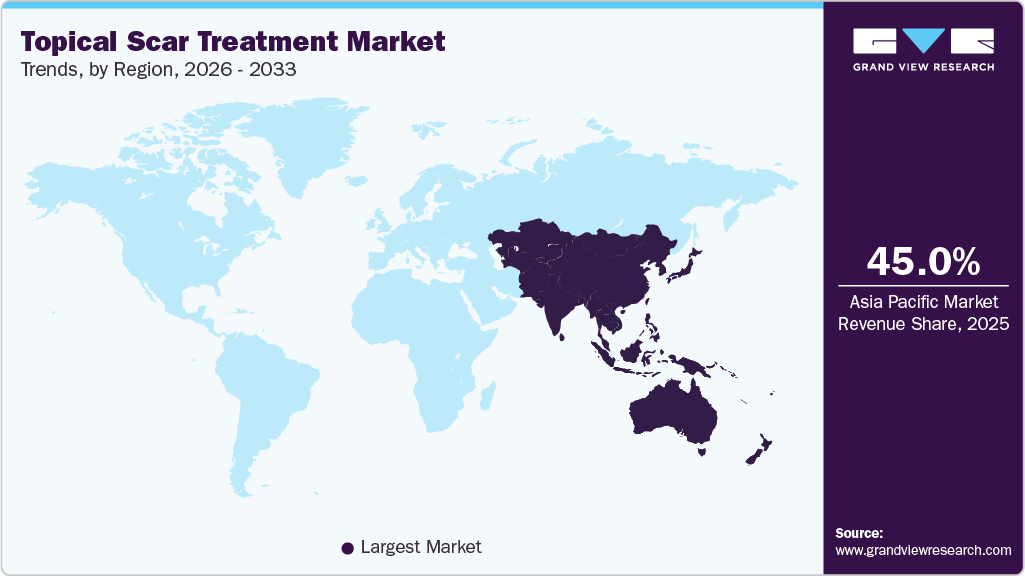
- The Asia Pacific topical scar treatment market held the largest global share of 45.0% in 2025.
- The China topical scar treatment industry is expected to grow significantly from 2026 to 2033.
- By product, the creamssegment held the largest market share of 36.2% in 2025.
- By scar type, the atrophic scars segment held the leading market share in 2025.
- By distribution channel, the retail pharmacies segment held a leading market share in 2025.
Market Size & Forecast
- 2025 Market Size: USD 1,883.3 Million
- 2033 Projected Market Size: USD 4,686.7 Million
- CAGR (2026-2033): 12.1%
- Asia Pacific: Largest market in 2025
According to a 2024 review published in the Journal of Clinical and Aesthetic Dermatology (2024) by Andrew Alexis et al., acne affects approximately 9.4% of the global population and remains one of the most common dermatologic conditions worldwide. While historically considered an adolescent disorder, adult acne is increasingly recognized, expanding the long-term treatment population.Importantly, acne frequently results in post-inflammatory hyperpigmentation (PIH), atrophic scars, and hypertrophic or keloid scars, conditions that often persist long after active lesions resolve. These sequelae are particularly prevalent in individuals with skin of color (SOC), who exhibit higher melanocyte reactivity and an increased risk of pigmentary alterations. Studies cited in the review report PIH in 65% of African American women and 48% of Hispanic women, compared to 10-25% in lighter phototypes. In some African cohorts, acne scarring was observed in up to 87.5% of adult women, even when acne severity was mild to moderate.
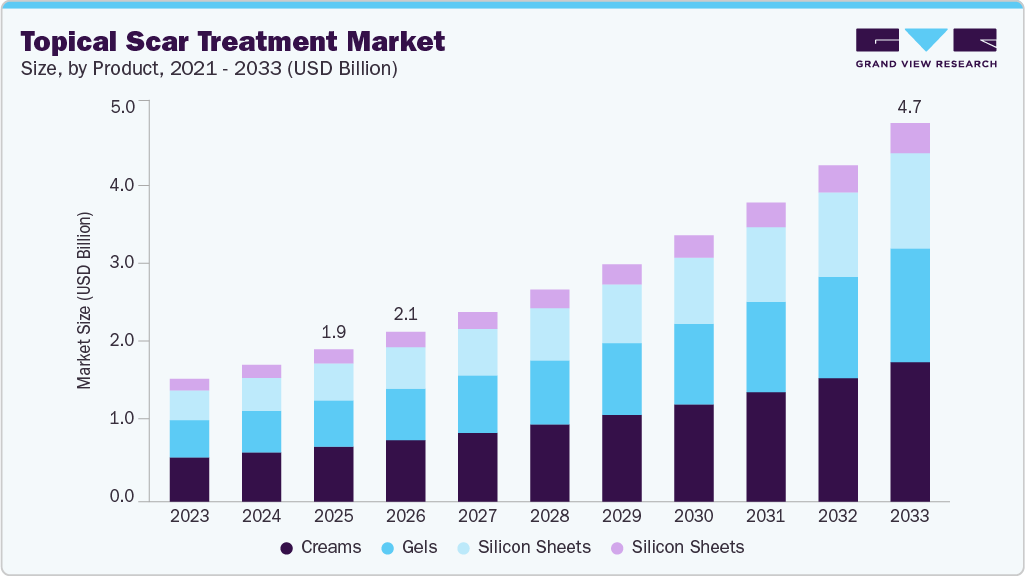
Topical products refer to various substances, compounds, or formulations that are applied to the surface of the skin, hair, or nails for various purposes. These products are designed to have localized effects on the area of application and are commonly used in skincare, haircare, and other personal care routines. A model was developed by analyzing the prevalence of scars across regions and countries. It was seen that most of the patients sought topical treatment for scar management. The adoption rates of creams, gels, silicon sheets, and other products were then analyzed. In addition, average product prices, usability, and treatment duration were considered for determining the market size and assigning the segment split for each product type.
In February 2024, a landmark global epidemiology study was published in the Journal of the American Academy of Dermatology (JAAD) by Pierre Fabre Laboratories under the ALL-project initiative. This large-scale study surveyed 50,552 adults across 20 countries, representing over 50% of the world’s population, making it one of the most comprehensive assessments of acne prevalence and its societal impact. The study found that global acne prevalence stands at 20.5%, meaning one in five individuals worldwide is affected. Prevalence is highest among adolescents and young adults (16-24 years) at 28.3% and remains high in adults aged 25-39 years at 19.3%. Women are more affected than men (23.6% vs. 17.5%), broadening the long-term consumer base for post-acne scar and pigmentation treatments.
Advancements in technology and innovation are driving the growth of the topical scar treatment industry, with a strong focus on natural-based treatments and multifunctional products. Innovations have led to the development of effective, gentle formulations that incorporate natural ingredients such as aloe vera, onion extract, vitamin E, and centella asiatica (often known as "cica"), which are well-known for their scar-reducing and skin-soothing properties. For instance, in September 2024, Dr. Speron's Natural Skin Care, LLC, introduced an innovative product designed to make a meaningful difference for individuals dealing with the physical and emotional impact of scars from injuries, surgeries, and skin conditions. These natural-based treatments appeal to consumers seeking safe, skin-friendly options with fewer synthetic chemicals.treatment products are also extensively used.
Market Concentration & Characteristics
The scar treatment market is moderately competitive, with several global dermatology and pharmaceutical companies holding significant market shares. Key players such as Merz Pharma, Smith & Nephew, and Alliance Pharma offer a wide range of scar management products, including silicone gels, silicone sheets, topical creams, and advanced formulations designed to improve scar appearance and support skin healing. These companies focus on developing clinically tested products that help reduce scar thickness, discoloration, and discomfort associated with surgical, burn, acne, and trauma-related scars. The market continues to evolve with ongoing product innovations, improved formulations, and increasing consumer awareness of aesthetic and dermatological care. Advancements such as enhanced silicone-based technologies, combination topical therapies, and improved product delivery systems are improving treatment effectiveness and patient compliance.
The topical scar treatment industry is highly innovative. New treatments leverage bioactive compounds, silicone-based gels, and nanotechnology to enhance skin healing and reduce scar visibility. Laser-assisted delivery systems and peptide-based therapies also improve treatment efficacy, addressing a wider range of scar types. With rising demand for minimally invasive solutions, these innovations are making scar treatment more effective and accessible to consumers worldwide. For instance, in January 2023, Skinuva proudly announced the launch of its latest product, Skinuva Scar+ SPF 30, a physician-developed solution designed to set new standards in skincare. Committed to advancing skincare with science-backed, clinically-tested formulations, Skinuva introduced this scar photoaging defense cream, which combines highly selective growth factors with a mineral-based Zinc Oxide sunscreen to protect and improve scar appearance.
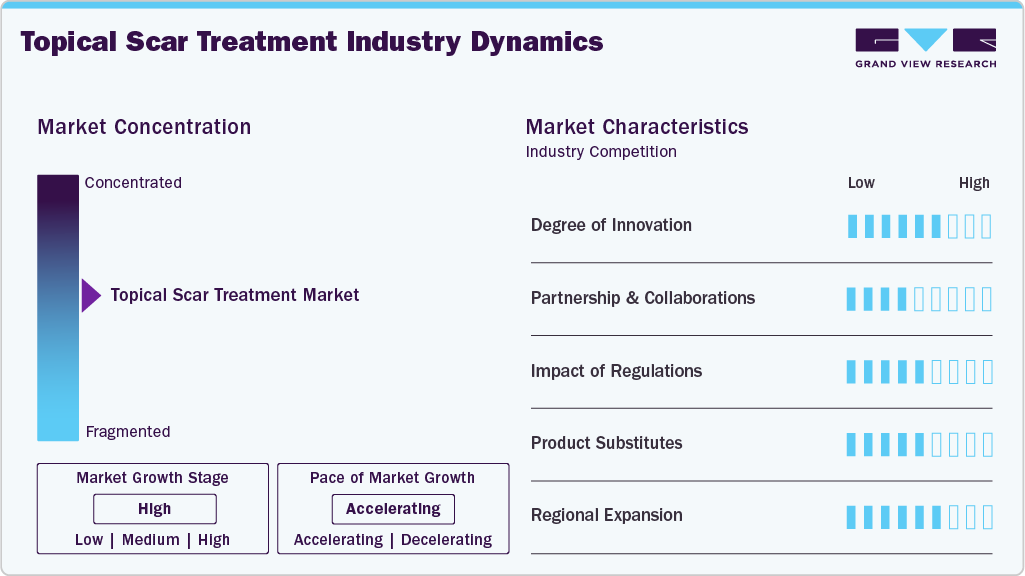
Partnerships and collaborations play an important role in the scar treatment market, enabling companies to expand product reach, strengthen dermatology expertise, and develop advanced scar management solutions. Through collaborations with dermatology clinics, aesthetic treatment centers, research institutions, and distribution partners, manufacturers gain access to improved formulation technologies, clinical research capabilities, and wider patient networks. These collaborations also support the development of innovative silicone-based products, combination topical therapies, and evidence-based treatment protocols that enhance scar appearance, improve skin healing, and increase patient satisfaction. For instance, in October 2024, Sonoma Pharmaceuticals expanded its agreement with a global healthcare distributor to include marketing and distribution of its Microcyn wound care products in Canada, in addition to the U.S. The amended partnership also covers over-the-counter products, broadening patient and consumer access across hospital and retail channels in both countries.
The regulatory framework significantly impacts the industry, shaping product approvals, safety standards, and market entry timelines. Stringent regulations from bodies like the FDA and EMA ensure product efficacy and safety, requiring rigorous clinical trials and compliance with quality standards. This process can extend development timelines and increase costs, but ultimately boost consumer trust. Regulatory harmonization and streamlined processes are crucial for faster innovation and expanding global market access for scar treatments.
Product substitutes in the market include alternative dermatological and aesthetic procedures that can reduce reliance on topical scar management products such as silicone gels, sheets, and creams. These alternatives are often used when patients seek faster or more advanced cosmetic improvement for surgical, burn, trauma, or acne-related scars. Procedures such as laser therapy, chemical peels, dermabrasion, microneedling, and corticosteroid injections are widely used in dermatology clinics and aesthetic centers to improve scar texture, reduce discoloration, and stimulate collagen remodeling. For example, laser-based treatments offered by companies such as Lumenis and Candela Corporation are increasingly used for scar revision, particularly for acne scars and hypertrophic scars. In addition, injectable treatments and regenerative approaches provided by companies such as Merz Pharma are gaining popularity for improving scar appearance and skin quality.
Regional expansion in the scar treatment market is gaining momentum across major global regions, driven by the increasing prevalence of acne scars, burn injuries, and post-surgical scarring, as well as rising awareness of dermatological care and aesthetic treatments. Companies are actively expanding their geographical presence through strategic partnerships with dermatology clinics, distribution agreements with pharmaceutical retailers, and targeted product launches in emerging markets. For instance, in April 2023, Merz Pharma announced to build a new production facility in Odenwald region. The production facility aims to replace the existing facility.
Product Insights
The creams segment dominated the topical scar treatment market, accounting for a share of 36.2% in 2025. This growth is primarily driven by its ease of application, over-the-counter availability, and suitability for long-term home-based care. Creams are commonly preferred by consumers for daily scar management as they are non-invasive, cost-effective, and do not require clinical supervision. Growing awareness of aesthetic appearance, along with the increasing incidence of surgical procedures, burns, acne, and trauma-related injuries, are key factors driving the rising demand for scar treatment creams globally. A major growth driver for this segment is the strong clinical backing of silicone-based creams, which are widely recognized as a first-line treatment for scar management. Clinical studies indicate that topical silicone formulations help reduce scar thickness, improve texture, and enhance color by maintaining hydration and regulating collagen production. Research shows that tretinoin cream can effectively prevent and improve hypertrophic and keloid scars when applied consistently after wound healing. Additionally, systematic reviews confirm that silicone-based topical treatments significantly improve scar outcomes and are among the most evidence-supported non-invasive therapies.
Silicon sheets are anticipated to witness the fastest CAGR of 12.6% over the forecast period. The growth is driven primarily due to their proven efficacy, non-invasive nature, and ease of use. These sheets are typically made from medical-grade silicone and are applied directly over the scar to create a protective, occlusive barrier that helps regulate hydration and collagen production in the skin. This mechanism plays a critical role in reducing scar thickness, improving texture, and minimizing discoloration over time. The growing preference for non-surgical scar management solutions among patients and dermatologists is a key factor driving the demand for silicone sheets globally. These sheets are widely used for treating hypertrophic and keloid scars. These feature self-drying technology and dry in 4 to 5 minutes. According to NCBI, silicone gel sheets can effectively reduce 86% texture, 84% of the color, and 68% height of the scars. For instance, CICA-CARE, a silicone gel sheet manufactured by Smith & Nephew, is up to 90% effective in reducing dark, red, or raised scars. The company reported that this product has been used by more than 1 million patients worldwide, including for scars up to 20 years old.
Scar Type Insights
The atrophic scars segment dominated the topical scar treatment industry, accounting for a revenue share of 37.4% in 2025, and is anticipated to witness the fastest growth over the forecast period due to the rising prevalence of acne scars. Atrophic scars are among the most common scar types, especially in the context of acne-related skin damage. These scars appear as depressed or indented areas on the skin surface and form due to collagen loss during the healing process. When the skin is unable to regenerate sufficient tissue after inflammation or injury, it results in uneven skin texture. Clinically, atrophic scars are mainly classified into three types, namely, ice-pick, boxcar, and rolling scars, each differing in depth and shape but all characterized by tissue loss rather than excess formation. From a biological perspective, atrophic scars occur when inflammatory skin conditions, such as acne, damage the dermal layer. This triggers a wound-healing response, but an imbalance in collagen production leads to net collagen destruction instead of repair, resulting in visible depressions. External factors such as delayed treatment, frequent picking of acne lesions, and severe inflammation significantly increase the risk of such scars. In addition, genetic predisposition and skin type also influence how the skin heals, making some individuals more prone to developing atrophic scarring than others.
The market for hypertrophic and keloid scar treatments is experiencing second second-fastest CAGR over the forecast period. The main reason these scars occur is an overactive healing response triggered by skin trauma. Factors such as wound depth, infection, skin tension, and genetic predisposition play a major role. Keloids, in particular, are strongly linked to genetic factors and are more common in individuals with darker skin tones. As per the study published by the National Library of Medicine in August 2023, hypertrophic scars represent a significant burden in wound care, with studies showing they can develop in 39%-68% of surgical wounds and up to 91% of burn injuries, depending on wound severity and healing conditions. This high incidence reflects the strong link between deep tissue injury and abnormal collagen overproduction during healing. These findings reinforce the need for early scar management, including topical treatments, to reduce long-term skin complications.
Distribution Channel Insights
Retail pharmacies dominated the market with the largest share in 2025. A key growth driver is the strong consumer trust in pharmacists, especially for skin-related conditions where guidance is important. In India, around 80% of consumers prefer buying OTC products from pharmacists for pain-related and treatment-based categories, highlighting the importance of retail pharmacies in healthcare purchasing decisions. Another major factor driving this segment is the high footfall and repeat purchases. Scar treatments often require continuous application over weeks or months, leading consumers to frequent nearby pharmacies. Retail pharmacies also ensure immediate product availability, which is critical for post-surgical or injury-related scars, as treatment begins immediately after wound healing. In addition, pharmacists play an active role in product recommendations and upselling, especially for products such as silicone gels, scar creams, and medicated ointments.
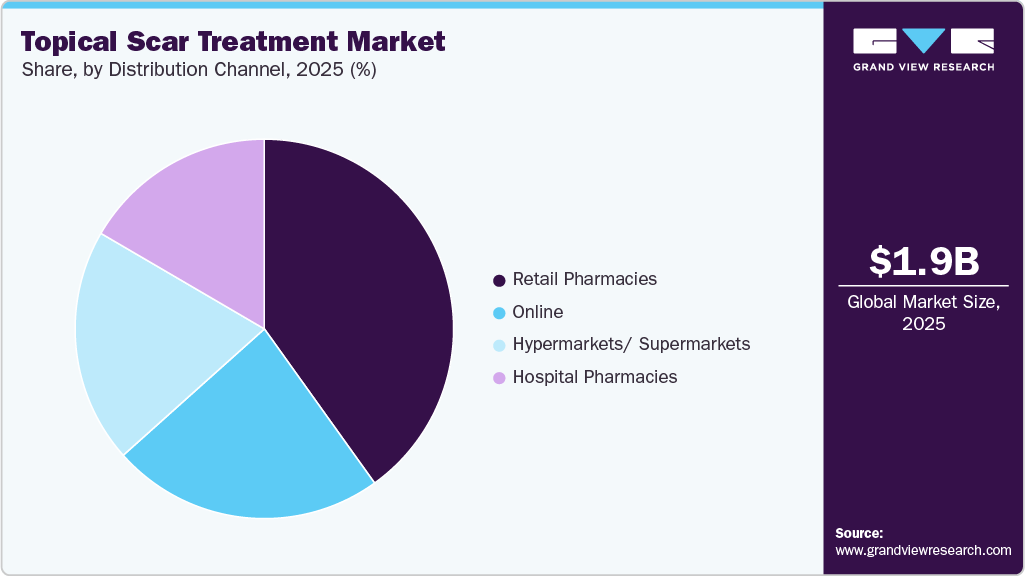
The online distribution channel is projected to witness the fastest CAGR over the forecast period. One of the primary growth drivers is the ease of access and home delivery, allowing consumers to purchase products without visiting physical stores. In the U.S., over 38% of online pharmacy users purchase prescription medicines at least once per quarter, indicating strong, consistent engagement with digital platforms. Another key factor is the growing demand for privacy and discreet purchasing, especially for skin-related conditions such as scars, stretch marks, or post-acne marks. Consumers often prefer online platforms to avoid social discomfort. Consumers increasingly value convenience, accessibility, and informed decision-making, all of which are strongly supported by e-commerce platforms. Online channels allow users to browse, compare, and purchase scar care products at any time, regardless of location, which is particularly beneficial for individuals seeking specialized dermatological solutions that may not be readily available at local pharmacies or clinics.
Regional Insights
The topical scar treatment market in North America is driven primarily by clinical need and consumer demand for non-invasive, easy-to-use solutions that improve scar appearance after acne, surgery, trauma, and burns. Rising aesthetic awareness and greater acceptance of minimally invasive care mean patients increasingly seek at-home topical options as first-line or adjunctive therapy; dermatologists and plastic surgeons also commonly recommend silicone-based gels and sheets, supported by strong clinical evidence showing they reduce scar height, pigmentation, and stiffness. Widespread availability through drugstores, dermatology clinics, and e-commerce, paired with brand marketing and influencer/beauty press coverage, amplifies patient uptake for both medical-grade silicone products and consumer OTC creams that contain ingredients like onion extract, vitamin C, and botanical actives.
U.S. Topical Scar Treatment Market Trends
The topical scar treatment industry in the U.S. held the largest share in 2025, in North America, owing to the high demand for advanced laser scar treatment instruments. The American Burn Association (ABA) reports that there are 486,000 burn cases each year. Scar treatment for burn injuries is covered by government reimbursement policies in the U.S. Scar treatment for acne may not be reimbursed unless a healthcare professional provides a Letter of medical necessity. Dermatologists often recommend topical therapies, particularly silicone-based gels and sheets, as a first-line or adjunctive option due to their well-documented ability to improve scar appearance and texture with minimal invasiveness. This strong clinical endorsement helps normalize topical treatments as part of standard post-operative and post-injury care routines.
Europe Topical Scar Treatment Market Trends
The topical scar treatment industry in Europe is growing, driven by the high prevalence of dermatological conditions and injury-related wounds that often result in permanent scarring. Acne remains one of the most common skin disorders across the region, particularly among adolescents and young adults. Epidemiological studies conducted in multiple European countries report that approximately 57.8% of individuals aged 15-24 experience acne, highlighting the widespread burden of the condition. Because inflammatory acne can lead to dermal damage and long-term scarring, dermatologists often recommend early topical interventions to improve healing outcomes and minimize scar formation. Consequently, topical scar products, such as silicone gels, creams, and other dermal formulations, are commonly used as first-line options in managing post-acne scarring before procedural treatments are considered.
The UK topical scar treatment market is growing, largely driven by the prevalence of injuries from accidents and burns, which frequently result in scarring. Acne also remains one of the most common skin conditions affecting adolescents and young adults in the UK. Epidemiological evidence indicates that acne can affect around 85 % of individuals between the ages of 12 and 25, making it one of the most prevalent dermatologic disorders in this population. Because inflammatory acne lesions can damage dermal structures during the healing process, a significant proportion of patients subsequently develop visible atrophic scars, which often require long-term management. In clinical practice, topical treatments such as silicone gels, creams, and other dermal formulations are commonly recommended as early interventions to improve scar appearance and support the remodeling phase of wound healing.
The topical scar treatment market in Germany is experiencing steady growth, driven by the high prevalence of dermatological conditions and injury-related wounds that can result in permanent scars. Acne, a common skin issue among adolescents and young adults, affects an estimated 773,000 to 931,000 individuals aged 25-30 in Germany in 2024, making it one of the most prevalent skin diseases in developed nations. Additionally, nearly 16% of Germans are affected by acne. Since inflammatory acne lesions can damage dermal tissue during healing, many patients develop atrophic scars that may require long-term treatment. This significant dermatological burden drives continued demand for topical scar therapies such as silicone gels, creams, and other dermal products, which are often used as initial treatments to improve scar texture, pigmentation, and overall appearance.
France topical scar treatment market is expanding, largely due to the prevalence of injuries resulting from road accidents, which frequently lead to scarring. The landscape of topical scar treatments in France is shaped by the high prevalence of skin conditions leading to long-term scars, especially acne. Acne is among the most common dermatological issues affecting teenagers and young adults throughout Europe, including France. Studies indicate that a significant portion of adolescents, typically 75% to 90%, experience acne, and adult acne is increasingly recognized. In France, surveys show about 41% of adult women suffer from acne, with roughly half of them reporting related consequences such as scarring or pigmentary changes.
Asia Pacific Topical Scar Treatment Market Trends
Asia Pacific topical scar treatment market held the largest global share of 45.0% in 2025.The Asia Pacific topical scar treatment industry is witnessing robust growth. The market is strongly influenced by the high prevalence of dermatological conditions and injury-related wounds that frequently lead to permanent scarring. Acne represents one of the most significant contributors to this burden. Globally, acne affects roughly 9.4% of the population, with the highest prevalence observed among adolescents and young adults. In many Asian populations, prevalence rates among teenagers are substantially higher; for example, studies have reported acne affecting up to 88% of adolescents aged 13-19 in Singapore and over 50-60% of young individuals in several Asian countries, highlighting the widespread nature of the condition across the region. Acne is particularly important in the context of scar treatment because inflammatory lesions can damage dermal collagen during healing, frequently resulting in long-lasting atrophic scars that require dermatological management.
China's topical scar treatment market is growing rapidly, driven by a high prevalence of dermatological conditions and injury-related wounds that frequently lead to long-term scarring. Acne represents one of the most common skin disorders affecting adolescents and young adults in the country. Epidemiological studies indicate that acne prevalence in China varies widely by age group and region, with reported rates ranging from 8.1% to 85.1%. In comparison, some pooled analyses estimate an overall prevalence of around 39.2% in the population studied across multiple provinces.
The topical scar treatment market in Japan is experiencing significant growth. Acne is widely recognized as one of the most common skin disorders in the Japanese population. Epidemiological studies indicate that more than 90% of Japanese individuals experience acne at some point in their lives, while surveys among adolescents report acne prevalence rates exceeding 58-65% in teenage populations. Because inflammatory acne lesions can damage dermal collagen during the healing process, many patients develop visible atrophic scars that persist into adulthood. This clinical burden has contributed to growing demand for early scar management strategies, with dermatologists commonly recommending topical therapies, such as silicone-based gels and dermocosmetic formulations, to improve scar texture and reduce long-term aesthetic impact.
Latin America Topical Scar Treatment Market Trends
The topical scar treatment industry in Latin America is experiencing significant growth, driven by rising injury incidence, improved healthcare access, and greater consumer awareness of aesthetic care. In particular, countries such as Brazil and Argentina are key contributors, driven by urban population growth and the expansion of dermatology and cosmetic care services. One of the major drivers for topical scar treatment demand in Latin America is the high prevalence of burn injuries and trauma-related skin damage. As per the study published by MDPI AG in August 2025, Central Latin America reported a severe burn prevalence of approximately 407 cases per 100,000 population, while Southern Latin America recorded a very high mild burn prevalence of over 7,800 cases per 100,000 population. These figures highlight a significant patient population requiring post-injury scar management, for which topical products such as silicone gels, creams, and ointments are often the first line of treatment due to their accessibility and non-invasive nature.
The Brazil topical scar treatment market is experiencing robust growth, driven by rising beauty consciousness, an increase in acne scars, and scarring from accidents. As Brazilian consumers place a high value on aesthetics, there is a growing demand for effective solutions to reduce and treat scars, particularly acne scars. The rise in cosmetic awareness and skincare routines is further propelling the market for topical scar treatments.
MEA Topical Scar Treatment Market Trends
The topical scar treatment industry in the Middle East and Africa (MEA) is experiencing notable growth. One of the key drivers of market growth is the high prevalence of burn injuries across the region. According to the World Health Organization (WHO), around 265,000 people die globally each year due to burns, with over 90% of these cases occurring in low- and middle-income countries, including many in Africa. In Africa alone, an estimated 43,000 people die annually from burns, highlighting a significant patient pool requiring long-term wound and scar management. Additionally, children in the WHO African region have significantly higher burn injury rates compared to global averages, indicating ongoing safety and healthcare challenges. This high incidence directly drives demand for accessible, non-invasive topical scar treatments.
The Saudi Arabia topical scar treatment market is growing rapidly due to the high prevalence of acne scars and increased interest in skincare. A key driver for the market is the rising number of surgical procedures in the country. In addition, the prevalence of burns and injury-related wounds is contributing to market demand. Burn injuries remain relatively common in Saudi Arabia, often occurring in domestic environments and requiring topical treatment as a primary line of care. Since many burn cases result in long-term scarring, the use of topical scar-reduction products is a critical part of the treatment pathway. Another important factor driving the market is the growing consumer awareness of aesthetic treatments and skin care. With rising disposable income, urbanization, and increasing use of dermatology clinics, there is a shift toward early scar management and preventive care.
Key Topical Scar Treatment Company Insights
The major companies in the market are focusing on strategies such as the launch of new products, mergers and acquisitions, and geographical expansions to cater to the unmet demand of the target population. The major companies are undertaking various strategies such as new product development, collaborations, acquisitions, mergers, and regional expansion to serve the unmet needs of their customers.
The topical scar treatment market is highly competitive, with several established dermatology and pharmaceutical companies operating globally. Key market players are focusing on expanding their geographical presence, strengthening distribution networks, and increasing collaborations with dermatology clinics, hospitals, and aesthetic centers to improve product accessibility and clinical adoption. Companies are also enhancing their product portfolios by introducing advanced silicone-based gels, sheets, and innovative topical formulations designed to improve scar appearance and support effective skin healing.
Key Topical Scar Treatment Companies:
The following key companies have been profiled for this study on the topical scar treatment market.
- Smith & Nephew PLC
- Lumenis
- Merz Pharmaceuticals, LLC
- Sonoma Pharmaceuticals, Inc.
- Cynosure
- CCA Industries, Inc.
- Newmedical Technology Inc.
- Mölnlycke Health Care AB
- Suneva Medical
- Scar Heal Inc.
- Pacific World Corporation
- Perrigo Company plc
- Enaltus LLC
Recent Developments
-
In December 2024, Sonoma Pharmaceuticals completed the transition of four products to comply with the EU’s new Medical Device Regulation (MDR), achieving Class IIb certification for select wound care, scar, and atopic dermatitis treatments. The milestone, reached ahead of the 2028 deadline, reflects strong safety data and regulatory readiness.
-
In September 2024, researchers at Chulalongkorn University developed an innovative "Transfersome Gel" designed to treat hypertrophic scars and dark spots. Formulated with a key compound derived from the Indian pennywort plant.
-
In January 2023, Skinuva proudly announced the launch of its latest product, Skinuva Scar+ SPF 30, a physician-developed solution designed to set new standards in skincare. Committed to advancing skincare with science-backed, clinically-tested formulations, Skinuva introduced this scar photoaging defense cream, which combines highly selective growth factors with a mineral-based Zinc Oxide sunscreen to protect and improve scar appearance.
-
In March 2023, Solution for Scars introduced a scientifically proven formula featuring a natural active ingredient designed to reduce the appearance of symptomatic scars visibly. Developed by a renowned UK plastic surgeon, this cream is a must-have addition to any first-aid kit.
Topical Scar Treatment Market Report Scope
Report Attribute
Details
Market size value in 2026
USD 2,100.6 million
Revenue forecast in 2033
USD 4,686.7 million
Growth rate
CAGR of 12.1% from 2026 to 2033
Actual data
2021 - 2025
Forecast period
2026 - 2033
Market representation
Revenue in USD million/billion & CAGR from 2026 to 2033
Regional scope
North America; Europe; Asia Pacific; Latin America; MEA
Report coverage
Revenue forecast, company share, competitive landscape, growth factors, trends
Segments covered
Product, scar type, distribution channel, and region
Country Scope
U.S.; Canada; Germany; UK.; France; Italy; Spain; Denmark; Sweden; Norway; China; India; South Korea; Australia; Thailand; Brazil; Mexico; Argentina; South Africa; Saudi Arabia; UAE; Kuwait
Key companies profiled
Smith & Nephew PLC; Lumenis; Merz Pharmaceuticals, LLC; Sonoma Pharmaceuticals, Inc.; Cynosure; CCA Industries, Inc.; Newmedical Technology Inc.; Mölnlycke Health Care AB; Suneva Medical; Scar Heal Inc.; Pacific World Corporation; Perrigo Company plc; Enaltus LLC
Customization scope
Free report customization (equivalent up to 8 analysts working days) with purchase. Addition or alteration to the country, regional, and segment scope.
Pricing and purchase options
Avail customized purchase options to meet your exact research needs. Explore purchase options
Global Topical Scar Treatment Market Report Segmentation
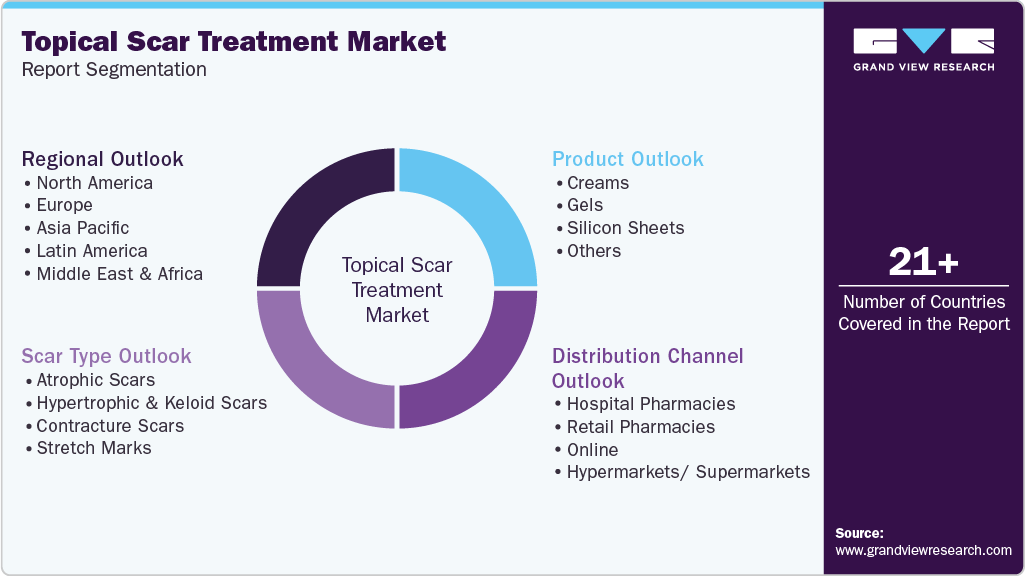
This report forecasts revenue growth at the global, regional, and country levels and provides an analysis of the latest industry trends and opportunities in each of the sub-segments from 2021 to 2033. For this study, Grand View Research has segmented the global topical scar treatment market report based on product, scar type, distribution channel, and region:
-
Product Outlook (Volume, Units; Revenue, USD Million, 2021 - 2033)
-
Creams
-
Gels
-
Silicon Sheets
-
Others
-
-
Scar Type Outlook (Revenue, USD Million, 2021 - 2033)
-
Atrophic Scars
-
Hypertrophic & Keloid Scars
-
Contracture Scars
-
Stretch Marks
-
-
Distribution Channel Outlook (Revenue, USD Million, 2021 - 2033)
-
Hospital Pharmacies
-
Retail Pharmacies
-
Online
-
Hypermarkets/ Supermarkets
-
-
Regional Outlook (Revenue, USD Million, 2021 - 2033)
-
North America
-
U.S.
-
Canada
-
Mexico
-
-
Europe
-
Germany
-
UK
-
Spain
-
France
-
Italy
-
Denmark
-
Norway
-
Sweden
-
-
Asia Pacific
-
China
-
India
-
Japan
-
South Korea
-
Australia
-
Thailand
-
-
Latin America
-
Brazil
-
Argentina
-
-
MEA
-
South Africa
-
Saudi Arabia
-
UAE
-
Kuwait
-
-
Frequently Asked Questions About This Report
b. Some key players operating in the topical scar treatment market include Smith & Nephew PLC; Lumenis; Merz Pharmaceuticals, LLC; Sonoma Pharmaceuticals, Inc.; Cynosure; CCA Industries, Inc.; Newmedical Technology Inc.; Mölnlycke Health Care AB; Suneva Medical.
b. The market is expected to grow due to several factors, such as the growing concern among people regarding their aesthetic appearance, the increasing number of road accidents and burn injuries, and technological advancements supplementing new device launches.
b. The global topical scar treatment market size was estimated at USD 1,883.3 million in 2025 and is expected to reach USD 2,100.6 million in 2026.
b. The global topical scar treatment market is expected to grow at a compound annual growth rate of 12.1% from 2026 to 2033 to reach USD 4,686.7 million by 2033.
b. Asia-Pacific dominated the market with a revenue share of 45.0% in 2025 owing to the high aesthetic consciousness among people and the rapid adoption of advanced products. The increasing prevalence of burn injuries, skin-related disorders, and trauma is a major factor likely to contribute to market growth in this region.


Share this report with your colleague or friend.
Need a Tailored Report?
Customize this report to your needs — add regions, segments, or data points, with 20% free customization.


ISO 9001:2015 & 27001:2022 Certified
We are GDPR and CCPA compliant! Your transaction & personal information is safe and secure. For more details, please read our privacy policy.
Trusted market insights - try a free sample
See how our reports are structured and why industry leaders rely on Grand View Research. Get a free sample or ask us to tailor this report to your needs.