
- Home
- »
- Next Generation Technologies
- »
-
Sports Streaming Platform Market Size & Share Report, 2033GVR Report cover
![Sports Streaming Platform Market (2026 - 2033)Report]()
Sports Streaming Platform Market (2026 - 2033)
Size, Share & Trends Analysis Report By Device (Smartphones & Tablets, Smart TVs & Set-top Boxes, PCs & Laptops), By Sport (Basketball, Cricket, Tennis, Football/Soccer, Baseball), By Region, And Segment Forecasts
Market Size, 2025
$38.0BMarket Estimate, 2026
$42.5BMarket Forecast, 2033
$101.6BCAGR, 2026–2033
13.3%Sports Streaming Platform Market Summary
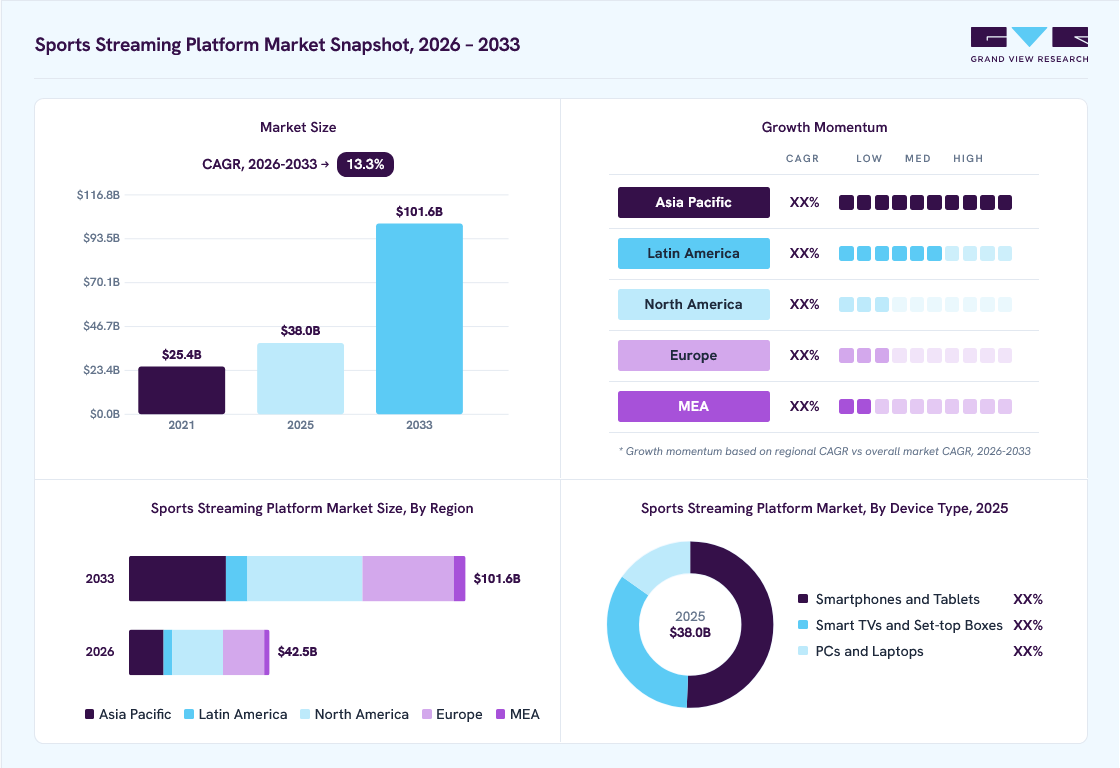
The global sports streaming platform market size was valued at USD 38.0 billion in 2025 and is projected to grow from USD 42.5 billion in 2026 to USD 101.6 billion by 2033, at a CAGR of 13.3% from 2026 to 2033. North America dominated the market, accounting for the revenue share of 36.3% in 2025. The industry growth is driven by a shift in consumer behavior from linear TV to OTT platforms, the acquisition of exclusive live sports rights, and the adoption of direct-to-consumer (DTC) streaming services.
Key Market Trends & Insights
- By device: Smartphones and tablets segment held the dominant position and accounted for the highest revenue share of 50.6% in 2025.
- By sport: Football/soccer segment accounted for the largest revenue share of 41.6% in 2025.
Regional Highlights
- Largest regional market: North America (36.3% revenue share, 2025)
- Fastest growing regional market: Asia Pacific (highest CAGR, 2026-2033)
- By Country: The U.S. held the largest market share in 2025
Market Size & Forecast
- Market size in 2025: USD 38.0 Billion
- Estimated market size in 2026: USD 42.5 Billion
- Projected market size by 2033: USD 101.6 Billion
- CAGR (2026-2033): 13.3%
Three ways to get this report
Buy it, customize it, or ask a question.Ask an Analyst
A direct answer, usually in 1 working day
- AccessReport author, directly
- Reply timeWithin 1 working day
- No sales callDirect answer only
- FormatEmail reply
- CostFree, no cost
Get the Full Report
What the study covers
- FormatsPDF · Excel · Dashboard
- Timeline2026–2033 annual, 2025 base
- Coverage20+ countries, 5 regions
- Companies10+ key players profiled
Customize the Report
20% free customization
- IncludeCountries, segments, points
- TailorTo your product definition
- ExtendDeeper competitor detail
- OrA fully bespoke study
- Turnaround5–10 working days
The expansion of mobile and connected-TV viewing, alongside investments in AI-powered personalization, interactive viewing, ad-supported streaming, and high-speed 5G connectivity, is accelerating demand for flexible and scalable sports streaming platforms. The growth of the sports streaming platform market is driven by the increasing demand for interactive sports viewing experiences, rising adoption of multi-view and alternate camera feeds, and growing integration of real-time sports data and analytics. The shift toward personalized commentary, fan-selected viewing angles, watch-party features, live polls, interactive statistics, and AI-generated highlights is encouraging platforms to enhance engagement and differentiate their services. In addition, the expansion of social viewing, shoppable content, in-stream commerce, and data-driven fan engagement capabilities is supporting higher viewer retention, platform stickiness, and monetization opportunities across live sports streaming services.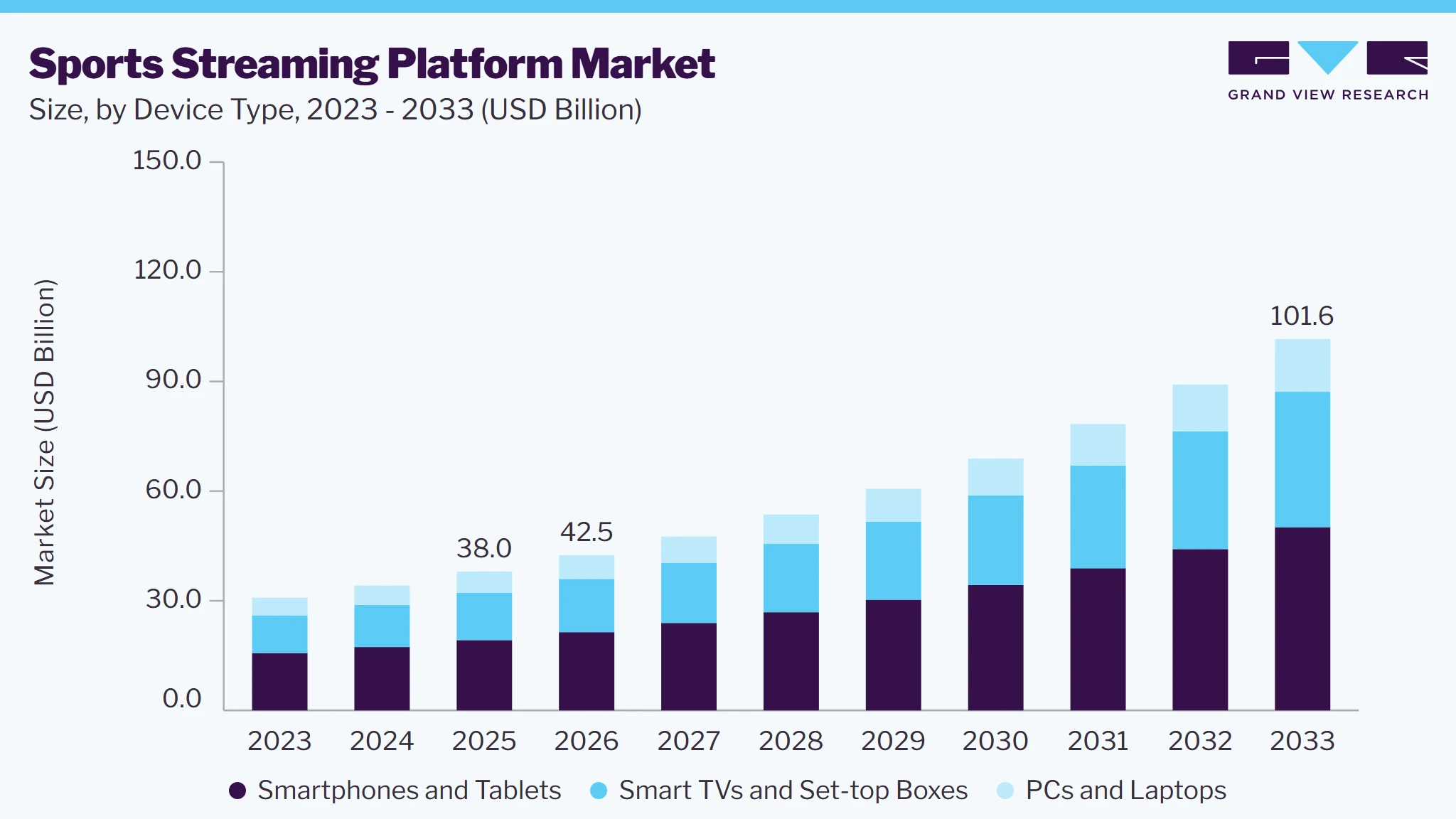
The increasing adoption of smart TVs, connected TV devices, and integrated streaming interfaces, the expansion of broadband infrastructure, and the growing need for seamless cross-device sports consumption are driving demand for sports streaming platforms. Consumers are increasingly accessing live sports on smart televisions, streaming sticks, gaming consoles, smartphones, and tablets, creating demand for platforms that deliver consistent viewing experiences across devices. The growing integration of sports streaming applications into connected TV operating systems and pay-TV environments is further supporting market expansion by improving accessibility and reducing dependence on traditional broadcast distribution.
Additionally, the increasing demand for flexible subscription packages, bundled sports offerings, and localized content delivery is accelerating the adoption of sports streaming platforms. Consumers are increasingly seeking affordable access to specific leagues, tournaments, teams, and sports rather than subscribing to broad traditional television packages. Platforms are therefore expanding monthly, seasonal, event-based, and team-specific subscription options while introducing regional language commentary, localized programming, and tailored content packages. These capabilities enable providers to address diverse audience preferences and strengthen retention across the sports streaming platform industry.
Moreover, the growing integration of advanced content delivery networks, low-latency streaming technologies, and cloud-based video processing is creating new opportunities for sports streaming platform providers. The incorporation of scalable cloud infrastructure and distributed delivery technologies can also enable platforms to efficiently manage major sporting events with sudden increases in traffic. These developments are encouraging the transition toward more reliable, scalable, and responsive streaming architectures that improve service quality and operational efficiency.
Market Dynamics
The sports streaming platform market is experiencing significant growth, driven by increasing demand for centralized access to sports content and rising consumer frustration with fragmented streaming services. Sports fans are increasingly seeking platforms that consolidate live matches, highlights, schedules, statistics, and multiple sports properties within a single digital environment. The ability of platforms to simplify content discovery, reduce subscription complexity, and provide comprehensive sports coverage is encouraging providers to develop integrated viewing ecosystems. Recent consumer research indicates that nearly half of surveyed sports fans would use a centralized sports application, highlighting the growing demand for consolidated sports experiences.
The increasing fragmentation of sports content across multiple platforms is driving demand for sports content aggregation and discovery capabilities. Fans increasingly seek centralized interfaces that help them locate live games, compare viewing options, manage subscriptions, and access schedules, highlights, and statistics across different services. This shift is encouraging platforms to integrate broader discovery functions, unified content libraries, and personalized navigation tools that simplify viewing decisions and improve accessibility within increasingly complex digital sports ecosystems.
Sports streaming providers are increasingly responding to fragmented viewing habits by developing centralized experiences that organize content from multiple competitions, leagues, and channels. Advanced search, personalized recommendations, universal watchlists, and consolidated event calendars enable users to discover relevant programming without having to navigate numerous applications. These capabilities also provide platforms with additional opportunities to understand viewing preferences, optimize content presentation, and strengthen engagement by creating more convenient and comprehensive destinations for sports consumption.
Escalating costs associated with acquiring premium sports broadcasting rights are creating financial pressure for streaming platforms. Exclusive rights frequently require substantial upfront commitments, while subscriber conversion and retention may remain uncertain. Providers must balance rights payments with subscription pricing, advertising revenue, technology infrastructure, marketing expenditure, and customer acquisition costs. This financial burden can undermine profitability and limit smaller platforms' ability to compete for highly valuable live sports properties.
The financial impact becomes more pronounced when platforms compete for overlapping rights across multiple sports and geographic markets. Long-term licensing agreements can lock providers into high fixed costs, while shifting consumer preferences may reduce expected returns on properties. Unsuccessful rights acquisitions can weaken subscriber economics and increase churn if audiences perceive the content to be of limited value. Consequently, platforms must carefully evaluate rights valuations, audience demand, monetization opportunities, and contractual commitments before expanding their sports portfolios.
The increasing consumer preference for bundled sports subscriptions creates an opportunity for platforms to combine multiple leagues, competitions, services, or distribution channels within simplified packages. Aggregated offerings can reduce subscription complexity while improving content accessibility and customer convenience. Platforms can use partnerships, wholesale arrangements, and cross-service bundles to provide broader sports coverage without requiring consumers to manage numerous individual subscriptions, creating more cohesive viewing experiences across diverse competitions and content providers.
Bundling strategies can enable platforms to address different audience segments through flexible packages built around sports preferences, viewing frequency, or geographic demand. Partnerships with rights holders, broadcasters, telecommunications providers, and other streaming services can expand content availability while supporting shared customer acquisition. Integrated billing, unified interfaces, and coordinated promotional offers can further improve convenience. These approaches allow providers to differentiate their services, increase perceived value, and strengthen relationships with sports viewers.
Market Concentration & Characteristics:
The sports streaming platform market is moderately concentrated, comprising major global streaming platforms, sports-focused OTT providers, broadcasters, technology-enabled streaming services, and league- or team-operated direct-to-consumer platforms competing across live sports, on-demand sports content, pay-per-view events, highlights, and interactive viewing services. The market is shaped by the OTT trend, direct-to-consumer sports consumption, rising demand for live and exclusive sports content, and the growing adoption of flexible subscription and advertising-supported models. Exclusive sports rights agreements, large content libraries, established subscriber bases, technology infrastructure, strategic partnerships with leagues and broadcasters, and strong brand recognition enable leading platforms to strengthen their positions in regional and international sports markets.
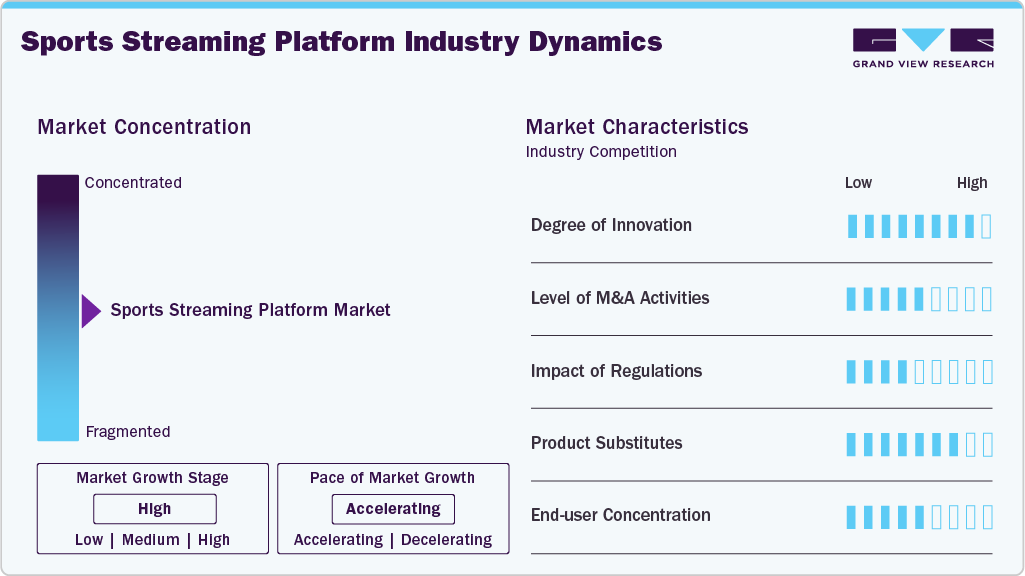
The market is characterized by a high level of innovation, supported by advancements in AI-powered content personalization, real-time analytics, multi-view streaming, interactive features, cloud-based video delivery, targeted advertising, immersive viewing experiences, and improved streaming quality. The market sees a moderate level of M&A activity, as major media and technology companies increasingly pursue strategic investments, partnerships, and selective acquisitions to expand their sports content portfolios. Competition from alternative viewing services is relatively high because consumers can access sports content through traditional pay-TV, free-to-air broadcasting, general entertainment OTT platforms, social media platforms, and other digital services. The increasing demand for exclusive live sports, personalized viewing experiences, flexible subscription models, and cross-platform accessibility continues to intensify competition and strengthen competitive positioning in the sports streaming platforms industry.
Analyst Perspective
The sports streaming platform market is advancing through the increasing shift from traditional television toward OTT and direct-to-consumer sports viewing, expansion of connected TV and mobile streaming, and rising demand for live, exclusive, and on-demand sports content. Platforms are strengthening their offerings through AI-powered personalization, multi-view functionality, targeted advertising, cloud-based streaming infrastructure, and flexible subscription models. The growing distribution of premium sports rights across streaming platforms, the increasing adoption of ad-supported and hybrid monetization models, and the demand for seamless cross-device access are encouraging providers to develop differentiated viewing experiences and strengthen their competitive positions across global sports markets.
Device Insights
The smartphones and tablets segment accounted for the largest market share of 50.6% in 2025, propelled by widespread mobile phone use and growing demand for streaming content on the go. People increasingly prefer smartphones and tablets for their convenience, which allows them to watch live sporting events anywhere, at any time. Continuous improvements in mobile internet infrastructure and the affordability of mobile data plans further contribute to the growth of this sector. As mobile technology continues to evolve, particularly with the rollout of 5G networks, mobile streaming is expected to become the leading device in the coming years.
The smart TVs and set-top boxes segment is expected to witness the highest CAGR of over 14% from 2026 to 2033. The segment is driven by the availability of high-quality streaming content, such as 4K and 8K broadcasts. Smart TVs, which come pre-integrated with streaming platforms, allow viewers to easily access sports content without needing separate devices. As more consumers watch sports on large, high-definition screens, this segment is set for substantial growth. Technological advancements in televisions, along with increased collaboration between TV manufacturers and streaming platforms, are expected to significantly impact the sports streaming platform industry.
Sport Insights
The football/soccer segment accounted for the largest market share of 41.6% in 2025, fueled by an extensive fanbase, and major leagues and tournaments have established it as a leader in the world of sports. Key events such as the FIFA World Cup, UEFA Champions League, and domestic leagues such as the English Premier League, La Liga, and Serie A attract millions of fans worldwide. The increasing shift towards online platforms for live sports has solidified this segment's leadership. Football continues to capture global interest in both traditional and emerging markets, and it is well-positioned to maintain its leading status, with further growth driven by enhanced access to streaming services and quality content delivery.
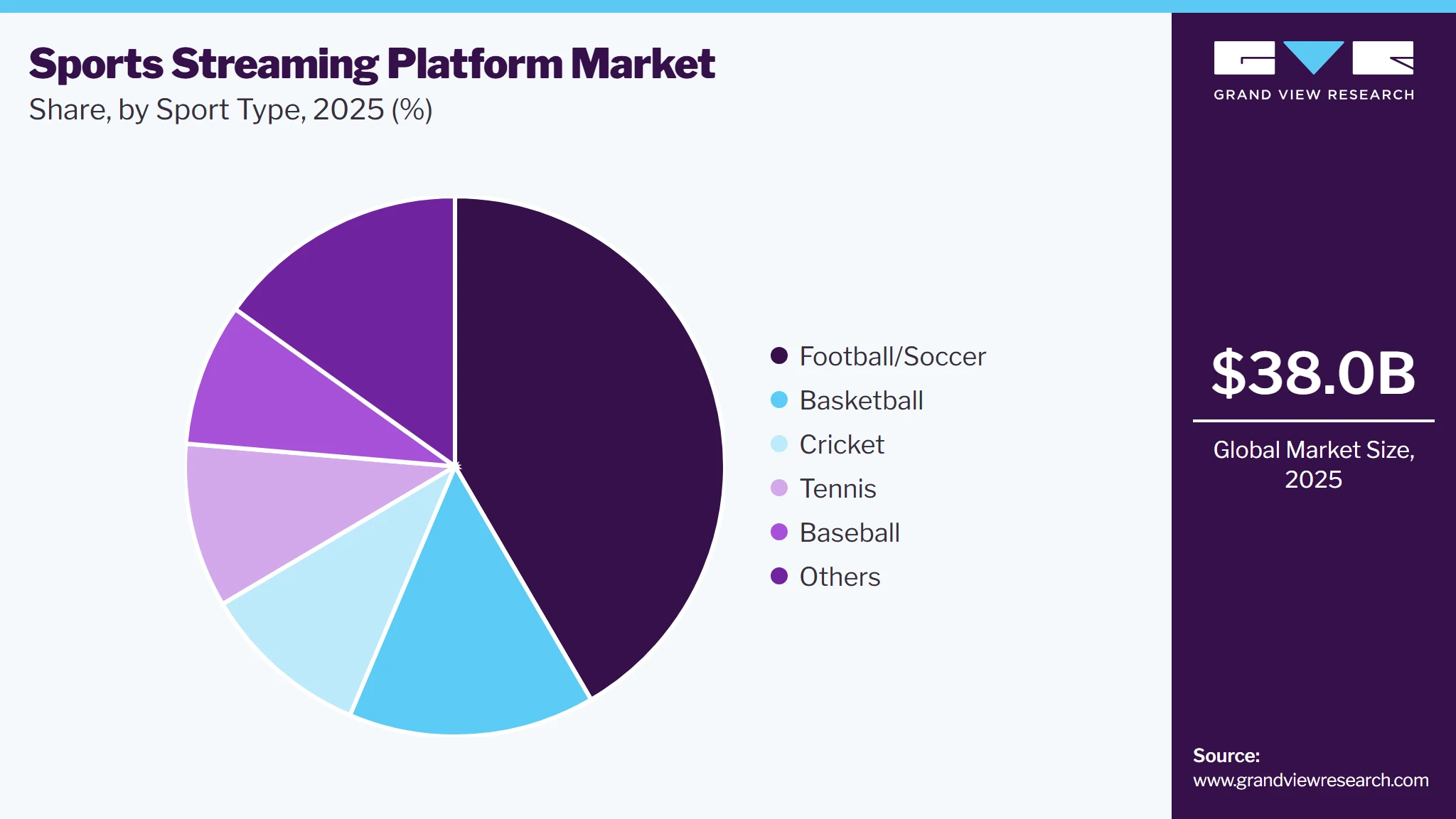
The cricket segment is expected to witness the highest CAGR from 2026 to 2033, driven by high-profile events such as the Indian Premier League (IPL), the ICC World Cup, and the Big Bash League. Growth in mobile streaming, bolstered by improved internet infrastructure and the expansion of over-the-top (OTT) platforms in cricket-loving regions, is anticipated to further boost this segment's growth. Technological advancements such as 5G will enhance streaming quality, providing better experiences for spectators and continuing to drive growth in the cricket segment over the coming years. As cricket's popularity continues to rise globally, this segment is expected to be a key driver of market growth during the forecast period.
Regional Insights
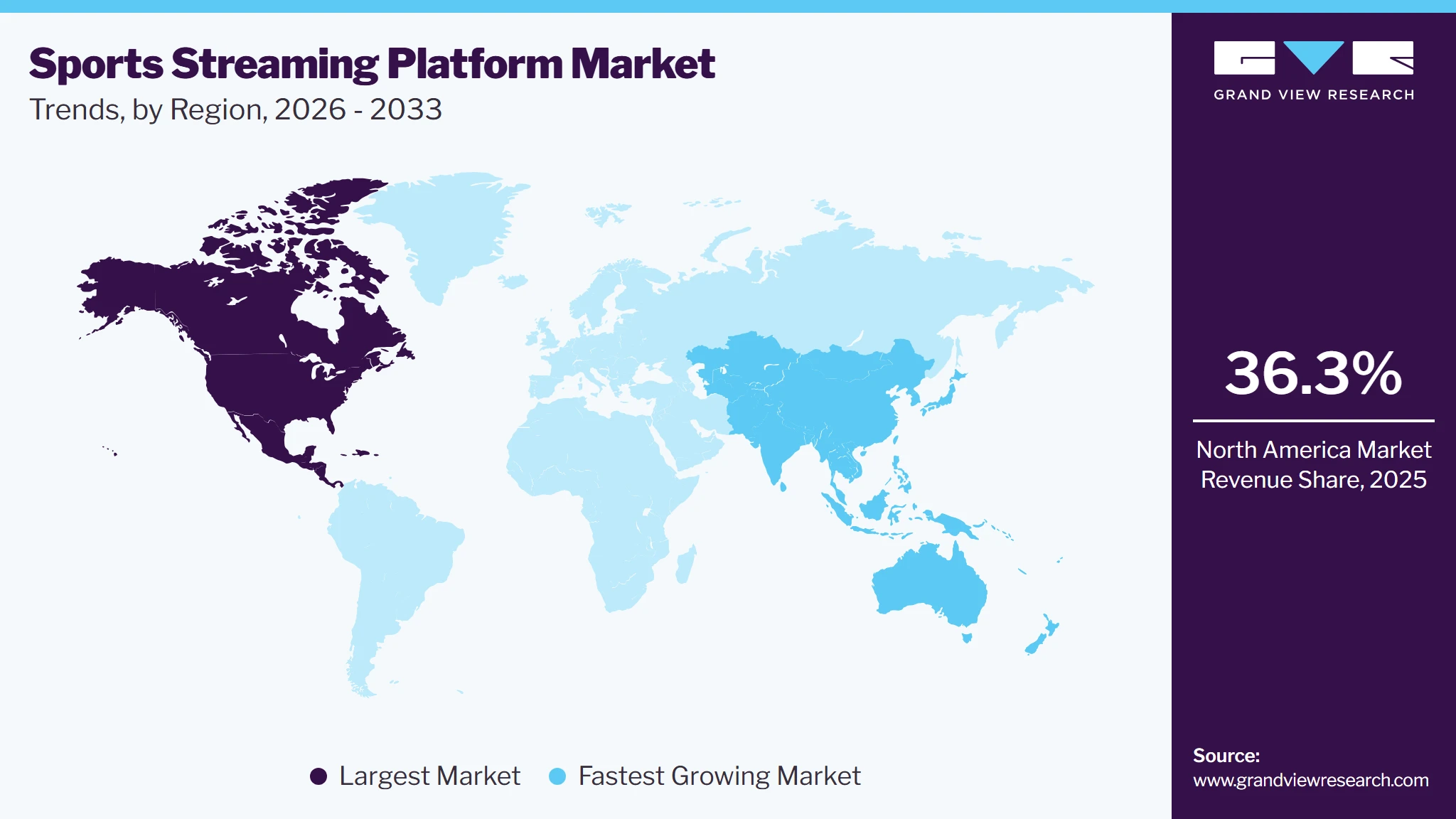
North America sports streaming platform market held the largest share of 36.3% in 2025, driven by cutting-edge streaming technologies and boasting a high level of maturity in infrastructure and consumption of digital content. The region's strong sporting culture, especially for leagues such as the NFL, NBA, and MLB, has helped to drive the popularity of sports streaming platforms. Further, the blending of sports streaming with other entertainment offerings, including the Disney Bundle, has helped sustain market expansion. The growth in 5G adoption and the popularity of interactive features such as sports betting should continue to drive regional expansion.
U.S. Sports Streaming Platform Market Trends
The sports streaming platform market in the U.S. dominated North America, with a share of 80.0% in 2025, driven by the widespread adoption of digital streaming technology and the high demand for live sports content. Merging sports betting with new-age technologies such as AI and 5G is increasing user interaction, while cord-cutting is revolutionizing the media scene. In addition, pairing sports with entertainment programming and emphasizing regional sports networks are both drawing wider audiences. These trends, along with the increasing popularity of mobile viewing and free ad-supported streaming, are making the U.S. a world leader in the market.
Europe Sports Streaming Platform Market Trends
The sports streaming platform market in Europe is expected to grow at a significant CAGR of 12.0% from 2026 to 2033. The market growth is driven by the heightened popularity of OTT (over-the-top) platforms, which offer convenient, pay-per-view access to premier sports leagues and events. Rising mobile streaming, along with top-quality 4K and HD broadcasts, is also improving the user experience. The ongoing collaborations between streaming services and sports organizations to secure broadcasting rights are fueling competition, while data-driven insights are enabling the provision of personalized content to cater to diverse European sports fans.
The UK sports streaming platform market has seen significant domestic growth, with BT Sport, Sky Sports, and Amazon Prime securing exclusive rights to major sports events such as the Premier League and rugby. The UK is characterized by growing demand for flexible subscription tiers, as consumers want to opt out of long-term contracts. Moreover, live streaming on mobile and smart TVs is increasingly used, giving fans the flexibility to watch sports anywhere. The popularity of niche sports streaming, such as esports, is also growing, indicative of a broader trend toward greater diversity of sports made available through digital channels.
The sports streaming platform market in Germany is supported by a mix of established broadcasters and digital-first streaming services such as DAZN and RTL+. Football and the Bundesliga in particular have fueled the growth of sports streaming, with platforms vying for rights to premier events. German consumers are increasingly preferring personalized, on-demand access to sports content, such as live streaming and highlights. The convergence of multi-screen streaming capabilities, including viewing sports on smartphones, tablets, and connected TVs, is accelerating. Esports streaming is on the rise, a sign of Germany's increasing passion for competitive gaming and its popularity among younger viewers.
Asia Pacific Sports Streaming Platform Market Trends
The sports streaming platform market in the Asia Pacific is expected to grow at the highest CAGR of 15.8% from 2026 to 2033. This growth is fueled by the region's large population, rising internet penetration, and the growing popularity of sports such as cricket, football, and badminton. India, China, and Japan are the pioneers in this growth, with services such as JioStar (Star India) and SonyLIV leading the way. The low cost of mobile data and widespread availability of affordable smartphones have popularized sports streaming. The region's expanding middle class and rising disposable income are fueling the demand for high-end sports content. The rollout of 5G technology and the rise of digital infrastructure are driving the growth of the sports streaming platform industry in the region.
The Japan sports streaming platform market is gaining traction owing to ultra-fast 5G networks, high smartphone adoption, and a migration from traditional television to OTT services. Dominant platforms such as DAZN, U-NEXT, and Lemino cater to strong domestic demand for Professional Baseball (NPB), J.League football, and combat sports. Supported by interactive viewing features, multi-angle streaming, and flexible pay-per-view options, digital platforms continue to redefine how Japanese sports fans access live events. As a mature tech market with a dedicated sports fanbase, Japan presents unique opportunities and competitive dynamics.
The sports streaming platform market in China is expanding very fast, with players such as iQIYI Sports, Tencent Sports, and Youku dominating with access to prominent events such as the Chinese Super League (football) and basketball leagues. The sporting fanbase in China is becoming more diversified, with increasing interest in sports such as esports, basketball, and tennis. Streaming platforms are compelled to incorporate AI-driven recommendations and interactive elements to encourage viewer engagement. Furthermore, mobile live streaming is extremely popular, particularly as 5G networks grow increasingly widespread, providing improved video quality and interactive viewing features for sports enthusiasts nationwide.
Key Sports Streaming Platform Company Insights
Some of the key players in the market include ESPN Enterprises, Inc. and DAZN Limited, among others.
-
ESPN Enterprises, Inc. is a key sports streaming player with in-depth coverage of major sports leagues, exclusive UFC broadcasts, and original programming through its ESPN+ service. Its broad North American footprint and deals with the largest sports organizations establish it as a market share leader. ESPN+ is also included in the Disney Bundle, which features Disney+ and Hulu and offers an integrated entertainment bundle with broad appeal.
-
DAZN Limited is a global provider of sports streaming, which includes boxing, MMA, and football. With its active expansion in new territories such as Asia and Latin America, DAZN has emerged as a major player in the sports streaming platform market, challenging established broadcasters with its unique streaming solutions. DAZN's latest foray into AI-driven personalized viewing experiences has further augmented its user retention and engagement.
FuboTV Inc. and Peacock TV LLC are some of the emerging market participants in the sports streaming platform market.
-
FuboTV Inc. is a sports-focused streaming service providing a multitude of live sports channels for enthusiastic sports lovers. Its recent addition of sports betting functionalities has made it one step ahead of its competitors, offering a more interactive and immersive user experience. FuboTV's emphasis on live sports streaming, coupled with interactive functionalities, has endeared it to sports enthusiasts in North America and Europe.
-
Peacock TV LLC, a subsidiary of NBCUniversal, has made huge strides by acquiring exclusive streaming rights for high-profile sporting events such as the Premier League, WWE, and the Olympics. Its inclusion within the larger NBCUniversal universe enables it to offer a diverse library of content, including not only sports but also movies, TV series, and original programming. Peacock's low costs and flexible subscription model have brought it within the range of many consumers, helping its subscription numbers grow.
Key Sports Streaming Platform Companies:
The following key companies have been profiled for this study on the sports streaming platform market:
-
ESPN Enterprises, Inc.
-
DAZN Limited
-
YouTube TV
-
FuboTV Inc.
-
Star India Private Limited
-
Peacock TV LLC
-
Paramount
-
Sky UK Limited
-
beIN MEDIA GROUP
-
Sony Pictures Networks India Private Limited
-
Amazon.com, Inc.
Competitive Benchmarking
Category
Operating Strategies
Competitive Edge
Weakness
Established Players (ESPN Enterprises, Inc., DAZN Limited, YouTube TV)
- Focus on securing premium sports rights and expanding live streaming across global markets.
- Invest heavily in platform technology, content partnerships, personalization, and scalable streaming infrastructure.
- Strong brand recognition, extensive subscriber bases, and established relationships with major sports leagues.
- Ability to deliver high-quality live sports, exclusive content, and seamless multi-device viewing experiences.
- High sports-rights costs can pressure margins and increase dependence on the availability of premium content.
- Large organizational structures may reduce agility when responding to emerging streaming technologies and consumer preferences.
Emerging Players (FuboTV Inc., Star India Private Limited, Peacock TV LLC)
- Emerging players are focusing on niche sports content and underserved audiences through flexible direct-to-consumer streaming models.
- Invest in innovative viewing features, mobile platforms, partnerships, and targeted expansion of regional content.
- Greater agility enables the rapid adoption of emerging technologies and the evolution of sports consumption preferences.
- Specialized content portfolios help differentiate platforms and attract highly engaged sports fan communities.
- Limited financial resources can restrict access to expensive premium sports broadcasting rights.
- Smaller subscriber bases and limited brand recognition can constrain international market expansion.
Recent Developments:
-
In August 2026, ESPN Enterprises, Inc. expanded its direct-to-consumer offering through ESPN Unlimited, providing subscribers access to ESPN networks and ESPN+ content, including NFL, NBA, NHL, MLB, tennis, golf, and major college sports. The company also added CW Sports live events to the ESPN App, strengthening its position as a centralized destination for live sports streaming and broadening its streaming content portfolio.
-
In August 2026, DAZN Limited announced an agreement to acquire EverPass Media, strengthening its U.S. commercial-venue streaming capabilities across bars, restaurants, and other public locations. The acquisition combines DAZN’s sports content portfolio with EverPass’s distribution and streaming technology infrastructure, supporting DAZN’s expansion into commercial sports viewing and creating additional monetization opportunities beyond household subscriptions.
-
In August 2026, FuboTV Inc. expanded its college sports offering through the launch of ACCNX and SECN+, increasing access to live collegiate sports programming. The expansion strengthens Fubo’s sports-focused content proposition and complements its broader strategy to increase the availability of premium sports in the sports streaming industry.
Sports Streaming Platform Market Report Scope
Report Attribute
Details
Market size in 2025
USD 38.0 billion
Estimated market size in 2026
USD 42.5 billion
Projected market size by 2033
USD 101.6 billion
Growth rate
CAGR of 13.3% from 2026 to 2033
Base year for estimation
2025
Historical data
2021 - 2024
Forecast period
2026 - 2033
Quantitative units
Revenue in USD billion and CAGR from 2026 to 2033
Report coverage
Revenue forecast, company ranking, competitive landscape, growth factors, and trends
Segments covered
Device, sport, region
Region scope
North America; Europe; Asia Pacific; Latin America; Middle East & Africa
Country scope
U.S.; Canada; Mexico; UK; Germany; France; China; Japan; India; South Korea; Australia; Brazil; Saudi Arabia; UAE; South Africa
Key companies profiled
ESPN Enterprises, Inc.; DAZN Limited; YouTube TV; FuboTV Inc.; Star India Private Limited; Peacock TV LLC; Paramount; Sky UK Limited; beIN MEDIA GROUP; Sony Pictures Networks India Private Limited; Amazon.com, Inc.
Customization scope
Free report customization (equivalent to up to 8 analyst’s working days) with purchase. Addition or alteration to country, regional & segment scope.
Pricing and purchase options
Avail customized purchase options to meet you exact research needs. Explore purchase options
Global Sports Streaming Platform Market Report Segmentation
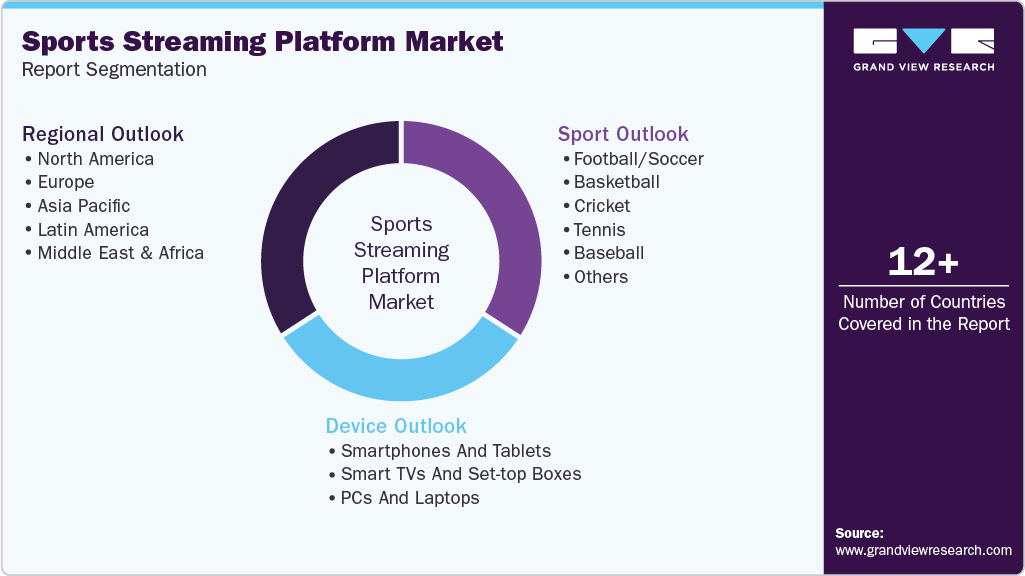
This report forecasts revenue growth at global, regional, and country levels and provides an analysis of the latest technological trends in each of the sub-segments from 2021 to 2033. For this study, Grand View Research has segmented the global sports streaming platform market report based on device, sport, and region:
-
Device Outlook (Revenue, USD Billion, 2021 - 2033)
-
Smartphones and Tablets
-
Smart TVs and Set-top Boxes
-
PCs and Laptops
-
-
Sport Outlook (Revenue, USD Billion, 2021- 2033)
-
Football/Soccer
-
Basketball
-
Cricket
-
Tennis
-
Baseball
-
Others
-
-
Regional Outlook (Revenue, USD Billion, 2021 - 2033)
-
North America
-
U.S.
-
Canada
-
Mexico
-
-
Europe
-
UK
-
Germany
-
France
-
-
Asia Pacific
-
China
-
Japan
-
India
-
South Korea
-
Australia
-
-
Latin America
-
Brazil
-
-
Middle East and Africa (MEA)
-
Saudi Arabia
-
UAE
-
South Africa
-
-
Research Methodology
The sports streaming platform market figures in this report are based on a proven research process that combines executive interviews with secondary research from proprietary databases, company filings, and recognized regulatory and institutional sources. Market size is built through value-chain sizing—reconciling supply-side and demand-side estimates—and triangulated with bottom-up and top-down approaches. Every estimate passes multiple levels of expert validation before publication, with eachsports streaming platformsegment quantified using the revenue-capture definitions in the table below.
Segment Definition
Segment – Device
Revenue capture definition
Smartphones and Tablets
Revenue is generated from sports streaming accessed through smartphones and tablets, enabling users to watch live and on-demand sports content through dedicated applications and mobile-optimized platforms. These devices support flexible, portable viewing and benefit from the growth of mobile internet, 5G connectivity, and consumer preference for accessing sports content anytime, anywhere.
Smart TVs and Set-top Boxes
Revenue is generated from sports streaming delivered through smart TVs and set-top boxes, enabling users to watch live matches and on-demand sports content on larger connected screens. These devices support high-quality viewing, including HD and 4K streaming, integrated applications, and connected-TV functionality, making them increasingly important for immersive home-based sports consumption.
PCs and Laptops
Revenue is generated from sports streaming accessed through PCs and laptops, where users view live events, replays, highlights, and other sports programming through web browsers or dedicated applications. These devices provide larger-screen viewing with flexible access to multiple streaming services and are particularly suitable for users seeking simultaneous access to sports content, statistics, and interactive features.
Segment – Sport
Revenue capture definition
Football/Soccer
Revenue is generated from streaming live and on-demand football/soccer matches, tournaments, leagues, highlights, and related programming through sports streaming platforms. Strong global fan engagement, premium broadcasting rights, and demand for live match access make football/soccer a major content category for streaming providers.
Basketball
Revenue is generated from streaming professional and collegiate basketball games, tournaments, highlights, replays, and related programming through digital sports platforms. Increasing demand for live access, mobile viewing, international competitions, and interactive sports content supports the expansion of basketball streaming services.
Cricket
Revenue is generated from streaming live and on-demand cricket matches, tournaments, leagues, highlights, and supporting sports programming. Strong cricket viewership across South Asia, the Middle East, Australia, and the UK, combined with major competitions such as the IPL and ICC events, supports significant demand for digital sports streaming.
Tennis
Revenue is generated from streaming professional tennis matches, Grand Slam tournaments, tours, highlights, replays, and related programming through dedicated and general sports platforms. Increasing consumer demand for live tournament access and flexible digital viewing supports the growth of tennis-focused streaming content.
Baseball
Revenue is generated from streaming professional and collegiate baseball games, tournaments, highlights, replays, and other baseball-related programming through digital platforms. The expansion of live sports OTT services and growing consumer preference for flexible access to games are driving demand for baseball streaming.
Others
Revenue is generated from streaming sports beyond the major categories, including motorsports, golf, hockey, volleyball, rugby, athletics, combat sports, esports, and other niche sporting events. Expanding coverage of specialized competitions and increasing demand for underserved sports content allow platforms to diversify their programming portfolios and attract specialized fan communities.
Estimation Model
Layer No.
Layer Name
Key Question
Description
01
Sports Content Rights Procurement Layer
Who are the potential content providers and rights holders?
Identifies sports leagues, governing bodies, tournament organizers, teams, broadcasters, media companies, and other rights holders that provide live and on-demand sports content to streaming platforms through licensing and broadcasting agreements.
02
Sports Streaming Platform Development Layer
Who can provide sports streaming platforms?
Sports streaming platform development involves OTT providers, sports-focused streaming companies, broadcasters, technology companies, cloud service providers, and digital media firms supporting platform development, video delivery, content management, subscriptions, advertising, personalization, analytics, and interactive viewing capabilities.
03
Distribution and Consumer Access Layer
Where are sports streaming platforms accessed?
Sports streaming platforms are accessed on smartphones, tablets, smart TVs, set-top boxes, PCs, laptops, connected TV devices, gaming consoles, and other internet-enabled devices, enabling consumers to watch live matches, replays, highlights, and on-demand sports programming across multiple channels.
04
Revenue Generation Layer
How is revenue generated?
Revenue is generated through subscriptions, advertising-supported streaming, pay-per-view events, premium content packages, sponsorships, sports-rights licensing, transactional viewing, bundled offerings, and hybrid monetization models, supported by long-term content agreements, subscriber expansion, targeted advertising, and premium sports programming.
Delivered Customizations
This report has been delivered with the following In-depth customizations
Client Request
Customization Delivered
Value Adds
Sports Content Rights & Licensing Assessment
Conducted detailed evaluation of sports broadcasting rights across football, basketball, cricket, tennis, baseball, and other sports, assessing league partnerships, exclusive rights agreements, regional licensing, and content acquisition strategies.
Strengthens content portfolios, improves competitive positioning, supports rights acquisition, and enhances subscriber retention.
Multi-Device Sports Streaming & Platform Integration Strategy
Assessed sports streaming delivery across smartphones, tablets, smart TVs, set-top boxes, PCs, and laptops, integrating cloud streaming, content delivery networks, adaptive video, and cross-device platform capabilities to improve viewing accessibility.
Improves viewing accessibility, enhances streaming quality, expands audience reach, and supports seamless cross-platform consumption.
AI-Powered Sports Personalization & Viewer Engagement Strategy
Evaluated AI-powered recommendation engines, real-time sports analytics, personalized content discovery, interactive viewing, audience behavior analysis, and targeted advertising capabilities to enhance engagement across live and on-demand sports streaming platforms.
Enhances personalization, increases viewer engagement, improves retention, and strengthens platform monetization potential.
Frequently Asked Questions About This Report
North America dominated the market, accounting for the revenue share of 36.3% in 2025.
The football/soccer segment accounted for the largest market share of 41.6% in 2025, while cricket segment is the fastest-growing sport type.
Key factors that are driving market growth including increasing penetration of high-speed Internet, mobile devices, and OTT (over-the-top) services.
The global sports streaming platform market size was valued at USD 38.0 billion in 2025 and is estimated at USD 42.5 billion for 2026.
The global sports streaming platform market is expected to grow at a CAGR of 13.3% from 2026 to 2033, reaching USD 101.6 billion by 2033.
The smartphones and tablets segment accounted for the largest market share of 50.6% in 2025, while smart TVs and set-top boxes segment the fastest-growing device.
Asia Pacific is the fastest-growing region over the forecast period.
The key players in the sports streaming platform market include Schneider ESPN Enterprises, Inc., DAZN Limited, YouTube TV, FuboTV Inc., Star India Private Limited, Peacock TV LLC, Paramount, Sky UK Limited, beIN MEDIA GROUP, Sony Pictures Networks India Private Limited, and Amazon.com, Inc., among others.
About the Author(s)
Next Generation Technologies Research Team
Technology · Next Generation TechnologiesThis report was authored by the next generation technologies research team at Grand View Research - comprising two research analysts, one senior research analyst, and one industry expert - with specialized expertise in the next generation technologies segment of the technology industry. All findings are based on proprietary technology databases, executive interviews, and regulatory analysis, subject to internal peer review prior to publication.
Last Updated:
Speak to Analyst


Customize this report to your needs - add regions, segments, or data points, with 20% free customization.
Or view our licence options:


ISO 9001:2015 & 27001:2022 Certified
We are GDPR and CCPA compliant! Your transaction & personal information is safe and secure. For more details, please read our privacy policy.


