
- Home
- »
- Homecare & Decor
- »
-
Safari Tourism Market Size And Share Report, 2026-2033GVR Report cover

Safari Tourism Market (2026 - 2033)
Size, Share & Trend Analysis Report by Type (Adventure Safari, Private Safari), Accommodation Type, By Group (Friends, Families, Couples, Solos), By Booking Mode, By Region, And Segment Forecasts
Market Size, 2025
$37.7BMarket Estimate, 2026
$39.7BMarket Forecast, 2033
$66.9BCAGR, 2026–2033
7.7%Safari Tourism Market Summary
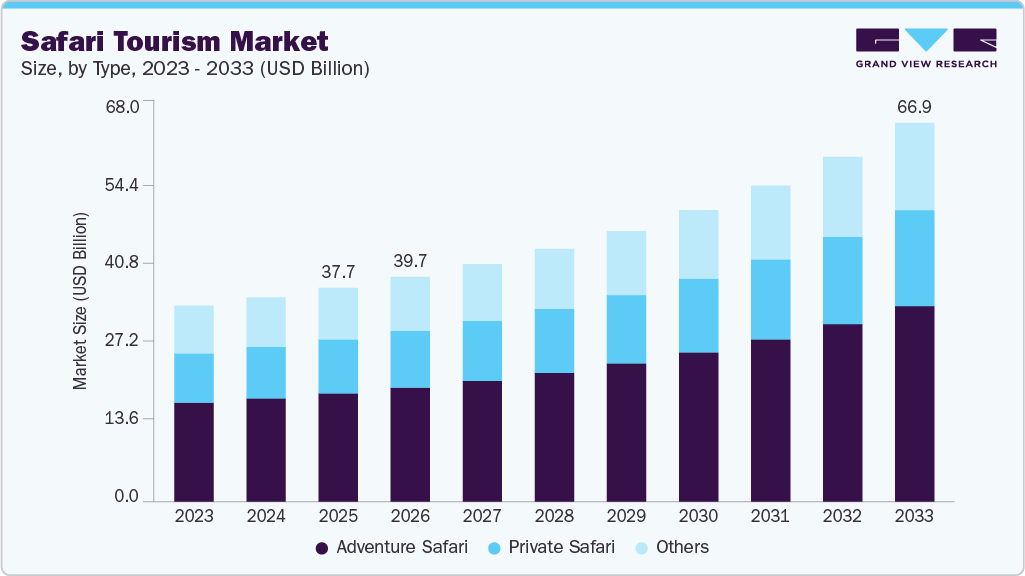
The global safari tourism market size was valued at USD 37.7 billion in 2025 and is projected to grow from USD 39.7 billion in 2026 to USD 66.9 billion by 2033, at a CAGR of 7.7% from 2026 to 2033. The Middle East & Africa market held the largest share of 51.5% of the global market in 2025. The market growth is driven by the rising demand for unique, experiential travel experiences, as many travelers increasingly prefer activities that offer deeper connections with nature rather than traditional sightseeing.
 Source: Grand View Research, IR Documents, Primary Interviews, Paid DatabasesTo learn more about this report,
 Download Free Sample Report
 Key Market Trends & Insights
- By type: The adventure safari tourism market segment accounted for a revenue share of 50.6% in 2025.
- By accommodation type: The safari resorts & lodges industry held a revenue share of 41.1% in 2025.
- By group: The Safari tourism for couples held a 43.8% share of the safari tourism industry in 2025.
- By booking mode: The Direct booking held a 64.0% share of the safari tourism market in 2025.
Regional Highlights
- Largest regional market: Middle East & Africa (51.5% revenue share, 2025)
- By country: The Saudi Arabia held the largest market share in 2025.
Market Size & Forecast
- Market size in 2025: USD 37.7 Billion
- Estimated market size in 2026: USD 39.7 Billion
- Projected market size by 2033: USD 66.9 Billion
- CAGR (2026-2033): 7.7%
Three ways to get this report
Buy it, customize it, or ask a question.Ask an Analyst
Analyst response in 1 business day
- AccessReport author, directly
- Reply timeWithin 1 working day
- No sales callDirect answer only
- FormatEmail reply
- CostFree, no cost
Get the Full Report
What the study covers
- FormatsPDF · Excel · Dashboard
- Timeline2026–2033 annual, 2025 base
- Coverage20+ countries, 5 regions
- Companies10+ key players profiled
Customize the Report
20% free customization
- IncludeCountries, segments, points
- TailorTo your product definition
- ExtendDeeper competitor detail
- OrA fully bespoke study
- Turnaround5–10 working days
Safari trips allowed tourists to observe wildlife in their natural habitats, participate in guided game drives, and experience ecosystems up close, which made them highly appealing to adventure and nature enthusiasts. Additionally, the expansion of the broader wildlife tourism sector supported the growth of the safari tourism industry, as rising global interest in nature-based tourism encouraged more travelers to visit national parks and wildlife reserves for safari experiences.The safari tourism market saw increasing demand for luxury safari experiences as affluent travelers sought exclusive, high-comfort wildlife trips. Luxury lodges, private game reserves, and premium safari packages offered personalized services, high-end accommodations, and private guided tours, allowing tourists to experience wildlife while enjoying comfort and privacy.
Another key trend was the growing preference for customized safari itineraries tailored to individual traveler interests. Tour operators offered specialized experiences, such as photography safaris, family-friendly wildlife tours, honeymoon packages, and private game drives, enabling visitors to design trips tailored to their preferences, duration, and budget.
 To learn more about this report, Download Free Sample Report
 In January 2025, African Travel, Inc. introduced a new tour concept, “Concierge Safaris,” designed to provide travelers with a more personalized, seamless safari experience. The small-group tours are limited to 14 guests and include luxury accommodations, most meals, exclusive wildlife game viewing, sightseeing activities, and all gratuities. Each group is accompanied by a dedicated traveling concierge and local guides who manage trip logistics, address guest requests, and provide insights into the region’s wildlife, landscapes, and culture.
Safari tourism also expanded beyond traditional jeep game drives as travelers increasingly sought immersive, adventurous experiences. Activities such as walking, hot-air balloon, and boat safaris, as well as cultural interactions with local communities, became popular, allowing tourists to engage more closely with nature and local ecosystems.
According to a United Nations World Tourism Organization (UNWTO) report titled 'Towards Measuring the Economic Value of Wildlife Watching Tourism in Africa,' wildlife tourism constitutes 7% of global tourism and experiences an annual growth rate of approximately 3%. The report further highlights that 14 African countries collectively generate around USD 142 million through entrance fees for protected sites and areas. This number is expected to grow in the coming years as more travelers, especially millennials, seek tourism activities that allow them to immerse themselves in pristine natural environments and witness wildlife in their natural habitats.
Consumer Insights
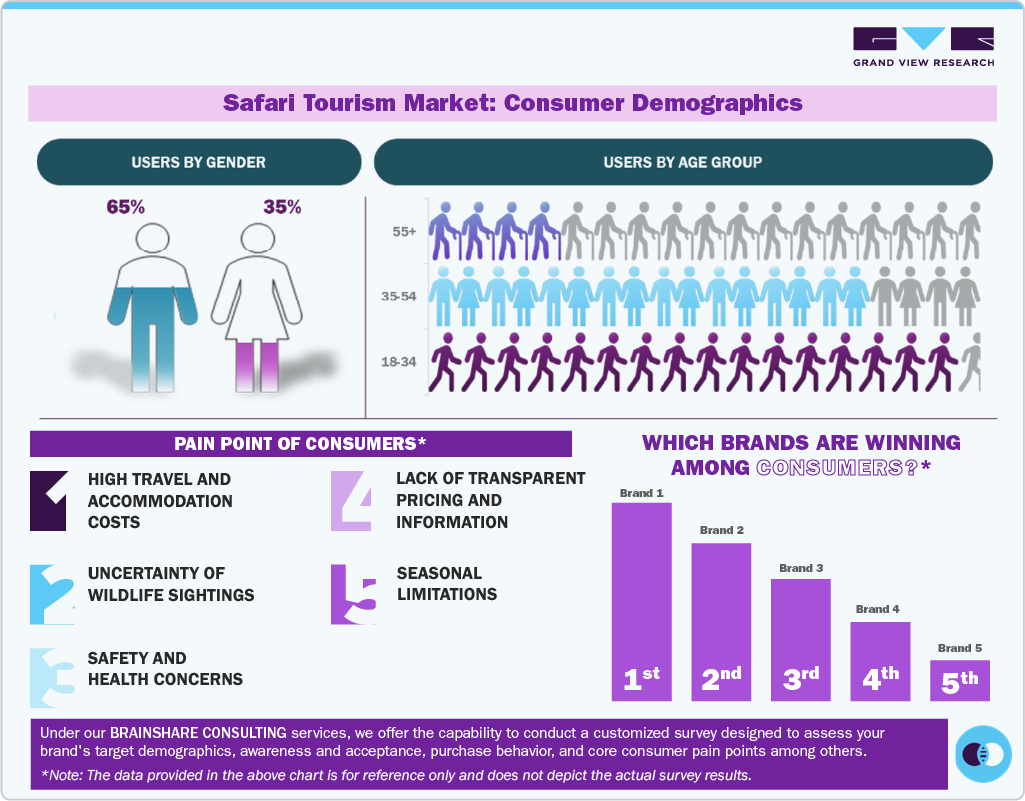
One of the most important preferences among safari tourists is the opportunity to observe wildlife in their natural habitats. Many travelers choose safari destinations specifically to see iconic animals and experience untouched natural landscapes. Successful wildlife sightings and close encounters with animals often play a major role in shaping overall tourist satisfaction.
Safari visitors strongly value knowledgeable guides and professional service throughout their trip. Experienced guides who can track animals, explain wildlife behavior, and ensure safety enhance the overall safari experience. Friendly staff, organized tours, and reliable services also contribute significantly to visitor satisfaction.
Many modern travelers prefer safari experiences that support environmental conservation and local communities. Tourists increasingly choose eco-lodges and responsible tour operators that practice sustainable tourism, minimize environmental impact, and support wildlife conservation.
 To learn more about this report, Download Free Sample Report
 While safari tourism focuses on adventure and nature, visitors also prefer comfortable accommodations and well-maintained facilities. Quality lodges, good food services, convenient transportation, and safe infrastructure help improve the overall travel experience and attract a wider range of tourists.
Safari tourists are increasingly interested in immersive and diverse experiences beyond traditional game drives. Activities such as walking safaris, hot-air balloon rides, wildlife photography tours, and cultural interactions with local communities allow travelers to engage more deeply with nature and local culture.
A study on safari tourism surveyed 350 tourists and found that factors such as attractions, staff, accessibility, facilities, information, and environmental quality are the most important. The results showed that staff services, wildlife attractions, facilities, and the natural environment significantly influenced overall tourist satisfaction with the safari experience.
Type Insights
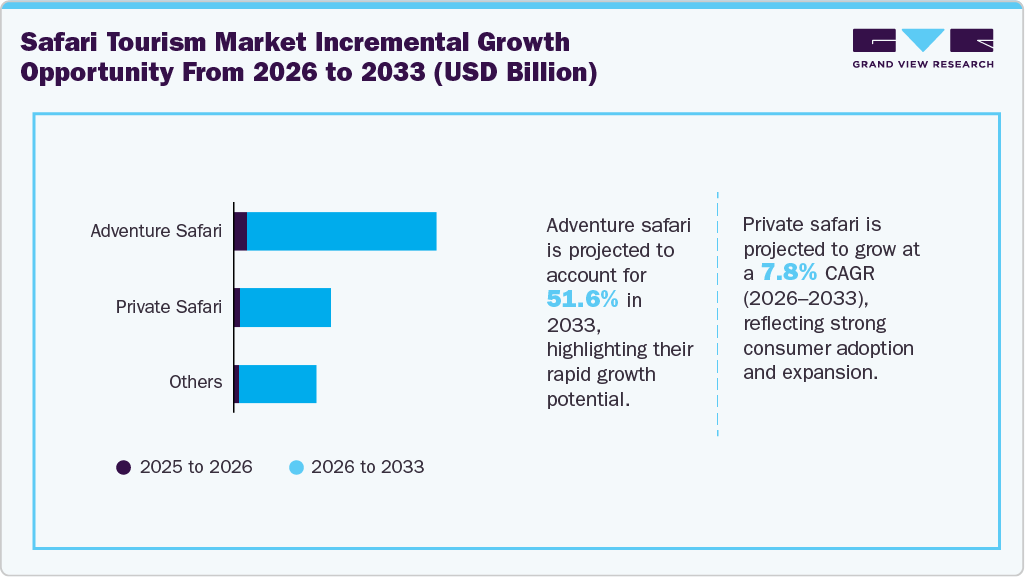
The adventure safari tourism market segment accounted for a revenue share of 50.6% in 2025. It offers travelers a more immersive and exciting way to experience wildlife and natural environments. Unlike traditional sightseeing, adventure safaris include activities such as walking safaris, off-road game drives, hot-air balloon rides, and night wildlife exploration, which allow tourists to engage with nature actively. These experiences provide closer encounters with wildlife, greater opportunities for exploration and photography, and a stronger sense of adventure.
In June 2025, Contiki expanded its Africa portfolio by launching four new safari itineraries across Kenya, Tanzania, South Africa, and Eswatini to meet rising demand for safari travel among young travelers aged 18-35. The new trips combined traditional wildlife game drives with additional adventure and cultural activities such as hot-air balloon rides, mountain biking, white-water rafting, village visits, and night safaris, offering a more immersive safari experience.
 To learn more about this report, Download Free Sample Report
 The private safari tourism industry segment is estimated to grow at a CAGR of 7.8% from 2026 to 2033. Private safaris offer customized itineraries, private game drives, and dedicated guides, allowing tourists to explore wildlife at their own pace and according to their specific interests. Many travelers also prefer private safaris for greater comfort, privacy, and premium service, especially families, couples, and high-end travelers seeking unique, intimate nature experiences.
In August 2025, luxury desert safari operator Platinum Heritage introduced a private night safari and astronomy experience in the Dubai Desert Conservation Reserve. The exclusive safari offered guests wildlife exploration and stargazing during a rare lunar eclipse, highlighting growing interest in private, unique, and once-in-a-lifetime safari experiences.
Accommodation Type Insights
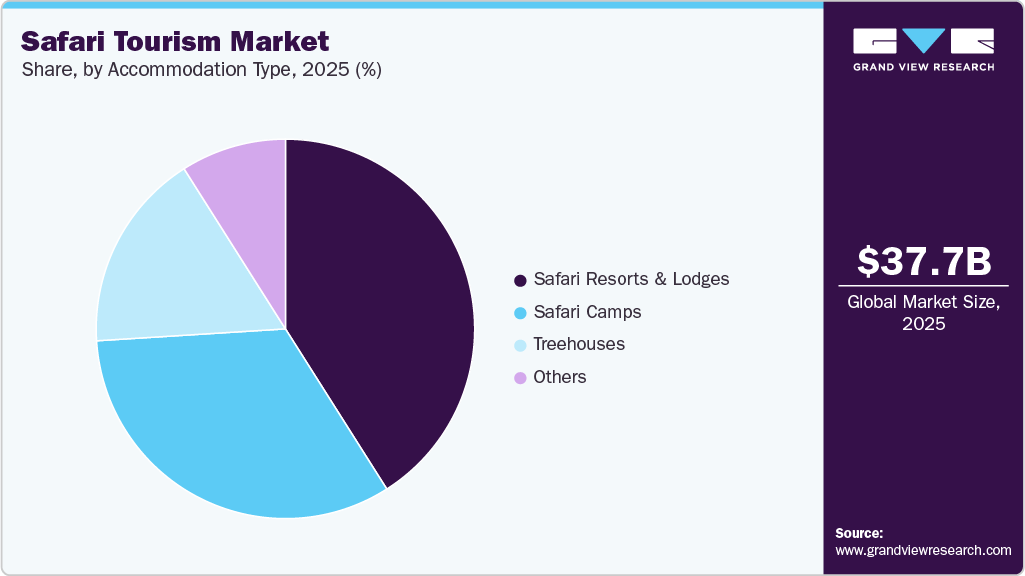
The safari resorts & lodges industry held a revenue share of 41.1% in 2025. With contemporary amenities like climate control, internet & phone connections, and reasonably easy access, safari lodges are typically more luxurious and situated slightly closer to civilization, which likely favors their appeal to consumers.
In September 2025, luxury hospitality brand Aman announced plans to open its first African safari resort, Aman Karingani, in Mozambique’s Karingani Game Reserve near Kruger National Park. The resort will feature luxury pavilions with private pools, branded residences, a central lodge, restaurants, and a spa, offering guests premium accommodation alongside immersive wildlife experiences. The development reflects the growing demand for luxury safari resorts and high-end nature tourism.
 To learn more about this report, Download Free Sample Report
 The safari camps market is estimated to grow at a CAGR of 8.5% from 2026 to 2033. Tented safaris, also known as safari camps, are typically set in magnificent natural settings where wildlife can graze in abundance. These can also be found near bodies of water, such as lakes or rivers, where animals gather during the day. These are an excellent chance to get up close and personal with the wild game without going too far into the woods. Growing consumer demand for close encounters with animals likely favors safari camps.
In February 2025, Marriott International announced plans to expand its luxury safari portfolio in Kenya by signing two new tented safari camps: The Ritz-Carlton, Masai Mara Safari Camp and JW Marriott Mount Kenya Rhino Reserve Safari Camp. The Ritz-Carlton camp, expected to open in August 2025 in the heart of the Masai Mara National Reserve, is designed to offer immersive wildlife experiences, elegant accommodations, and high-end service.
Group Insights
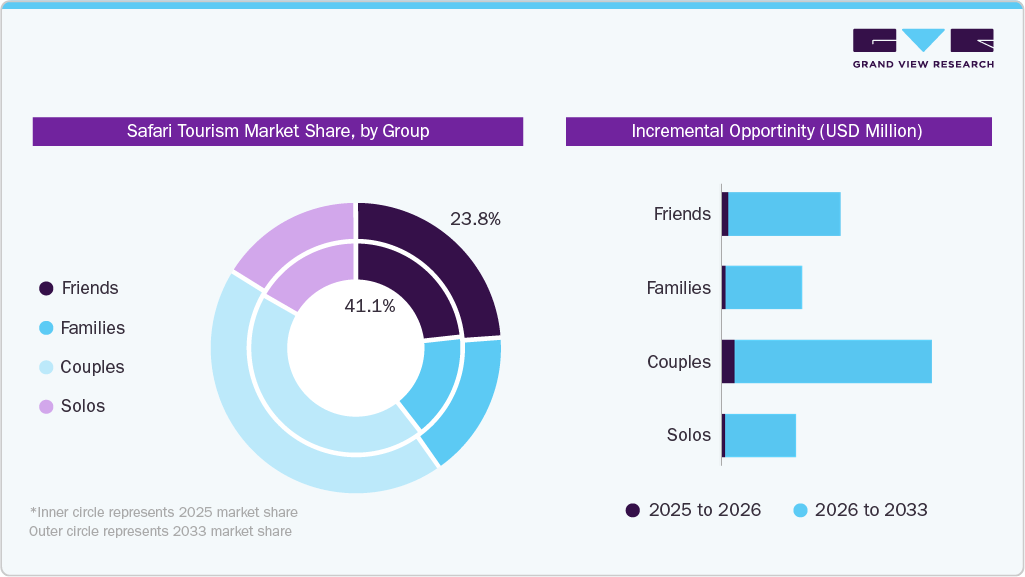
Safari tourism for couples held a 43.8% share of the safari tourism industry in 2025. Safari trips offer the opportunity to explore breathtaking landscapes and observe exotic wildlife in their natural habitats, creating memorable, shared experiences that strengthen their bond. Additionally, many safari packages include luxury accommodations, such as secluded lodges and tented camps, which offer privacy and high-end amenities. The combination of adventure, romance, and exclusivity makes safari tourism particularly appealing to couples seeking a distinctive and enriching travel experience.
 To learn more about this report, Download Free Sample Report
 Safari tourism for friends is estimated to witness a CAGR of 8.1% from 2026 to 2033.Friends travel has become more popular, especially among younger travelers seeking shared adventure experiences. Safaris offer activities such as game drives, walking safaris, and wildlife photography, which are more enjoyable when experienced together as a group. Traveling with friends also allows visitors to share accommodation costs, private safari vehicles, and guided tours, making the trip more affordable.
Booking Mode Insights
Direct booking held a 64.0% share of the safari tourism market in 2025. By booking directly with tour operators or safari lodges, travelers can customize itineraries, choose specific accommodations, and select preferred safari activities based on their interests and budget. Direct communication with service providers also helps tourists obtain accurate information, personalized recommendations, and faster support.
Marketplace booking is estimated to witness a CAGR of 9.3% from 2026 to 2033. Safari tourism through marketplace booking channels, such as online travel agencies (OTAs) and booking platforms, has gained popularity in recent years. Marketplace booking modes provide travelers with a convenient, accessible platform to search for, compare, and book safari experiences. For example, SafariBookings, the largest and most reliable source for organizing an African safari, allows individuals to compare safari offerings from top-rated travel operators using its online marketplace.
Regional Insights
Middle East and Africa Safari Tourism Market Trends
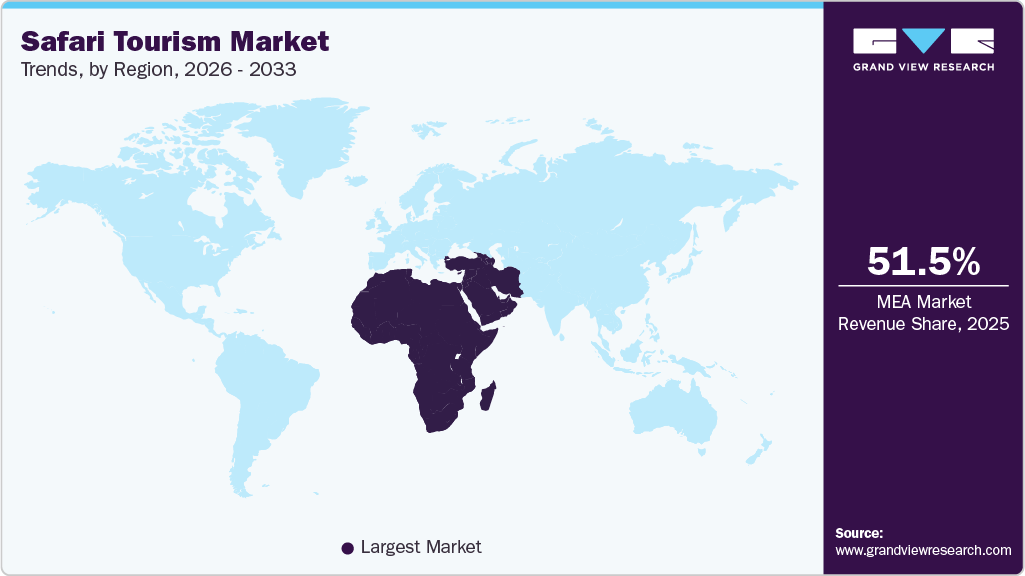
The safari tourism industry in the Middle East & Africa held the largest share of 51.5% in 2025 and is estimated to witness a CAGR of 7.9% from 2026 to 2033. The market is increasingly driven by a strong focus on sustainability and eco-tourism, as travelers become more conscious of environmental conservation and ethical wildlife practices. Tourists now prefer eco-friendly lodges, low-impact safari activities, and operators that follow responsible tourism guidelines, such as minimizing carbon footprints and protecting biodiversity. Additionally, there is growing support for community-based tourism, which benefits local communities through employment and revenue-sharing models. This shift is encouraging safari providers to adopt greener practices, invest in conservation initiatives, and promote authentic, responsible travel experiences.
 To learn more about this report, Download Free Sample Report
 In May 2025, the Indian Hotels Company (IHCL) announced the launch of three luxury wildlife lodges under its Taj brand in the Balule Game Reserve within Kruger National Park, South Africa. This marked the company’s entry into Middle East & Africa’s safari tourism segment, offering premium experiences that combine guided wildlife safaris, community engagement, and conservation-focused design.
Africa Safari Tourism Market Trends
The safari tourism industry in Africa held a revenue share of 48.8% in 2025. High spending power and growing demand for family and nature-based vacations have continued to drive safari tourism in Africa. The region is increasingly becoming a preferred destination for international travelers seeking wildlife experiences, national parks, beaches, and cultural tourism. According to UNWTO, Africa recorded around 81 million international tourist arrivals in 2025, an 8% increase from 2024, making it the fastest-growing tourism region globally. The growth was supported by strong travel demand, improved air connectivity, and expanding tourism infrastructure across several African destinations.
The safari tourism market in the Tanzania is estimated to witness a CAGR of 8.7% from 2026 to 2033. Tanzania is home to iconic destinations such as the Serengeti National Park and Mount Kilimanjaro, which attract adventure seekers and wildlife enthusiasts from around the world. Tanzania also has a well-developed tourism infrastructure, with numerous safari lodges, camps, and experienced guides.
Middle East Safari Tourism Market Trends
The safari tourism industry in the Middle East is estimated to witness a CAGR of 8.8% from 2026 to 2033. Desert safaris have become one of the most popular tourism activities in the Middle East, particularly in the UAE, Saudi Arabia, and Oman. Tourists increasingly participate in activities like dune bashing, camel riding, sandboarding, and overnight desert camping to experience the region’s unique desert landscapes and culture. These adventure-based experiences are attracting both international and domestic travelers seeking exciting outdoor tourism activities.
Asia Pacific Safari Tourism Market Trends
The safari tourism industry in Asia Pacific is estimated to witness a CAGR of 8.2% from 2026 to 2033. Travelers in the region increasingly prefer immersive, adventure-based travel experiences over traditional sightseeing. Activities such as jungle safaris, wildlife photography, trekking, and guided nature exploration are becoming more popular, attracting adventure-oriented travelers to national parks and wildlife reserves.
The safari tourism market in Bhutan is estimated to witness a CAGR of 8.5% from 2026 to 2033. Bhutan strongly promotes sustainable tourism and conservation, which attracts travelers interested in responsible wildlife experiences. Tourism is one of the country’s key economic sectors and a major source of foreign currency after hydropower, encouraging the government to support eco-tourism and nature-based tourism initiatives.
Europe Safari Tourism Market Trends
The safari tourism industry in Europe is estimated to witness a CAGR of 7.5% from 2026 to 2033. Social media platforms such as Instagram, YouTube, and travel blogs play a major role in shaping safari travel trends in Europe. Travel influencers and bloggers frequently share wildlife and adventure travel experiences online, inspiring more travelers to explore safari destinations and wildlife tourism activities.
The safari tourism market in the UK is estimated to witness a CAGR of 8.0% from 2026 to 2033. Many tourists prefer high-end safari lodges, private wildlife tours, and premium travel packages that offer exclusive experiences and comfort. This increasing demand for luxury and bespoke safari experiences is expected to support long-term market growth in the region.
Key Safari Tourism Company Insights
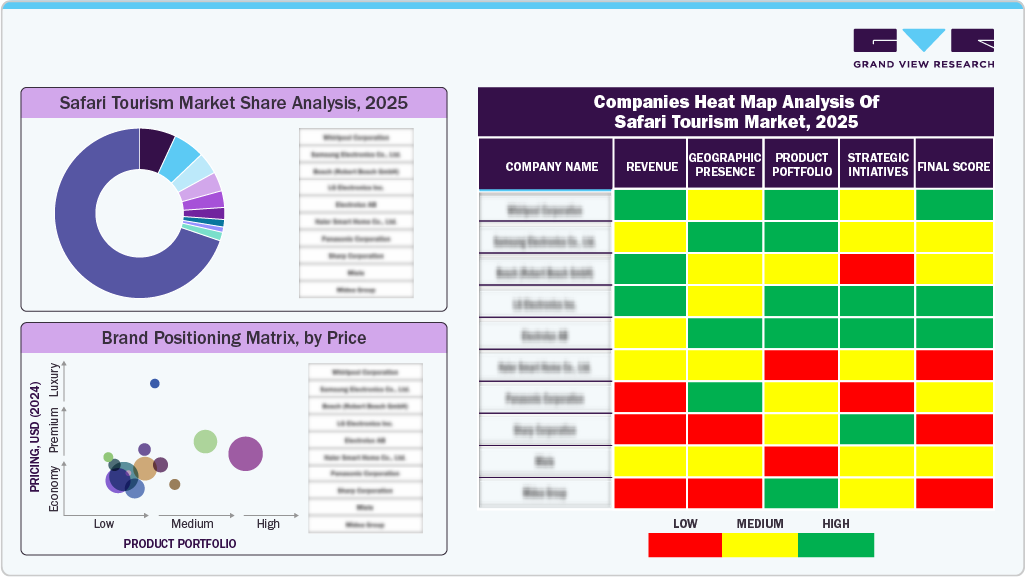
The presence of global companies and emerging players characterizes the industry. The industry's major players emphasize product innovation & differentiation, as well as unique designs aligned with changing consumer trends. These players have extensive worldwide distribution networks, enabling them to reach a broad customer base and expand into emerging markets. The emerging companies, on the other hand, are focused on niche markets, specialized product portfolios, and fresh designs to improve their market visibility.
 To learn more about this report, Download Free Sample Report
 Key Safari Tourism Companies:
The following key companies have been profiled for this study on the safari tourism market.
- Wilderness
- Thomas Cook Group
- Singita
- Scott Dunn Ltd.
- Rothschild Safaris
- &Beyond
- Abercrombie & Kent USA, LLC
- Gamewatchers Safaris Ltd.
- Backroads
- TUI Group
- Angama
- One&Only
- Wellworth Hospitality Collection
- Marriott International, Inc.
Recent Developments
-
In March 2026, safari tour operator Bestday Safaris launched a new range of affordable Tanzania safari tour packages to make wildlife experiences more accessible to international travelers. The newly introduced itineraries cover popular destinations across Tanzania’s northern safari circuit, including Serengeti National Park, Ngorongoro Crater, Tarangire National Park, and Lake Manyara National Park. The packages combine guided game drives, cultural experiences, and flexible travel options, including private safaris, small-group tours, lodge stays, and budget camping trips.
-
In September 2025, Uber introduced a new service, Uber Safari, in Nairobi National Park, allowing tourists and residents to book guided safari experiences directly through the Uber mobile app. The service enables users to reserve day or night safaris, during which they are picked up in safari-ready, licensed Land Cruisers and taken on a three-hour guided wildlife tour within the park.
Safari Tourism Market Report Scope
Report Attribute
Details
Market size in 2025
USD 37.7 Billion
Estimated market size in 2026
USD 39.7 billion
Projected market size by 2033
USD 66.9 billion
Growth rate
CAGR of 7.7% from 2026 to 2033
Actuals
2021 - 2025
Forecast period
2026 - 2033
Quantitative units
Revenue in USD billion and CAGR from 2026 to 2033
Report coverage
Revenue forecast, company ranking, competitive landscape, growth factors, and trends
Segments covered
Type, accommodation type, group, booking mode, region
Regional scope
North America; Europe; Asia Pacific; Central & South America; Middle East; Africa
Country scope
U.S.; Canada; France; Germany; UK; Spain: Italy; China; India; Bhutan; Nepal; Brazil; Saudi Arabia; South Africa; Kenya; Tanzania; Botswana; Namibia
Key companies profiled
Wilderness; Thomas Cook Group; Singita; Scott Dunn Ltd.; Rothschild Safaris; &Beyond; Abercrombie & Kent USA, LLC; Gamewatchers Safaris Ltd.; Backroads; TUI Group; Angama; One&Only; Wellworth Hospitality Collection; Marriott International, Inc.
Customization scope
Free report customization (equivalent up to 8 analysts working days) with purchase. Addition or alteration to country, regional & segment scope.
Pricing and purchase options
Avail customized purchase options to meet your exact research needs. Explore purchase options
Global Safari Tourism Market Report Segmentation
This report forecasts revenue growth at the global, regional & country levels and provides an analysis of the latest industry trends and opportunities in each of the sub-segments from 2021 to 2033. For this study, Grand View Research has segmented the global safari tourism market report based on type, accommodation type, group, booking mode, and region:
-
Type Outlook (Revenue, USD Billion, 2021 - 2033)
-
Adventure Safari
-
Private Safari
-
Others
-
-
Accommodation Type Outlook (Revenue, USD Billion, 2021 - 2033)
-
Safari Resorts & Lodges
-
Safari Camps
-
Treehouses
-
Others
-
-
Group Outlook (Revenue, USD Billion, 2021 - 2033)
-
Friends
-
Families
-
Couples
-
Solos
-
-
Booking Mode Outlook (Revenue, USD Billion, 2021 - 2033)
-
Direct Booking
-
Agents and Affiliates Account
-
Marketplace Booking
-
-
Regional Outlook (Revenue, USD Billion, 2021 - 2033)
-
North America
-
U.S.
-
Canada
-
-
Europe
-
Germany
-
UK
-
France
-
Spain
-
Italy
-
-
Asia Pacific
-
China
-
India
-
Bhutan
-
Nepal
-
-
Central & South America
-
Brazil
-
-
Middle East
-
Saudi Arabia
-
-
Africa
-
South Africa
-
Kenya
-
Tanzania
-
Botswana
-
Namibia
-
-
Frequently Asked Questions About This Report
Some of the key players operating in the safari tourism market include Wilderness,Thomas Cook Group, Singita, Scott Dunn Ltd., Rothschild Safaris, &Beyond, Abercrombie & Kent USA, LLC, Gamewatchers Safaris Ltd., Backroads, TUI Group, Angama, One&Only, Wellworth Hospitality Collection, and Marriott International, Inc.
Key factors that are driving the safari tourism market growth include the increasing interest of bloggers and influencers. Rising demand for increased travel memories, swelling in micro trips, and developing tourism all over the globe is anticipated to drive the safari tourism market.
The South Africa safari tourism market size was estimated at USD 4.39 billion in 2025 and is expected to reach USD 4.61 billion in 2026.
The global safari tourism is expected to grow at a compound annual growth rate of 7.7% from 2026 to 2033 to reach USD 66.9 billion by 2033.
The adventure safari tourism segment led with a 50.6% revenue share in 2025, while the private safari tourism segment is estimated to grow at a CAGR of 7.8% from 2026 to 2033.
The safari resorts & lodges segment led with a 41.1% revenue share in 2025, while the safari camps segment s estimated to grow at a CAGR of 8.5% from 2026 to 2033.
The safari tourism for couples segment led with a 43.8% revenue share in 2025, while the safari tourism for friends segment is estimated to witness a CAGR of 8.1%.
Direct booking segment held the largest share (over 64.0%) in 2025, while the marketplace booking segment is estimated to witness a CAGR of 9.3%
The global safari tourism market was estimated at USD 37.7 billion in 2025 and is expected to reach USD 39.7 billion in 2026.
The safari tourism industry in the Middle East & Africa held the largest share of 51.5% in 2025 and is estimated to witness a CAGR of 7.9% from 2026 to 2033. The market is increasingly driven by a strong focus on sustainability and eco-tourism, as travelers become more conscious of environmental conservation and ethical wildlife practices.
About the Author(s)
Homecare & Decor Research Team
Consumer Goods · Homecare & DecorThis report was authored by the homecare & decor research team at Grand View Research - comprising two research analysts, one senior research analyst, and one industry expert - with specialized expertise in the homecare & decor segment of the consumer goods industry. All findings are based on proprietary consumer goods databases, executive interviews, and regulatory analysis, subject to internal peer review prior to publication.
Last Updated:
Speak to Analyst

Customize this report to your needs - add regions, segments, or data points, with 20% free customization.
Or view our licence options:


ISO 9001:2015 & 27001:2022 Certified
We are GDPR and CCPA compliant! Your transaction & personal information is safe and secure. For more details, please read our privacy policy.


