- Home
- »
- Medical Devices
- »
-
Photodynamic Therapy Devices Market Size Report, 2030GVR Report cover
![Photodynamic Therapy Devices Market Size, Share & Trends Report]()
Photodynamic Therapy Devices Market (2024 - 2030) Size, Share & Trends Analysis Report By Product (Diode Lasers, Disposable Fiber Optic Light Delivery Devices), By Application, By End-use, By Region, And Segment Forecasts
- Report ID: GVR-4-68040-187-0
- Number of Report Pages: 145
- Format: PDF
- Historical Range: 2018 - 2022
- Forecast Period: 2024 - 2030
- Industry: Healthcare
- Report Summary
- Table of Contents
- Segmentation
- Methodology
- Download FREE Sample
-
 Download Sample Report
Market Size & Trends
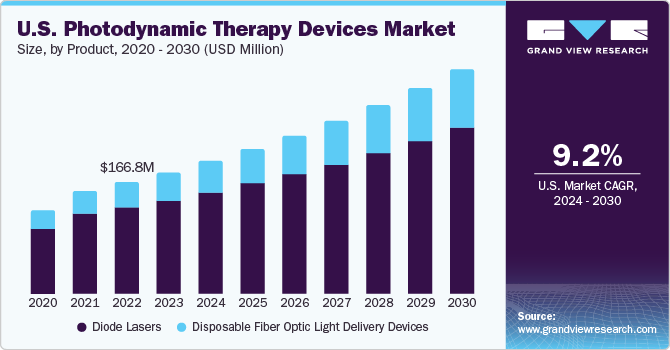
The global photodynamic therapy devices market size was estimated at USD 560.23 million in 2023 and is projected to grow at a compound annual growth rate (CAGR) of 8.7% from 2024 to 2030. Photodynamic therapy (PDT) is a medical procedure that utilizes light-sensitive medication and a light source to eliminate abnormal cells. PDT devices are integral in addressing diverse medical conditions such as cancer and dermatological disorders. These devices amalgamate photosensitizing applications and light sources, operating collaboratively to trigger therapeutic processes effectively.
The market growth is propelled by various factors. Notable drivers encompass the rising prevalence of skin cancer and various malignancies, along with a growing preference for minimally invasive procedures. Furthermore, heightened consumer awareness of the application associated with photodynamic therapy contributes to market expansion. This, in conjunction with an increasing acceptance of treatments for conditions like acne and procedures aimed at advancing the face, collectively has a positive impact on shaping the dynamics of the market.
The rising incidence of cancer, specifically skin cancers such as basal cell carcinoma and squamous cell carcinoma, is driving the demand for efficacious treatment modalities like PDT.In February 2022, data from the World Health Organization (WHO) highlighted that cancer accounted for roughly 10 million deaths worldwide, constituting approximately one in six fatalities in 2020. The growing prevalence of cancer cases globally is foreseen to be a significant driver for the increased demand for photosensitizer drugs, consequently playing a pivotal role in fueling the expansion of the market.
Furthermore, the expanding research and development in the analysis of photodynamic treatment present lucrative commercial potential. The surge in demand for photosensitizer drugs and equipment utilized in the treatment of various cancer types is projected to drive the market growth. The global increase in cancer cases is anticipated to elevate the demand for photosensitizer drugs, thereby expediting market acceleration. As reported in a May 2022 article from the National Library of Medicine, nations located nearer to the equator exhibit elevated rates of actinic keratosis. Australia, in particular, experiences a prevalence rate nearing 60%, attributed to its geographical proximity to the equator. Prolonged, unprotected exposure to UV light is a primary cause of actinic keratosis. The rising incidence of actinic keratosis is expected to amplify the demand for photodynamic therapy in the treatment and care of this condition.
Market Concentration & Characteristics
The global market for photodynamic therapy devices is marked by its dynamic and innovative nature, continually adapting to meet the demand for discreet and effective solutions in photodynamic therapy. Companies are actively channeling investments into research and development, fostering ongoing advancements that improve treatment outcomes and enhance patient comfort and discretion. A focal point of innovation lies in the high market growth, where the pace of expansion is accelerating. This momentum is fueled by rapid technological advancements propelled by factors such as breakthroughs in treatment approaches and the continuous evolution of therapeutic techniques.
Moreover, the market is distinguished by a notable level of research and development activity, primarily driven by leading market players committed to staying at the forefront of innovation. This emphasis on innovation further reinforces the dynamic and progressive landscape of the global market.
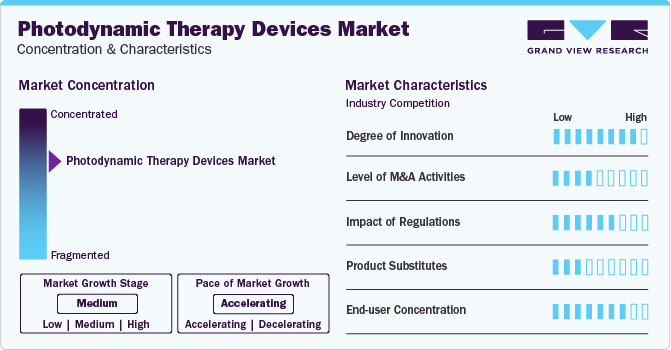
Several key players in the market, including Boston Scientific Corporation, Lumibird Medical, Coherent Corp., and IRIDEX Corporation, engage in merger and acquisition initiatives. These companies extend their geographical footprint and venture into new territories through these strategic activities.
Continuous advancements in light sources, photosensitive drugs, and imaging techniques have markedly enhanced the precision and efficacy of photodynamic therapy. These technological advancements are engaging patients and healthcare providers, playing a crucial role in driving the market's expansion. Furthermore, the market receives substantial support from positive regulatory approvals globally. Regulatory bodies worldwide have been granting approvals for various PDT indications, encompassing skin cancers, pre-cancerous conditions, and applications beyond oncology. These regulatory validations broaden the market's potential and motivate healthcare providers to adopt PDT as a viable and endorsed treatment option.
Product Insights
Based on the product, the diode lasers segment led the market in 2023 for the largest revenue share of 76.18%. Diode lasers are crucial in PDT, providing precise and targeted light sources necessary to activate photosensitizing applications. The prominence of this segment is driven by ongoing technological advancements that continuously enhance the efficiency and precision of PDT procedures. The compact size, versatility, and wavelength options of diode lasers make them increasingly attractive for healthcare providers, facilitating the treatment of various medical conditions, including cancer and dermatological disorders.
The disposable fiber optic light delivery devices segment is anticipated to witness significant CAGR over the forecast period. The disposability of fiber optic light delivery devices provides benefits such as improved hygiene, lowered cross-contamination risks, and cost-effectiveness. The healthcare industry progressively acknowledges disposable devices' practicality and effectiveness, fostering this market growth. Moreover, the disposable fiber optic light delivery devices market is experiencing expansion driven by advancements in fiber optic technology and a growing demand for minimally invasive procedures. These devices address the changing requirements of healthcare professionals, delivering heightened precision in light delivery and optimizing treatment outcomes.
Application Insights
In terms of applications, the cancer segment accounted for the largest revenue share in 2023. Cancer treatment is a prominent factor contributing to this trend. Photodynamic therapy for cancer offers additional benefits compared to traditional treatments like surgery or chemotherapy. According to estimates by the International Agency for Research on Cancer, one in five individuals is expected to develop cancer at some point in their lives, and one in eight men and one in eleven women are projected to succumb to the disease. In addition, the Skin Cancer Foundation reports that by the age of 70, one in five Americans will have skin cancer, underscoring the growing incidence of cancer due to increased exposure to harmful UV radiation.
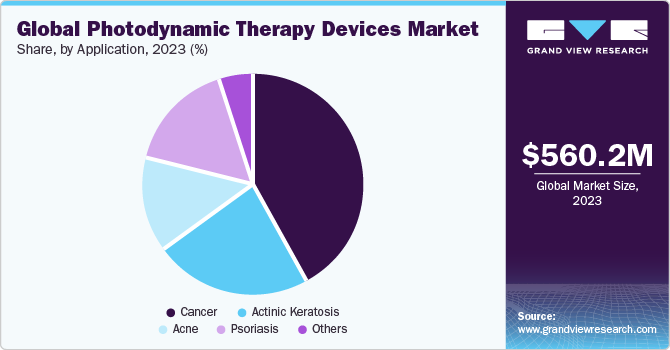
The actinic keratosis segment is anticipated to witness significant CAGR over the forecast period, driven by the noninvasive nature of the treatment, its high target specificity, and a reduced risk of scarring associated with photodynamic therapy. The prevalence of conditions like skin wrinkling, baldness, and sunburn patches has contributed to increased actinic keratosis cases. According to information presented in an April 2022 article by the Indian Journal of Dermatology, actinic keratosis is frequently identified during outpatient visits, accounting for over 10% of dermatology diagnoses. In the UK, a substantial percentage of individuals, ranging from 15% to 23%, display actinic keratosis lesions, with a prevalence as high as 37.5% among those aged 50 years and older. This pattern is anticipated to stimulate higher acceptance of existing treatments and streamline the early diagnosis of the disease.
End-use Insights
Based on the end-use, the hospital segment accounted for the largest revenue share in 2023. Several factors contribute to its significance and influence on the market dynamics. These driving factors include the increasing adoption of photodynamic therapy in hospital settings for the treatment of various medical conditions, the growing prevalence of cancer and dermatological disorders prompting the demand for effective and non-invasive treatment options, and advancements in photodynamic therapy technologies that make it a preferred choice in hospital-based interventions. In additional, the hospital segment is characterized by a high level of expertise and infrastructure, enabling the efficient implementation of photodynamic therapy procedures. The combination of these factors positions the hospital segment as a key driver fueling the market growth.
The clinics and dermatology centers segment are estimated to register a significant CAGR over the forecast period.This growth can be attributed to various factors, including the increasing demand for photodynamic therapy in dermatological treatments, the rising prevalence of skin disorders and cancers, and the accessibility of these therapies in clinics and dermatology centers.
Regional Insights
North America dominated the market with a revenue share of 38.34% in 2023. This can be attributed to several factors, including increased healthcare expenditure, the presence of certified professionals, well-established healthcare infrastructure, a concentration of key market players in the U.S., a growing demand for innovative biologics in cancer treatment, widespread adoption of photodynamic therapy, and continuous product launches by industry stakeholders. In January 2022, the American Cancer Society projected around 1,918,030 new cancer cases and 609,360 cancer-related deaths in the U.S. Strategic initiatives, specifically geared towards targeted cancer control, coupled with investments in advanced early detection and treatment methodologies, play a pivotal role in reducing cancer mortality rates. The rising incidence of cancer in the U.S. is expected to drive demand for treatment, thereby fueling the expansion of the market in the region.
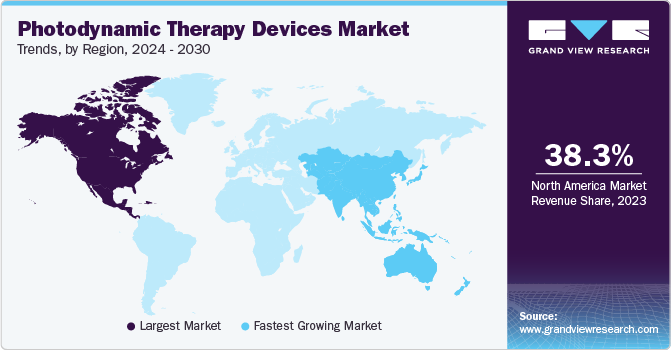
Asia Pacific is anticipated to witness significant growth over the forecast period. The region’s growth can be attributed to the increasing awareness of PDT and the region's rising prevalence of skin disorders and cancer. Key markets in Asia Pacific include China, India, and Japan, with the region displaying the highest growth trajectory. The factors propelling this growth encompass improved healthcare accessibility, a substantial patient pool, and increased healthcare investments, notably in China and India.
Key Companies & Market Share Insights
Some of the key players operating in the market include Boston Scientific Corporation, Lumibird Medical, Candela Corporation, and Cutera Inc. are.
- In June 2022, LUMIBIRD established a new subsidiary in Mumbai named Lumibird Medical India. The primary objective of this venture is to drive the sales of Quantel Medical and Ellex products in the Indian market. Lumibird Medical India will focus on offering a diverse array of ophthalmic lasers, ultrasound platforms and cutting-edge equipment designed for both diagnosis and treatment purposes. This expansion reflects LUMIBIRD's commitment to strengthening its footprint in India and delivering advanced medical technologies to the healthcare sector in the region
- In March 2021, Boston Scientific unveiled a definitive agreement with Baring Private Equity Asia (BPEA) for the acquisition of the worldwide surgical business of Lumenis LTD. This segment of Lumenis specializes in advanced laser systems, fibers, and accessories utilized in urology and otolaryngology procedures
Key Photodynamic Therapy Devices Companies:
- Boston Scientific Corporation
- Biolitec AG
- Lumibird Medical
- ShangHai Apolo Medical Technology Co.,Ltd
- Coherent Corp.
- Modulight USA Inc.
- IRIDEX Corporation
- Candela Corporation
- Cutera Inc.
- Excel Lasers
Recent Developments
-
In June 2023, CUTERA, INC. received clearance from the U.S. Food and Drug Administration for AviClear. This clearance positions AviClear as a pioneering long-term treatment specifically designed for mild to severe inflammatory acne vulgaris. This achievement marks a significant advancement in acne treatment, emphasizing AviClear's unique positioning in addressing a wide range of acne severities with prolonged effectiveness
Photodynamic Therapy Devices Market Report Scope
Report Attribute
Details
Market size value in 2024
USD 608.13 million
Revenue forecast in 2030
USD 1,002.94 million
Growth rate
CAGR of 8.7% from 2024 to 2030
Base year for estimation
2023
Historical data
2018 - 2022
Forecast period
2024 - 2030
Quantitative units
Revenue in USD million/billion, and CAGR from 2024 to 2030
Report covers
Revenue forecast, company ranking, competitive landscape, growth factors, and trends
Segments covered
Product, application, end-use, region
Regional scope
North America; Europe; Asia Pacific; Latin America; and MEA
Country scope
U.S.; Canada; UK; Germany; France; Italy; Spain; Denmark; Sweden; Norway; Japan; China; India; Australia; Thailand; South Korea; Brazil; Mexico; Argentina; South Africa; Saudi Arabia; UAE; Kuwait
Key companies profiled
Boston Scientific Corporation; Biolitec AG; Lumibird Medical; ShangHai Apolo Medical Technology Co.,Ltd; Coherent Corp.; Modulight USA Inc.; IRIDEX Corporation; Candela Corporation; Cutera Inc.; Excel Lasers
Customization scope
Free report customization (equivalent up to 8 analyst’s working days) with purchase. Addition or alteration to country, regional & segment scope
Pricing and purchase options
Avail customized purchase options to meet your exact research needs. Explore purchase options
Global Photodynamic Therapy Devices Market Report Segmentation
This report forecasts revenue growth at global, regional & country levels and provides an analysis on the industry trends in each of the sub-segments from 2018 to 2030. For this report, Grand View Research has segmented the global photodynamic therapy devices market report based on the product, application, end-use, and region:

-
Product Outlook (Revenue, USD Million, 2018 - 2030)
-
Diode Lasers
-
Disposable Fiber Optic Light Delivery Devices
-
-
Application Outlook (Revenue, USD Million, 2018 - 2030)
-
Cancer
-
Actinic Keratosis
-
Acne
-
Psoriasis
-
Others
-
-
End-use Outlook (Revenue, USD Million; 2018 - 2030)
-
Hospitals
-
Clinics and Dermatology Centers
-
Others
-
-
Regional Outlook (Revenue, USD Million, 2018 - 2030)
-
North America
-
U.S.
-
Canada
-
-
Europe
-
UK
-
Germany
-
France
-
Italy
-
Spain
-
Denmark
-
Sweden
-
Norway
-
-
Asia Pacific
-
China
-
Japan
-
India
-
Australia
-
Thailand
-
South Korea
-
-
Latin America
-
Brazil
-
Mexico
-
Argentina
-
-
Middle East & Africa
-
South Africa
-
Saudi Arabia
-
UAE
-
Kuwait
-
-
Frequently Asked Questions About This Report
b. The global photodynamic therapy devices market size was estimated at USD 560.23 million in 2023 and is expected to reach USD 608.13 million in 2024.
b. The global photodynamic therapy devices market is expected to grow at a compound annual growth rate of 8.7% from 2024 to 2030 to reach USD 1,002.94 million by 2030.
b. North America dominated the market and accounted for 38.34% of the share in 2023. This can be attributed to several factors, including increased healthcare expenditure, the presence of certified professionals, well-established healthcare infrastructure, and a concentration of key market players in the U.S.
b. Some key players operating in the photodynamic therapy devices market are Boston Scientific Corporation, biolitec AG, Lumibird Medical, ShangHai Apolo Medical Technology Co.,Ltd, Coherent Corp., Modulight USA Inc., IRIDEX Corporation, Candela Corporation, Cutera Inc., Excel Lasers.
b. The growth of the photodynamic therapy (PDT) devices market is propelled by various factors, such as the rising prevalence of skin cancer and various malignancies, along with a growing preference for minimally invasive procedures.

Share this report with your colleague or friend.
Need a Tailored Report?
Customize this report to your needs — add regions, segments, or data points, with 20% free customization.


ISO 9001:2015 & 27001:2022 Certified
We are GDPR and CCPA compliant! Your transaction & personal information is safe and secure. For more details, please read our privacy policy.
Trusted market insights - try a free sample
See how our reports are structured and why industry leaders rely on Grand View Research. Get a free sample or ask us to tailor this report to your needs.