- Home
- »
- Consumer F&B
- »
-
Mushroom Market Size, Share And Trends Report, 2026-2033GVR Report cover
![Mushroom Market (2026 - 2033)Report]()
Mushroom Market (2026 - 2033)
Size, Share & Trends Analysis Report By Product (Button, Shiitake, Oyster, Matsutake, Truffles), By Form (Fresh, Processed), By Distribution Channel (Direct to Customer, Grocery Stores, Convenience Stores), By Application, By Region, And Segment Forecasts
Market Size, 2025
$71.9BMarket Estimate, 2026
$78.8BMarket Forecast, 2033
$156.3BCAGR, 2026–2033
10.2%Mushroom Market Summary
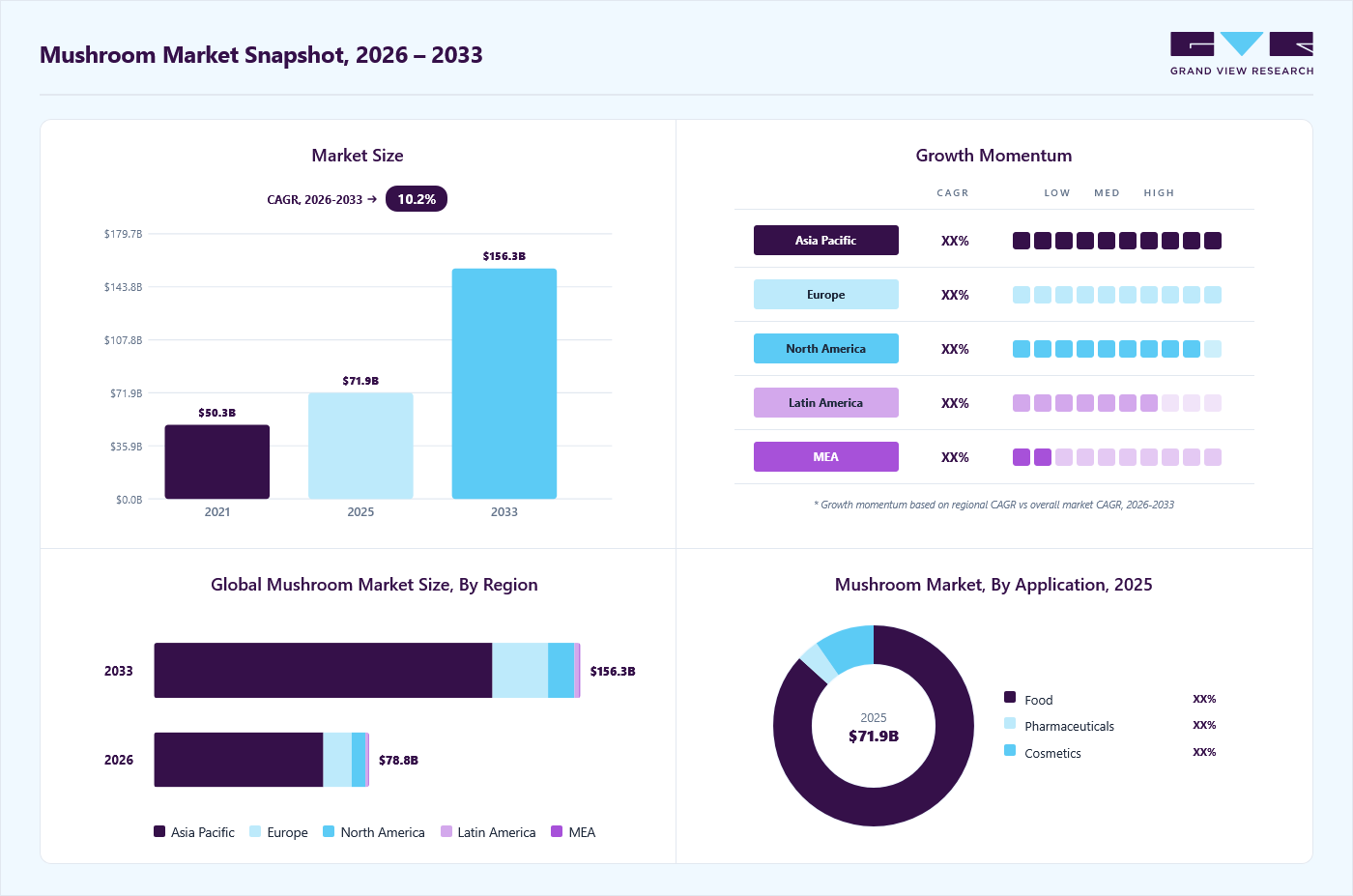
The global mushroom market size was valued at USD 71.9 billion in 2025 and is projected to grow from USD 78.8 billion in 2026 to USD 156.3 billion by 2033, growing at a CAGR of 10.2% from 2026 to 2033. Asia Pacific dominated the mushroom market with the largest revenue share of 78.7% in 2025. Growing vegan population, rising health consciousness, and penetration of retail network are few key factors augmenting growth to the mushroom industry.
Key Market Trends & Insights
- By product: Shiitake segment led the market with the largest revenue share of 32.4% in 2025.
- By form: Processed segment is expected to grow at the fastest CAGR of 10.7% over the forecast period.
Regional Highlights
- Largest regional market: Asia Pacific (78.7% revenue share, 2025)
- By country: The U.S. held the largest market share in 2025
Market Size & Forecast
- Market size in 2025: USD 71.9 Billion
- Estimated Market size in 2026: 78.8 Billion
- Projected market size by 2033: USD 156.3 Billion
- CAGR (2026-2033): 10.2%
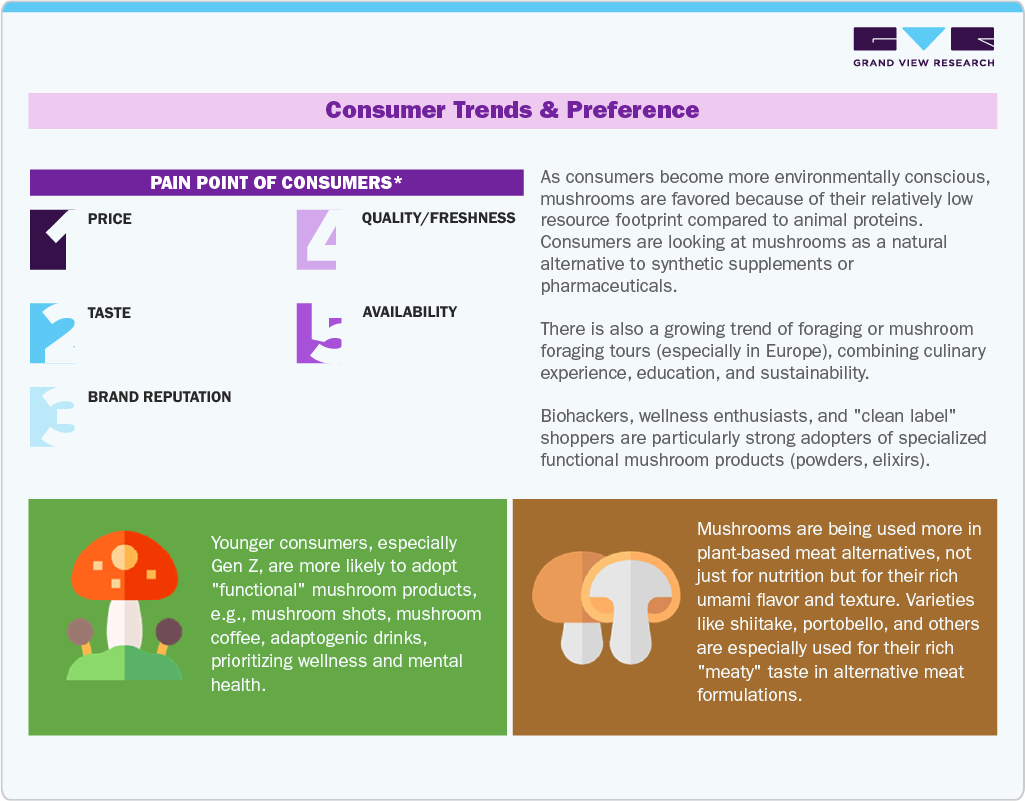
Besides, expansion of food processing industry has also been pivotal in fueling growth to the mushroom market. Meat is a key source of protein; thus, the population adopting a vegan diet is anticipated to prefer protein-rich vegan products to fulfill their daily protein requirements. Mushroom is one of the protein-rich vegan sources as it offers nearly 3.3 g of protein per 100 g of serving. Therefore, rising vegan population across the world is expected to augment the growth of mushroom market. The increasing rate of vegan population can also be witnessed by the rising shelf space for meat alternatives and vegan products, especially in developed regions such as North America and Europe.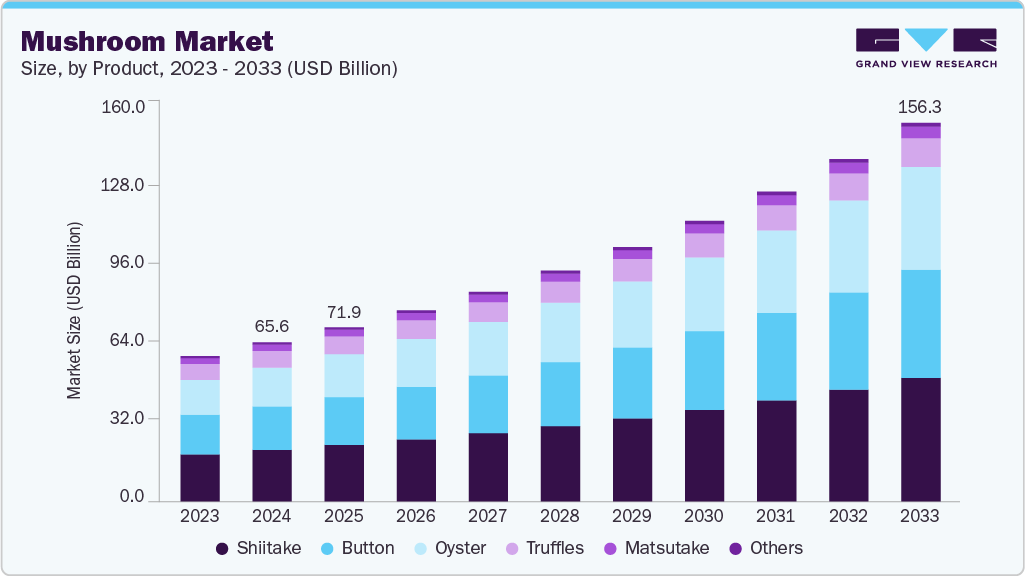
Over 39% of people in the U.S. are actively adding more vegan food options to the dishes they eat mainly due to health and environmental concerns. This number has been significantly increasing year on year as the plant-based eating has become mainstream, especially among young people who are concerned about the environment and animal welfare.
Mushrooms are considered as a superfood due to their robust nutritional properties. They offer more amount of vitamin B2, B3, B5, zinc, and antioxidants than widely consumed vegan products such as potatoes, carrots, onions, and broccoli offer. In addition, mushrooms are low in calories and nearly 99% fat-free, making them the ideal diet for the health-conscious and fitness freak population.
Furthermore, the global demand for natural or organic skincare products has been rapidly growing since the past several years mainly on account of increased customer awareness regarding the side effects of synthetic cosmetic products. In addition, increased brand awareness and penetration of e-commerce industry are the key factors augmenting the demand for natural skincare products.
Consumers are increasingly becoming label-conscious and seeking products made from natural ingredients. Clean label cosmetic products made from plant extracts, without the use of synthetic ingredients, are gaining considerable traction in the market. Thus, personal care & beauty product manufacturers are increasingly using botanical ingredients in cosmetic formulations.
Market Dynamics
The mushroom market includes the production and commercialization of edible and functional mushrooms used across food products, dietary supplements, nutraceuticals, and functional beverages, with consumption spanning fresh, dried, powdered, and extract-based formats; it also covers applications in plant-based food formulations and wellness-oriented products, with functional varieties such as reishi, lion’s mane, cordyceps, and chaga used in immunity, cognitive support, and stress-related health formulations; demand is associated with plant-based protein substitution in vegetarian and vegan diets and the use of mushrooms in processed food products, while supply conditions are influenced by short shelf life and dependence on controlled cultivation environments such as humidity and temperature.
The increasing shift toward plant-based diets is a key growth driver for the mushroom market. Consumers are actively reducing meat consumption and seeking nutritious substitutes that offer similar texture and umami flavor, positioning mushrooms as a preferred alternative. Additionally, functional mushrooms such as reishi, lion’s mane, cordyceps, and chaga are gaining popularity due to their perceived benefits in immunity support, cognitive health, stress management, and energy enhancement. The growing focus on preventive healthcare and wellness-oriented lifestyles is accelerating the use of mushrooms in supplements, nutraceuticals, and fortified foods. Expansion of vegan food products in retail and foodservice channels further supports market growth.
Despite strong demand, the mushroom market faces challenges related to short shelf life and post-harvest losses. Fresh mushrooms are highly perishable, requiring controlled temperature storage and efficient cold-chain logistics, which increases operational costs. In many developing regions, inadequate storage infrastructure and limited processing capabilities lead to significant wastage. Additionally, seasonal production constraints and dependency on specific cultivation conditions can create supply fluctuations. These factors collectively restrict large-scale distribution and limit market penetration, particularly in rural and price-sensitive markets.
The growing interest in functional foods and dietary supplements presents significant opportunities for market expansion. Mushrooms are increasingly being processed into powders, extracts, capsules, teas, and protein-rich ingredients for use in health-focused products. Advancements in cultivation technology and biotechnology are improving yield efficiency and enabling large-scale production of medicinal mushroom varieties. The rise of e-commerce and direct-to-consumer wellness brands is also expanding accessibility of mushroom-based supplements globally. Furthermore, increasing investment in research on immunomodulatory, anti-inflammatory, and neuroprotective properties of mushrooms is expected to open new applications in pharmaceuticals and personalized nutrition.
Analyst Perspective
The mushroom market is benefiting from rising demand for plant-based nutrition, functional foods, and wellness-oriented products, supported by growing health consciousness and dietary shifts toward meat alternatives. Its strongest long-term value creation potential lies with players that can move beyond fresh mushroom supply into higher-margin segments such as processed ingredients, nutraceuticals, and functional extracts, effectively repositioning mushrooms from a commodity crop into a differentiated health and wellness ingredient category. Additionally, advancements in controlled cultivation and supply chain efficiency are improving year-round availability and quality consistency. This is helping expand adoption across food, pharmaceutical, and cosmetic applications globally.
Consumer Insights for Mushroom Market
Product Insights
Based on product, the shiitake segment led the market with the largest revenue share of 32.4% in 2025. Shiitake mushrooms are among the popular mushrooms globally, mainly due to their rich, savory taste and diverse health benefits. These are brown in color, with their capsize ranging from 5-10 centimeters. These can be consumed in fresh or processed forms such as dried form, although dried shiitake mushrooms are more popular due to their umami flavor.
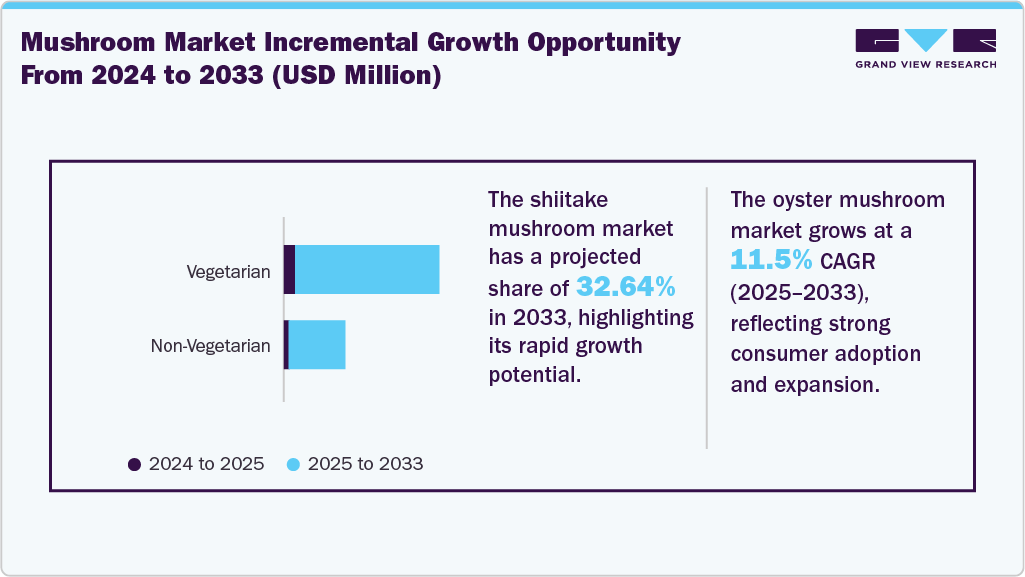
The oyster mushroom industry is projected to grow at a significant CAGR of 11.5% from 2025 to 2033. Oyster mushrooms are named after their oyster shape caps, which are typically grey or brown in color; although they also come in few other colors, such as yellow or pink. Oyster mushrooms are consumed in various cuisines and are highly popular in Chinese, Japanese, and Korean cooking due to their delicate texture and mild-savory flavor.
Form Insights
Based on form, the processed segment is expected to grow at the fastest CAGR of 10.7% over the forecast period. Fresh mushrooms are witnessing a considerable upsurge in demand from the past few years owing to increased consumer focus on organic and unprocessed food consumption. Increasing technological advancements such as the use of modified atmosphere packaging, which maintains a controlled environment and extends the shelf life of mushrooms, has curbed the challenges associated with limited shelf life of mushrooms, thereby favoring the segment growth.
The processed mushroom industry is projected to grow at the fastest CAGR of 10.7% from 2025 to 2033. Processed mushrooms include dried, frozen, canned, pickled, and powdered mushrooms. Additional processing such as canning, freezing, or drying is essential to extend the shelf life of mushrooms. Globally, consumers are increasingly opting for processed and convenient food products owing to changing lifestyles; thus, mushroom companies are increasingly introducing packaged mushroom products across the world.
Distribution Channel Insights
The mushroom market through supermarkets & hypermarkets accounted for the largest share of 38.27% of the revenue in 2024. Supermarket & hypermarkets are large-sized retail outlets, which usually offer multiple categories of retail products under one roof. Supermarkets are usually located near a residential area in order to be accessible to the customers. However, due to unavailability of land near residential areas, most of the supermarket and hypermarket chains are opening their new stores outside of the city. In developed regions, such as Europe and North America, the penetration of supermarkets and hypermarkets is higher than that in the developing regions.
The mushroom industry through online stores is projected to grow at the fastest CAGR of 10.7% from 2025 to 2033. Consumers across the world increasingly prefer online mode for their fresh produce purchase owing to the convenience and price benefits offered by these channels. Online retailer account for a smaller share as of now as compared to supermarkets & hypermarkets. However, the segment is expected to account for a significant share in the coming years owing to increasing adoption by consumers.
Application Insights
The mushroom in food application market accounted for the largest share of around 86.71% of the global revenue in 2024. Food application segment accounted for the highest share in the global mushroom market, in 2020 as it includes fresh and processed mushrooms that are utilized by household and food services for making meals along with the mushrooms utilized by processed food companies to make mushroom-infused food & beverages. Growing health consciousness and increasing vegan population are key factors augmenting the consumption of mushrooms across the world.
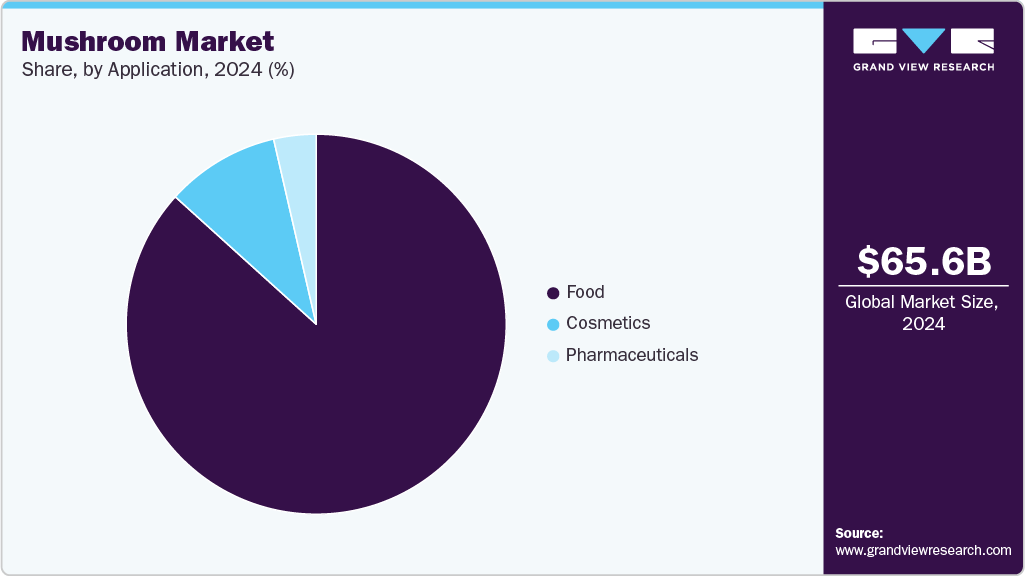
The mushroom in cosmetics application market is projected to grow at a significant CAGR of 10.5% from 2025 to 2033. Mushrooms are witnessing high traction within the cosmetics sector as increasing number of cosmetic companies are introducing mushroom-based skincare products. Cosmetic companies are in continuous search of ingredients from natural or clean sources owing to their competitive effectiveness and lower toxicity effects. Mushrooms are rich in several key skin benefitting compounds such as phenolics, polyphenolics, terpenoids, selenium, polysaccharides, and vitamins, which show excellent antioxidant, anti-aging, anti-wrinkle, skin whitening, and moisturizing effects.
Regional Insights
North America Mushroom Market Trends
North America accounted for a significant market share of the global mushroom market in 2024. North America is one of the prominent regional mushroom markets owing to higher market penetration in developed economies of the region, such as the U.S. and Canada. Growing consumer base in developing economies such as Mexico is the key factor driving the mushroom consumption. Mushrooms are popularly used in religious rituals and are produced largely in central Mexico. A higher urban population and higher per capita income in the North America region are expected to boost the demand for expensive mushroom products including shiitake and oyster mushrooms over the forecast period.
U.S. Mushroom Market Trends
The mushroom market in the U.S. held the largest share in the North America region in 2025, holding the largest market share with 77.27% of the region’s total revenue. The U.S. government is continuously increasing the import duties on mushrooms, which is also contributing to the higher prices of mushrooms. The higher prevalence of restaurants, cafés, pubs, and other fast-food outlets in the country is projected to fuel the demand for fresh mushrooms. Mushrooms are majorly sold via supermarkets/hypermarkets, convenience stores, and grocery stores in the country. Consumers in the country are preferring supermarkets/hypermarkets for retail shopping owing to the high per capita income and luxury lifestyles.
Europe Mushroom Market Trends
The mushroom market in the UK held the largest share in the Europe region in 2025. Europe is one of the key regions in the global mushroom market and is one of the largest importers of mushrooms. Higher per capita income and developed markets in the region are creating an additional opportunity for exotic mushrooms like gourmet mushrooms. A higher inclination toward organic food in the region is responsible for the higher market share of the fresh mushrooms in the region. In the processed category, around 30% of the imports were of Agaricus mushroom types and the remaining were other types including dried porcini and shiitake mushrooms.
The UK was identified as a lucrative region for the mushroom market. The UK was one of the key producers of cultivated mushrooms and was the largest importer of dried mushrooms. The country majorly imported from the Netherlands and China. Leathams and RH Amar are the leading suppliers of dry mushrooms in the UK. Mushrooms are majorly distributed by supermarkets including Day-in Supermarket, Interlink Direkt, and SeeWoo. A huge consumer base with high-income levels in the country is responsible for the higher demand for processed food and dietary supplements.
Asia Pacific Mushroom Market Trends
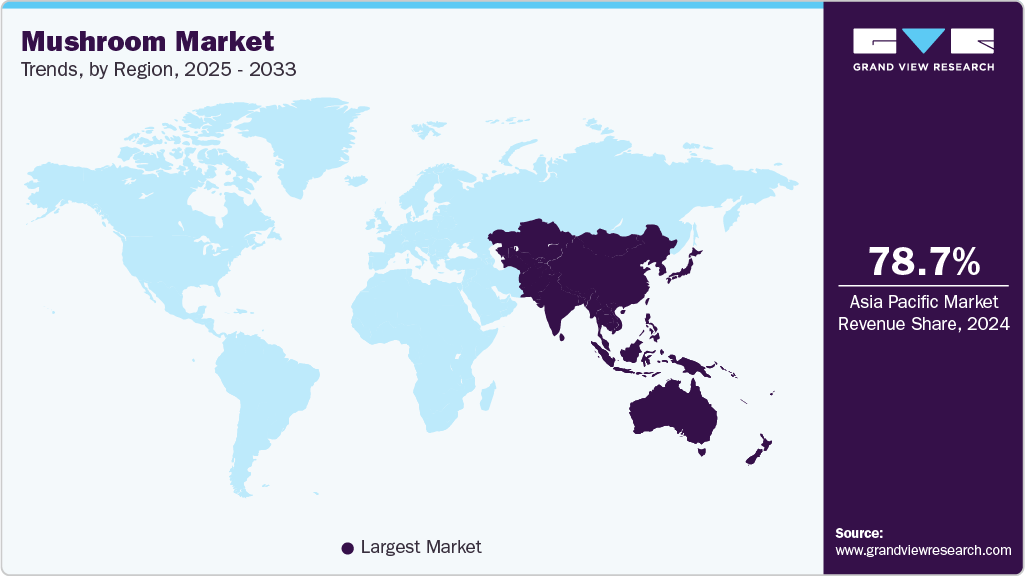
Asia Pacific dominated the mushroom market with the largest revenue share of 78.7% in 2025. The Asia Pacific region has more prevalence of the traditional medicine systems, including Ayurveda and Traditional Chinese Medicines, which make use of several species of mushroom for the treatment of various diseases. Low calorie and high nutritional values, coupled with their immunity-boosting properties, are expected to drive the demand for mushrooms in the region. Several developing economies, including China, Japan, Indonesia, India, South Korea, and Vietnam, are the key producers of mushrooms in the region.
Key Mushroom Company Insights
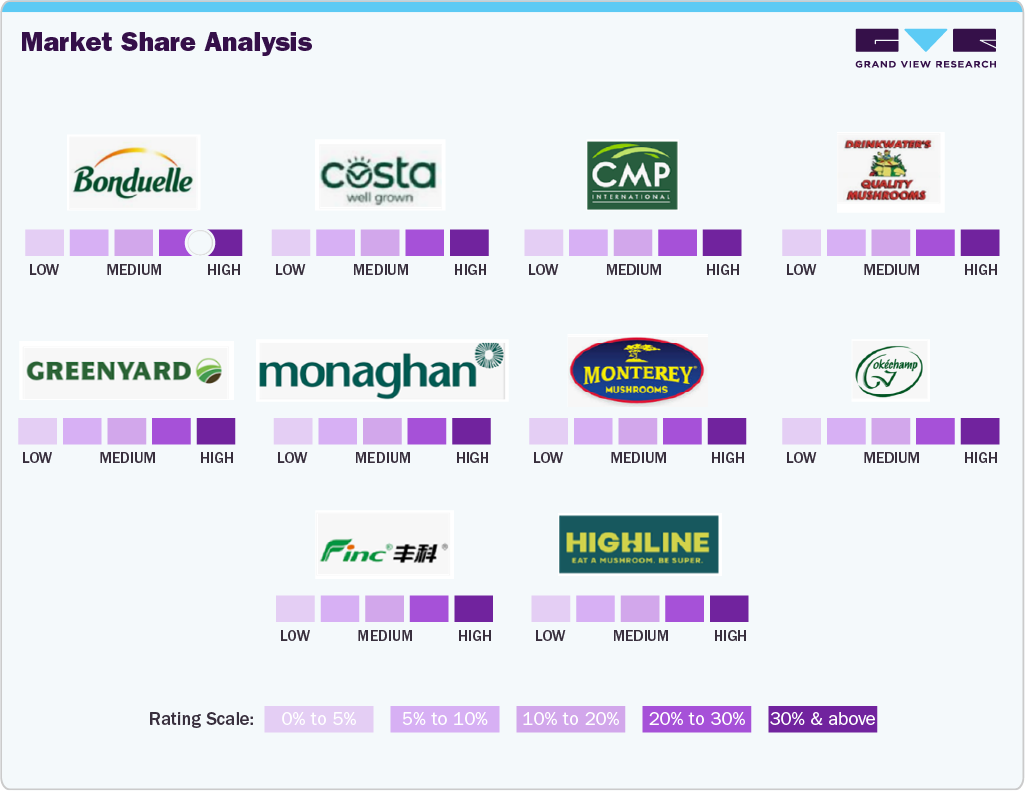
The global mushroom market is highly competitive and comprised of a mix of large, vertically integrated players and regional specialists, key firms include Bonduelle (strong in fresh, canned, and frozen), Monaghan Group (vertically integrated fresh mushrooms), Monterey Mushrooms, Costa Group, CMP Mushrooms, Okechamp SA, Highline Mushrooms, Giorgio Fresh, and Shanghai Finc Bio-Tech. These companies differentiate themselves through scale, controlled-environment agriculture, R&D for value-added products (e.g., IQF, canned, functional mushrooms), and sustainability credentials.
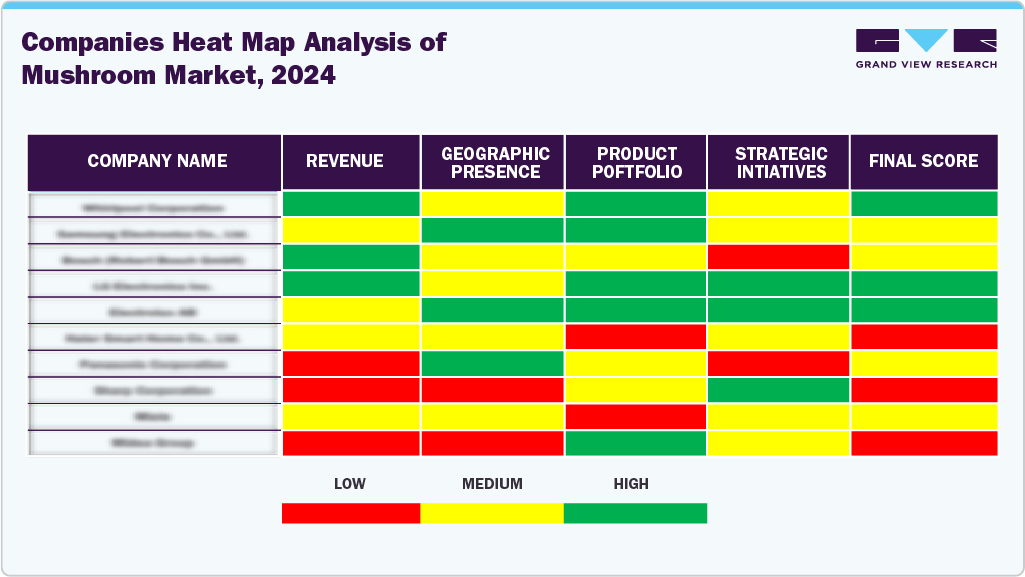
Key Mushroom Companies:
The following are the leading companies in the mushroom market. These companies collectively hold the largest market share and dictate industry trends.
- Bonduelle Group
- Costa Group
- CMP Mushroom
- Drinkwater Mushrooms
- Greenyard
- Monaghan Group
- Monterey Mushroom, Inc
- OKECHAMP S.A
- Highline Mushrooms
- Shanghai Finc Bio-Tech
Competitive Benchmarking
Category
Operating Strategies
Competitive Edge
Weakness
Established Players (Large mushroom growers, integrated agribusiness firms, export-oriented producers)
Scale up controlled-environment cultivation to ensure year-round production. Strengthen cold-chain logistics and expand processed mushroom products.
Build long-term contracts with retail chains, foodservice companies, and export buyers. Invest in quality certifications (organic, food safety standards) and automation in farming processes.
Consistent large-scale supply with standardized quality. Strong distribution networks across retail and export markets. Higher efficiency through mechanized farming and established brand trust in packaged mushroom products.
High capital requirement for infrastructure and climate-controlled farming systems. Vulnerability to energy cost fluctuations. Limited flexibility in quickly switching crop varieties or responding to niche demand trends.
Emerging Players (Small-scale growers, startups in functional mushrooms, organic farms, local cooperatives)
Focus on high-value segments such as exotic mushrooms (shiitake, oyster, lion’s mane) and functional mushrooms for nutraceutical use. Use low-cost cultivation methods, vertical farming, and local distribution models. Leverage e-commerce platforms, direct-to-consumer sales, and farm-to-table branding. Build awareness through health-focused marketing and community engagement.
Greater agility in adopting new mushroom varieties and cultivation techniques. Ability to target niche demand such as wellness, vegan diets, and plant-based proteins. Lower entry barriers and stronger appeal in local and organic markets.
Limited production capacity and inconsistent supply volumes. Weak cold-chain and distribution infrastructure. Lower brand recognition and challenges in meeting strict export or regulatory standards.
Recent Developments
-
In March 2024, Mushrooms Inc. announced a suite of strategic initiatives aimed at transforming the healthcare landscape. These initiatives include the launch of two groundbreaking health supplements, LONGEVITY and SPORT+, and the exploration of a development collaboration with a renowned scientific team in Germany.
-
In March 2024, the new Costa Innovation Centre has been formally launched (March 20) at Costa’s glasshouse facility in Guyra, on the Northern Tablelands of New South Wales. There are close to 30 new types and varieties of produce already being tested in the Innovation Centre to assess their potential as commercial fruit and vegetable product lines.
Mushroom Market Report Scope
Report Attribute
Details
Market size in 2025
USD 71.9 billion
Estimated Market size in 2026
USD 78.8 billion
Projected market size by 2033
USD 156.3 billion
Growth rate
CAGR of 10.2% from 2026 to 2033
Base year for estimation
2025
Historical data
2021 - 2024
Forecast period
2026 - 2033
Quantitative units
Revenue in USD million/billion and CAGR from 2026 to 2033
Report coverage
Revenue forecast, company ranking, competitive landscape, growth factors, and trends
Segments covered
Product, form, distribution channel, application, region
Regional scope
North America; Europe; Asia Pacific; Latin America; MEA
Country scope
U.S.; Canada; Mexico; Germany; UK; France; Italy; Spain; Norway; Denmark; Sweden; Russia; Iceland; Finland; China; Japan; India; South Korea; Australia; Thailand; Singapore; Brazil; Argentina; Saudi Arabia; South Africa; UAE; Kuwait; Israel
Key companies profiled
Bonduelle Group; Monaghan Mushrooms (Monaghan Group); Monterey Mushrooms Inc.; Costa Group Holdings; Greenyard NV; Okechamp S.A.; CMP Mushrooms; Agro Dutch Industries Ltd.; Shanghai Finc Bio-Tech Inc. and The Mushroom Company
Customization scope
Free report customization (equivalent up to 8 analysts' working days) with purchase. Addition or alteration to country, regional & segment scope.
Pricing and purchase options
Avail customized purchase options to meet your exact research needs. Explore purchase options
Global Mushroom Market Report Segmentation
This report forecasts revenue growth at the regional and country levels and provides an analysis of the latest industry trends and opportunities in each of the sub-segments from 2021 to 2033. For this study, Grand View Research has segmented the mushroom market report on the basis of product, form, distribution channel, application, and region:
-
Product Outlook (Volume, Kilo Tons; Revenue, USD Million, 2021 - 2033)
-
Button
-
Shiitake
-
Oyster
-
Matsutake
-
Truffles
-
Others
-
-
Form Outlook (Volume, Kilo Tons; Revenue, USD Million, 2021 - 2033)
-
Fresh
-
Processed
-
-
Distribution Channel Outlook (Volume, Kilo Tons; Revenue, USD Million, 2021 - 2033)
-
Direct to Customer
-
Grocery Stores
-
Supermarkets & Hypermarkets
-
Convenience Stores
-
Online Stores
-
-
Application Outlook (Volume, Kilo Tons; Revenue, USD Million, 2021 - 2033)
-
Food
-
Pharmaceuticals
-
Cosmetics
-
-
Regional Outlook (Volume, Kilo Tons; Revenue, USD Million, 2021 - 2033)
-
North America
-
U.S.
-
Canada
-
Mexico
-
-
Europe
-
UK
-
Germany
-
France
-
Italy
-
Spain
-
-
Asia Pacific
-
Japan
-
India
-
China
-
Australia
-
-
Central & South America
-
Brazil
-
Argentina
-
-
Middle East & Africa
-
Saudi Arabia
-
-
Research Methodology
Segment Definition
Segment - Product
Revenue capture definition
Button
This segment include the sales of white button mushrooms, which are widely consumed in fresh and processed food products, commonly used in salads, soups, pizzas, and ready-to-eat meals due to their mild flavor and easy availability across retail and foodservice channels.
Shiitake
This segment include the sales of shiitake mushrooms, which are primarily used in Asian cuisine and functional food applications, valued for their umami taste and incorporation in soups, stir-fries, and nutraceutical formulations.
Oyster
This segment include the sales of oyster mushrooms, which are used in fresh culinary applications and plant-based meat alternatives due to their soft texture, high yield cultivation, and suitability for vegetarian and vegan diets.
Matsutake
This segment include the sales of matsutake mushrooms, which are used in premium food applications, especially in Japanese and East Asian cuisines, and are considered a high-value seasonal delicacy with limited cultivation.
Truffles
This segment include the sales of truffles, which are used in gourmet food preparations and high-end culinary applications, valued for their strong aroma and rare availability, making them one of the most premium mushroom varieties in the market.
Others
This segment include the sales of other mushroom varieties such as enoki, portobello, and specialty medicinal mushrooms, which are used in food, health supplements, and functional nutrition products across various end-use industries.
Segment - Form
Revenue capture definition
Fresh
This segment include the sales of freshly harvested mushrooms that are consumed in unprocessed form across household, retail, and foodservice channels, used in daily cooking applications such as salads, soups, stir-fries, and ready-to-cook meals due to their natural taste, texture, and nutritional value.
Processed
This segment include the sales of mushrooms that are dried, canned, frozen, powdered, or extracted, used in packaged food products, long-shelf-life ingredients, dietary supplements, and functional food formulations to support convenience, storage stability, and wider application in the food and nutraceutical industries.
Segment – Distribution Channel
Revenue capture definition
Direct to Customer
This segment include the sales of mushrooms directly from producers to end consumers through farm outlets, brand-owned platforms, and subscription-based delivery models, enabling better pricing control and product freshness.
Grocery Stores
This segment include the sales of mushrooms through small retail grocery outlets that serve local communities, offering fresh and packaged mushroom products for daily household consumption.
Supermarkets & Hypermarkets
This segment include the sales of mushrooms through large retail chains that provide a wide range of fresh and processed mushroom varieties under one roof, catering to high-volume consumer demand.
Convenience Stores
This segment include the sales of mushrooms through small-format retail stores located in residential and high-footfall areas, offering quick-access packaged mushroom products for immediate purchase.
Online Stores
This segment include the sales of mushrooms through e-commerce platforms and grocery delivery applications, providing home delivery services for fresh and processed mushrooms with wider product availability and convenience.
Segment - Application
Revenue capture definition
Food
This segment include the sales of mushrooms used in culinary applications, processed food products, and plant-based meat alternatives, where they are consumed in fresh, dried, or processed forms for their nutritional value, flavor, and texture.
Pharmaceuticals
This segment include the sales of mushrooms and mushroom-derived extracts used in medicinal and nutraceutical formulations, supporting applications such as immunity support, antioxidant therapy, and general health supplements.
Cosmetics
This segment include the sales of mushroom-based ingredients used in skincare and personal care products, where bioactive compounds are incorporated into formulations for hydration, anti-aging, and skin-repair benefits.
Estimation Model
Demand Layer
Supply & Access Layer
Behavioural Layer
Monetisation Layer
What drives mushroom demand?
How is supply expanding?
How are mushrooms consumed?
How much revenue is generated?
Rising preference for plant-based protein, growing vegan/flexitarian population, demand for immunity-boosting and functional foods, and increasing awareness of low-fat, high-nutrition diets.
Expansion of controlled environment farming, improved cultivation techniques, better cold-chain logistics, and wider distribution through retail stores, online grocery platforms, and food delivery channels..
Shift from traditional cooking to processed and functional uses such as ready-to-eat meals, plant-based meat substitutes, gourmet foods, and wellness products like powders, teas, and supplements.
Revenue generated through fresh mushrooms, processed mushroom products (dried/canned/powdered), functional mushroom supplements, and strong demand from food service, nutraceutical, and retail sectors.
Delivered Customizations
This report has been delivered with the following In-depth customizations
CLIENT REQUEST
CUSTOMIZATION DELIVERED
VALUE ADDS
Mushroom Product Type Analysis
Conducted a focused analysis of the global mushroom market covering key product types including button, oyster, shiitake, and specialty mushrooms, alongside major forms such as fresh, processed, dried, and powdered variants, while also evaluating emerging market trends driven by functional mushroom adoption, increasing demand for plant-based protein alternatives, and the expansion of sustainable and controlled cultivation practices.
Helps stakeholders identify high-growth product segments, evaluate demand shifts toward plant-based diets, and assess expansion opportunities in functional foods, nutraceuticals, and online retail channels.
Consumption & Distribution Channel Trends
Evaluated consumption patterns across retail and institutional demand, including direct household consumption, food service sector, and food processing industries, alongside distribution dynamics across supermarkets, convenience stores, and rapidly growing e-commerce platforms.
Provides insights into shifting consumer purchasing behavior, rising demand for convenience-driven retail formats, and strategic opportunities in online grocery and organized retail expansion.
Functional & Specialty Mushroom Opportunity Assessment
Assessed growth of functional mushrooms (reishi, cordyceps, lion’s mane, medicinal blends) across nutraceuticals, dietary supplements, and preventive healthcare applications, along with increasing use in immunity support and wellness products.
Supports identification of high-margin innovation areas, wellness-driven product development, and long-term growth opportunities in health-oriented food and supplement industries.
Frequently Asked Questions About This Report
The global mushroom market is expected to grow at a CAGR of 10.2% from 2026 to 2033, reaching USD 156.3 billion.
The global mushroom market size was estimated at USD 71.9 billion in 2025 and is expected to reach USD 78.8 billion in 2026.
Asia Pacific dominated with a 78.7% revenue share in 2025.
Asia Pacific is the fastest-growing region over the forecast period.
The shiitake mushroom segment led with a 32.4% revenue share in 2025, which services is the fastest-growing segment.
Some key players operating in the mushroom market include Bonduelle Group; Monaghan Mushrooms (Monaghan Group); Monterey Mushrooms Inc.; Costa Group Holdings; Greenyard NV; Okechamp S.A.; CMP Mushrooms; Agro Dutch Industries Ltd.; Shanghai Finc Bio-Tech Inc., and The Mushroom Company
Key factors driving the mushroom market include increasing consumer preference for nutrient-rich and functional foods, growing adoption of plant-based diets, expanding use of mushrooms in food processing and nutraceutical applications, and continuous advancements in cultivation technologies that improve production efficiency and product availability.
Key players include mushroom markets include Bonduelle Group, Monaghan Mushrooms (Monaghan Group), Monterey Mushrooms Inc., Costa Group Holdings, Greenyard NV, Okechamp S.A., CMP Mushrooms, Agro Dutch Industries Ltd., Shanghai Finc Bio-Tech Inc., and The Mushroom Company
The fresh segment held the largest revenue share in 2025, while processed is the fastest-growing segment.
The Supermarkets and Hypermarkets channel held the largest share(over 38.3%) in 2025 and is the fastest-growing area.
About the Author(s)
Consumer F&B Research Team
Consumer Goods · Consumer F&BThis report was authored by the consumer f&b research team at Grand View Research - comprising two research analysts, one senior research analyst, and one industry expert - with specialized expertise in the consumer f&b segment of the consumer goods industry. All findings are based on proprietary consumer goods databases, executive interviews, and regulatory analysis, subject to internal peer review prior to publication.
Last Updated:
Speak to Analyst


Need a Tailored Report?
Customize this report to your needs — add regions, segments, or data points, with 20% free customization.
Or view our licence options:


ISO 9001:2015 & 27001:2022 Certified
We are GDPR and CCPA compliant! Your transaction & personal information is safe and secure. For more details, please read our privacy policy.