
- Home
- »
- Next Generation Technologies
- »
-
Machine Learning Market Size & Share Report, 2026-2033GVR Report cover

Machine Learning Market (2026 - 2033)
Size, Share & Trends Analysis Report, By Component (Hardware, Software, Services), By Enterprise Size (SMEs, Large Enterprises), By End-use (Healthcare, BFSI, Law, Retail, Agriculture), By Region, And Segment Forecasts
Market Size, 2025
$100.0BMarket Estimate, 2026
$135.8BMarket Forecast, 2033
$684.4BCAGR, 2026–2033
26.0%Machine Learning Market Summary
The global machine learning market size was valued at USD 100.0 billion in 2025 and is projected to grow from USD 135.8 billion in 2026 to USD 684.4 billion by 2033, at a CAGR of 26.0% from 2026 to 2033. The market in North America dominated with a revenue share of 30.3% in 2025. The market is driven by the strong presence of leading technology companies, advanced digital infrastructure, and increasing adoption of AI and machine learning solutions across industries such as healthcare, BFSI, retail, manufacturing, and automotive.
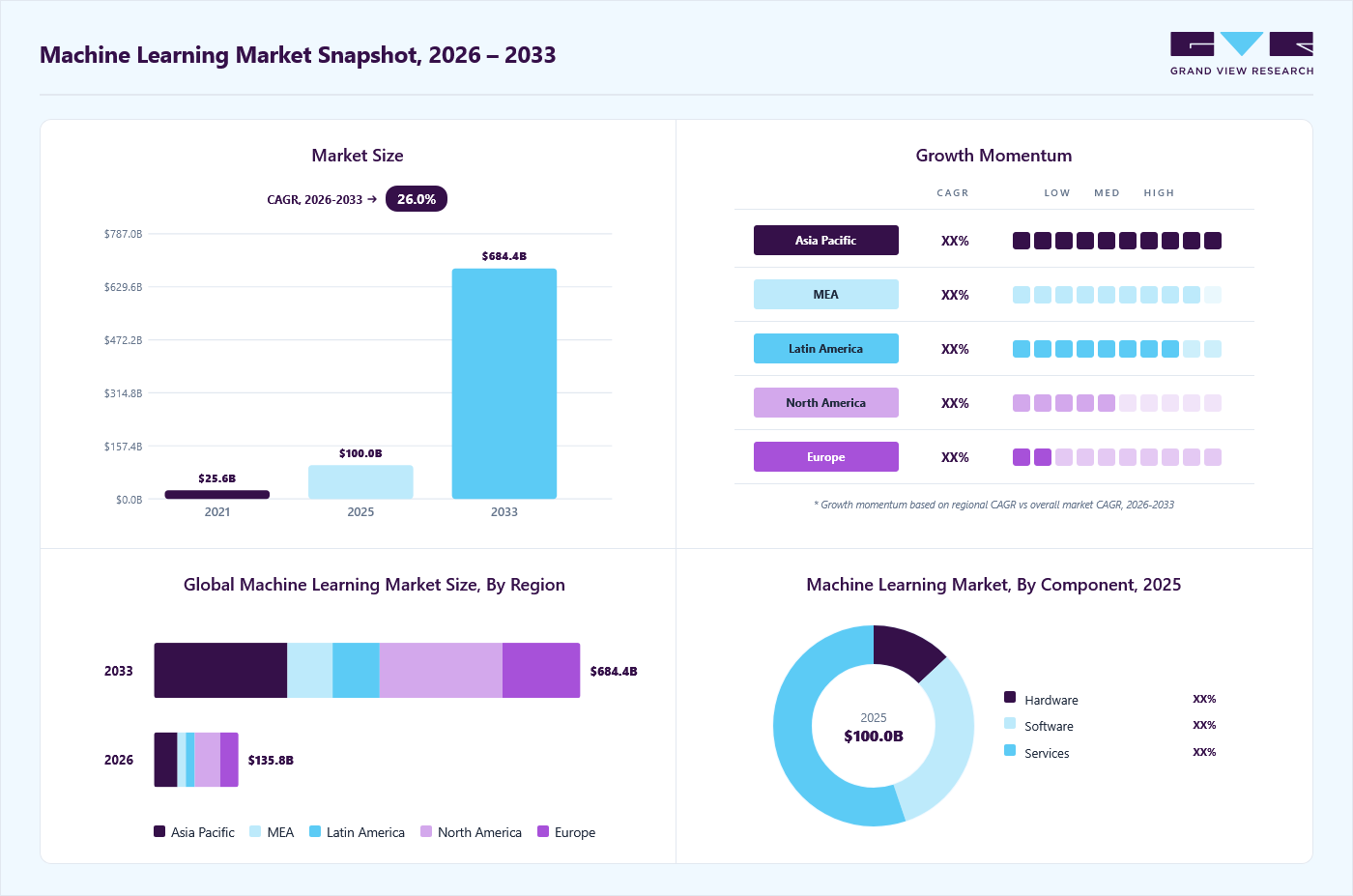 Source: Grand View Research, IR Documents, Primary Interviews, Paid DatabasesTo learn more about this report,
 Download Free Sample Report
 Key Market Trends & Insights
- By enterprise size: Large enterprises segment held the largest market share of 63.8% in 2025.
- By component: Services segment held the largest market share of 55.2% in 2025.
- By end use: Advertising & media segment held the largest market share of 17.3% in 2025.
Regional Highlights
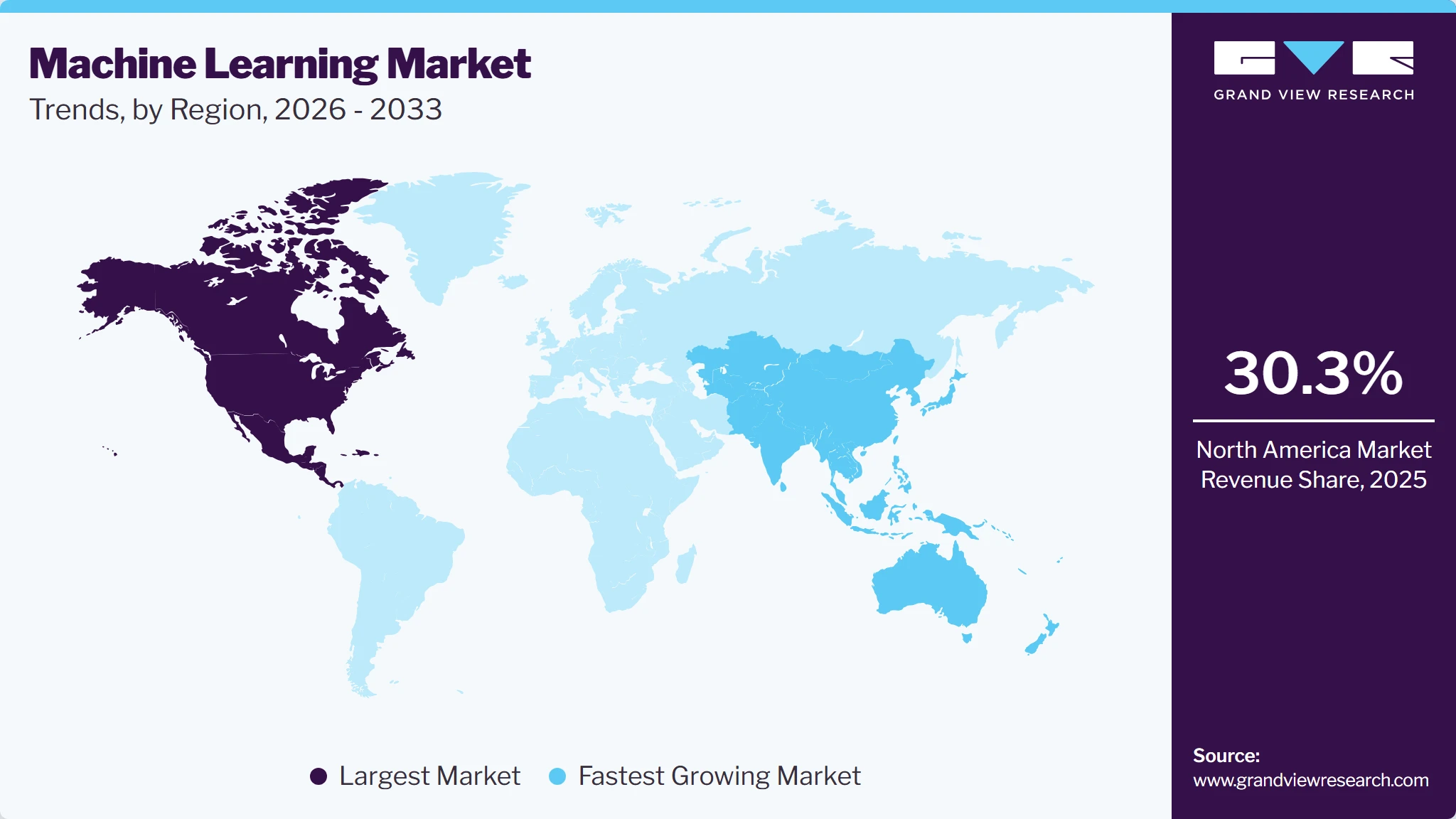
- Largest regional market: North America (30.3% revenue share, 2025)
- Fastest-growing regional market: Asia Pacific (highest CAGR, 2026-2033)
- By country: The U.S. held the largest market share in 2025
Market Size & Forecast
- Market size in 2025: USD 100.0 Billion
- Estimated market size in 2026: USD 135.8 Billion
- Projected market size by 2033: USD 684.4 Billion
- CAGR (2026-2033): 26.0%
Three ways to get this report
Buy it, customize it, or ask a question.Ask an Analyst
A direct answer, usually in 1 working day
- AccessReport author, directly
- Reply timeWithin 1 working day
- No sales callDirect answer only
- FormatEmail reply
- CostFree, no cost
Get the Full Report
What the study covers
- FormatsPDF · Excel · Dashboard
- Timeline2026–2033 annual, 2025 base
- Coverage20+ countries, 5 regions
- Companies10+ key players profiled
Customize the Report
20% free customization
- IncludeCountries, segments, points
- TailorTo your product definition
- ExtendDeeper competitor detail
- OrA fully bespoke study
- Turnaround5–10 working days
Rising investments in cloud computing, data analytics, and AI research, coupled with growing demand for predictive analytics, intelligent automation, and generative AI applications, continue to accelerate market growth across the U.S and Canada. Through the development of several digital services and products, as well as supply chain optimization, these technologies have revolutionized the consumer experience. While some startups concentrate on solutions for specialized domains, numerous technology firms invest in this area to create AI platforms. Machine learning (ML), one of the AI approaches, is getting a lot of momentum in the industry due to its quick progress. Automation is one of the key trends in machine learning, aiming to reduce manual labor to construct and deploy models. Platforms for automated machine learning (AutoML) are becoming increasingly common, allowing non-experts to take advantage of Machine Learning capabilities and quicken model building. Moreover, deep learning, a machine learning that uses multiple-layer neural networks, is also improving. This tendency, the availability of enormous datasets, and the creation of more effective algorithms are all driven by advancements in processing capacity. Deep learning provides innovations in speech recognition, natural language processing, and computer vision.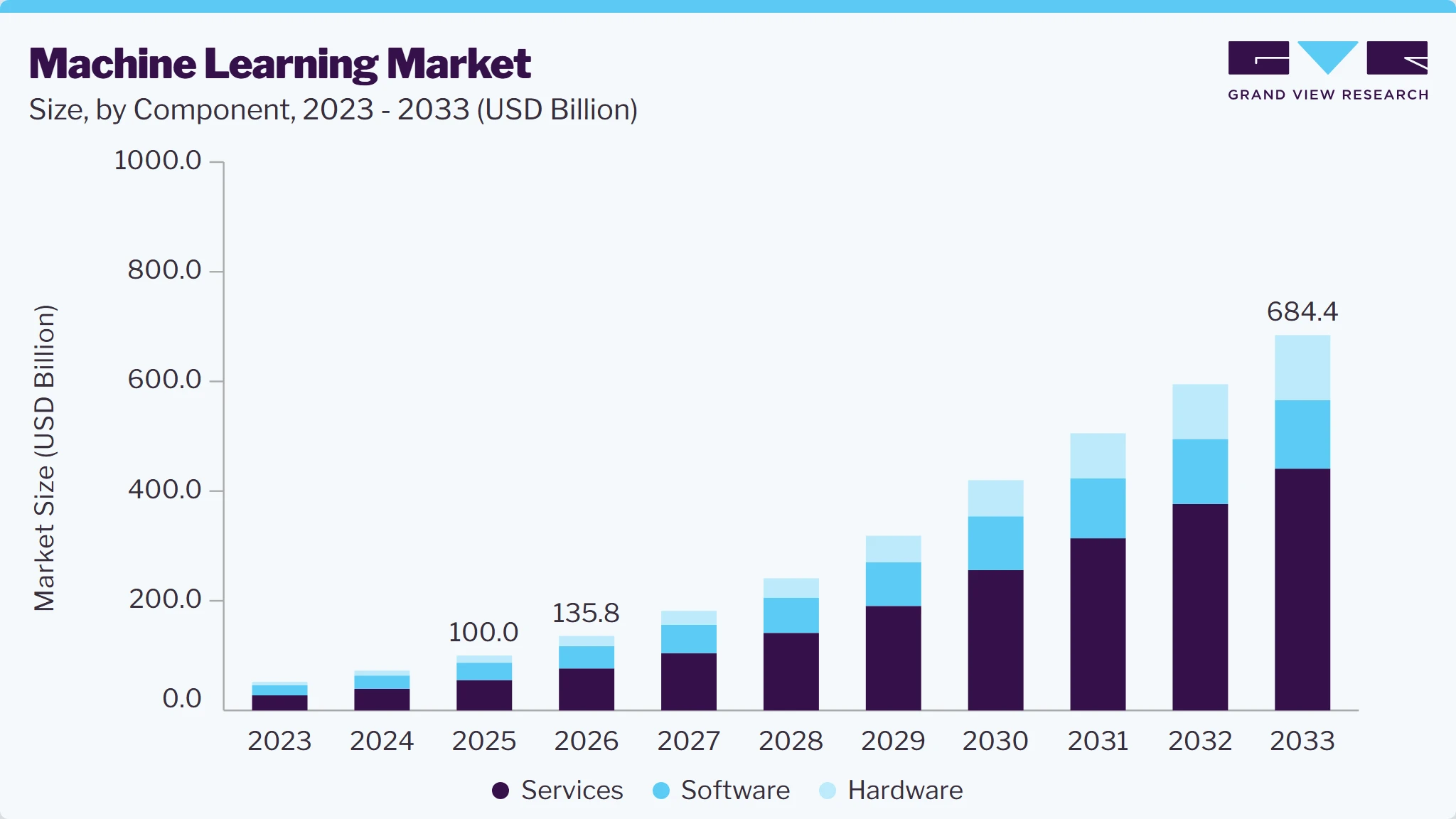 To learn more about this report, Download Free Sample Report
 Machine learning is transforming healthcare by aiding in medical diagnostics. For instance, Google researchers have created a neural network-based machine learning model that predicts data center energy efficiency in Power Usage Effectiveness (PUE). By analyzing sensor data, the model helps optimize operations, cutting costs and carbon emissions without hardware changes. Proven across Google’s data centers, it highlights the power of AI in boosting energy efficiency in complex environments.
Market Dynamics
The machine learning market is experiencing significant growth as organizations increasingly adopt AI-driven technologies to improve decision-making, operational efficiency, and business intelligence. Machine learning solutions enable businesses to analyze large volumes of data, automate complex processes, enhance predictive capabilities, and deliver personalized customer experiences across industries such as healthcare, BFSI, retail, manufacturing, telecommunications, and automotive. The growing demand for advanced analytics, intelligent automation, natural language processing, computer vision, and generative AI applications is further accelerating the adoption of machine learning technologies worldwide. Additionally, increasing investments in cloud computing, big data infrastructure, and AI research, coupled with the rising focus on digital transformation and data-driven business strategies, continue to drive market expansion.
The machine learning market is experiencing strong growth due to the increasing demand for intelligent automation, predictive analytics, and data-driven decision-making across industries such as healthcare, BFSI, retail, manufacturing, telecommunications, and automotive. Machine learning technologies enable organizations to process vast amounts of structured and unstructured data, improve operational efficiency, enhance customer experiences, and optimize business processes. Additionally, the rapid adoption of cloud computing, big data platforms, and AI-powered applications is accelerating the deployment of machine learning solutions, further driving market expansion.
Despite its significant advantages, the machine learning market faces challenges related to data privacy, security concerns, and regulatory compliance requirements. Organizations often encounter difficulties in managing sensitive data while ensuring transparency and ethical AI practices. Furthermore, the shortage of skilled AI and machine learning professionals, combined with the complexity of developing, training, and maintaining advanced models, can increase implementation costs and limit adoption, particularly among small and medium-sized enterprises.
The growing adoption of generative AI, edge computing, and intelligent automation presents significant growth opportunities for the machine learning market. Machine learning is increasingly being integrated into applications such as virtual assistants, recommendation engines, fraud detection, predictive maintenance, autonomous systems, and healthcare diagnostics. Moreover, advancements in deep learning, natural language processing, computer vision, and AI chips are expanding the scope of machine learning across industries. Rising investments in digital transformation initiatives and AI innovation are expected to create substantial long-term opportunities for market participants.
Market Concentration & Characteristics
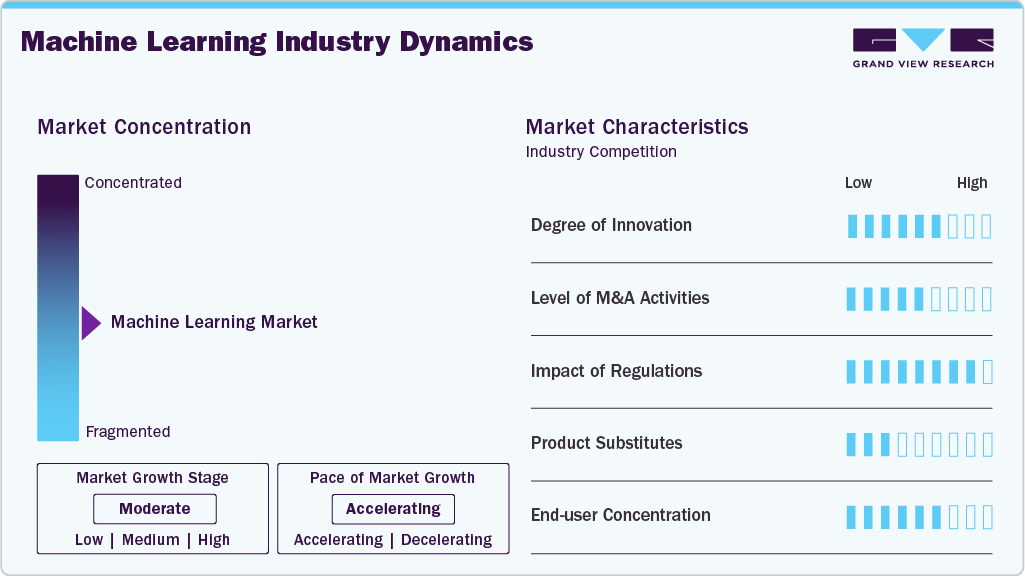
The machine learning market is moderately concentrated, characterized by the presence of several global technology companies and AI solution providers competing on the basis of algorithm innovation, model performance, cloud integration, scalability, and industry-specific applications. Major players such as Microsoft Corporation, Google LLC, Amazon Web Services, Inc., IBM Corporation, and NVIDIA Corporation hold significant market positions. However, the presence of numerous emerging AI startups, specialized machine learning platform providers, and regional technology firms prevents excessive market consolidation. Continuous investments in generative AI, deep learning, cloud-based machine learning platforms, edge AI, and industry-specific AI solutions continue to intensify competition across the market.
 To learn more about this report, Download Free Sample Report
 Analyst Perspective
The machine learning market is positioned as a critical enabler of digital transformation, driven by the increasing demand for intelligent automation, predictive analytics, and data-driven decision-making across industries such as healthcare, BFSI, retail, manufacturing, transportation, and media. Organizations are increasingly adopting machine learning technologies to improve operational efficiency, enhance customer experiences, optimize business processes, and extract actionable insights from rapidly growing volumes of data. The market is benefiting from continuous advancements in deep learning, generative AI, natural language processing, computer vision, and cloud-based AI platforms, which enable faster model development, greater scalability, and improved business outcomes. As enterprises continue to embrace AI-driven innovation and digital transformation initiatives, machine learning has evolved from a specialized analytical tool into a core technology supporting enterprise-wide operations and strategic decision-making. Furthermore, the growing adoption of edge AI, autonomous systems, intelligent applications, and industry-specific AI solutions is expected to create significant growth opportunities and further accelerate market expansion over the coming years.
Component Insights
Based on component, the Services segment led the market with the largest revenue share of 55.2% in 2025. The adoption of machine learning is driven by its increasing accessibility, the pressure to lower operational costs, and the push to automate core business functions. AI and ML are becoming standard features in off-the-shelf business applications, while ongoing labor and skills shortages are prompting companies to use ML services to bridge talent gaps. In addition, the rise of cloud-based ML platforms offering scalable and managed solutions is boosting demand, particularly among large enterprises aiming to harness ML without significant infrastructure investments.
The hardware segment registered a CAGR of 30.6% from 2026 to 2033. Key drivers for the hardware segment include the growing adoption of AI across industries like IT, healthcare, and automotive, which require specialized hardware for deep learning and real-time analytics. The rise of edge computing boosts demand for energy-efficient, high-performance chips such as GPUs, ASICs, and neuromorphic processors. Advancements in chip design and increased cloud computing and AI use in robotics and automation further fuel the need for purpose-built AI hardware to support scalable and efficient ML workloads.
Enterprise Size Insights
Based on Enterprise Size, the large enterprises segment led the market with the largest revenue share of 63.8% in 2025. Based on enterprise size, the market is categorized into small and medium enterprises (SMEs) and large enterprises. Large businesses are utilizing cloud-based machine learning platforms and services more and more. Cloud platforms' scalable and economic infrastructure makes machine learning model training and deployment possible. Large enterprises can use machine learning without making significant infrastructure investments thanks to services like amazon web services (aws), google cloud ai platform, and microsoft azure machine learning which offer pre-built models, distributed training capabilities, and infrastructure management.
The SMEs segment is projected to grow at the fastest CAGR over the forecast period. The adoption of machine learning is rapidly increasing among small and medium-sized enterprises. Due to their sometimes-constrained resources, SMEs may require additional skills to analyze significant data. Machine learning platforms and technologies may automate data analysis procedures, enabling SMEs to gain insightful knowledge from their data without putting in much human work. SMEs may better understand consumer behavior, enhance inventory management, optimize marketing efforts, and make data-driven choices using automated data analysis.
End Use Insights
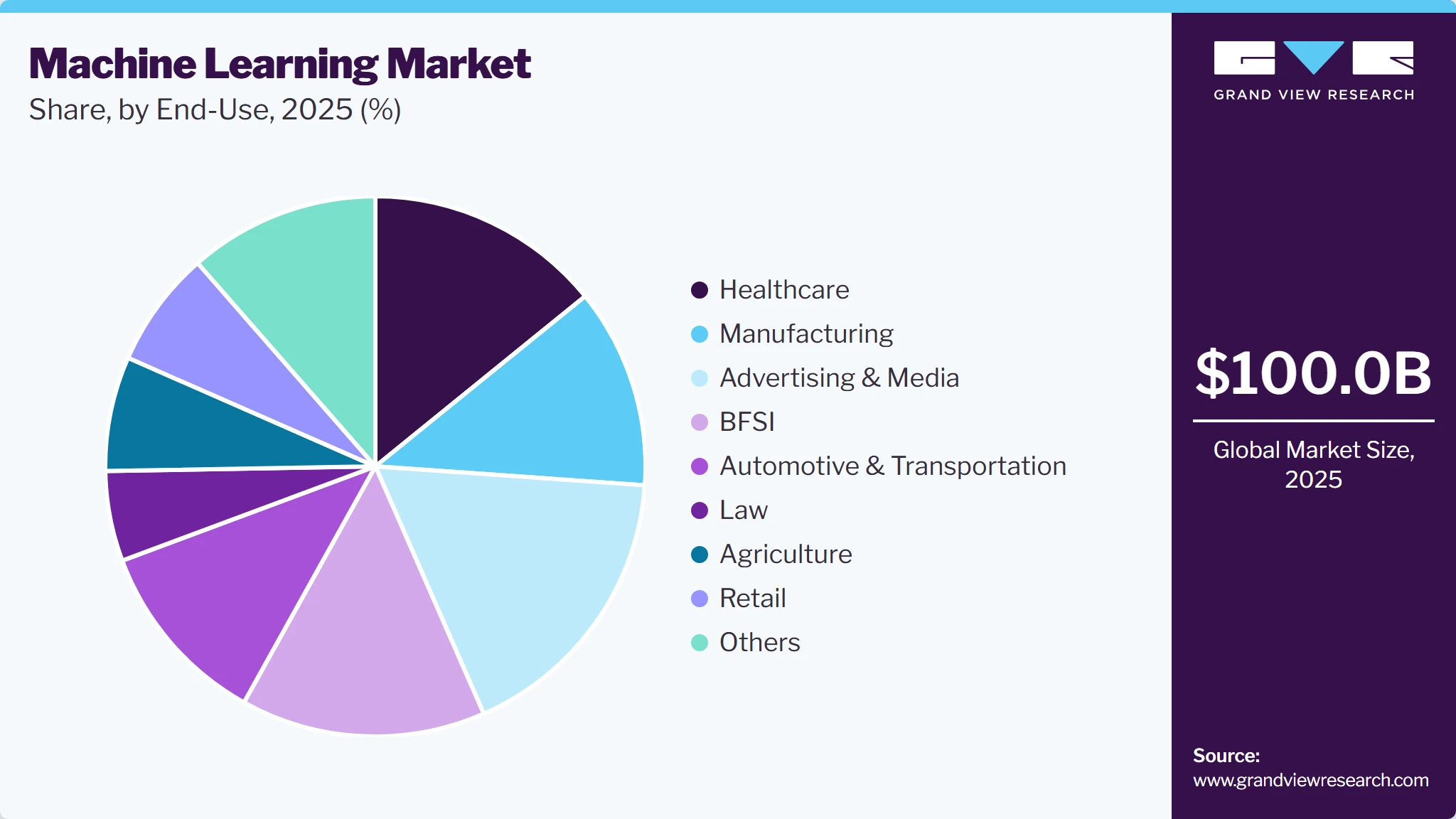
Based on End Use, the advertising & media segment led the market with the largest revenue share of 17.3% in 2025. Hyper-personalization is one of the key trends in which machine learning algorithms analyze enormous volumes of user data to produce highly personalized and pertinent adverts that boost engagement and conversion rates. Another trend is cross-channel optimization, in which machine learning algorithms plan budgets and modify bidding schemes to optimize advertising campaigns across several channels. Moreover, a growing emphasis is on ad fraud detection using machine learning. Advertisers leverage machine learning algorithms to identify and prevent fraudulent activities such as click and impression fraud, ensuring that ad campaigns are effective and budgets are protected.
 To learn more about this report, Download Free Sample Report
 The healthcare segment is projected to grow significantly over the forecast period. This segment is driven by the need for early disease detection, personalized treatment, and improved diagnostic accuracy using data from medical records, imaging, and wearables. The growing volume of healthcare data and demand for predictive analytics support better patient outcomes and chronic disease management. ML enhances operational efficiency through automation, accelerates drug discovery, and helps address workforce shortages, transforming clinical care and hospital workflows.
Regional Insights
North America dominated the machine learning market with the largest revenue share of 30.3% in 2025. With machine learning's increasing impact on society, there is a growing emphasis on ethical AI and responsible AI practices in North America. Organizations prioritize fairness, transparency, and accountability in machine learning models and algorithms. Efforts are being made to mitigate biases, ensure privacy protection, and address ethical considerations related to AI applications. Regulatory frameworks, guidelines, and industry standards are being developed to govern the region's responsible use of machine learning.
 To learn more about this report, Download Free Sample Report
 U.S. Machine Learning Market Trends
The Machine Learning Market in the U.S. held the largest share in the North America region in 2025. The machine learning market in the U.S. is driven by major investments from tech giants like Google and Amazon, along with rapid advancements in AI and deep learning across sectors such as healthcare and finance. The rise of big data, powerful cloud platforms, and strong government support through initiatives like the American AI Initiative are further accelerating growth. Furthermore, growing academic collaboration is boosting R&D and speeding up the adoption of machine learning technologies nationwide.
Europe Machine Learning Market Trends
The machine learning market in Europe is driven by rising adoption across industries seeking data-driven efficiency and automation. Sectors like automotive and healthcare are leveraging AI for safety, ethics, and predictive analytics, while smart home growth drives demand for intelligent systems. Increased use of AI chatbots, strong government support, and ongoing digital transformation in traditional sectors further accelerate the region’s machine learning expansion.
Asia Pacific Machine Learning Market Trends
The machine learning market in Asia Pacific is anticipated to register the fastest CAGR over the forecast period. This is driven by rapid digital transformation across sectors like finance, healthcare, and e-commerce, along with strong government support for AI initiatives in countries like China, India, and South Korea. The region's growing startup ecosystem, rising internet and mobile usage, and demand for personalized solutions in e-learning and fintech boost adoption. Expanding digital payments and innovation hubs across APAC also play a key role in accelerating machine learning development and deployment.
Key Machine Learning Company Insights
Prominent firms have used product launches and developments, followed by expansions, mergers and acquisitions, contracts, agreements, partnerships, and collaborations as their primary business strategy to increase their market share. The companies have used various techniques to enhance market penetration and boost their position in the competitive industry.
-
Intel Corporation, based in Santa Clara, California, is a tech leader known for designing and producing semiconductor chips such as CPUs, GPUs, and AI accelerators for consumer and enterprise use. Committed to innovation, Intel is advancing AI, data center, and edge computing technologies through its IDM 2.0 strategy and growing foundry services.
-
Microsoft Corporation is a major American multinational technology company recognized for its software offerings, such as Windows and Microsoft Office, along with its Azure cloud services. Microsoft has grown into areas like AI, gaming through Xbox, and enterprise technologies, establishing itself as one of the world’s most influential tech firms. The company drives innovation in cloud computing, artificial intelligence, and sustainability to support individuals and businesses worldwide.
Key Machine Learning Companies:
The following are the leading companies in the machine learning market. These companies collectively hold the largest market share and dictate industry trends.
- Amazon Web Services, Inc.
- Baidu, Inc.
- H2O.ai.
- Hewlett-Packard Enterprise Development LP
- Intel Corporation
- International Business Machines Corporation
- Microsoft
- SAS Institute Inc.
- SAP SE or an SAP affiliate company
Competitive Benchmarking
Category
Operating Strategies
Competitive Edge
Weakness
Established Players (Microsoft Corporation, Google LLC, Amazon Web Services, Inc., IBM Corporation, Intel Corporation, Hewlett Packard Enterprise Development LP)
- Expand AI and machine learning portfolios through cloud-based platforms, generative AI solutions, MLOps tools, industry-specific applications, and strategic acquisitions. Strengthen market leadership through continuous R&D investments, ecosystem development, global partnerships, and AI infrastructure expansion.
- Strong global presence, advanced AI capabilities, extensive cloud infrastructure, large customer bases, significant R&D resources, broad product portfolios, and strong brand recognition across enterprise markets.
- High operational costs, regulatory and data privacy challenges, intense competition, dependence on large-scale infrastructure investments, and increasing pressure to demonstrate AI transparency and governance.
Emerging Players (H2O.ai, DataRobot, C3 AI, Dataiku, Hugging Face, Domino Data Lab, Abacus.AI, Cloudera)
- Focus on specialized AI and machine learning platforms, AutoML solutions, model management, generative AI applications, and industry-specific use cases.
- Invest in product innovation, strategic partnerships, and expansion into high-growth markets.
- Strong specialization in machine learning technologies, faster innovation cycles, flexible deployment options, customer-centric solutions, and the ability to address niche enterprise requirements.
- Limited global reach compared to major technology companies, smaller financial resources, lower brand recognition, dependence on external cloud infrastructure, and challenges in scaling operations and customer acquisition.
Recent Developments
-
In May 2025, Amazon Web Services (AWS) and Saudi-based HUMAIN unveiled a $5 billion investment to boost AI innovation and adoption in Saudi Arabia and beyond. The collaboration will strengthen the Kingdom’s startup ecosystem with cutting-edge AI and cloud solutions, support workforce development through comprehensive training initiatives, and advance the Vision 2030 digital transformation agenda. The partnership aims to establish Saudi Arabia as a global leader in AI and a major economic force.
-
In April 2025, Baidu introduced ERNIE 4.5 Turbo and ERNIE X1 Turbo, powerful AI models with improved multimodal functions, quicker response speeds, and much lower costs. In addition, Baidu launched new AI tools like the multi-agent collaboration app Xinxiang and lifelike digital humans, enabling developers and speeding up AI advancements.
Machine Learning Market Report Scope
Report Attribute
Details
Market size in 2025
USD 100.0 billion
Estimated market size in 2026
USD 135.8 billion
Projected market size by 2033
USD 604.4 billion
Growth rate
CAGR of 26.0% from 2026 to 2033
Base year for estimation
2025
Historical data
2021 - 2024
Forecast period
2026 - 2033
Quantitative units
Revenue in USD billion/billion and CAGR from 2026 to 2033
Report coverage
Revenue forecast, company ranking, competitive landscape, growth factors, and trends
Segments covered
Component, Enterprise Size End Use and Region
Regional scope
North America; Europe; Asia Pacific; Latin America; MEA
Country scope
U.S.; Canada; Mexico; Germany; U.K; France; China; Japan; India; South Korea; Australia; Brazil; Saudi Arabia; South Africa; UAE;
Key companies profiled
Amazon Web Services, Inc.; Baidu, Inc.; Google; H2O.ai.; Hewlett Packard Enterprise Development LP; Intel Corporation; International Business Machines Corporation; Microsoft; SAS Institute Inc.; SAP SE or an SAP affiliate company
Customization scope
Free report customization (equivalent up to 8 analysts' working days) with purchase. Addition or alteration to country, regional & segment scope.
Pricing and purchase options
Avail customized purchase options to meet your exact research needs. Explore purchase options
Global Machine Learning Market Report Segmentation
This report forecasts revenue growth at the global, regional, and country levels and provides an analysis of the latest industry trends in each of the sub-segments from 2021 to 2033. For this study, Grand View Research has segmented the global machine learning market report based on component, enterprise size, end-use, and region:
 To learn more about this report, Download Free Sample Report
 -
Component Outlook (Revenue, USD Million, 2021- 2033)
-
Hardware
-
Software
-
Services
-
-
Enterprise Size Outlook (Revenue, USD Million, 2021- 2033)
-
SMEs
-
Large Enterprises
-
-
End Use Outlook (Revenue, USD Million, 2021- 2033)
-
Healthcare
-
BFSI
-
Law
-
Retail
-
Advertising & Media
-
Automotive & Transportation
-
Agriculture
-
Manufacturing
-
Others
-
-
Regional Outlook (Revenue, USD Million, 2021- 2033)
-
North America
-
U.S.
-
Canada
-
Mexico
-
-
Europe
-
UK
-
Germany
-
France
-
-
Asia Pacific
-
China
-
Japan
-
India
-
South Korea
-
Australia
-
-
Latin America
-
Brazil
-
-
Middle East and Africa (MEA)
-
KSA
-
UAE
-
South Africa
-
-
Research Methodology
The machine learning market figures in this report are based on a proven research process that combines executive interviews with secondary research from proprietary databases, company filings, and recognized regulatory and institutional sources. Market size is built through value-chain sizing - reconciling supply-side and demand-side estimates - and triangulated with bottom-up and top-down approaches. Every estimate passes multiple levels of expert validation before publication, with each machine learning segment quantified using the revenue-capture definitions in the table below.
Segment Definition
Segment - Component
Revenue capture definition
Hardware
Revenue in this segment is generated through the sale and deployment of hardware components that support machine learning operations, including processors, graphics processing units (GPUs), tensor processing units (TPUs), application-specific integrated circuits (ASICs), servers, storage systems, and edge computing devices. These hardware solutions provide computational power, memory capacity, and data-processing capabilities required for training, deploying, and running machine learning models across industries such as healthcare, BFSI, retail, manufacturing, automotive, and telecommunications.
Software
Revenue in this segment is generated through the licensing, subscription, and deployment of machine learning software platforms, tools, and applications used for data preparation, model development, training, deployment, monitoring, and optimization. These solutions enable organizations to build, manage, and scale machine learning models for applications such as predictive analytics, natural language processing, computer vision, recommendation systems, fraud detection, and intelligent automation across industries including healthcare, BFSI, retail, manufacturing, and telecommunications
Services
Revenue in this segment is generated through professional and managed services that support the implementation, integration, customization, deployment, maintenance, and optimization of machine learning solutions. These services include consulting, data engineering, model development, training, system integration, cloud migration, technical support, and managed AI operations
Segment - Enterprise Size
Revenue capture definition
SMEs
Revenue in this segment is generated through the adoption of machine learning solutions by small and medium-sized enterprises (SMEs) to enhance operational efficiency, improve customer engagement, automate business processes, and support data-driven decision-making. SMEs utilize machine learning technologies for applications such as predictive analytics, customer segmentation, fraud detection, demand forecasting, recommendation engines, and process automation.
Large Enterprises
Revenue in this segment is generated through the adoption of machine learning solutions by large enterprises to optimize business operations, enhance decision-making, improve customer experiences, and drive innovation at scale. Large organizations leverage machine learning technologies for applications such as predictive analytics, intelligent automation, fraud detection, risk management, supply chain optimization, natural language processing, and advanced customer insights.
Segment - End Use
Revenue capture definition
Healthcare
This segment generates revenue from the use of machine learning technologies in healthcare applications such as medical imaging, disease diagnosis, drug discovery, patient monitoring, clinical decision support, and personalized medicine. Machine learning solutions are extensively utilized by hospitals, healthcare providers, pharmaceutical companies, and research institutions to improve diagnostic accuracy, accelerate treatment planning, optimize operational workflows, and enhance patient outcomes through data-driven insights and predictive analytics.
BFSI
This segment generates revenue from the use of machine learning technologies across banking, financial services, and insurance organizations for applications such as fraud detection, credit risk assessment, algorithmic trading, customer analytics, anti-money laundering (AML), claims processing, and personalized financial services.
Law
This segment generates revenue from the use of machine learning technologies within legal firms, corporate legal departments, and regulatory organizations for applications such as contract analysis, legal research, document review, compliance monitoring, e-discovery, case prediction, and risk assessment.
Retail
This segment generates revenue from the use of machine learning technologies across retail and e-commerce organizations for applications such as customer behavior analysis, personalized recommendations, demand forecasting, inventory optimization, dynamic pricing, fraud detection, and supply chain management.
Advertising & Media
This segment generates revenue from the use of machine learning technologies across advertising agencies, media companies, digital marketing platforms, and content providers for applications such as audience targeting, ad personalization, programmatic advertising, content recommendation, campaign optimization, sentiment analysis, and customer engagement analytic
Automotive & Transportation
This segment generates revenue from the use of machine learning technologies across automotive manufacturers, transportation providers, logistics companies, and mobility service operators for applications such as autonomous driving, predictive maintenance, route optimization, fleet management, demand forecasting, driver assistance systems, and supply chain analytics.
Agriculture
This segment generates revenue from the use of machine learning technologies across agricultural operations, agribusinesses, and precision farming applications for crop monitoring, yield prediction, soil analysis, irrigation management, pest and disease detection, livestock monitoring, and farm automation.
Manufacturing
This segment generates revenue from the use of machine learning technologies across manufacturing industries for applications such as predictive maintenance, quality inspection, production planning, process optimization, demand forecasting, supply chain management, and industrial automation
Others
This segment generates revenue from the use of machine learning technologies across various industries not covered under the primary application categories, including education, energy and utilities, telecommunications, government, cybersecurity, real estate, and hospitality.
Estimation Model
Layer Name
Key Question
Description
Addressable Enterprise Base Layer
Which organizations can adopt machine learning solutions?
Identify the global addressable base of enterprises across industries such as healthcare, BFSI, retail, manufacturing, transportation, media, agriculture, telecommunications, and government that can leverage machine learning technologies for data analysis, automation, and decision-making.
Machine Learning Adoption Layer
Which organizations deploy machine learning solutions?
Apply adoption rates for machine learning platforms and AI solutions across key industries using predictive analytics, natural language processing, computer vision, recommendation systems, fraud detection, and intelligent automation applications.
Application & Usage Layer
How extensively are machine learning solutions utilized?
Estimate machine learning usage based on the volume of data processed, number of deployed models, AI workloads, application complexity, cloud and edge AI deployments, and the frequency of machine learning-driven operations across organizations.
Revenue Generation Layer
How much revenue is generated?
Multiply the number of machine learning deployments, software subscriptions, hardware infrastructure investments, cloud consumption, and associated consulting, integration, support, and managed service revenues across industries and regions to estimate the total Machine Learning Market revenue.
Delivered Customizations
This report has been delivered with the following In-depth customizations
CLIENT REQUEST
CUSTOMIZATION DELIVERED
VALUE ADDS
Competitive Landscape & Technology Benchmarking
Conducted an in-depth assessment of leading machine learning platform providers, cloud service providers, AI software companies, data analytics vendors, and enterprise AI solution developers.
Analyzed competitive positioning, product portfolios, machine learning capabilities, deployment models, industry focus areas, and recent strategic developments across the machine learning ecosystem
Enables stakeholders to evaluate competitive intensity, identify market leaders, benchmark AI and machine learning capabilities, assess partnership opportunities, and understand evolving competitive dynamics within the machine learning value chain.
ML Adoption & Industry Demand Assessment
Evaluated adoption trends of predictive analytics, natural language processing, computer vision, recommendation engines, intelligent automation, and generative AI technologies across major industries. Assessed demand for cloud-based machine learning platforms, AI infrastructure, MLOps solutions, and industry-specific AI applications across diverse use cases.
Provides actionable insights into high-growth application areas, industry adoption patterns, technology preferences, and revenue opportunities to support strategic planning and market expansion initiatives.
AI Innovation & Growth Opportunity Analysis
Assessed the impact of generative AI, large language models (LLMs), edge AI, cloud computing, intelligent automation, and advanced analytics solutions on the Machine Learning Market. Identified emerging opportunities across healthcare diagnostics, financial services, autonomous mobility, cybersecurity, retail personalization, and industrial AI applications.
Supports growth and investment strategies by highlighting emerging technology trends, identifying attractive revenue opportunities, evaluating future market potential, and understanding key factors driving long-term growth in the Machine Learning Market
Frequently Asked Questions About This Report
The global machine learning market size was valued at USD 100.0 billion in 2025 and is expected to reach USD 135.8 billion in 2026.
The global machine learning market is expected to grow at a compound annual growth rate of 26.0% from 2026 to 2033 to reach USD 684.4 billion by 2033.
North America dominated the market and accounted for a 30.3% share in 2025.
Some key players operating in the machine learning market include Amazon Web Services, Inc.; Baidu Inc.; Google Inc.; H2O.ai; Intel Corporation; International Business Machines Corporation; Hewlett Packard Enterprise Development LP; and Microsoft Corporation.
Key factors that are driving the market growth include increasing applications of the machine learning algorithms and rising adoption of advanced technologies.
The large enterprises segment leads the market with 63.8% market share in 2025, while SMEs is the fastest-growing segment in the market.
The advertising & media segment leads the market with 17.3% market share in 2025, while Healthcare is the fastest-growing segment.
Asia Pacific is the fastest-growing region in the machine learning market
The services segment leads the market with 55.2% market share in 2025, while hardware is the fastest-growing segment.
About the Author(s)
Next Generation Technologies Research Team
Technology · Next Generation TechnologiesThis report was authored by the next generation technologies research team at Grand View Research - comprising two research analysts, one senior research analyst, and one industry expert - with specialized expertise in the next generation technologies segment of the technology industry. All findings are based on proprietary technology databases, executive interviews, and regulatory analysis, subject to internal peer review prior to publication.
Last Updated:
Speak to Analyst

Customize this report to your needs - add regions, segments, or data points, with 20% free customization.
Or view our licence options:


ISO 9001:2015 & 27001:2022 Certified
We are GDPR and CCPA compliant! Your transaction & personal information is safe and secure. For more details, please read our privacy policy.


