
- Home
- »
- Medical Devices
- »
-
Infusion Bags Market Size And Share Report, 2026-2033GVR Report cover
![Infusion Bags Market (2026 - 2033)Report]()
Infusion Bags Market (2026 - 2033)
Size, Share & Trends Analysis Report By Product (Basic Sterile IV Empty Containers, Parenteral Nutrition (TPN) Empty Bags), By Material (PVC-Based Empty Infusion Bags, Non-PVC Empty Infusion Bags), By Capacity, By End Use, And Segment Forecasts
Market Size, 2025
$8.2BMarket Estimate, 2026
$8.8BMarket Forecast, 2033
$14.6BCAGR, 2026–2033
7.4%Infusion Bags Market Summary
The global infusion bags market size was valued at USD 8.2 billion in 2025 and is projected to grow from USD 8.8 billion in 2026 to USD 14.6 billion by 2033, at a CAGR of 7.4% from 2026 to 2033. The market in North America dominated with a revenue share of 39.1% in 2025. The infusion bags market is growing steadily, driven by the increasing demand for safe and efficient intravenous drug delivery systems across hospitals, ambulatory surgical centers, and home healthcare settings.

Key Market Trends & Insights
- By product: Basic sterile IV empty containers segment held the largest market share of 64.9% in 2025.
- By material: Non-PVC empty infusion bags segment held the largest market share of 61.8% in 2025.
- By capacity: 250-1000 mL segment held the largest market share in 2025.
- By end use: Hospitals segment held the largest market share in 2025.
Regional Highlights
- Largest regional market: North America (39.1% revenue share, 2025)
- By country: The U.S. held the largest market share in 2025
Market Size & Forecast
- Market size in 2025: USD 8.2 Billion
- Estimated market size in 2026: USD 8.8 Billion
- Projected market size by 2033: USD 14.6 Billion
- CAGR (2026-2033): 7.4%
Infusion bags are widely used for the administration of fluids, medications, parenteral nutrition, blood products, and biologics in the treatment of chronic diseases, critical care conditions, and surgical procedures. The rising prevalence of cancer, diabetes, cardiovascular disorders, and renal diseases is significantly increasing the volume of infusion therapies globally. In addition, the growing number of surgical procedures, expanding aging population, and increasing hospitalization rates are strengthening the demand for sterile and high-performance infusion solutions. Technological advancements in non-PVC and multilayer infusion bag materials with improved drug compatibility, reduced leachable, and enhanced patient safety are further supporting market growth. Furthermore, the increasing adoption of ready-to-use infusion systems and the expansion of home infusion therapy are accelerating the utilization of advanced infusion bags across healthcare facilities and homecare environments.
The increasing volume of hospital admissions, surgical procedures, and critical care treatments is one of the primary factors driving the growth of the infusion bags market. Infusion bags are extensively used for the administration of saline, electrolytes, antibiotics, hydration fluids, and other intravenous therapies across hospitals, emergency departments, intensive care units, and outpatient settings. The growing burden of chronic diseases such as cardiovascular disorders, diabetes, cancer, and renal diseases has significantly increased the demand for long-term infusion therapy, thereby supporting higher consumption of sterile infusion bags globally.

The growing global burden of cancer is a major factor accelerating demand for infusion bags, particularly specialized chemotherapy infusion bags used in oncology drug compounding and administration. According to the World Health Organization and the American Cancer Society, the incidence of cancer continues to rise due to aging populations, lifestyle-related risk factors, and improved diagnostic rates. As the number of patients undergoing chemotherapy increases, hospitals, oncology centers, and outpatient infusion clinics are witnessing significantly higher consumption of sterile infusion bags used for the preparation and intravenous administration of cytotoxic drugs.
Chemotherapy drugs are highly sensitive formulations and require specialized non-PVC and EVA-based infusion bags to maintain drug stability and patient safety. Traditional PVC materials may interact with certain oncology drugs through adsorption or leaching, potentially reducing drug potency or posing contamination risks. As a result, healthcare providers are shifting toward ethylene-vinyl acetate (EVA), polypropylene, and other DEHP-free non-PVC infusion bags that offer improved chemical compatibility, lower extractables/leachables risk, and enhanced barrier protection. This transition is particularly important for high-value biologics, monoclonal antibodies, and hazardous oncology medications.
U.S. Estimated Cancer Incidence, Mortality, and Chemotherapy Utilization by Cancer Type (2026)
Cancer Type
Estimated New Cases (2026)
Estimated Deaths (2026)
Impact on Chemotherapy Infusion Bag Demand
Breast Cancer
324,580
42,670
One of the largest oncology infusion therapy segments
Lung & Bronchus Cancer
229,410
124,990
Very high chemotherapy and infusion utilization
Colon & Rectum Cancer
158,850
55,230
Major driver of infusion-based oncology treatment
Pancreatic Cancer
67,530
52,740
Intensive systemic chemotherapy demand
Leukemia
67,790
23,910
High inpatient infusion therapy usage
Non-Hodgkin Lymphoma
79,320
19,970
Multi-cycle IV chemotherapy regimens
Hodgkin Lymphoma
8,920
1,100
Significant infusion treatment dependency
Multiple Myeloma
36,000
10,850
Long-term infusion therapy utilization
Ovarian Cancer
21,010
12,450
Combination chemotherapy dependent
Bladder Cancer
84,530
17,870
Increasing oncology infusion procedures
Stomach Cancer
31,510
10,740
Multi-drug chemotherapy usage
Esophageal Cancer
22,530
16,290
High chemotherapy administration rate
Liver & Intrahepatic Bile Duct Cancer
42,340
30,980
Increasing targeted + chemo combination use
Cervical Cancer
13,490
4,200
Chemoradiation-associated infusion therapy
Uterine Corpus Cancer
68,270
14,450
Used mainly in advanced disease
Acute Myeloid Leukemia (AML)
22,720
11,500
Extremely high infusion intensity
Acute Lymphocytic Leukemia (ALL)
6,250
1,600
Long-duration IV chemotherapy
Bone & Joint Cancer
4,110
2,210
Aggressive chemotherapy protocols
Soft Tissue Sarcoma
13,910
5,400
Moderate-to-high infusion utilization
Source: The American Cancer Society
Furthermore, advancements in personalized medicine and targeted oncology therapies are contributing to increased utilization of specialized infusion bags. Many newer oncology treatments require customized dosing, complex admixture preparation, and controlled infusion environments, which favor the use of high-performance sterile infusion containers. The increasing adoption of immunotherapy, biologics, and precision oncology drugs is therefore expected to further strengthen long-term demand for non-PVC chemotherapy infusion bags globally.
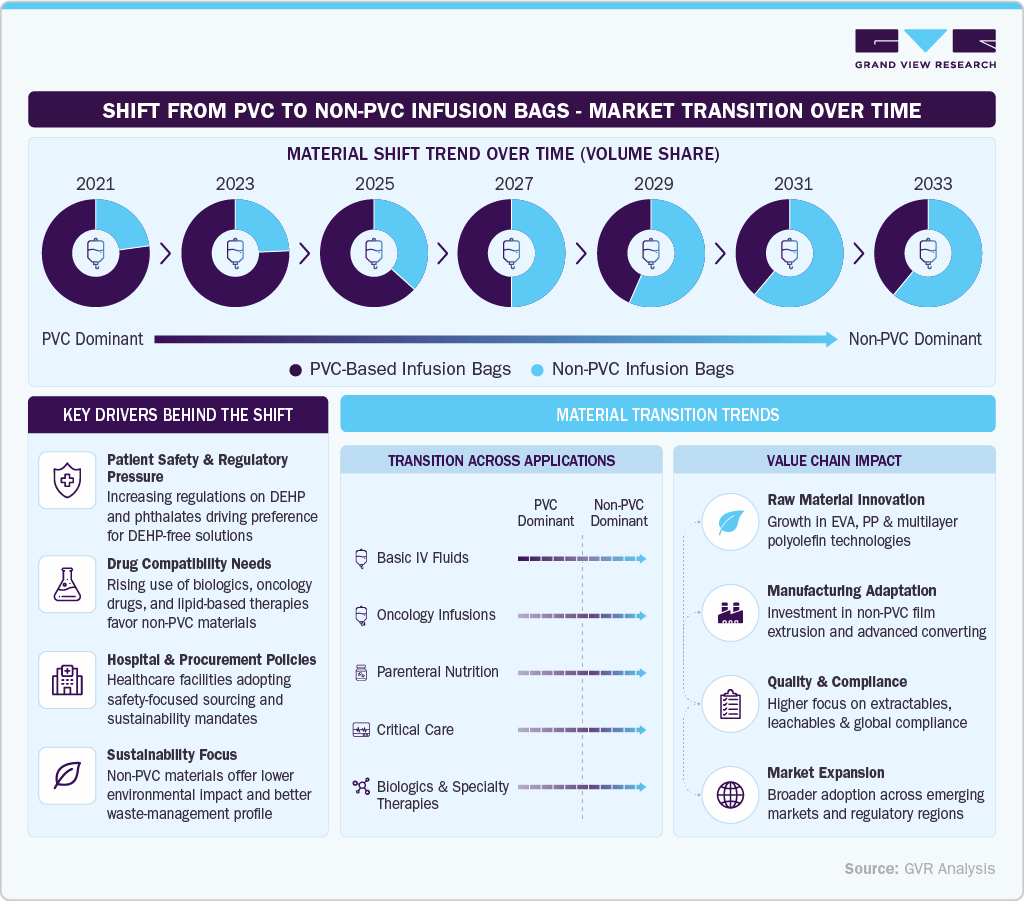
The infusion pressure bags market is witnessing a structural shift from traditional PVC-based systems toward non-PVC alternatives, driven primarily by increasing clinical safety concerns, regulatory pressure, and material performance advantages. PVC-based products have historically dominated the market due to their low cost and ease of manufacturing; however, concerns about the presence of plasticizers, such as DEHP, and their potential leaching effects, particularly in sensitive patient populations, such as neonates and ICU patients, have significantly accelerated the transition toward safer alternatives.
Market Dynamics
The infusion bags market is primarily driven by the increasing demand for safe, compatible, and high-performance drug delivery systems across hospital and clinical settings. The rising prevalence of chronic diseases such as cancer, diabetes, and cardiovascular disorders has significantly increased the volume of intravenous (IV) therapies globally. In addition, the growing adoption of biologics, immunotherapy, chemotherapy, and parenteral nutrition has accelerated the need for advanced infusion containers with superior chemical stability and low interaction risk. Technological advancements in non-PVC materials such as EVA, polypropylene, and multilayer polyolefin films have further supported market growth by improving drug compatibility, reducing leachable, and enhancing patient safety. Furthermore, the expansion of ambulatory care centers and home healthcare services has increased demand for ready-to-use, sterile, and flexible infusion solutions that improve clinical efficiency and reduce hospital workload.
According to the International Diabetes Federation (IDF) Diabetes Atlas (2025), the global burden of diabetes continues to rise rapidly, with approximately 589 million adults (aged 20-79 years) currently living with the condition-equivalent to about 1 in 9 adults worldwide. Over 40% of these individuals remain undiagnosed. Projections indicate that by 2050, the number of people living with diabetes will increase to around 853 million, or 1 in 8 adults, representing a 46% rise compared to current levels.
The infusion bags market faces restraints due to the higher cost and manufacturing complexity of non-PVC infusion systems. PVC-based bags remain widely used in cost-sensitive markets due to their low production cost and established supply chain infrastructure, limiting rapid transition in developing regions. In addition, healthcare providers in some regions face budget constraints and reimbursement limitations that limit the adoption of premium non-PVC solutions. The presence of alternative IV container formats and variability in hospital procurement preferences further impacts standardized adoption. Moreover, concerns about material compatibility validation, regulatory compliance processes, and supply chain transition challenges can slow the large-scale replacement of conventional PVC infusion bags.
Market Concentration & Characteristics
The infusion bags market is characterized by strong and consistent demand, driven by the widespread use of intravenous therapy across hospitals, outpatient facilities, oncology centers, and critical care settings. The market includes a broad range of products such as basic sterile IV empty containers, parenteral nutrition (TPN) bags, chemotherapy infusion bags, and blood collection & transfusion bags, supporting diverse clinical applications including hydration therapy, oncology drug compounding, nutrition support, and blood processing. The market is witnessing increasing adoption of non-PVC and specialty infusion bags due to growing concerns regarding drug compatibility, patient safety, and regulatory compliance associated with hazardous drug handling and DEHP-free materials.
The infusion bags market is witnessing continuous innovation driven by increasing demand for safer, more compatible, and application-specific infusion solutions. Manufacturers are focusing on developing non-PVC, DEHP-free materials, such as EVA, polypropylene, and multilayer polyolefin films, to improve drug stability and minimize chemical interaction risks. Innovations in multi-chamber bag technology, enhanced sterility systems, and advanced compounding-compatible designs are supporting greater adoption in parenteral nutrition, oncology, and biologic drug administration. In addition, companies are investing in customized bag configurations, improved barrier properties, and environmentally sustainable materials to address evolving clinical and regulatory requirements.
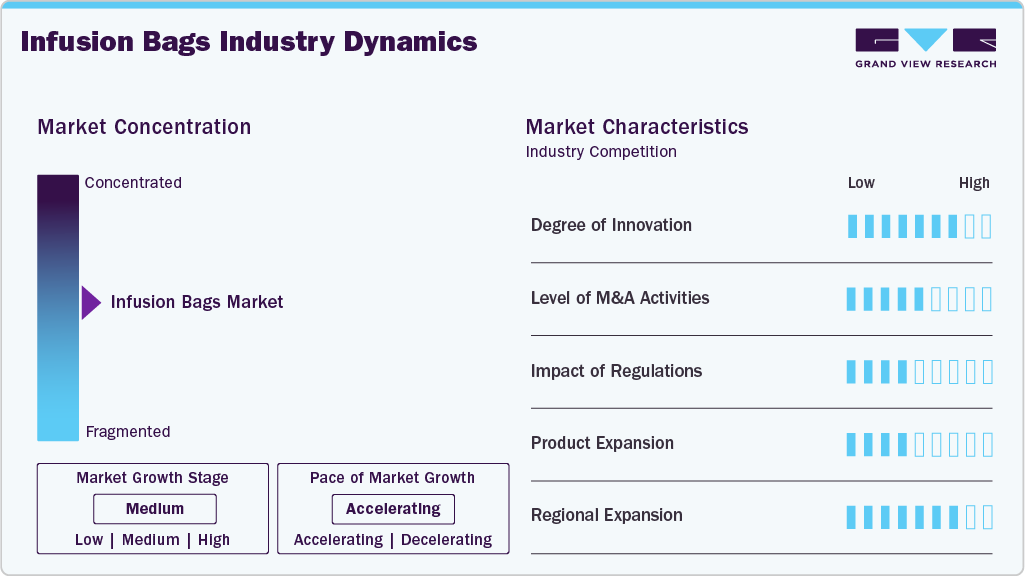
Regulatory standards play a critical role in shaping the infusion bags market, particularly regarding sterility assurance, material safety, and hazardous drug handling. Regulatory agencies and healthcare standards organizations have increased scrutiny on DEHP-containing PVC materials due to potential leaching risks, encouraging a gradual transition toward non-PVC infusion systems. In oncology and sterile compounding environments, regulations such as USP <800> and GMP guidelines have strengthened requirements for safe preparation, handling, and administration of hazardous drugs, driving demand for specialized chemotherapy infusion bags. In addition, stringent FDA and international medical device regulations related to manufacturing quality, biocompatibility, and packaging integrity continue to influence product development and market entry strategies.
The infusion bags market is experiencing moderate levels of mergers, acquisitions, and strategic partnerships as companies aim to strengthen product portfolios, expand manufacturing capabilities, and improve geographic presence. Large medical device and infusion therapy companies are actively acquiring specialty infusion and sterile compounding technology providers to enhance their presence in high-growth segments such as oncology, biologics, and parenteral nutrition. Strategic collaborations between infusion bag manufacturers and healthcare providers are also increasing to support customized compounding solutions and supply chain stability.
Regional expansion remains a key growth strategy in the infusion bags market, particularly across Asia-Pacific, Latin America, and the Middle East. Increasing healthcare infrastructure investments, rising hospital admissions, and growing access to infusion therapies are creating strong demand for sterile infusion consumables in emerging markets. Manufacturers are expanding local manufacturing facilities and distribution partnerships to improve supply reliability and reduce logistics costs. In developed markets such as North America and Europe, growth is supported by rising adoption of specialty infusion therapies, increasing oncology treatment volumes, and the transition toward advanced non-PVC infusion systems.
In January 2026, Medline announced the expansion of its Middle East presence through the launch of a new office in Riyadh, Saudi Arabia, aimed at strengthening regional healthcare support and improving customer engagement capabilities. The company stated that the new facility supports key product divisions including surgical procedure trays, operating room solutions, wound care, urology, and respiratory products, while enhancing supply continuity, localized support, and operational efficiency across the region.
By Product Insights
Basic sterile IV empty containers dominate the infusion bags market due to their extensive use in routine intravenous fluid administration, hydration therapy, antibiotic delivery, and general medication infusion across hospitals and clinical settings. These containers are widely preferred because of their cost-effectiveness, high-volume consumption, ease of handling, and compatibility with a broad range of infusion therapies. Increasing hospitalization rates, rising surgical procedures, and growing demand for emergency and critical care treatments continue to drive large-scale adoption of standard sterile IV containers globally. In addition, strong procurement demand from hospitals, ambulatory surgical centers, and healthcare institutions further supports the segment’s leading market share.
Parenteral Nutrition (TPN) empty bags are expected to witness the fastest CAGR in the infusion bags market due to the increasing prevalence of chronic diseases, gastrointestinal disorders, cancer, malnutrition, and critical care conditions requiring specialized nutritional support. The rising number of premature births, aging population, and long-term care patients has significantly increased demand for customized nutritional infusion therapies. In addition, the growing adoption of home healthcare and home parenteral nutrition programs is accelerating the utilization of advanced TPN bags with enhanced sterility, multilayer protection, and improved drug compatibility. Technological advancements in non-PVC and multi-chamber nutrition bags are further supporting segment growth by improving nutrient stability, patient safety, and clinical efficiency.
By Material Insights
Non-PVC empty infusion bags dominate the market and are expected to witness the fastest CAGR due to increasing concerns regarding DEHP leaching, drug compatibility limitations, and environmental sustainability associated with conventional PVC materials. These bags commonly manufactured using EVA, polypropylene, and multilayer polyolefin materials, offer superior chemical stability, lower extractables, and enhanced compatibility with biologics, chemotherapy drugs, parenteral nutrition, and sensitive pharmaceutical formulations. Growing regulatory focus on patient safety, increasing adoption of biologics and specialty infusion therapies, and rising demand for eco-friendly healthcare products are significantly accelerating the transition toward non-PVC infusion systems. Furthermore, technological advancements in multilayer film technology and increasing utilization of home infusion therapies are further strengthening demand for non-PVC infusion bags across hospitals, specialty clinics, and home healthcare settings.
PVC-based empty infusion bags hold a significant share in the infusion bags market due to their widespread adoption, low manufacturing cost, high flexibility, and well-established supply chain infrastructure. These bags are extensively used for routine intravenous fluid administration, saline solutions, glucose infusions, and general-purpose hospital applications across developed and emerging healthcare markets. Their strong durability, transparency, and compatibility with conventional infusion systems continue to support large-scale utilization in hospitals and healthcare facilities. In addition, the affordability of PVC-based bags makes them highly preferred in cost-sensitive regions where healthcare providers prioritize economical medical consumables and large-volume procurement requirements.
By Capacity Insights
The 250-1000 mL segment dominates the infusion bags market due to its widespread utilization across routine intravenous therapies, hydration treatment, antibiotic administration, electrolyte infusion, and general medication delivery in hospitals and clinical settings. These infusion bags are extensively used in emergency care, inpatient treatment, surgical procedures, and outpatient infusion therapies because they offer optimal fluid capacity for a broad range of standard medical applications. The increasing number of hospital admissions, rising surgical volumes, and growing prevalence of chronic diseases requiring regular IV therapy continue to support high consumption of 250-1000 mL infusion bags globally. In addition, their cost efficiency, ease of storage, and compatibility with standard infusion systems further strengthen segment dominance.
The >2000 mL segment is expected to witness the fastest CAGR in the infusion bags market due to the growing demand for high-volume infusion therapies in critical care, parenteral nutrition, oncology treatment, trauma management, and long-duration therapeutic applications. Increasing ICU admissions, rising prevalence of chronic and severe medical conditions, and expanding use of total parenteral nutrition (TPN) therapies are significantly driving demand for large-capacity infusion bags. In addition, the growing adoption of home infusion therapy and long-term nutritional support programs is further accelerating segment growth. Technological advancements in multilayer non-PVC infusion bags with enhanced sterility, durability, and drug compatibility are also supporting increased utilization of large-volume infusion systems across healthcare facilities and homecare environments.
By End Use Insights
Hospitals dominate the infusion bags market due to the high volume of inpatient treatments, surgical procedures, emergency care admissions, and critical care therapies requiring continuous intravenous fluid and medication administration. Hospitals are the primary end users of infusion bags for applications such as hydration therapy, blood transfusion, chemotherapy, parenteral nutrition, and intensive care management. The increasing prevalence of chronic diseases, rising hospitalization rates, and growing number of complex surgical interventions continue to drive substantial demand for infusion bags across hospital settings. In addition, the presence of advanced healthcare infrastructure, large procurement volumes, and availability of specialized treatment departments further strengthen the dominance of hospitals in the global infusion bags market.

Outpatient facilities are expected to witness the fastest CAGR in the infusion bags market due to the growing shift toward minimally invasive procedures, same-day treatments, and cost-effective ambulatory care services. Increasing adoption of outpatient infusion therapies for chemotherapy, biologics administration, hydration therapy, and chronic disease management is significantly accelerating demand for infusion bags in ambulatory surgical centers and specialty clinics. In addition, the rising preference for shorter hospital stays, expanding home healthcare services, and advancements in portable infusion technologies are supporting the rapid growth of outpatient treatment settings. The increasing focus on reducing healthcare costs and improving patient convenience is further contributing to the expansion of infusion therapy services across outpatient facilities globally.
Regional Insights
North America is growing significantly in the infusion bags market due to the increasing prevalence of chronic diseases, rising hospital admissions, expanding oncology treatment volumes, and strong adoption of advanced infusion therapies across the region. The presence of well-established healthcare infrastructure, high utilization of intravenous therapies, and growing demand for non-PVC and specialty infusion bags are supporting market expansion. In addition, increasing chemotherapy procedures, rising utilization of parenteral nutrition, and the growing emphasis on patient safety and hazardous drug handling regulations are accelerating the adoption of advanced sterile infusion bag systems across hospitals, outpatient infusion centers, and specialty pharmacies in the region.

U.S. Infusion Bags Market Trends
The U.S. infusion bags market is primarily driven by the rising volume of hospital admissions, increasing prevalence of chronic diseases, and growing demand for intravenous therapies across acute care and outpatient settings. The country has one of the highest utilization rates of infusion-based treatments globally due to the large patient population requiring hydration therapy, antibiotic administration, chemotherapy, parenteral nutrition, and blood transfusion procedures. Increasing incidences of cancer, cardiovascular disorders, diabetes, renal diseases, and gastrointestinal conditions are further supporting demand for sterile infusion bags used in long-term and critical care treatment. In addition, the expansion of outpatient infusion centers, specialty pharmacies, and ambulatory care facilities is accelerating the adoption of advanced infusion systems throughout the U.S. healthcare sector.
-
According to the Centers for Disease Control and Prevention, chronic diseases such as heart disease, cancer, and diabetes account for nearly USD 4.9 trillion in annual healthcare costs in the U.S. as of 2026. The CDC also reported that nearly three in four American adults have at least one chronic condition, more than half live with two or more chronic diseases, and over 90% of adults aged 65 years and older are living with at least one chronic condition.
-
According to a study published by the American Osteopathic Academy of Orthopedics in 2025. A total of 1,238 injuries were identified, yielding a national estimate of 77,963 injuries. The most common injuries were fractures (27%) and sprains (27%). Injuries were predominantly concentrated in the upper trunk, lower trunk, and wrist. The majority (91%) of injuries occurred in players aged 50 and older, with an 88% increase in injury rates since 2020.
Europe Infusion Bags Market Trends
Europe is witnessing growth in the infusion bags market due to the rising prevalence of chronic diseases, an aging population, and growing demand for intravenous therapies across hospitals and outpatient care facilities. The region has a strong healthcare infrastructure and high utilization of infusion-based treatments for oncology, critical care, parenteral nutrition, and surgical procedures. Increasing cancer incidence and expanding volumes of chemotherapy administration are further driving demand for specialty infusion bags, particularly non-PVC and EVA-based products used for hazardous drug handling and biologic therapies. In addition, rising emphasis on patient safety, strict regulatory standards regarding DEHP exposure, and increasing adoption of sterile compounding practices are supporting the transition toward advanced infusion bag materials across European healthcare systems.
-
According to the European Society for Medical Oncology, approximately 1.23 million cancer deaths are projected in the European Union in 2026, highlighting the substantial oncology treatment burden across the region.
The UK infusion bags market is expanding due to the increasing demand for intravenous therapies across acute care, oncology, critical care, and nutritional support applications. Rising hospital admissions, growing elderly population, and increasing prevalence of chronic conditions such as cancer, diabetes, gastrointestinal disorders, and renal diseases are contributing to higher utilization of sterile infusion bags throughout the healthcare system. The country is also witnessing increasing adoption of outpatient infusion services and day-care treatment models, particularly for chemotherapy and biologic therapies, which is supporting sustained demand for specialty infusion containers.
UK Stomach Cancer Mortality and Treatment Statistics
Metric
Statistics
Year
Annual stomach cancer deaths in the UK
3,600 deaths
2022-2024
Male stomach cancer deaths
~2,300 deaths annually
2022-2024
Female stomach cancer deaths
~1,300 deaths annually
2022-2024
Patients aged ≥75 years among stomach cancer deaths
55%
2022-2024
Decline in stomach cancer mortality over the last decade
34% decrease
2022-2024
Patients receiving SACT treatment
31%
2022
Patients receiving radiotherapy
7%
2022
Patients undergoing surgery
18%
2022
Source: Cancer Research UK
Germany is witnessing strong growth in the infusion bags market, driven by rising chronic disease burden, increasing surgical procedures, and expanding demand for intravenous therapies across hospitals and ambulatory care settings. The country’s aging population is a key growth driver, as elderly patients require long-term treatments such as parenteral nutrition, chemotherapy, antibiotic therapy, and fluid replacement therapy, all of which depend on sterile infusion bag systems. In addition, the increasing adoption of non-PVC and EVA-based infusion bags is accelerating market expansion, driven by stricter EU regulations on DEHP exposure and a growing emphasis on patient safety and drug compatibility.
Asia Pacific Infusion Bags Market Trends
The Asia Pacific infusion bags market is experiencing growth driven by expanding healthcare infrastructure, increasing hospital admissions, and rising burden of chronic diseases such as cancer, diabetes, and renal disorders across emerging economies such as China, India, and Southeast Asia. The region is witnessing strong adoption of intravenous therapies in both acute and outpatient care settings, supported by improving access to healthcare services and government investments in hospital capacity expansion. In addition, growing demand for chemotherapy, parenteral nutrition, and antibiotic infusion therapies is significantly increasing the use of sterile infusion bags, particularly in large-volume hospital networks.
The India infusion bags market is growing due to the increasing burden of chronic diseases such as cancer, diabetes, renal disorders, and cardiovascular conditions, which are driving higher demand for intravenous therapies across hospitals and healthcare facilities. Expanding healthcare infrastructure, rising hospital admissions, and increasing penetration of tertiary care centers are significantly boosting the use of sterile infusion bags for fluid administration, parenteral nutrition, chemotherapy, and blood transfusion. In addition, increasing government healthcare investments and initiatives to improve access to affordable treatment are further supporting market expansion across both urban and semi-urban regions.
-
According to the Press Information Bureau (PIB), Government of India, the Union Budget 2026-27 marks a significant expansion in India’s healthcare strategy under the vision of Viksit Bharat 2047. The Ministry of Health and Family Welfare has been allocated USD 11,107.03 million, reflecting a 10% increase over the revised estimates of 2025-26 and a 194% rise over the last 12 years, highlighting sustained government focus on strengthening healthcare infrastructure and universal health coverage.
Japan drives the infusion bags market through a highly advanced, technology-intensive healthcare system supported by a rapidly aging population and strong demand for precision-based medical care. The country has one of the highest proportions of elderly citizens globally, which significantly increases the incidence of chronic diseases such as cancer, cardiovascular disorders, and renal conditions, thereby sustaining long-term demand for intravenous therapies and hospital-based drug administration. Japan’s healthcare system is also characterized by strict regulatory standards and a strong emphasis on patient safety, which accelerates the adoption of high-performance, sterile, and low-contamination-risk infusion solutions, particularly non-PVC and EVA-based bags. In addition, strong hospital infrastructure, widespread use of automated compounding systems, and high penetration of advanced oncology and biologics treatments further support market expansion. According to the World Economic Forum, Japan's Ministry of Internal Affairs and Communications reported that, as of 2024, the country had a record 36.25 million people aged 65 and over, accounting for 29.3% of the total population. This share is projected to rise to 34.8% in 2040 and 36.3% in 2045. Japan's proportion of elderly residents is already far higher than second-ranked Martinique (25.3%), making it the world's most aged society.
Latin America Infusion Bags Market Trends
The infusion bags market in Latin America is expanding, supported by improving healthcare infrastructure, rising government healthcare expenditure, and increasing access to hospital-based treatments across countries such as Brazil and Argentina. Growth in surgical procedures, rising prevalence of chronic diseases such as cancer and diabetes, and gradual expansion of public health insurance coverage are key demand drivers. However, market penetration of advanced non-PVC and specialized infusion bags remains moderate due to cost sensitivity and uneven healthcare access. Increasing investments by international medical device companies, along with the growing adoption of standardized hospital care practices and the expansion of private healthcare facilities, are expected to accelerate market growth in the region gradually.
MEA Infusion Bags Market Trends
The infusion bags market in the Middle East & Africa is witnessing growth driven by rapid hospital infrastructure development, rising burden of chronic diseases, and increasing investments in healthcare modernization programs, particularly in GCC countries such as Saudi Arabia and the UAE. Expanding medical tourism, growing oncology treatment capacity, and government initiatives to enhance tertiary care services are supporting demand for advanced infusion systems. However, large parts of Africa still face challenges such as limited healthcare access and affordability constraints, which restrict widespread adoption of premium infusion products.
Key Infusion Bags Company Insights
Some of the key players operating in the market include Baxter and B. Braun SE.
-
Baxter is a U.S.-based global healthcare company and one of the leading players in intravenous (IV) therapy and infusion systems. The company offers a broad portfolio of IV solutions, infusion containers, and related delivery systems used across hospitals, critical care, and oncology settings. Baxter focuses on innovation in sterile fluid systems, including PVC and non-PVC infusion bags, and continues to strengthen its position through advanced manufacturing capabilities and a strong global distribution network.
-
B. Braun SE is a Germany-based global medical and pharmaceutical device company with a strong presence in infusion therapy and clinical nutrition. The company provides a wide range of IV solutions, infusion bags, and drug delivery systems designed for hospital and outpatient care. B. Braun emphasizes safety, quality, and material innovation, particularly in DEHP-free and non-PVC solutions, and supports healthcare providers through integrated infusion therapy systems and continuous product development.
The infusion bags market is highly competitive, with a mix of global medical device manufacturers and regional players accounting for a significant share of the industry. Leading companies are actively focusing on both organic and inorganic growth strategies, including new product innovation, material advancements (particularly non-PVC and DEHP-free solutions), strategic collaborations, mergers and acquisitions, and geographic expansion to strengthen their market presence. Increasing demand for safer, compatible, and application-specific infusion solutions across hospitals, oncology, parenteral nutrition, and critical care settings is further intensifying competition.
Key Infusion Bags Companies:
The following are the leading companies in the infusion bags market.
-
Terumo
-
Fresenius Kabi Deutschland GmbH
-
Baxter
-
B. Braun SE
-
Kapsam Health Products
-
EcoFLX (Douglas Medical Products)
-
Boen Healthcare Co., Ltd.
-
VALMED s.r.l.
-
MITRA
-
ICU Medical, Inc.
-
Sippex IV bags
-
Technoflex (Adagia Partners)
-
Bioteque Corporation
-
Helapet
-
Merit Pharmaceutical
-
AdvaCare Pharma
-
Polymed
-
JMS North America Corporation
-
Other Players
Competitive Benchmarking
Operating Strategies
Competitive Edge
Weaknesses
Mature Players: B. Braun SE
- Mature companies in the infusion bags market primarily focus on large-scale manufacturing, long-term supply agreements with hospitals and healthcare networks, portfolio diversification, and expansion of non-PVC infusion bag offerings.
- These companies emphasize regulatory compliance, automation, advanced multilayer film technologies, and strategic partnerships with pharmaceutical and healthcare providers to strengthen market presence. In addition, they invest in global.
- Mature players benefit from strong brand recognition, established customer relationships, broad geographic presence, extensive distribution networks, and high production capacity.
- Their strong regulatory expertise, diversified product portfolios, and ability to offer customized infusion solutions provide a competitive advantage in institutional procurement and large-volume contracts.
- They also possess greater financial strength to invest in innovation, acquisitions, and advanced manufacturing technologies.
- High operational and manufacturing costs, dependence on raw material price stability, and slower adaptation to niche market trends can impact competitiveness.
- Large companies may also face challenges associated with complex regulatory compliance processes, supply chain disruptions, and increasing pressure to transition from PVC-based to sustainable non-PVC infusion systems.
- In addition, pricing pressure from low-cost regional manufacturers can affect profitability in emerging markets.
Emerging Players: MITRA
- Emerging players focus on cost-competitive manufacturing, niche product development, regional expansion, and flexible customization capabilities to gain market share. Many companies are targeting high-growth segments such as non-PVC infusion bags, TPN bags, oncology compounding bags, and eco-friendly infusion solutions.
- Emerging companies benefit from greater operational flexibility, faster product innovation cycles, lower manufacturing overhead, and the ability to address specific regional or application-based requirements.
- Their focus on customized solutions, sustainable materials, and competitive pricing strategies enables them to penetrate underserved markets and rapidly growing healthcare segments.
- Emerging players often face limitations related to brand visibility, regulatory approval capabilities, production scale, and global distribution reach.
- Limited financial resources, weaker bargaining power with large healthcare procurement organizations, and dependence on third-party suppliers can also impact operational stability.
- In addition, competition from well-established multinational manufacturers creates challenges in securing long-term institutional contracts and expanding internationally.
Recent Developments
-
In November 2025, Baxter is expanding its operations in Oconee County, South Carolina. The company is investing USD 15.7 million to add 35,000 sq. ft. of manufacturing space and new machinery at its Westminster facility (1000 Innovation Way), aimed at boosting production capacity for automotive and plastics customers.
-
In May 2025, ICU Medical, Inc. and Otsuka Pharmaceutical Factory announced the completion of a joint venture to strengthen IV solutions manufacturing and innovation in North America. The partnership created one of the largest global IV solutions manufacturing networks with a combined production capacity.
Infusion Bags Market Report Scope
Report Attribute
Details
Market size in 2025
USD 8.2 billion
Estimated market size in 2026
USD 8.8 billion
Projected market size by 2033
USD 14.6 billion
Growth rate
CAGR of 7.4% from 2026 to 2033
Actual data
2021 - 2025
Forecast period
2026 - 2033
Quantitative units
Revenue in USD million/billion, and CAGR from 2026 to 2033
Report coverage
Revenue forecast, company ranking, competitive landscape, growth factors, and trends
Segments covered
Product, end use, material, capacity, region
Regional scope
North America; Europe; Asia Pacific; Latin America; MEA
Country scope
U.S.; Canada; Mexico; UK; Germany; France; Italy; Spain; Denmark; Sweden; Norway; Japan; China; India; Australia; Thailand; South Korea; Brazil; Argentina; South Africa; Saudi Arabia; UAE; Kuwait
Key companies profiled
Baxter; B. Braun SE; Kapsam Health Products; EcoFLX (Douglas Medical Products); Boen Healthcare Co., Ltd.; VALMED s.r.l.; MITRA; ICU Medical, Inc.; Sippex IV Bags; Technoflex (Adagia Partners); Bioteque Corporation; Helapet; Merit Pharmaceutical; AdvaCare Pharma; Polymed; JMS North America Corporation
Customization scope
Free report customization (equivalent to up to 8 analysts working days) with purchase. Addition or alteration to country, regional & segment scope.
Pricing and purchase options
Avail customized purchase options to meet your exact research needs. Explore purchase options
Infusion Bags Market Segmentation
This report forecasts country-level revenue growth and analyzes the latest industry trends and opportunities across sub-segments from 2021 to 2033. For this study, Grand View Research has segmented the infusion bags market report based on product type, material, capacity, end use, and region:
-
Product Type Outlook (Revenue, USD Million, 2021 - 2033)
-
Basic Sterile IV Empty Containers
-
Parenteral Nutrition (TPN) Empty Bags
-
Chemotherapy Empty Infusion Bags
-
Blood Collection & Transfusion Empty Bags
-
-
Material (Revenue, USD Million, 2021 - 2033)
-
PVC-Based Empty Infusion Bags
-
Non-PVC Empty Infusion Bags
-
-
Capacity (Revenue, USD Million, 2021 - 2033)
-
<250 mL
-
250-1000 mL
-
1000-2000 mL
-
>2000 mL
-
-
End Use (Revenue, USD Million, 2021 - 2033)
-
Hospital
-
Outpatient Facilities
-
Others
-
-
Region Outlook (Revenue, USD Million, 2021 - 2033)
-
North America
-
U.S.
-
Canada
-
Mexico
-
-
Europe
-
UK
-
Germany
-
France
-
Italy
-
Spain
-
Denmark
-
Sweden
-
Norway
-
-
Asia Pacific
-
Japan
-
China
-
India
-
Australia
-
South Korea
-
Thailand
-
-
Latin America
-
Brazil
-
Argentina
-
-
Middle East & Africa
-
South Africa
-
Saudi Arabia
-
UAE
-
Kuwait
-
-
Delivered Customizations
This report has been delivered with the following In-depth customizations
Client Request
Customization Delivered
Value Adds
Understanding long-term shift in IV fluid container materials (PVC vs Non-PVC) in global infusion bags market (2010-2035)
Developed a longitudinal market transition framework analyzing the shift from PVC-based infusion bags toward Non-PVC (polyolefin, EVA, PP-based) systems across hospitals, ambulatory centers, and pharmaceutical compounding environments globally. The analysis incorporates regulatory tightening on DEHP/plasticizer exposure, hospital safety mandates, drug compatibility requirements, and sustainability-driven procurement policies shaping material substitution trends from 2010 through 2035. The study also evaluates technology evolution in multilayer film structures, oxygen permeability control, and drug-leachability performance influencing adoption curves across developed and emerging markets.
Enables stakeholders to understand material substitution dynamics rather than just market growth, highlighting how Non-PVC systems are structurally displacing PVC in high-value applications such as oncology infusions, TPN, and biologics. Provides clarity on why PVC remains dominant in cost-sensitive bulk IV fluids while Non-PVC captures premium, safety-critical applications, helping align product strategy, regulatory positioning, and material innovation pipelines.
Competitive positioning and adoption drivers between PVC and Non-PVC infusion bag manufacturers
Conducted segmentation-based competitive mapping across legacy PVC suppliers (cost-driven sterile fluid packaging players) and advanced Non-PVC innovators focusing on biocompatibility and drug stability. Key participants analyzed include Baxter, B. Braun SE, Fresenius Kabi, ICU Medical, and Technoflex, with differentiation based on polymer technology, extractables/leachables profile, global regulatory approvals, and hospital procurement preferences.
Provides insight into why leading players are dual-portfolios rather than single-material focused, and how companies are strategically transitioning production lines toward Non-PVC formats to defend margins and comply with global regulatory tightening (EU, U.S. FDA, and Japan PMDA).
Regional adoption and regulatory impact assessment (North America, Europe, Asia Pacific)
Evaluated regional regulatory frameworks driving material transition: EU restrictions on DEHP plasticizers accelerating Non-PVC adoption, North American hospital procurement shift toward safety and sustainability, and Asia-Pacific gradual dual-material coexistence due to cost sensitivity and infrastructure variability.
Shows how Europe acts as the fastest Non-PVC adoption hub, while Asia-Pacific remains PVC-heavy but is the largest volume growth region, and North America drives innovation-led hybrid adoption models.
Frequently Asked Questions About This Report
The basic sterile IV empty containers segment led with a 64.9% revenue share in 2025, while parenteral nutrition empty bags is the fastest-growing segment.
The non-PVC empty infusion bags segment held the highest market share of 61.8% in 2025
The 250-1000 mL segment accounted for the largest share in 2025, while >2000 mL is the fastest-growing segment.
The hospitals segment held the largest market share in 2025, while outpatient facilities is the fastest-growing segment.
The global infusion bags market is expected to grow at a compound annual growth rate of 7.4% from 2026 to 2033 to reach USD 14.6 billion by 2033.
North America dominated with a 39.1% revenue share in 2025.
Some key players operating in the infusion bags market include Terumo, Fresenius Kabi Deutschland GmbH, Baxter, B. Braun SE, Kapsam Health Products, EcoFLX (Douglas Medical Products), Boen Healthcare Co., Ltd., VALMED s.r.l., MITRA, ICU Medical, Inc., Sippex IV Bags, Technoflex (Adagia Partners), Bioteque Corporation, Helapet, Merit Pharmaceutical, AdvaCare Pharma, Polymed, JMS North America Corporation, and other players.
Key factors include the rising prevalence of chronic diseases, increasing hospitalizations, surgical procedures, and growing demand for intravenous therapies and parenteral nutrition.
The global infusion bags market size was estimated at USD 8.2 billion in 2025 and is expected to reach USD 8.8 billion in 2026.
About the Author(s)
Medical Devices Research Team
Healthcare · Medical DevicesThis report was authored by the medical devices research team at Grand View Research - comprising two research analysts, one senior research analyst, and one industry expert - with specialized expertise in the medical devices segment of the healthcare industry. All findings are based on proprietary healthcare databases, executive interviews, and regulatory analysis, subject to internal peer review prior to publication.
Last Updated:
Speak to Analyst


Customize this report to your needs — add regions, segments, or data points, with 20% free customization.
Or view our licence options:


ISO 9001:2015 & 27001:2022 Certified
We are GDPR and CCPA compliant! Your transaction & personal information is safe and secure. For more details, please read our privacy policy.


