- Home
- »
- Biotechnology
- »
-
Human Primary Cell Culture Market, Industry Report, 2030GVR Report cover
![Human Primary Cell Culture Market Size, Share & Trends Report]()
Human Primary Cell Culture Market (2025 - 2030) Size, Share & Trends Analysis Report By Product (Primary Cells, Primary Cell Culture Media, Reagents & Supplements), By Application, By End-use, By Region, And Segment Forecasts
- Report ID: GVR-4-68040-499-1
- Number of Report Pages: 120
- Format: PDF
- Historical Range: 2018 - 2024
- Forecast Period: 2025 - 2030
- Industry: Healthcare
- Report Summary
- Table of Contents
- Segmentation
- Methodology
- Download FREE Sample
-
 Download Sample Report
Human Primary Cell Culture Market Summary
The global human primary cell culture market size was estimated at USD 3.86 billion in 2024 and is projected to reach USD 7.15 billion by 2030, growing at a CAGR of 11.05% from 2025 to 2030. The growth of the market is driven by the rising demand for biologics, expanding cancer research efforts, an increasing number of pharmaceutical and biotechnology companies, the superior benefits of primary human cells compared to cell lines, and enhanced government support for cell-based research initiatives.
Key Market Trends & Insights
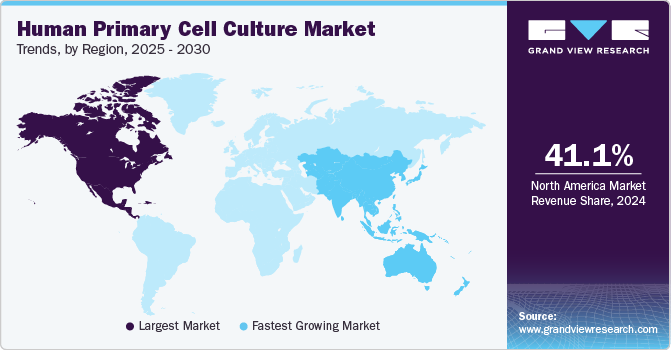
- North America human primary cell culture market accounted for the largest market share of 41.12% in 2024 for the human primary cell culture industry.
- The U.S. human primary cell culture market is expected to grow over the forecast period.
- Based on product, the primary cells segment dominated the market with a share of 36.35% in 2024.
- Based on application, the therapy development segment dominated the market with a share of 40.83% in 2024.
- Based on end-use, the pharmaceutical & biotechnology companies segment dominated the market with a share of 48.02% in 2024.
Market Size & Forecast
- 2024 Market Size: USD 3.86 Billion
- 2030 Projected Market Size: USD 7.15 Billion
- CAGR (2025 - 2030): 11.05%
- North America: Largest market in 2024
- Asia Pacific:Fastest growing market
The market is experiencing rapid growth due to its critical role in advancing biological research and therapeutic development. As the global focus on precision medicine intensifies, the demand for human primary cells, which provide more biologically accurate models than traditional cell lines, has surged. These cells, derived directly from human tissues, offer a more realistic representation of human biology, making them invaluable in drug discovery, disease modeling, and toxicology studies. Their ability to replicate the complexity of human organs and tissues allows researchers to study cellular responses and therapeutic interventions at a more granular level.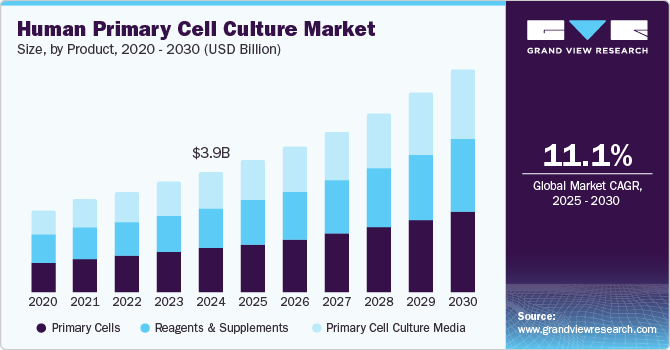
The human primary cell culture industry is positioned for growth as the healthcare industry addresses a significant cancer burden. According to the statistics published by the National Institutes of Health article in 2024, common cancers such as breast, prostate, and colorectal account for a substantial percentage of diagnoses—48% in men and 51% in women. With approximately 40.5% of individuals expected to be diagnosed with cancer during their lifetime, there is increasing reliance on precise in vitro models like human primary cell cultures to improve therapeutic outcomes and accelerate clinical advancements.
Furthermore, the growing focus on personalized medicine is a key driver for the market. Primary cell cultures, derived directly from patient tissues, are essential for developing these personalized therapeutic approaches. In addition, human primary cells offer a more biologically relevant model than immortalized cell lines, as they retain the characteristics of the original tissue, including cell-specific gene expression, metabolism, and response to stimuli. This makes them invaluable in personalized medicine research, where understanding how an individual’s cells respond to different treatments is critical for optimizing therapeutic strategies.
Moreover, the COVID-19 pandemic led to increased funding and investment in biomedical research, as governments and private organizations recognized the importance of improving diagnostic tools and healthcare solutions. This financial support boosted the demand for advanced research technologies, including human primary cell cultures, which are critical for developing precision medicines and understanding complex diseases at the cellular level. The pandemic also increased awareness of the limitations of traditional research models and pushed for innovations in cell culture techniques. As a result, there was a significant surge in the adoption of human primary cell culture systems in both academic and commercial settings, leading to advancements in cell culture technologies such as 3D models and organ-on-a-chip platforms.
Market Concentration & Characteristics
The innovation in the human primary cell culture industry is significant, driven by advancements in technology, materials, and applications across the biotechnology, pharmaceutical, and regenerative medicine industries. For instance, traditional 2D culture methods are being replaced by 3D systems to better mimic in vivo conditions. These include scaffold-based systems, hydrogels, and spheroid/organoid cultures.
The human primary cell culture industry has experienced significant growth, driven by strategic collaborations and partnerships among key industry players. These alliances aim to enhance product offerings, streamline research and development, and accelerate the commercialization of innovative cell culture technologies. For instance, in February 2023, Thermo Fisher Scientific and Celltrio announced a collaboration with Celltrio to develop a fully automated cell culture system, enhancing efficiency and consistency in cell culture processes.
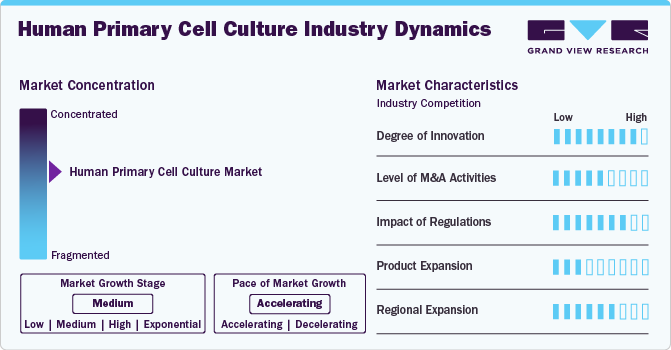
Regulatory guidelines are essential for ensuring the safety, efficacy, and quality of products used in cell culture processes, particularly in research, drug discovery, and clinical applications. Regulatory bodies such as the U.S. FDA, the European Union, and others require compliance with Good Manufacturing Practices (GMP) for primary cell culture products used in therapeutics and research.
Product expansion is a key strategy companies adopt in the human primary cell culture industry. It addresses evolving customer needs, increases market share, and capitalizes on emerging applications such as regenerative medicine, biologics production, and advanced cell-based research. For instance, in July 2024, Bioserve India launched advanced stem cell products from REPROCELL to drive innovation in research, drug development, regenerative medicine, and therapeutic discovery in the Indian market.
The human primary cell culture industry is experiencing significant regional expansion, indicating rapid growth and increasing market presence across different geographic regions. For instance, in 2023, Fujifilm Corporation allocated USD 200 million between two production units in its cell therapy expansion strategy. The funds are divided between Fujifilm Cellular Dynamics, focused on human induced pluripotent stem cells, and Fujifilm Diosynth Biotechnologies, a CDMO for biologics & advanced therapies.
Product Insights
The market is segmented by product into primary cells, reagents and supplements, and primary cell culture media. The primary cells segment dominated the market with a share of 36.35% in 2024. One significant segment driver is the expanding application of primary cells in cell-based therapies and regenerative medicine. With growing investments in stem cell research and biopharmaceutical innovations, primary cells are increasingly utilized in the development of innovative therapeutic solutions.
The primary cell culture media segment is expected to register the highest CAGR over the forecast period. The segment has been driven by the increasing demand for optimized media formulations that ensure primary cells' viability, growth, and functionality in research and therapeutic applications.
Application Insights
The market is segmented by application into drug discovery, therapy development, regenerative medicine, and other applications. The therapy development segment dominated the market with a share of 40.83% in 2024. This can be attributed to increasing investments in R&D activities and the rising demand for cell-based therapies. Primary cells are essential for the production of biologics, monoclonal antibodies, and vaccines. Moreover, the pandemic demonstrated the critical role of cell culture in virology, driving sustained investment.
Regenerative medicine is projected to grow rapidly during the forecast period, driven by the need for human-relevant models to develop advanced therapies. Primary cells are essential for stem cell research, tissue engineering, and wound healing applications.
End-use Insights
Based on end use, the human primary cell culture industry is segmented into pharmaceutical & biotechnology companies, CMOs & CROs, and academic research institutes. The pharmaceutical & biotechnology companies segment dominated the market with a share of 48.02% in 2024. The pharmaceutical and biopharmaceutical industries are witnessing substantial growth in the market, driven by the growing adoption of cell-based models for drug discovery, development, and manufacturing. By utilizing human primary cells, these companies can more accurately replicate in vivo conditions, improving the precision & applicability of preclinical research.
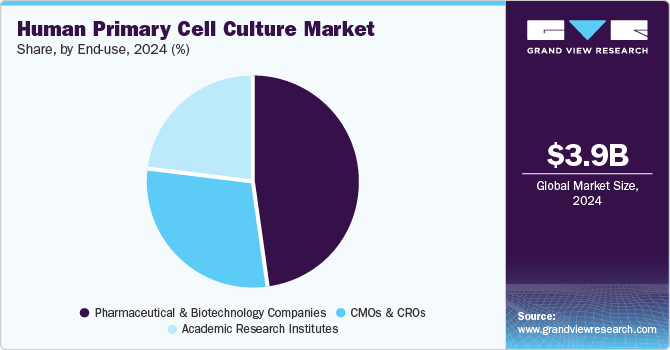
The CMOs & CROs segment is expected to register the highest CAGR over the forecast period. The rise of complex biologics and personalized medicine is fueling the demand for contract services, as CROs and CMOs play a crucial role in supporting clinical trials, process development, and large-scale production. With the continued focus on biomanufacturing and stringent regulatory requirements, CROs and CMOs are increasingly adopting human primary cell cultures to improve product quality, compliance, and speed to market, further driving growth in this segment.
Regional Insights
North America human primary cell culture market accounted for the largest market share of 41.12% in 2024 for the human primary cell culture industry. This dominance can be attributed to the strong research infrastructure, substantial investments in biomedical research, and the presence of leading industry players in the region. North America boasts a thriving scientific community and renowned research institutions that drive innovation in cell culture technologies. Furthermore, the region is home to numerous biotechnology and pharmaceutical companies heavily investing in primary cell culture research and development.
U.S. Human Primary Cell Culture Market Trends
The U.S. human primary cell culture market is expected to grow over the forecast period. Healthcare spending on primary cell culture has significantly risen over the years, and the trend is expected to continue due to the potential benefits of primary cells, such as stem cell therapy, cancer diagnosis, organogenesis, the prevalence of cancer disease, and the rising demand for regenerative medicine.
Europe Human Primary Cell Culture Market Trends
Europe's human primary cell culture market was identified as a lucrative region in this industry. The rising demand for human primary cell culture technology and cell biology research in Europe has shown significant development in the past few years.
The UK human primary cell culture market held a significant share in 2024. Rising investment in stem cell research is expected to fuel the country's demand for primary cell culture.
Human primary cell culture market in France is expected to grow significantly over the forecast period. A major contributor is the increasing investment in pharmaceutical and biotechnology research and development, where primary cell cultures are essential for drug discovery, toxicity testing, and the development of personalized medicine.
Asia Pacific Human Primary Cell Culture Market Trends
The Asia Pacific human primary cell culture marketheld the highest CAGR of 12.21% over the forecast period and is expected to be the fastest-growing region over the forecast period. The growth is mainly due to the increasing number of cancer patients and the rising prevalence of chronic disease, which stimulate the demand for stem cell therapy and transplantation in the region.
China's human primary cell culture market is expected to grow over the forecast period. This is attributed to the rising healthcare needs and a growing prevalence of chronic diseases like cancer, diabetes, and cardiovascular conditions. There is a significant demand for more accurate and efficient models to study these diseases within the country.
Human primary cell culture market in Japan is witnessing rapid growth over the forecast period. Japan has many stem cell transplants and clinical research studies being conducted. The rising cases of cancer, the aging population, and the increasing disease burden are further expected to stimulate the demand for human primary cell cultures
Middle East And Africa Human Primary Cell Culture Market Trends
The MEA human primary cell culture marketis expected to grow exponentially over the forecast period due to several key factors. The increased disposable income in Middle Eastern and African countries has resulted in infrastructural development. Further increases in awareness and disposable income in such regions may bridge this gap and provide the cell culture industry with added business, investments, and partnerships.
Saudi Arabia human primary cell culture market is expected to grow over the forecast period. Saudi Biotech, a leading pharmaceutical and biotech company, uses primary cell cultures for vaccine development and other biologic therapies, contributing to the market's growth.
Human primary cell culture market in Kuwait is anticipated to grow moderately over the forecast period. The market is gradually gaining momentum, driven by the country’s efforts to enhance its healthcare research capabilities and adopt advanced medical science technologies.
Key Human Primary Cell Culture Company Insights
The market players operating in the market are adopting product approval to increase the reach of their products in the market, improve their availability in diverse geographical areas, and expandcell to enhance production/research activities. In addition, several market players are acquiring smaller players to strengthen their market position. This strategy enables companies to increase their capabilities, expand their product portfolios, and improve their competencies.
Key Human Primary Cell Culture Companies:
The following are the leading companies in the human primary cell culture market. These companies collectively hold the largest market share and dictate industry trends.
- Thermo Fisher Scientific Inc.
- Merck KGaA
- Lonza
- STEMCELL Technologies
- Cell Biologics, Inc.
- PromoCell
- ZenBio
- AllCells
- American Type Culture Collection
- Axol Biosciences Ltd.
Recent Development
-
In October 2024, Thermo Fisher Scientific established a bioprocess design center in Genome Valley, Hyderabad. This move reflects the growing demand in the human primary cell culture market.
-
In July 2024, Merck began commercial production at its first GMP-compliant cell culture media manufacturing line in China.
-
In April 2024, PromoCell introduced Cryo-SFM Plus, an advanced cryopreservation medium that ensures the integrity and viability of human and animal cells during long-term storage, tailored for the human primary cell culture industry.
-
In June 2023, MEDiC Life Sciences, a biotech startup from Silicon Valley, partnered with Bristol Myers Squibb to conduct research using its scalable 3D tumor models for CRISPR genomics screens in solid tumors. MEDiC will also use its co-culture platform to identify genes involved in immune cell targeting of cancer. This collaboration highlights the growing potential in the market
Human Primary Cell Culture Market Report Scope
Report Attribute
Details
Market size value in 2025
USD 4.24 billion
Revenue Forecast in 2030
USD 7.15 billion
Growth rate
CAGR of 11.05% from 2025 to 2030
Actual data
2018 - 2024
Forecast period
2025 - 2030
Quantitative units
Revenue in USD million/billion and CAGR from 2025 to 2030
Report Coverage
Revenue forecast, company ranking, competitive landscape, growth factors, and trends
Segments Covered
Product, application, end-use, region
Regional scope
North America; Europe; Asia Pacific; Latin America; MEA
Country scope
U.S.; Canada; Mexico; UK; Germany; France; Italy; Spain; Denmark; Sweden; Norway; Japan; China; India; Australia; Thailand; South Korea; Brazil; Argentina; South Africa; Saudi Arabia, UAE; Kuwait
Key companies profiled
Thermo Fisher Scientific Inc., Merck KGaA, Lonza STEMCELL Technologies Inc., Cell Biologics, Inc., PromoCell, ZenBio, AllCells, American Type Culture Collection, Axol Biosciences Ltd.
Customization scope
Free report customization (equivalent up to 8 analyst's working days) with purchase. Addition or alteration to country, regional & segment scope.
Pricing and purchase options
Avail customized purchase options to meet your exact research needs. Explore purchase options
Global Human Primary Cell Culture Market Report Segmentation
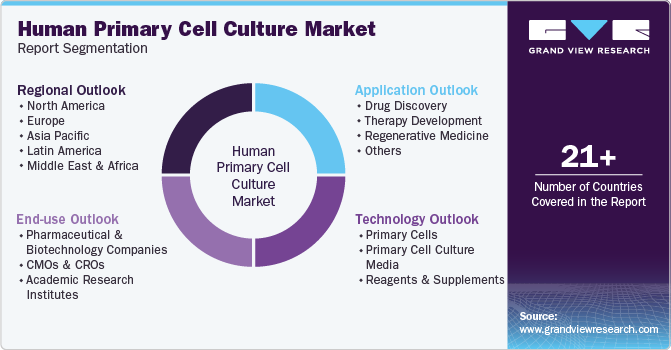
This report forecasts revenue growth and provides an analysis of the latest trends in each of the sub-segments from 2018 to 2030. For this report, Grand View Research has segmented the global human primary cell culture market based on product, application, end use, and region:
-
Product Outlook (Revenue, USD Million, 2018 - 2030)
-
Primary Cells
-
Hematopoietic Cells
-
Skin Cells
-
Hepatocytes
-
Gastrointestinal Cells
-
Lung Cells
-
Renal Cells
-
Heart Cells
-
Skeletal and Muscle Cells
-
Other Primary Cells
-
-
Primary Cell Culture Media
-
Serum-free Media
-
Serum-containing Media
-
Others
-
-
Reagents and Supplements
-
Attachment Solutions
-
Buffers and Salts
-
Sera
-
Growth Factors and Cytokines
-
Others
-
-
-
Application Outlook (Revenue, USD Million, 2018 - 2030)
-
Drug Discovery
-
Therapy Development
-
Regenerative Medicine
-
Others
-
-
End-use Outlook (Revenue, USD Million, 2018 - 2030)
-
Pharmaceutical & Biotechnology Companies
-
CMOs & CROs
-
Academic Research Institutes
-
-
Regional Outlook (Revenue, USD Million, 2018 - 2030)
-
North America
-
U.S.
-
Canada
-
Mexico
-
-
Europe
-
UK
-
Germany
-
France
-
Italy
-
Spain
-
Denmark
-
Sweden
-
Norway
-
-
Asia Pacific
-
Japan
-
China
-
India
-
Australia
-
Thailand
-
South Korea
-
-
Latin America (LATAM)
-
Brazil
-
Argentina
-
-
Middle East and Africa (MEA)
-
South Africa
-
Saudi Arabia
-
UAE
-
Kuwait
-
-
Frequently Asked Questions About This Report
b. The growth of the market is driven by the rising demand for biologics, expanding cancer research efforts, an increasing number of pharmaceutical and biotechnology companies, the superior benefits of primary human cells compared to cell lines, and enhanced government support for cell-based research initiatives.
b. The global human primary cell culture market size was valued at USD 3.86 billion in 2024 and is expected to reach USD 4.24 billion by 2025.
b. The market is projected to witness a compound annual growth rate (CAGR) of 11.05% from 2025 to 2030 to reach USD 7.15 billion by 2030.
b. The primary cells segment dominated the market with a share of 36.35% in 2024. One significant segment driver is the expanding application of primary cells in cell-based therapies and regenerative medicine.
b. Some of the prominent companies in the global human primary cell culture market include Thermo Fisher Scientific Inc., Merck KGaA, Lonza STEMCELL Technologies Inc., Cell Biologics, Inc., PromoCell, ZenBio, AllCells, American Type Culture Collection, Axol Biosciences Ltd.

Share this report with your colleague or friend.
Need a Tailored Report?
Customize this report to your needs — add regions, segments, or data points, with 20% free customization.


ISO 9001:2015 & 27001:2022 Certified
We are GDPR and CCPA compliant! Your transaction & personal information is safe and secure. For more details, please read our privacy policy.
Trusted market insights - try a free sample
See how our reports are structured and why industry leaders rely on Grand View Research. Get a free sample or ask us to tailor this report to your needs.