- Home
- »
- Medical Devices
- »
-
Fertility Testing Devices Market Size & Share Report, 2033GVR Report cover
![Fertility Testing Devices Market Size, Share & Trends Report]()
Fertility Testing Devices Market (2026 - 2033) Size, Share & Trends Analysis Report By Product (Ovulation Prediction Kits, Fertility Monitors, Male Fertility Testing Devices), By Application (Female, Male Fertility Testing), By End Use, By Region, And Segment Forecasts
Market Size, 2025
$2.5BMarket Estimate, 2026
$2.6BMarket Forecast, 2033
$3.9BCAGR, 2026–2033
5.5%Fertility Testing Devices Market Summary
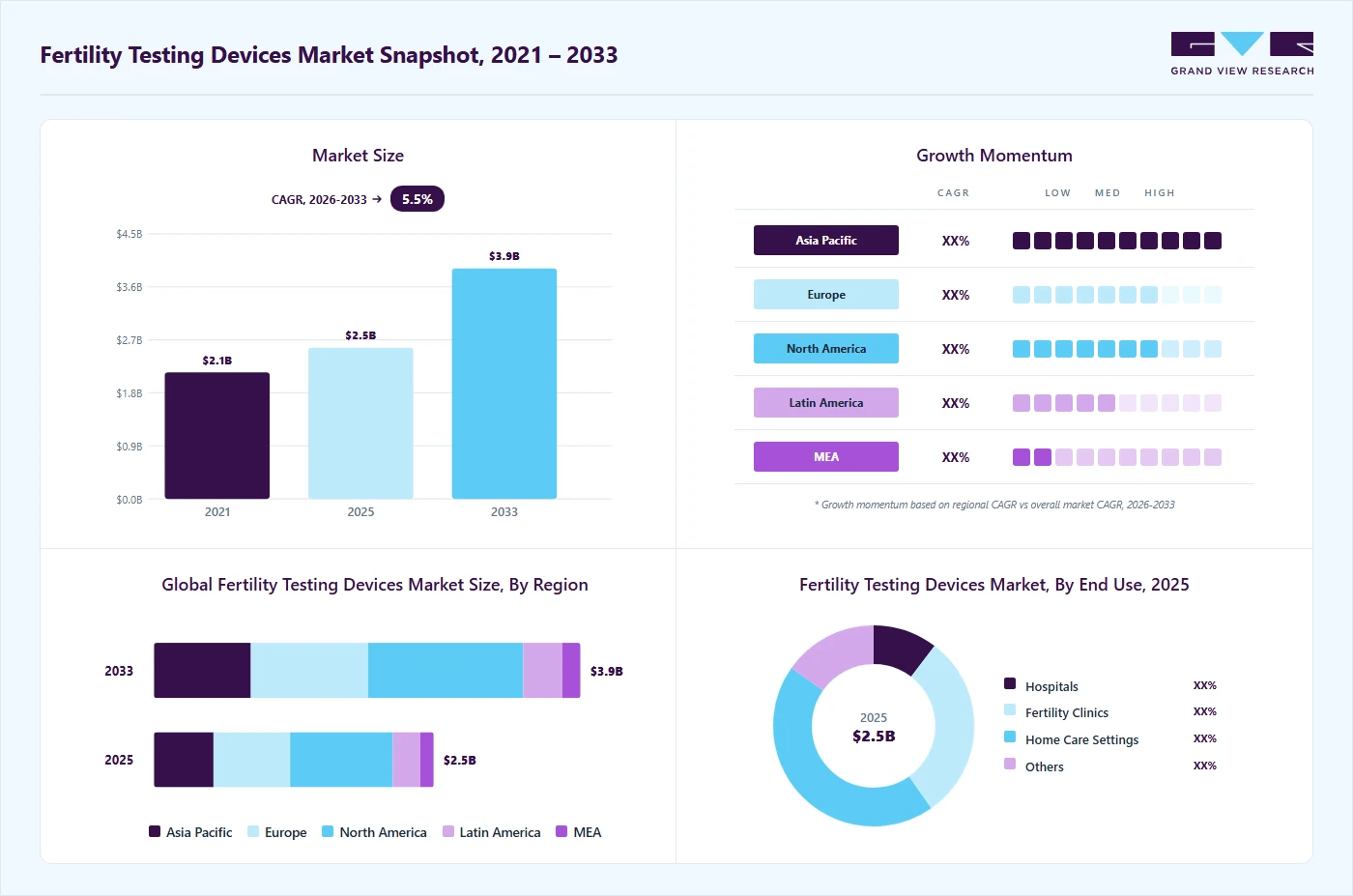
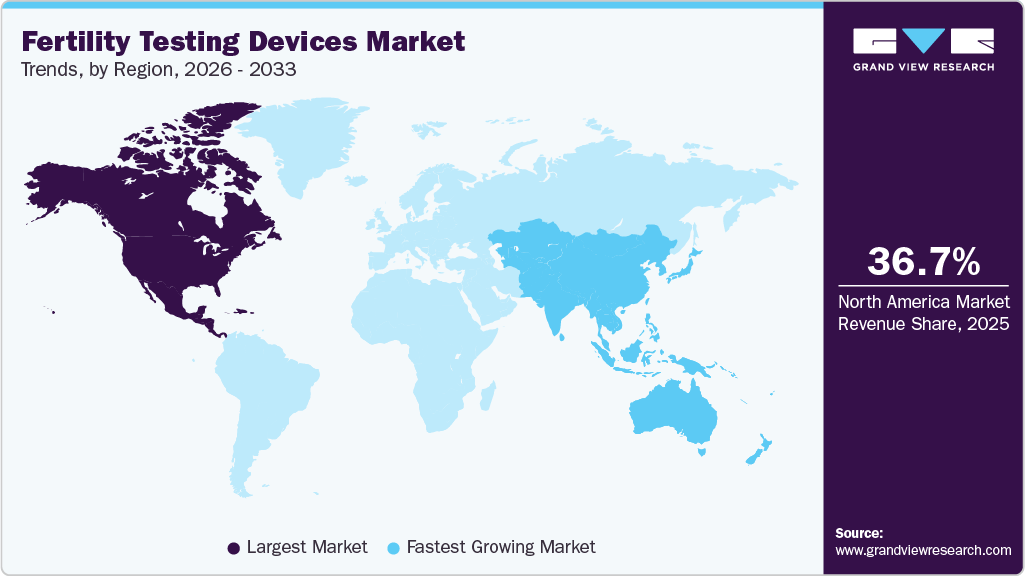
The global Fertility testing devices market size was valued at USD 2.5 billion in 2025 and is projected to grow from USD 2.6 billion in 2026 to USD 3.8 billion by 2033, at a CAGR of 5.5% from 2026 to 2033. The North America dominated the global market in 2025 and accounted for the largest revenue share of 36.69%. Rising awareness about fertility health, delayed parenthood and lifestyle changes, technological advancements in home testing devices, and preference for at-home and non-invasive testing are some of the factors driving industry growth.
Key Market Trends & Insights
- By product: Ovulation prediction kits segment dominated the market in 2025 with a share of 42.01%.
- By end-use: Home care settings segment accounted for the largest share of 44.38% in 2025.
- By application: Female fertility testing segment dominated the market in 2025.
Regional Highlights
- Largest regional market: North America (36.69% revenue share, 2025)
- Fastest-growing regional market: Asia Pacific (highest CAGR, 2026-2033)
- By country: U.S. fertility testing devices market is anticipated to register the fastest growth rate during the forecast period.
Market Size & Forecast
- Market size in 2025: USD 2.5 Billion
- Estimated market size in 2026: USD 2.6 Billion
- Projected market size by 2033: USD 3.8 Billion
- CAGR (2026-2033): 5.5%
Furthermore, the growth of IVF and other ART procedures encourages pre-conception monitoring using fertility devices, thereby escalating market growth. Many women are choosing to start families later due to career priorities, higher education, and personal goals. Delaying parenthood can affect fertility, leading to increased interest in monitoring reproductive health.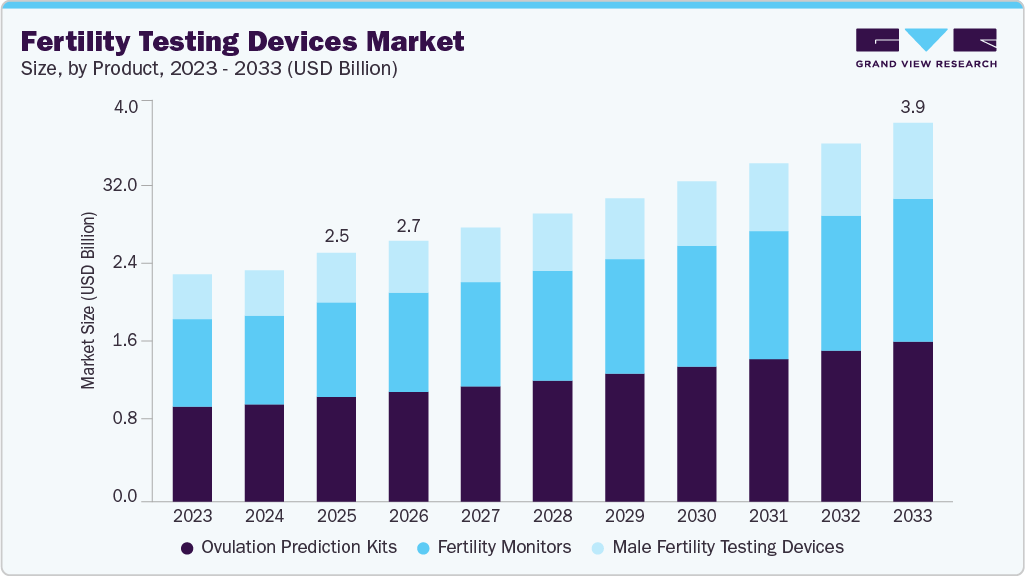
Percentage of first births , by age of mother: U.S., 2018 - 2023
Age Group
2018
2019
2020
2021
2022
2023
Younger than 20
10.7
10.4
9.9
9.1
8.8
8.7
20-24
26.7
26.6
26.3
25.6
25.4
25.1
25-29
28.6
28.5
28.3
28.4
28.4
28.5
30-34
23.2
23.5
24.1
25.1
25
25.1
35 and older
10.8
11
11.4
11.9
12.3
12.5
Source:National Center for Health Statistics, National Vital Statistics System, natality data file
The table shows a clear shift toward older maternal ages, with the proportion of first births among women aged 30-34 and 35+ steadily increasing from 2016 to 2023, highlighting delayed parenthood and supporting the growing demand for fertility testing devices.
In addition to delayed parenthood, lifestyle factors significantly impact reproductive health for both men and women. High stress levels, irregular sleep patterns, poor dietary habits, limited physical activity, and smoking reduce fertility in men and women. Smoking in men has been linked to reduced sperm count, motility, and overall semen quality, while in women it affects ovarian reserve and conception rates. For instance, as per the Global Action to End Smoking, in 2022, approximately 253.0 million individuals (200.2 million males and 53.5 million females) aged 15 and above were users of tobacco products in India.These lifestyle challenges have led many individuals to actively monitor their reproductive health through home-based and non-invasive fertility testing devices.

Moreover, the rising prevalence of infertility globally has further increased demand for fertility testing devices for both men and women. According to a WHO report published in 2023, approximately 17.5% of the adult population, about 1 in 6 worldwide, experiences infertility, highlighting the urgent need for increased access to affordable, high-quality care for those in need. Contributing factors include hormonal imbalances, reproductive disorders such as polycystic ovary syndrome (PCOS) in women, and declining sperm quality in men.
Annual Incidence Rates of Female Infertility Diagnoses by Age Group, Active Component Service Women, U.S. Armed Forces, 2019-2023
Age Group
2019
2020
2021
2022
2023
<20
18.3
18
11.1
7.5
6.4
20-24
51.7
42.1
42
35.3
32.6
25-29
99.5
92.2
89.2
75.7
67.3
30-34
166.5
132
149.2
137.6
131.9
35-39
176.1
158.5
166.9
150.8
145.7
40-44
101
84.4
99.7
93.8
97
45-49
10.4
5.6
7.4
5.8
4.4
Market Dynamics
The increasing trend of delayed parenthood is emerging as a major driver for the fertility testing devices market. Many individuals, particularly women, are choosing to postpone pregnancy due to higher education, career advancement, financial planning, and changing lifestyle preferences. Many women are choosing to start families later due to career priorities, higher education, and personal goals. Delaying parenthood can affect fertility, leading to increased interest in monitoring reproductive health.
U.S. Fertility Rates and Birth Trends by Maternal Age Group, 2024–2025
Age Group
2024 Fertility Rate / Share
2025 Fertility Rate / Share (Provisional)
Trend
15–17 years
5.3 births per 1,000 females
4.7 births per 1,000 females
Declined by 11%; record low
18–19 years
23.6 births per 1,000 females
21.9 births per 1,000 females
Declined by 7%
15–19 years (overall teens)
12.6 births per 1,000 females
11.7 births per 1,000 females
Declined by 7%; record low
20–24 years
Continued decline
Continued decline
Reflected delayed parenthood trend
25–29 years
Relatively stable
Relatively stable
Remained major childbearing age group
30–34 years
Increasing share of first births
Increasing share of first births
Growing delayed motherhood trend
35 years and above
Increasing fertility contribution
Increasing fertility contribution
Rising late-age pregnancies
Source:National Center for Health Statistics, National Vital Statistics System, Natality Data File (2025 Provisional Report).
Moreover, the rising prevalence of infertility globally has further increased demand for fertility testing devices for both men and women. According to the American Society for Reproductive Medicine report published in December 2025, the average global fertility rate declined to approximately 2.2 births per woman in 2024, reflecting a continuing reduction in reproductive rates across both developed and developing countries. This decline is increasingly associated with the rising prevalence of infertility and reproductive health challenges worldwide. As fertility rates continue to fall below replacement levels in many countries, awareness regarding reproductive health monitoring, fertility assessment, and early infertility detection is rising significantly, thereby supporting demand for fertility testing devices, ovulation monitoring solutions, and assisted reproductive technologies.
Limited diagnostic accuracy and reliability associated with home-based fertility testing devices represent a key restraint for the market. Although these products provide convenience, privacy, and accessibility to consumers, their diagnostic capabilities remain comparatively limited compared with laboratory-based fertility assessments and clinical diagnostic procedures. Variability in hormone levels, irregular menstrual cycles, improper sample collection, user interpretation errors, and underlying reproductive disorders can affect test accuracy and lead to false-positive or false-negative results. Consequently, concerns about the reliability of results may reduce consumer confidence and limit large-scale adoption, particularly among patients seeking comprehensive fertility evaluation.
The challenge is particularly significant for ovulation prediction kits and at-home sperm testing devices, which often measure limited biomarkers instead of providing comprehensive fertility assessments. For instance, ovulation kits typically detect luteinizing hormone (LH) surges but cannot confirm successful ovulation or overall reproductive health. Similarly, many home sperm testing kits assess sperm concentration but do not fully evaluate sperm morphology, motility, DNA fragmentation, or other critical fertility parameters commonly analyzed in clinical laboratories. Healthcare professionals, therefore, continue to recommend confirmatory clinical testing for individuals facing prolonged infertility issues..
Consumers are increasingly seeking convenient, private, and non-invasive fertility monitoring solutions that can be used without frequent hospital or clinic visits. This trend is particularly strong among working professionals, women delaying pregnancy, individuals undergoing fertility treatments, and couples preferring proactive reproductive health management. Advancements in smartphone-connected ovulation trackers, AI-enabled fertility apps, wearable hormone-monitoring devices, and at-home sperm-testing kits are transforming fertility tracking from periodic clinical testing to continuous, personalized monitoring. The integration of digital analytics, cloud-based data tracking, and predictive fertility insights is further improving user engagement and test accuracy, thereby expanding the addressable consumer base beyond infertility patients to include general wellness and family planning users.
Moreover, companies such as Modern Fertility, now part of Ro Health, have expanded consumer access to at-home hormone testing and fertility assessment services in the U.S. Similarly, Mira Fertility offers AI-powered fertility analyzers that quantitatively track hormone levels at home, enabling more precise ovulation prediction compared to conventional test strips. Wearable fertility technology providers such as Ava Women have also introduced sensor-based fertility tracking bracelets that continuously monitor physiological parameters during sleep. In addition, increasing telehealth adoption and growing awareness of reproductive wellness are encouraging partnerships between fertility clinics, diagnostic companies, and digital health platforms to improve remote fertility management. These innovations are expected to accelerate market penetration, particularly among younger tech-savvy consumers and populations with limited access to specialized fertility clinics.
The demand for at-home ovulation kits, hormone monitors, and male fertility testing devices continues to grow, driven by consumer preferences for convenience and privacy. The clinical reliability of these products persists when compared to laboratory-based diagnostic testing. Fertility outcomes are shaped by a complex interplay of hormonal, physiological, and lifestyle factors, and at-home diagnostic devices may not consistently offer comprehensive or fully accurate assessments. This limitation is particularly evident among individuals with irregular menstrual cycles, underlying hormonal disorders such as Polycystic Ovary Syndrome or thyroid dysfunction, or multifactorial infertility challenges. The potential for false-positive or false-negative results may contribute to emotional distress, delayed engagement with healthcare professionals, suboptimal self-management decisions, and a decline in consumer confidence in home-based fertility monitoring technologies.
In male fertility testing, several home sperm testing kits primarily measure sperm concentration but do not comprehensively evaluate sperm morphology, motility, DNA fragmentation, or overall reproductive health, limiting their diagnostic utility. Similarly, ovulation prediction kits may inaccurately estimate fertile windows in women with fluctuating hormone levels or irregular ovulation patterns. These limitations create hesitation among healthcare professionals about relying fully on consumer-grade fertility devices for clinical decision-making. Moreover, regulatory scrutiny and product recall further highlight this challenge. In recent years, manufacturers of fertility and reproductive diagnostic products have faced increasing pressure from regulatory agencies, such as the U.S. Food and Drug Administration, to improve product validation, transparency in labeling, and clinical performance standards for over-the-counter fertility tests. A notable example highlighting the reliability and regulatory challenges in the fertility testing devices market is the November 2025 Class II recall of the Exploro Highly Sensitive Male Fertility / Sperm Concentration Test by Changchun Wancheng Bio-Electron Co., Ltd. According to the U.S. Food and Drug Administration, the recall was initiated because the sperm concentration test strips and related near-patient testing products were distributed in the U.S. market without the required regulatory clearance under the FDA’s 510(k) process.
Market Concentration & Characteristics
The industry has seen significant innovation over the past decade, driven by the demand for home-based, non-invasive, and accurate reproductive health monitoring. Modern ovulation prediction kits now incorporate digital sensors, smartphone connectivity, and AI-powered cycle tracking, allowing users to receive personalized fertility insights. For instance, Clearblue Advanced Fertility Monitor tracks both luteinizing hormone (LH) and estradiol (E3G), improving prediction accuracy by up to 99% for peak fertility days. Moreover, male fertility testing has also advanced, with devices such as Yo Home Sperm Test providing smartphone-based sperm motility and concentration analysis at home, showing over 95% correlation with laboratory semen analysis.
The level of mergers and acquisitions in the market remains relatively low, with few recent deals observed. Most companies focus on organic growth through product innovation and expansion of at-home and digital fertility solutions rather than consolidation.
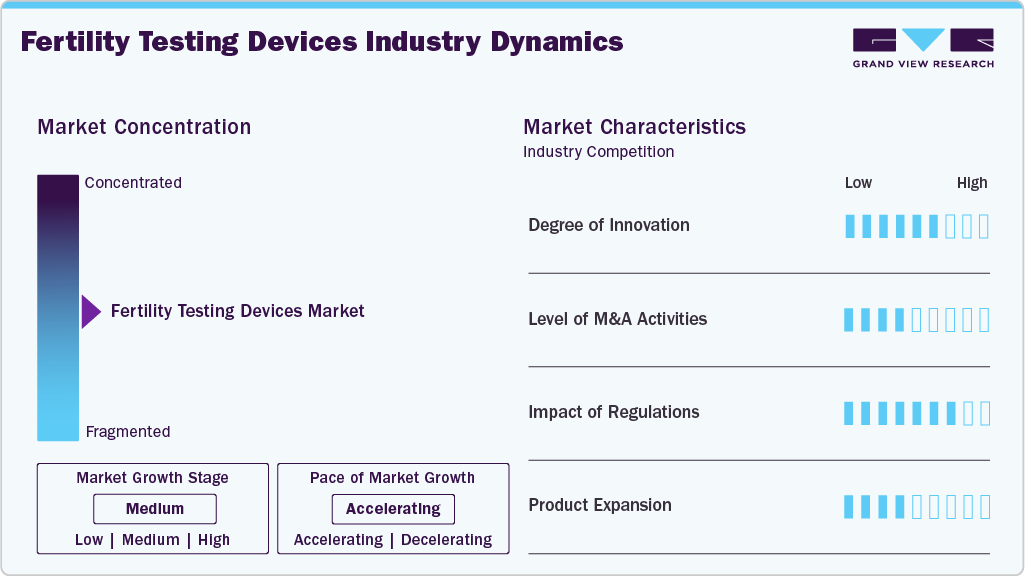
Agencies such as the U.S. Food and Drug Administration (FDA) and the European Medicines Agency (EMA) classify ovulation prediction kits, fertility monitors, and home semen analysis devices as medical devices, requiring clearance or approval before market launch.Compliance with such regulations increases consumer trust but may slow product launch timelines, impacting market growth, especially for emerging home-based devices.
Several market players are expanding their business by introducing new products. For instance, in August 2023, Trajan Scientific and Medical supplied CE-IVD registered Mitra devices to Fertilly, a German start-up, which launched Europe’s first at-home fertility test kits using dried blood microsampling with VAMS technology.
Product Insights
The ovulation prediction kits segment dominated the market in 2025 with a share of 42.01%. Increasing awareness among women and couples about reproductive health and fertility planning are boosting market growth.Delayed parenthood and rising infertility rates lead to greater reliance on home-based ovulation monitoring to optimize conception timing. These kits are non-invasive, convenient, and increasingly integrated with digital health platforms, allowing users to track cycles accurately and receive personalized insights. Furthermore, technological innovations such as smartphone connectivity, improved hormone detection sensitivity, and user-friendly interfaces have enhanced kit accuracy and usability.
The male fertility testing devices segment is expected to grow significantly over the forecast period, due to increasing awareness about male reproductive health and the rising prevalence of male infertility. For instance, according to a study released in J Clin Med in 2025, male infertility is a common issue impacting about 15% of couples globally.Factors such as delayed parenthood, lifestyle-related issues such as obesity, smoking, and alcohol consumption, and environmental exposures have further highlighted the need for accessible at-home and clinical testing solutions. In addition, technological advancements, including microfluidic semen analysis, smartphone-integrated devices, and rapid motility and sperm concentration detection kits, have improved convenience, accuracy, and affordability for consumers.
Application Insights
The female fertility testing segment dominated the market in 2025, owing to the increasing accessibility and affordability of advanced diagnostic technologies.Innovations such as high-sensitivity hormone assays, self-collected blood microsampling, and rapid follicle-stimulating hormone (FSH) and anti-Müllerian hormone (AMH) tests allow women to assess ovarian reserve and reproductive potential with clinical accuracy at home. In addition, integration with digital health platforms enables automated result interpretation, trend tracking, and teleconsultations, further encouraging adoption. Furthermore, increasing infertility among women is driving segmental growth. For instance, as per the study published in International Journal of Reproduction, Contraception, Obstetrics and Gynecology in 2023, among infertile women, 57.33% experienced primary infertility, and 42.66% had secondary infertility, with the 26-30 age group being the most affected, highlighting the importance of early and accurate assessment.
The male fertility testing segment is expected to grow at the fastest CAGR over the forecast period. Factors such as declining sperm counts, hormonal imbalances, and increasing prevalence of lifestyle-related infertility have prompted men to seek early and convenient diagnostic solutions. As per the 2022 NIH report, human sperm counts have decreased by over 50% worldwide in the last five decades, highlighting the need for timely testing. Furthermore, technological innovations, including home-based semen analysis kits and microfluidic sperm testing devices, allow men to assess motility, concentration, and morphology without visiting clinics, reducing social stigma and encouraging proactive health monitoring, thereby driving industry growth.
End Use
The home care settings segment accounted for the largest share of 44.38% in 2025 due to rising preference for convenient, non-invasive, and private fertility monitoring solutions.Increasing awareness about reproductive health, coupled with the desire to track ovulation, hormone levels, and sperm quality in the comfort of one’s home, is driving adoption of at-home fertility testing devices. In addition, advancements in device accuracy, ease of use, and integration with digital health platforms have enhanced user confidence and engagement. Moreover, rising internet penetration and e-commerce availability have expanded access to these devices, making home-based fertility care an increasingly viable and preferred option.
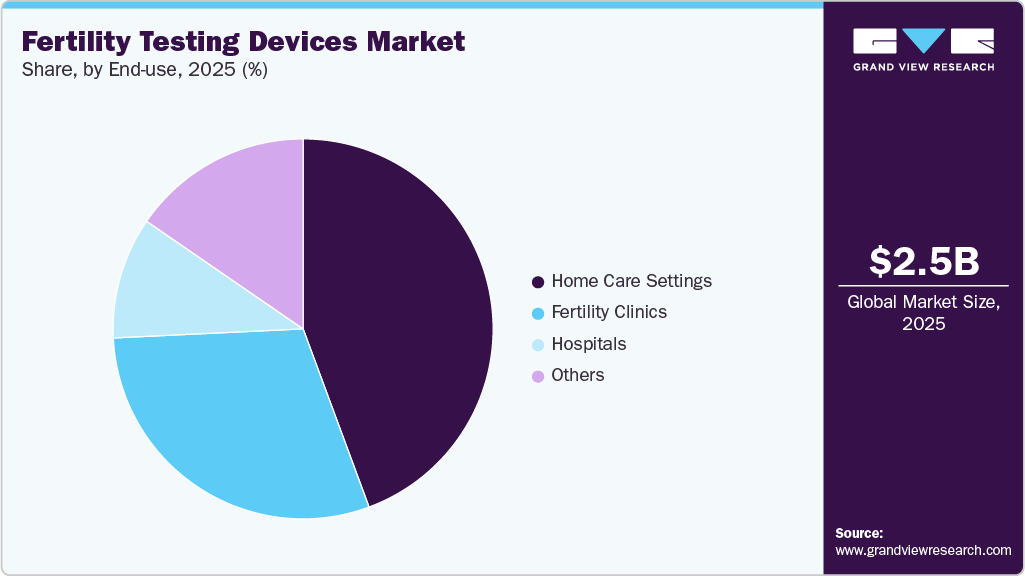
Fertility clinics are expected to grow at the fastest CAGR over the forecast period, owing to increasing demand for specialized reproductive healthcare and advanced assisted reproductive technologies (ART).Fertility clinics offer comprehensive services including ovulation induction, in vitro fertilization (IVF), intrauterine insemination (IUI), and hormone monitoring, attracting patients seeking personalized care. The expansion of insurance coverage and reimbursement policies in certain regions has further increased accessibility to clinic-based treatments.Moreover, increased female workforce participation, and delayed parenthood trends have also contributed to higher patient volumes, thus supplementing industry growth.
Regional Insights
North America fertility testing devices market dominated the industry in 2025 with a share of 36.69%, owing to the high awareness of reproductive health and the widespread availability of advanced assisted reproductive technologies (ART).Moreover, supportive insurance coverage in certain states and growing telehealth adoption for reproductive health consultations have further enhanced accessibility to fertility testing devices.
U.S. Fertility Testing Devices Market Trends
Fertility testing devices market in the U.S.accounted for the largest share in North America due to the increasing use of personalized fertility care and demand for early detection tools. Fertility testing devices that provide rapid hormone or sperm analysis at home are becoming popular, especially among millennials seeking convenience and privacy. Moreover, partnerships between device manufacturers and telehealth platforms are facilitating remote consultations and continuous monitoring, further driving adoption.
Asia Pacific Fertility Testing Devices Market Trends
The market in Asia Pacific is expected to register significant growth over the forecast period. This is due to rising awareness, cultural shifts, and increasing adoption of fertility care services. Furthermore,growing urbanization, delayed marriage, and lifestyle changes such as smoking and poor diet are driving demand for both male and female fertility testing devices.
Fertility testing devices market in India dominated the Asia Pacific marketdue to a rise in lifestyle-related infertility. According to an article published in the Indian Journal of Community Medicine in 2024, the prevalence of infertility in India ranges from 3.9% to 16.8%.
China fertility testing devices marketis expected to register significant growth over the forecast period in Asia Pacific marketowing to the rising prevalence of infertility, government initiatives promoting reproductive health, and increasing awareness among working women.Fertility clinics and home-based testing devices are witnessing higher adoption due to privacy preferences and convenience, alongside expansion of ART services.
Europe Fertility Testing Devices Market Trends
Europe held a substantial revenue share of the global industry owing to the rising investments in reproductive healthcare infrastructure and public awareness campaigns about fertility preservation. Furthermore, growing government support coupled with increasing lifestyle related issues is driving market growth.
Germany fertility testing devices market dominated the Europe industry owing to the widespread health insurance coverage for fertility testing and advanced clinical infrastructure. Moreover, increasing infertile population in the region is driving market growth. For instance, as per an article published in Deutsche Welle in 2024, infertility affects 1 in 6 women in Germany.
Fertility testing devices market in the UK is one of the largest markets in Europe and is expected to witness lucrative growth owing to the rising prevalence of age-related infertility among women over 30, coupled with growing awareness of male reproductive health.Increased awareness of ovarian reserve testing and non-invasive hormone monitoring has encouraged both at-home and clinic-based fertility testing, particularly among professionals balancing career and family planning.
Latin America Fertility Testing Devices Market Trends
The industry in Latin America is expected to register considerable growth over the forecast period owing to the increasing investment in reproductive health, expanding private healthcare facilities, and rising awareness about infertility. In countries such as Brazil and Mexico, cultural stigma around fertility is gradually declining, prompting more individuals to seek testing and treatment.
Brazil fertility testing devices market is expected to register significant growth over the forecast period in Latin America market.The growth of private fertility clinics offering complementary diagnostic services has stimulated interest in pre-clinic at-home testing to prepare patients for consultations.
Middle East & Africa Fertility Testing Devices Market Trends
The industry in the Middle East & Africa (MEA) is driven by rising awareness of fertility health, adoption of advanced reproductive technologies, and high-income urban populations seeking personalized healthcare solutions.In countries such as UAE and Saudi Arabia, government initiatives to improve maternal and reproductive health, alongside rising investment in private fertility clinics, have driven device adoption.
Key Fertility Testing Devices Company Insights
Key companies in the market are engaged in adopting strategies such as mergers and acquisitions, new service launches, partnerships, collaborations, and expansion to strengthen their position in the market.
Key Fertility Testing Devices Companies:
The following are the leading companies in the fertility testing devices market. These companies collectively hold the largest market share and dictate industry trends.
- viO HealthTech Inc
- Accuquik
- SPD Swiss Precision Diagnostics GmbH
- Tempdrop
- Inito Health Tech Private Limited
- Mira
- YO Home Sperm Test
- Geratherm Medical AG
- bioZhena Corporation
- Eli Health
Competitive Benchmarking
Operating Strategies
Competitive Edge
Weaknesses
Mature Players: viO HealthTech Inc
- Focus on continuous product innovation through advanced digital fertility monitoring systems, AI-enabled cycle tracking, and connected mobile applications.
- Strengthen distribution through pharmacies, hospitals, fertility clinics, e-commerce platforms, and direct-to-consumer channels.
- Strong brand recognition and high consumer trust developed through established clinical credibility and large customer bases.
- Broad product portfolios covering ovulation prediction kits, sperm testing devices, fertility monitors, and digital reproductive health platforms.
- Higher product pricing compared to low-cost emerging competitors may limit penetration in price-sensitive markets.
- Large organizational structures can slow innovation speed and product commercialization timelines.
Emerging Players: Mira
- Focus on affordable, home-based, and smartphone-connected fertility testing solutions targeting younger and digitally active consumers.
- Utilize direct-to-consumer online sales models and social media marketing to rapidly build brand visibility.
- Faster innovation cycles and greater flexibility in adopting new digital health technologies.
- Lower operating costs and lean business structures enable competitive pricing strategies.
- Strong appeal among tech-savvy consumers seeking convenient and non-invasive fertility monitoring solutions.
- Regulatory compliance challenges and limited experience navigating complex approval pathways.
- Smaller financial resources may restrict large-scale R&D investment, international expansion, and marketing capabilities.
Recent Developments
-
In July 2024, OVUL launched saliva-based AI-fertility tracker, represents a fresh breakthrough in femtech by making ovulation and fertility monitoring simpler, more accurate, and far more user-friendly than traditional methods. The device works through a three-step process collecting a saliva sample, placing it on the analyzer, and receiving results through the OVUL app without the need for urine strips, bathroom privacy, or timing tests to mornings only.
-
In July 2024, Astec acquired Australia-originated Life Whisperer, an AI-driven embryo and egg assessment tool, marks a significant advance in assisted reproductive technology by expanding access to non-invasive, data-driven IVF support worldwide. Life Whisperer uses three artificial intelligence algorithms to evaluate embryo viability, genetic normality, and oocyte quality from standard microscopic images.
Takeo Cho, Deputy CEO of Astec said
"We are excited to incorporate Life Whisperer in our product range to further our mission of supporting the assisted reproductive industry globally. We believe AI will be a core feature of every IVF lab in the future and we are delighted to offer our customers one of the most advanced and validated products in the market."
-
In December 2023, Bengaluru-based start-up Arva Health launched an at-home fertility test designed to help women track and monitor up to 12 hormone levels affecting fertility. The product is customized specifically for Indian women suffering from polycystic ovary syndrome (PCOS) and thyroid issues, offering a more affordable alternative to traditional fertility clinics.
-
In July 2023, Quest Diagnostics partnered with Proov to introduce the Proov Confirm PdG home fertility test on QuestHealth.com. The Proov Confirm PdG test was the FDA-cleared home kit designed to confirm successful ovulation by detecting pregnanediol glucuronide (PdG), a progesterone metabolite, in urine.
Fertility Testing Devices Market Report Scope
Report Attribute
Details
Market size in 2025
USD 2.5 billion
Estimated market size in 2026
USD 2.6 billion
Projected market size by 2033
USD 3.8 billion
Growth rate
CAGR of 5.5% from 2026 to 2033
Actual data
2021 - 2025
Forecast period
2026 - 2033
Quantitative units
Revenue in USD Million/Billion and CAGR from 2026 to 2033
Report coverage
Revenue forecast, company ranking, competitive landscape, growth factors, and trends
Segments covered
Product, application, end use, region
Regional scope
North America; Europe; Asia Pacific; Latin America; MEA
Country scope
U.S.; Canada; Mexico; UK; Germany; France; Italy; Spain; Denmark; Sweden; Norway; China; Japan; India; Australia; South Korea; Thailand; Brazil; Argentina; South Africa; Saudi Arabia; UAE; Kuwait
Key companies profiled
viO HealthTech Inc; Accuquik; SPD Swiss Precision Diagnostics GmbH; Tempdrop; Inito Health Tech Private Limited; Mira; YO Home Sperm Test; Geratherm Medical AG; bioZhena Corporation; Eli Health
Customization scope
Free report customization (equivalent up to 8 analysts working days) with purchase. Addition or alteration to country, regional & segment scope.
Pricing and purchase options
Avail customized purchase options to meet your exact research needs. Explore purchase options
Global Fertility Testing Devices Market Report Segmentation
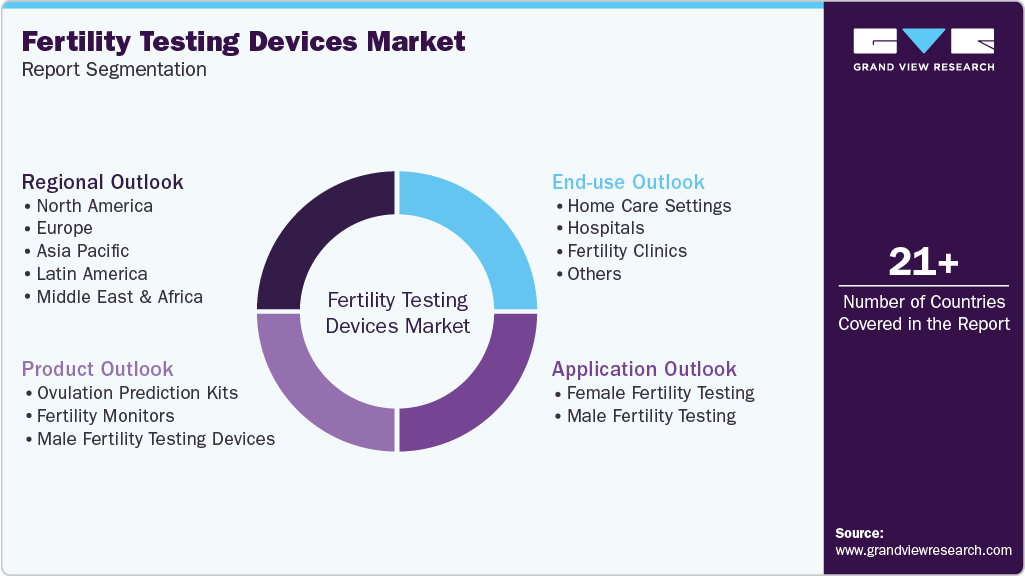
This report forecasts revenue growth and provides at global, regional, and country levels an analysis of the latest trends in each of the sub-segments from 2021 to 2033. For this report, Grand View Research has segmented the global fertility testing devices market report-based on product, application, end use, and region:
-
Product Outlook (Revenue, USD Million, 2021 - 2033)
-
Ovulation Prediction Kits
-
Fertility Monitors:
-
Male Fertility Testing Devices
-
-
Application Outlook (Revenue, USD Million, 2021 - 2033)
-
Female Fertility Testing
-
Male Fertility Testing
-
-
End Use Outlook (Revenue, USD Million, 2021 - 2033)
-
Home Care Settings
-
Hospitals
-
Fertility Clinics
-
Others
-
-
Regional Outlook (Revenue, USD Million, 2021 - 2033)
-
North America
-
U.S.
-
Canada
-
Mexico
-
-
Europe
-
UK
-
Germany
-
France
-
Italy
-
Spain
-
Denmark
-
Sweden
-
Norway
-
-
Asia Pacific
-
Japan
-
China
-
India
-
Australia
-
South Korea
-
Thailand
-
-
Latin America
-
Brazil
-
Argentina
-
-
Middle East & Africa
-
South Africa
-
Saudi Arabia
-
UAE
-
Kuwait
-
-
Delivered Customizations
This report has been delivered with the following In-depth customizations
Client Request
Customization Delivered
Value Adds
Volume Analysis by Product Type
- Developed a comprehensive volume assessment of fertility testing devices segmented by ovulation prediction kits, fertility monitors, pregnancy & fertility combo kits, male fertility testing devices, wearable fertility trackers, and digital hormone monitoring systems. The study evaluated annual unit consumption trends, testing frequency patterns, adoption rates across homecare and clinical settings, repeat purchase behavior, and regional demand variations across key fertility product categories.
- Enables stakeholders to identify high-volume product categories, optimize manufacturing and inventory planning, strengthen distribution strategies, and prioritize investments in rapidly growing fertility testing segments with strong consumer adoption.
AI-Based Fertility Prediction & Digital Biomarker Assessment
- Developed an advanced assessment of AI-powered fertility prediction platforms utilizing menstrual cycle analytics, wearable biosensors, hormone monitoring, basal body temperature tracking, and behavioral health data. The study benchmarked predictive accuracy, machine learning capabilities, digital biomarkers, and personalized fertility forecasting models across leading fertility technology providers.
- Enables stakeholders to identify next-generation fertility technologies, evaluate AI-driven reproductive health innovations, and strengthen investment strategies in predictive and personalized fertility diagnostics.
Personalized Fertility Journey & Behavioral Analytics Study
- Developed a patient-centric analysis tracking the emotional, behavioral, and digital engagement journey of fertility consumers from family planning awareness to fertility testing adoption and IVF consultation. The study incorporated app engagement behavior, consumer anxiety triggers, repeat testing patterns, and healthcare decision-making pathways.
- Provides actionable insights for improving customer retention, digital engagement, subscription models, and personalized reproductive health experiences across fertility platforms.
Reproductive Longevity & Ovarian Reserve Monitoring Opportunity Analysis
- Delivered a focused assessment of emerging reproductive longevity solutions, including ovarian reserve testing, AMH monitoring technologies, fertility preservation awareness, and biological age tracking innovations. The study evaluated consumer adoption trends among women delaying pregnancy due to career and lifestyle priorities.
- Supports clients in capturing opportunities linked to delayed parenthood trends and expanding into premium reproductive wellness and preventive fertility management segments.
Frequently Asked Questions About This Report
The global fertility testing devices market is expected to grow at a compound annual growth rate (CAGR) of 5.5% from 2026 to 2033 and is expected to reach USD 3.8 billion in 2033.
The key players in the market include viO HealthTech Inc, Accuquik, SPD Swiss Precision Diagnostics GmbH, Tempdrop, Inito Health Tech Private Limited, Mira, YO Home Sperm Test, Geratherm Medical AG, bioZhena Corporation, Eli Health
Asia Pacific is the fastest-growing region over the forecast period.
The ovulation prediction kits segment led with a 42.0% revenue share in 2025, while male fertility testing devices is the fastest-growing segment.
The home care settings segment held the highest market share of 44.4% in 2025, while fertility clinics is the fastest-growing segment.
The female fertility testing segment held the highest market share in 2025, while male fertility testing is the fastest-growing segment.
The global fertility testing devices market was estimated at USD 2.5 billion in 2025 and is expected to reach USD 2.6 billion in 2026.
North America dominated with a 36.69% revenue share in 2025.
Key factors include the rising awareness about fertility health, delayed parenthood and lifestyle changes, technological advancements in home testing devices, and preference for at-home and non-invasive testing.
About the Author(s)
Medical Devices Research Team
Healthcare · Medical DevicesThis report was authored by the medical devices research team at Grand View Research - comprising two research analysts, one senior research analyst, and one industry expert - with specialized expertise in the medical devices segment of the healthcare industry. All findings are based on proprietary healthcare databases, executive interviews, and regulatory analysis, subject to internal peer review prior to publication.
Last Updated:
Speak to Analyst

Need a Tailored Report?
Customize this report to your needs — add regions, segments, or data points, with 20% free customization.
Or view our licence options:


ISO 9001:2015 & 27001:2022 Certified
We are GDPR and CCPA compliant! Your transaction & personal information is safe and secure. For more details, please read our privacy policy.