
- Home
- »
- Medical Devices
- »
-
Electric Wheelchair Market Size & Share Report, 2026-2033GVR Report cover
![Electric Wheelchair Market (2026 - 2033)Report]()
Electric Wheelchair Market (2026 - 2033)
Size, Share & Trends Analysis Report By Product (Rear-wheel, Mid-wheel, Front-wheel), By Age Group (Geriatric, Pediatric, Adult), By Portability (Standalone, Portable), By End-use (Homecare, Hospitals), By Region, And Segment Forecasts
Market Size, 2025
$5.1BMarket Estimate, 2026
$5.7BMarket Forecast, 2033
$12.7BCAGR, 2026–2033
12.1%Electric Wheelchair Market Summary
The global electric wheelchair market size was valued at USD 5.1 billion in 2025 and is projected to grow from USD 5.7 billion in 2026 to USD 12.7 billion by 2033, at a CAGR of 12.1% from 2026 to 2033. North America dominated the market, accounting for a revenue share of 37.8% in 2025. An electric wheelchair, also known as a motorized wheelchair, is a mobility device designed for individuals who find walking challenging due to health conditions, accidents, or other medical barriers.

Key Market Trends & Insights
- By product: Rear-wheel segment led the market with the largest revenue share of 38.1% in 2025.
- By age group: Geriatric segment led the market with the largest revenue share of 55.6% in 2025.
- By portability: Standalone segment led the market with the largest revenue share of 72.1% in 2025.
- By end use: Homecare segment led the market with the largest revenue share of 49.8% in 2025.
Regional Highlights
- Largest regional market: North America (37.8% revenue share, 2025)
- By country: The U.S. held the largest market share in 2025.
Market Size & Forecast
- Market size in 2025: USD 5.1 Billion
- Estimated market size in 2026: USD 5.7 Billion
- Projected market size by 2033: USD 12.7 Billion
- CAGR (2026-2033): 12.1%
Unlike manual wheelchairs, which require physical strength for direction and movement, electric wheelchairs utilize electric motors. This enables users to manage their motion through a joystick or a similar control system. The growing elderly population and rising cases of injuries requiring mobility support are key contributors to the market expansion.Rising road accident rates drive demand for electric wheelchairs. According to the WHO article published in December 2023, every year, road traffic accidents result in the loss of 1.19 million lives and leave an additional 20 to 50 million people with varying degrees of non-fatal injuries. Among those injured, a significant number suffer from long-term or permanent disabilities, often requiring mobility assistance for the rest of their lives. This frightening increase in accident-related disabilities is contributing to increased demand for electric wheelchairs, which offer essential support for individuals who face daily mobility challenges.
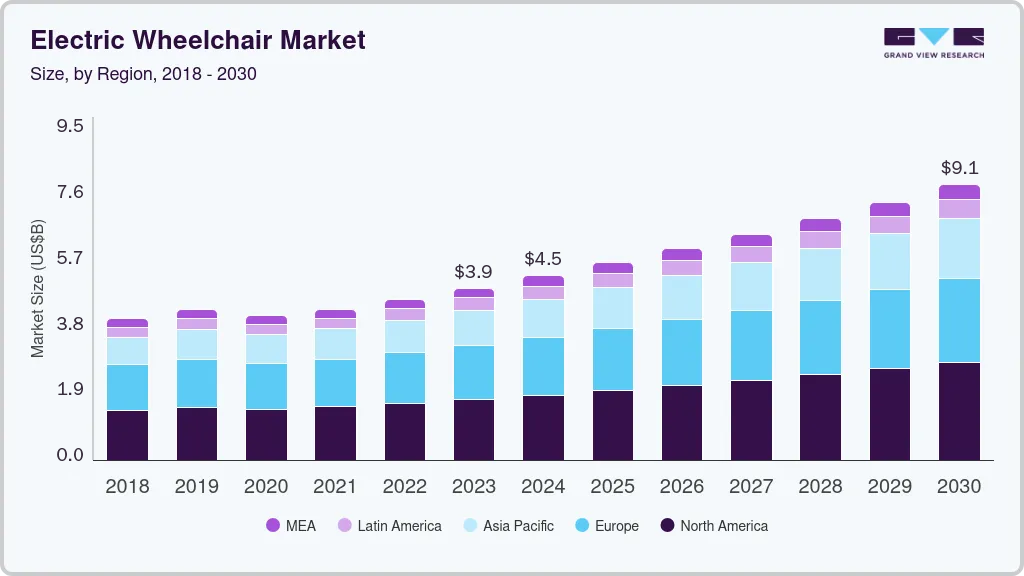
The anticipated demand increase in the future is attributed to the high prevalence of chronic illnesses, the growing population, and the increasing risk of developing lifestyle diseases, such as obesity, among a significant portion of the population. Moreover, easy product access in several countries is a significant factor in market expansion. For example, in Asia, Singapore is known for its commitment to accessibility.
According to a study by the World Economic Forum (WEF), Singapore has the best infrastructure for wheelchair users, with specially designed buses and lifts across all public transport systems. The United Arab Emirates is another country making substantial strides in accessible travel. The UAE has invested heavily to ensure that individuals with disabilities can move freely throughout the country, offering complimentary passes on public transport and reserved parking spots for disabled drivers. The country also supports various events and initiatives to increase awareness about accessibility and inclusivity issues.
In addition, the ongoing technological advancements in product design are anticipated to fuel future sales in the market. The introduction of battery-electric wheelchairs is expected to offer enhanced assistance to users. Moreover, design improvements now enable wheelchairs to store and link the device with the patient’s medical records and monitor the user’s health. For instance, in March 2024, the Indian Institute of Technology Madras developed NeoStand, a customizable power-standing wheelchair in India. The device is designed to benefit patients by offering versatile usage options.
Market Dynamics
The electric wheelchair market is experiencing substantial growth, driven by the increasing prevalence of mobility impairments, rising geriatric population, and growing incidence of chronic conditions and disabilities that limit independent movement. The market is further supported by continuous technological advancements in powered mobility solutions, including the integration of smart navigation systems, advanced battery technologies, and enhanced user control features. Increasing awareness regarding mobility assistance devices, coupled with favorable reimbursement policies and government initiatives promoting accessibility and independent living, is also contributing significantly to market expansion. The growing emphasis on improving quality of life, ensuring patient independence, and facilitating long-term home-based care is accelerating the adoption of electric wheelchairs across both healthcare institutions and residential settings. In addition, the rising demand for personalized mobility solutions, increasing preference for home healthcare, and expanding use of assistive technologies among elderly and disabled populations are creating significant growth opportunities for market participants.
The increasing incidence of road accidents, traumatic injuries, and permanent disabilities across the globe is emerging as a significant driver for the growth of the electric wheelchair market. Road traffic accidents frequently result in severe musculoskeletal injuries, spinal cord injuries (SCI), limb amputations, and long-term mobility impairments, thereby creating sustained demand for powered mobility solutions. Electric wheelchairs play a critical role in restoring mobility, enhancing independence, and improving quality of life for individuals suffering from accident-related disabilities, particularly among patients requiring long-term rehabilitation and assisted mobility. According to the World Health Organization (WHO) article published in May 2026, approximately 1.19 million people die annually due to road traffic crashes, while an additional 20-50 million individuals suffer non-fatal injuries, many of which lead to temporary or permanent disabilities. Road traffic injuries remain one of the leading causes of disability worldwide, significantly increasing the need for rehabilitation services and assistive mobility devices, including electric wheelchairs. Furthermore, spinal cord injuries often caused by road accidents and falls represent a major patient pool requiring long-term wheelchair support. These trends are expected to continue driving demand for technologically advanced electric wheelchairs globally.
The high cost of electric wheelchairs remains a major restraint to the growth of the electric wheelchair market. Advanced electric wheelchairs equipped with features such as power tilt and recline functions, smart navigation systems, pressure management technologies, and customizable seating systems are often expensive, making them less affordable for a large portion of the population. In addition to the initial purchase cost, users also incur ongoing expenses related to battery replacement, maintenance, repairs, and servicing, which further increases the overall cost of ownership. This cost burden is particularly significant in low- and middle-income countries, where reimbursement coverage for mobility assistive devices is limited and out-of-pocket healthcare expenditure remains high. Consequently, many individuals with mobility impairments continue to rely on manual wheelchairs or delay the adoption of powered mobility solutions, thereby restricting the overall growth potential of the electric wheelchair market.
Market Concentration & Characteristics
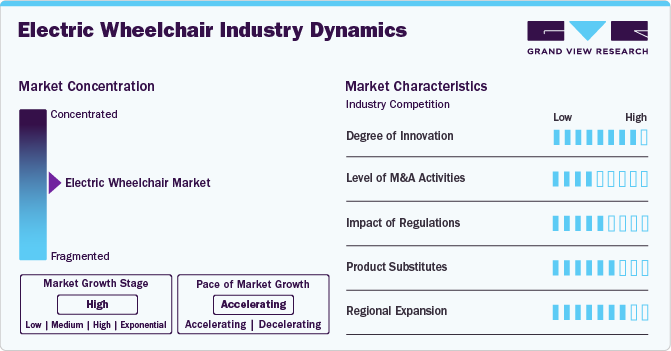
The shift toward providing care at home or bedside is fueling the creation of wheelchairs with advanced therapeutic, diagnostic, display, and monitoring tools while being more adaptable, accurate, and compact. These systems represent a consumer-centric approach to healthcare, which encourages the adoption of innovations, such as personalized wearable devices, digital patient records, and systems connected to the internet wirelessly. All these technologies are expected to provide smart, user-friendly, and convenient healthcare services at home. Several market players are focused on this progress.
Numerous merger and acquisition activities are observed among top product manufacturers aimed at broadening their footprint in the country. For example, in October 2023, Sunrise Medical acquired Ride Designs, specializing in high-quality custom seating products for wheelchair users. This acquisition represents a notable extension of Sunrise Medical’s custom seating offerings and service capabilities, enhancing its current manual and electric mobility product lineup.
Efforts by the government to enhance financial support for patients in need of long-term care are anticipated to bolster the growth of this market. For example, in the U.S., several initiatives have been introduced to aid people with disabilities, which is predicted to stimulate market expansion. The U.S. government, for instance, has started several programs to help people who have disabilities, and this is likely to drive the market’s growth.
The market is poised for expansion, driven by product advancements and a surge in demand for electric wheelchairs, which will subsequently enhance sales. Dominant entities such as Numotion, Permobil, and Sunrise Medical hold most of the revenue share. Furthermore, Sunrise Medical has been making significant strides and increasing its market share.
Regional expansion significantly drives the market's growth. Though strict safety and accessibility standards can challenge market penetration and expansion in certain areas, varying cultural perceptions of disability and accessibility increase market acceptance. Policies that govern insurance coverage and compensation for motorized wheelchairs can affect market accessibility and adoption. In different countries, wheelchair-friendly infrastructure, such as ramps and lifts, is vital for the broad acceptance of motorized wheelchairs. This can fuel the market growth for companies to expand to different regions.
Analyst Perspective
The global electric wheelchair market is undergoing significant transformation, driven by advancements in mobility technologies, growing demand for assistive healthcare devices, and increasing emphasis on independent living for individuals with mobility impairments. The market is gaining momentum as healthcare systems, rehabilitation centers, and home care settings increasingly adopt advanced mobility solutions that improve comfort, safety, and quality of life. Rising chronic diseases, disabilities, mobility disorders, and the expanding geriatric population are creating substantial growth opportunities for manufacturers and assistive technology companies. Growth is further supported by increasing awareness of mobility assistance devices and favorable government initiatives promoting accessibility and independent living.
Electric wheelchairs have become essential mobility solutions across home healthcare, rehabilitation, and long-term care settings due to their ability to enhance mobility, autonomy, and ease of use. The shift toward home-based care and demand for personalized mobility solutions are driving adoption of advanced electric wheelchairs featuring powered seating systems, adjustable positioning, joystick controls, and ergonomic designs, enabling users to perform daily activities with reduced caregiver assistance and improved quality of life.
Product Insights
Based on product, the rear-wheel segment led the market with the largest revenue share of 38.1% in 2025. The rear-wheel drive segment of the electric wheelchair market is known for its speed and stability, particularly in outdoor settings. With the power concentrated in the rear wheels, these wheelchairs provide strong propulsion and perform well at higher speeds. Strategic initiatives by the key players drive the market. For instance, in June 2022, Sunrise Medical introduced a new compact, rear-wheel-drive power wheelchair to its range. The product was named QUICKIE Q200 R. This design emphasizes ease of maneuverability and transport, making it highly practical for navigating tight spaces and portability.
Moreover, Sunrise Medical’s Director of Power Product Management stated, “With the Q200 R, our vision was to create a true indoor/outdoor power chair-one with super-tight indoor maneuverability and zero compromise on outdoor stability and performance. A large drive base means difficulty when maneuvering in tight environments. Too small, and it becomes tippy with a loss of traction. In development, we tested hundreds of configurations to find the perfect combination of maneuverability and performance.”
The mid-wheel drive segment is expected to grow at the fastest CAGR from 2025 to 2030. The mid-wheel drive segment of the electric wheelchair market is known for offering superior maneuverability, especially in tight spaces, due to its central wheel placement. These wheelchairs provide a tight turning radius, making them ideal for indoor use while offering stability on various outdoor terrains. Advancements by the manufacturers fuel market growth. For instance, in September 2022, the newly launched Karma Medical Morgan M is a mid-wheel-driven power wheelchair designed for adaptable use in both indoor and outdoor settings. Its compact design allows for exceptional maneuverability, especially in tight spaces. The wheelchair features a mid-wheel drive configuration with a small turning radius, making it ideal for navigating narrow hallways and doorways. Its six-wheel design enhances stability and traction across various surfaces, ensuring a comfortable ride.
Age Group Insights
Based on age group, the geriatric segment led the market with the largest revenue share of 55.6% in 2025. Increasing gait disease disorders among the geriatric population drive market growth. According to an article published by PM&R Knowledge Now in July 2023, the prevalence of gait disorders significantly increases with age, affecting only 10% of individuals aged 60-69 but rising to over 60% in those above 80 and 82% in adults over 85. These disorders not only impair mobility but are also linked to higher risks of cognitive decline, cardiovascular disease, disability, and a 2.2 times higher likelihood of institutionalization and death compared to older adults without gait issues. Falls, often resulting from gait problems, are the leading cause of injury among seniors in the U.S., causing 3 million emergency room visits, 800,000 hospitalizations, and nearly $50 billion in healthcare costs yearly.
The adult segment is expected to grow at the fastest CAGR over the forecast period. Rising road accident injuries among adults boost demand in the electric wheelchair market. According to the HT Digital Streams Ltd. article published in October 2023, 461,312 road accidents resulted in 168,491 fatalities and 443,366 injuries in 2022. Young adults aged 18 to 45 accounted for 66.5% of the victims, while those in the broader working age group of 18 to 60 made up 83.4% of all fatalities. These figures emphasize the significant impact road accidents have on adults, many of whom face long-term mobility challenges due to severe injuries. As a result, the demand for electric wheelchairs is rising, particularly within the adult segment.
Portability Insights
Based on portability, the standalone segment led the market with the largest revenue share of 72.1% in 2025. Standalone electric wheelchairs are designed to cater to individuals with significant mobility limitations. Unlike conventional wheelchairs, these are generally more robust and have many features, making them an ideal choice for those who heavily rely on such aids for their daily mobility. Moreover, these wheelchairs are feature-rich, often including elements like adjustable seats, customizable controls, and even health monitoring systems. These features enhance the user’s comfort and contribute to their overall well-being.
The portable wheelchair segment is expected to grow at the fastest CAGR during the forecast period. Portable electric wheelchairs are designed to be compact and lightweight, making them easy to transport. They are typically used by individuals who have some mobility but need a wheelchair for longer distances or when venturing outside their homes. These wheelchairs have several advantages, including travel-friendly features, lightweight construction, and compact storage. Therefore, portable electric wheelchairs serve as a comprehensive mobility solution, significantly improving the quality of life for those with severe mobility restrictions.
End-use Insights
Based on end use, the homecare segment led the market with the largest revenue share of 49.8% in 2025. The adoption of electric wheelchairs in homecare settings is growing globally, mainly due to the rising geriatric population. Furthermore, they are designed to provide stability and reduce the risk of falls. Individuals with chronic health conditions that affect mobility, such as multiple sclerosis, muscular dystrophy, and spinal cord injuries, often use wheelchairs to facilitate daily activities at home. According to the article published in Axiscare, in August 2023, about 12 million Americans utilize home health care services, reflecting a significant preference for aging in their residences rather than relocating to long-term care facilities. This inclination is reinforced by research indicating that 88% of Americans would prefer to receive any essential long-term care services in the comfort of their own homes as they grow older.

The ambulatory surgical centers (ASCs) segment is expected to grow at a significant CAGR over the forecast period due to the increasing volume of outpatient surgeries, which offer benefits such as shorter hospital stays and cost-effectiveness. ASCs are medical facilities that perform minor surgical operations. These centers are rising in developed and developing nations as they help alleviate the load on hospitals and doctors’ clinics. These centers primarily aim to cater to surgical procedures or emergencies exclusively. In the U.S., there are approximately 9,280 operational ASCs, with California hosting the most centers (1,213) nationwide. Among the operational ACSs, about 60% are certified by Medicare.
Number of Ambulatory Surgical Centers in April 2024
U.S. State
Number of ASCs
California
1,218
Texas
760
Florida
736
Georgia
536
Maryland
439
Pennsylvania
374
New York
362
Ohio
310
Washington
272
Michigan
221
Regional Insights
North America dominated the electric wheelchair market with the largest revenue share of 37.8% in 2025. The growth was driven by the rising incidence of disability, increasing demand for electric wheelchairs, supportive government initiatives, and technological advancements. According to an article published by The Trustees of the University of Pennsylvania in January 2023, arthritis impacts over 50 million adults in the U.S., making it the leading cause of disability in the nation. Moreover, as per a CDC article published in May 2023, almost 61 million adults in the U.S. are living with a disability.

U.S. Electric Wheelchair Market Trends
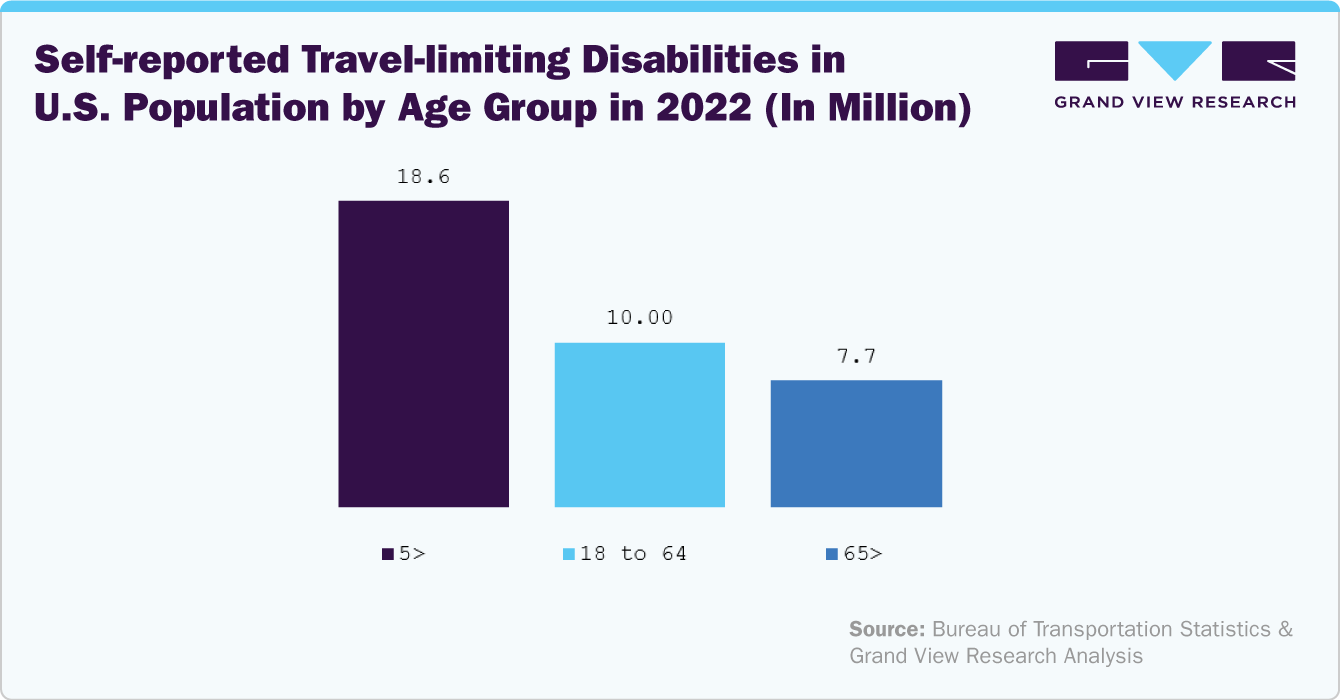
The electric wheelchair market in the U.S. held the largest share in the North America region in 2025. This can be attributed to the growing need for mobility solutions, increasing demand for electric wheelchairs, and technological advancements fueling the market's growth. According to the CDC article published in July 2024, in the U.S., more than 1 in 4 adults (28.7%) are living with some form of disability, highlighting the significant demand for assistive technologies. Among these individuals, 12.2% face serious mobility challenges, including difficulties with walking or climbing stairs. The rising incidence of mobility-related issues emphasizes the critical role of electric wheelchairs in improving quality of life.
Europe Electric Wheelchair Market Trends
The Europe electric wheelchair market held the second-largest revenue share in 2024.Factors such as a growing geriatric population and a rise in conditions, such as spinal cord injuries, necessitating mobility aids drive the market growth. While the market is still in its early stages, its availability and acceptance are anticipated to grow due to increasing consumer knowledge and favorable government policies. As the population ages, more individuals will likely face mobility issues, increasing the demand for wheelchairs. In addition, advancements in wheelchair technology and heightened awareness of sophisticated products are expected to propel market growth.
Germany electric wheelchair market held the dominant revenue share of 25.7% in 2024. Germany is recognized as one of the world’s most aged societies, with individuals aged 65 years and above projected to constitute approximately one-third of the total population by 2050. The country is at the forefront of utilizing digital technology to promote a healthier and more active lifestyle among older adults, and the government has implemented programs to help seniors acquire basic tech skills. In 2021, Germany had approximately 7.8 million individuals classified as severely disabled, according to the Federal Statistical Office (Destatis). This group constituted 9.4% of the total population of Germany.
The electric wheelchair market in the UK held the second-largest share in 2024 due to the high geriatric population and a rise in the number of individuals with physical disabilities. The UK is home to over 11 million disabled individuals, who make up 45% of the country’s disabled population, compared to 16% of working adults and 6% of children. An estimated 1.2 million people in the UK use wheelchairs, with most users aged over 60 years, representing over two-thirds of all wheelchair users in the country. The UK’s public health system includes reimbursement policies for disabled and elderly citizens. Furthermore, the government has implemented measures like the Disabled Facilities Grant (DFG) to construct ramps, acquire heating systems, and provide financial aid for equipment and assistive devices for people with disabilities.
The France electric wheelchair market is anticipated to witness a CAGR of 13.1% during the forecast period. In France, for every 10,000 individuals, 62 are wheelchair users. These individuals typically face multiple limitations and/or impairments. The average age of these wheelchair users is 70 years, and 64% of them are women. Moreover, wheelchair use is associated with factors such as the severity of impairments and disabilities, confinement, exposure to environmental risks, and life in institutions.As per French disability law, any company in France with more than 20 employees is mandated to employ at least 6% of workers with disabilities. Furthermore, the rising number of road accidents in the country is a significant factor contributing to the growth of the wheelchair market during the forecast period.
Asia Pacific Electric Wheelchair Market Trends
The electric wheelchair market in Asia Pacific is projected to register the fastest CAGR over the forecast period. In this region, wheelchairs are a predominant mobility aid. The rising target population fuels the demand for these devices. In addition, the prevalence of chronic illnesses and the high frequency of road accidents contribute to market growth. According to WHO data from 2023, between 20 and 50 million people sustain non-lethal injuries, with a significant number resulting in disabilities within the region.
China Electric wheelchair market is expected to grow over the forecast period. China has a significant elderly population of over 254 million. The country also has over 85 million disabled individuals, with 20 million of them depending on temporary aids for disability. This substantial and growing number of senior citizens and disabled individuals has led to an increased demand for electric wheelchairs. The market growth in China can be attributed to the rising instances of accidental injuries.
The electric wheelchair market in Japan is expected to grow over the forecast period. Elderly individuals, particularly in countries like Japan, represent a significant demographic. Japan’s health ministry reports that over 7% of the population, or 9.36 million people, have been identified with some form of disability. The Commonwealth Fund indicates that Japan’s statutory health insurance system (SHIS) has plans to include durable medical equipment, such as oxygen therapy devices, prescribed by doctors in their coverage. Government subsidies are available to individuals with disabilities who need other devices like hearing aids or electric wheelchairs, helping to offset the cost. These subsidies are primarily aimed at low-income households and alleviate the cost-sharing burden for individuals with disabilities, mental health conditions, and certain chronic diseases.
India electric wheelchair market is expected to grow rapidly over the forecast period on account of the increasing need for a secure and convenient method of patient mobility in hospitals and homecare environments. The enhancement of healthcare facilities, coupled with a substantial elderly population, are key factors anticipated to propel market growth.
Latin America Electric Wheelchair Market Trends
The electric wheelchair market in Latin America is expected to witness lucrative growth during the forecast period. The market is anticipated to grow due to increased life expectancy, heightened awareness of home healthcare services, a growing incidence of disabilities, and a surge in demand for long-term care medical devices. Furthermore, Brazil has a significant influence on economic activities in this region. The average lifespan in this region is said to exceed 75 years.
Brazil electric wheelchair market is expected to grow over the forecast period due to the country’s increasing healthcare spending and a growing number of disabled individuals nationwide. For instance, more than 16 million people in Brazil are living with disabilities. In addition, the market growth in Brazil can be attributed to the increasing instances of accidental injuries.
Middle East & Africa Electric Wheelchair Market Trends
The electric wheelchair market in MEA is expected to grow lucratively owing to the expanding geriatric population and intensified efforts by governments to enhance healthcare accessibility. These are anticipated to draw the attention of international medical device companies interested in penetrating this market. The market could see growth over the forecast period due to increased healthcare spending, an aging population, and a rise in disability cases.
South Africa electric wheelchair market held the largest revenue share in the MEA regional market. Disabled individuals constitute 10% of Africa’s population, potentially rising to 20% in poorer regions. Disabled children’s school attendance is estimated at 5-10%. The South African Department of Health has been criticized by the National Council for Persons with Disabilities (NCPD) for its ineffective wheelchair provision. Despite the NCPD’s advocacy, the persistent wheelchair shortage remains unresolved.
Key Electric Wheelchair Company Insights
Leading companies are enhancing their offerings and incorporating new technologies to expand their customer reach, secure a greater market share, and diversify their product range. For example, In November 2023, Magic Mobility, part of the Sunrise Medical brand, introduced the Magic 360 crossover wheelchair in North America. Drawing on more than 25 years of experience in off-road and all-terrain wheelchair design, the Australian company developed the Magic 360 to deliver adaptability and high performance across different settings.
Key Electric Wheelchair Companies
The following key companies have been profiled for this study on the electric wheelchair market.
-
Sunrise Medical
-
Invacare Corporation
-
Permobil
-
Pride Mobility Products
-
Numotion
-
Ottobock
-
MEYRA GmbH
-
Hoveround Corporation
-
Golden Technologies
-
Drive DeVilbiss Healthcare Ltd.
Competitive Benchmarking
Category
Operating Strategies
Competitive Edge
Weakness
Established Players (Sunrise Medical, Invacare Corporation, Permobil, Pride Mobility Products)
- Focus on expanding premium powered mobility portfolios, including smart wheelchairs, standing wheelchairs, and customizable seating systems.
- Strengthen global distribution networks through partnerships with hospitals, rehabilitation centers, dealers, and home healthcare providers.
- Strong brand recognition, extensive global sales networks, and established relationships with healthcare providers and reimbursement agencies support market leadership.
- Broad product portfolios covering pediatric, adult, bariatric, and complex rehabilitation needs enable penetration across diverse patient groups.
- High manufacturing and R&D costs, coupled with stringent regulatory and reimbursement requirements, increase operational complexity.
- Large organizations may experience slower product development cycles due to extensive quality assurance and compliance processes.
Emerging Players (Hoveround Corporation, Golden Technologies, Drive DeVilbiss Healthcare Ltd.)
- Focus on smart, lightweight, foldable, and travel-friendly electric wheelchairs targeting homecare and personal mobility applications.
- Prioritize innovation-driven strategies including AI-enabled navigation, autonomous driving assistance, remote monitoring, and app-based controls.
- Faster innovation cycles and greater flexibility enable rapid introduction of technologically advanced products.
- Strong focus on intelligent mobility features such as obstacle detection, autonomous navigation, voice control, and smartphone integration enhances differentiation.
- Limited financial resources and comparatively smaller distribution networks restrict large-scale market expansion.
- Regulatory approval challenges and limited long-term clinical evidence may slow product adoption in certain regions.
Recent Developments
-
In June 2024, Ottobock UK introduced Juvo B7, an advanced power wheelchair designed to provide all-day comfort and control for individuals with complex needs. Available in mid- and front-wheel drive, the Juvo B7 is tailored to those with specific positioning and mobility requirements.
-
In April 2024, Numotion and the United Spinal Association partnered with United Airlines to develop a new tool that helps wheelchair users find flights suited to their mobility devices. Available on the United Airlines app and website, this digital feature allows customers to easily identify flights that can accommodate their wheelchairs' dimensions.
-
In October 2023, Sunrise Medical, a global pioneer in cutting-edge mobility aids, declared its strategic takeover of Ride Designs, a distinguished market leader known for its high-quality custom seating systems for wheelchair users. This takeover signifies a substantial growth in Sunrise Medical’s custom seating portfolio, clinical proficiency, and service competencies, seamlessly enhancing the broad spectrum of manual and electric mobility products already provided by Sunrise Medical
-
In October 2023, Numotion introduced SpinKids, a distinctive platform under SpinLife specifically designed for children. This unique initiative is aimed at addressing the mobility and equipment requirements of pediatric users. It provides a tailored shopping experience exclusively for children and their parents, ensuring they can access mobility aids and equipment. The launch of SpinKids signifies Numotion’s commitment to enhancing the lives of children with mobility challenges by offering products and services that cater specifically to their needs
Electric Wheelchair Market Report Scope
Report Attribute
Details
Market size in 2025
USD 5.1 billion
Estimated market size in 2026
USD 5.7 billion
Projected market size by 2033
USD 12.7 billion
Growth rate
CAGR of 12.1% from 2026 to 2033
Historical data
2021 - 2024
Forecast period
2026 - 2033
Quantitative units
Revenue in USD million/billion and CAGR from 2026 to 2033
Report coverage
Revenue forecast, company ranking, competitive landscape, growth factors, and trends
Segments covered
Product, age group, portability, end-use, region
Regional scope
North America; Europe; Asia Pacific; Latin America; MEA
Country scope
U.S.; Canada; Mexico; Germany; UK; France; Italy; Spain; Norway; Denmark; Sweden; China; Japan; India; South Korea; Australia; Thailand; Brazil; Argentina; Saudi Arabia; South Africa; UAE; Kuwait;
Key companies profiled
Sunrise Medical LLC; Invacare Corp.; Permobil; Pride Mobility Products Corp.; Numotion; Ottobock; MEYRA GmbH; Hoveround Corp.; Golden Technologies; Drive DeVilbiss Healthcare Ltd.
Customization scope
Free report customization (equivalent up to 8 analysts' working days) with purchase. Addition or alteration to country, regional & segment scope.
Pricing and purchase options
Avail customized purchase options to meet your exact research needs. Explore purchase options
Global Electric Wheelchair Market Report Segmentation
This report forecasts revenue growth at global, regional, and country levels and provides an analysis of the latest trends in each of the sub-segments from 2021 to 2033. For this study, Grand View Research has segmented the global electric wheelchair market report based on product, age group, portability, end-use, and region:
-
Product Outlook (Revenue, USD Million, 2021 - 2033)
-
Front-wheel Drive
-
Mid-wheel Drive
-
Rear-wheel Drive
-
Others
-
-
Age Group Outlook (Revenue, USD Million, 2021 - 2033)
-
Adult
-
Pediatric
-
Geriatric
-
-
Portability Outlook (Revenue, USD Million, 2021 - 2033)
-
Standalone
-
Portable
-
-
End-use Outlook (Revenue, USD Million, 2021 - 2033)
-
Homecare
-
Hospitals
-
Ambulatory Surgical Centers
-
Rehabilitation Centers
-
-
Regional Outlook (Revenue, USD Million, 2021 - 2033)
-
North America
-
U.S.
-
Canada
-
Mexico
-
-
Europe
-
UK
-
Germany
-
France
-
Italy
-
Spain
-
Denmark
-
Sweden
-
Norway
-
-
Asia Pacific
-
Japan
-
China
-
India
-
Australia
-
South Korea
-
Thailand
-
-
Latin America
-
Brazil
-
Argentina
-
-
Middle East & Africa
-
Saudi Arabia
-
South Africa
-
UAE
-
Kuwait
-
-
Research Methodology
Segment Definition
Segment - Product
Revenue capture definition
Front-wheel Drive
Revenue is generated through the sale of powered mobility bases configured with the primary drive wheels positioned at the front of the seating system. Manufacturers capture revenue through upfront capital sales of specialized indoor/outdoor units, valued for their tight turning radius and structural ability to negotiate small indoor obstacles and door thresholds.
Mid-wheel Drive
Revenue flows from the commercialization of electric wheelchairs where the drive wheels are positioned directly beneath the user's center of gravity. Market participants earn substantial high-volume revenue from these platforms due to their superior 360-degree turning capabilities in confined residential and clinical spaces.
Rear-wheel Drive
Revenue is captured through the distribution of heavy-duty and high-speed mobility systems featuring drive wheels located at the back of the power base. Companies maximize baseline revenue from users requiring superior tracking, high directional acceleration, and stability over rough outdoor terrains or steep public ramps. Monetization is driven by upfront hardware sales, integrated high-torque gearboxes, heavy-duty suspension assemblies, and recurring outdoor tire replacements.
Others
Revenue encompasses alternative or hybrid electric propulsion configurations, including stand-up or standing-assisted powered wheelchairs, specialized bariatric/heavy-duty reinforced platforms, and clip-on motorized conversions that transform manual wheelchairs into battery-powered units.
Segment - Age Group
Revenue capture definition
Adult
Revenue is generated through the distribution of standard and customized power mobility devices configured for individuals between pediatric and geriatric classifications. Manufacturers capture income through bulk sales of adaptable power chairs, adjustable seating systems, and specialized joystick or head-array control modules designed to assist adults experiencing long-term physical disabilities or spinal injuries.
Pediatric
Revenue flows from the sale of highly specialized, ergonomically scaled electric wheelchairs designed for children with early-onset mobility impairments. Companies capture revenue through high-margin initial hardware sales and, crucially, recurring income from modular, expandable growth kits, adjustable seating hardware, and specialized pediatric positioning belts that scale alongside the child.
Geriatric
Revenue is captured through high-volume sales of assistive mobility devices tailored to aging populations experiencing age-related gait disorders, severe arthritis, or stroke-related hemiplegia. Income is secured through retail consumer channels and government-subsidized medical equipment programs, monetized via standard comfort-oriented power chairs, simplified electronic interfaces, anti-tip safety wheels, and replacement deep-cycle batteries.
Segment - Portability
Revenue capture definition
Standalone
Revenue is generated through the sale of high-performance, non-folding, complex rehabilitation technology (CRT) powered chairs engineered for permanent or primary daily use. Manufacturers derive high-value margins from upfront chassis sales integrated with complex power seating functions, sophisticated joystick electronics, and custom-molded seating systems.
Portable
Revenue flows from the commercialization of lightweight, travel-optimized, or foldable electric wheelchairs. Market participants generate high consumer-direct and retail revenue from units built with lightweight aluminum or carbon fiber frames and quick-disconnect electronics. This is augmented by recurring sales of compact lithium-ion battery modules, specialized travel cases, and automated remote folding mechanisms.
Segment - End Use
Revenue capture definition
Homecare
Revenue is derived through direct-to-consumer medical retail channels, specialized home medical equipment (HME) distributors, and private insurance or national healthcare reimbursement programs. Companies capture revenue by supplying user-friendly, optimized indoor power mobility aids designed to fit residential floor plans, alongside recurring home maintenance, battery replacements, and localized repair services.
Hospitals
Revenue is captured through formal institutional bulk procurement contracts, healthcare group purchasing organizations (GPOs), and hospital facility expansion tenders. Equipment providers monetize this segment by delivering highly durable, standardized fleet-model electric wheelchairs equipped with universal joystick controls, antimicrobial seating surfaces, and broad-spectrum security or tracking systems for patient transport across multi-ward clinical settings.
Ambulatory Surgical Centers
Revenue flows through the sale of agile post-operative mobility equipment intended for safe outpatient transit and immediate discharge workflows. Manufacturers generate revenue by offering specialized, low-profile powered transit chairs that reduce immediate physical strain on clinical staff during the safe transfer of recovering day-surgery patients to discharge vehicles.
Rehabilitation Centers
Revenue is generated through target-specific sales of advanced, diagnostic-compatible power chairs used in specialized post-acute physical therapy, neuro-rehabilitation, and occupational training. Income is driven by premium multi-user platforms equipped with dual-control training modules, advanced pressure-mapping electronics, environmental control integrations, and high-margin clinical accessories used for patient remobilization programs.
Estimation Model
Scope Definition
Build the Product Base
Estimate Penetration
Revenue Conversion
Key Question: What segments should be included in the electric wheelchair market estimation?
Key Question: How many individuals are potential users of electric wheelchairs across regions and care settings?
Key Question: What proportion of the eligible population currently uses or is expected to adopt electric wheelchairs?
Key Question: How does estimated unit demand translate into market revenues across product segments and geographies?
PROCESS STEPS
1. Define the product universe comprising front-wheel, rear-wheel, mid-wheel drive wheelchairs.
2. Establish market boundaries by excluding manual wheelchairs, mobility scooters, and other assistive mobility devices.
3. Identify key stakeholders across manufacturers, distributors, healthcare providers, and homecare channels.
4. Establish geographic scope and align on base year & forecast horizon (2026-2033).
PROCESS STEPS
1. Estimate the addressable population requiring powered mobility assistance.
2. Assess the proportion of patients eligible for electric wheelchairs based on clinical severity and functional dependence.
3. Analyze utilization across hospitals, rehabilitation centers, long-term care facilities, and homecare settings.
4. Determine annual replacement demand based on product life cycles.
PROCESS STEPS
1. Assess current penetration of electric wheelchairs within the eligible population.
2. Evaluate conversion trends from manual wheelchairs to powered mobility solutions.
3. Analyze the influence of reimbursement coverage, government assistance programs, and healthcare accessibility on adoption.
4. Assess technology adoption trends including smart mobility, standing functionality, and connected wheelchairs.
PROCESS STEPS
1. Determine average selling prices (ASPs) for different electric wheelchair categories across regions.
2. Calculate market revenues by multiplying unit demand with segment-specific ASPs.
3. Incorporate revenues generated from accessories, batteries, maintenance, and aftermarket services where applicable.
4. Develop historical and forecast revenue estimates based on adoption and pricing trends.
DATA SOURCES: Regulatory databases, company product portfolios, industry publications, rehabilitation associations, government healthcare agencies.
DATA SOURCES: WHO disability statistics, epidemiological databases, census data, national healthcare statistics, rehabilitation studies.
DATA SOURCES: Primary interviews with industry experts, researchers, clinicians, robotics manufacturers.
DATA SOURCES: Manufacturer price lists, distributor pricing databases, company financial reports, procurement records, e-commerce platforms.
Delivered Customizations
This report has been delivered with the following In-depth customizations
Client Request
Customization Delivered
Value Adds
Technology Integration in Assistive Mobility Ecosystem Analysis
Conducted a comprehensive assessment of technology integration trends within the global electric wheelchair market ecosystem. The study evaluated the adoption and impact of advanced technologies including IoT-enabled connectivity, AI-based navigation systems, autonomous driving capabilities, obstacle detection and collision avoidance systems, smart sensors, cloud-based remote monitoring platforms, and mobile application integration. The analysis further assessed interoperability between electric wheelchairs and broader assistive technologies such as smart home systems, rehabilitation devices, telehealth platforms, and wearable health monitoring solutions. Additionally, the study examined partnerships among wheelchair manufacturers, software providers, healthcare institutions, rehabilitation centers, and technology companies to understand innovation pathways, product differentiation strategies, and future ecosystem development opportunities across homecare, hospital, and long-term care settings.
Enables stakeholders to understand the evolving digital assistive mobility ecosystem and identify high-impact technology trends shaping the electric wheelchair market. The study supports strategic decision-making related to product innovation, partnership development, digital health integration, and investment prioritization. It also helps manufacturers benchmark smart mobility capabilities, identify ecosystem collaboration opportunities, optimize connected care offerings, and strengthen competitive positioning in the rapidly evolving assistive mobility landscape.
Porters Analysis
Conducted a detailed Porter's Five Forces assessment of the global electric wheelchair market to evaluate competitive intensity and market attractiveness. The study analyzed supplier bargaining power across critical components such as batteries, motors, electronic controllers, sensors, and seating systems. Buyer bargaining power was assessed across hospitals, rehabilitation centers, long-term care facilities, distributors, government agencies, and individual consumers. The analysis further examined the threat of new entrants considering regulatory requirements, technological expertise, manufacturing capabilities, and capital investments. In addition, substitute products including manual wheelchairs, mobility scooters, and other assistive mobility devices were evaluated, alongside the degree of competitive rivalry among established manufacturers and emerging technology-driven companies. The study also assessed the influence of product innovation, pricing pressures, distribution strategies, and brand differentiation on market competition.
Enables stakeholders to gain a comprehensive understanding of competitive dynamics, market entry barriers, and long-term industry attractiveness. The study supports strategic planning by identifying competitive threats, supplier and buyer dependencies, pricing pressures, and potential substitution risks. It further assists organizations in developing effective market entry strategies, strengthening supplier relationships, enhancing product differentiation, and identifying sustainable competitive advantages across global and regional markets.
Reimbursement Framework & Positional Impact on Consumers and Providers Analysis
Conducted a detailed assessment of reimbursement frameworks and their impact on consumers and healthcare providers within the global electric wheelchair market. The study evaluated reimbursement policies, coverage criteria, funding mechanisms, and eligibility requirements across major healthcare systems, including public insurance programs, private insurers, veterans' healthcare programs, and social welfare schemes. The analysis examined variations in reimbursement pathways across key countries and assessed their influence on patient accessibility, prescription patterns, provider purchasing decisions, and market adoption rates. Furthermore, the study evaluated out-of-pocket expenditure trends, prior authorization requirements, documentation burdens, and reimbursement timelines affecting both end users and healthcare providers. The assessment also analyzed how evolving healthcare policies and value-based care initiatives influence electric wheelchair utilization across hospitals, rehabilitation facilities, and homecare settings.
Enables stakeholders to understand how reimbursement policies influence market access, patient affordability, and provider adoption patterns across different regions. The study supports strategic decision-making by identifying favorable reimbursement environments, potential access barriers, and emerging policy trends. It also helps manufacturers optimize market expansion strategies, develop evidence-based reimbursement approaches, prioritize target geographies, and improve patient access by aligning product offerings with payer and provider requirements.
Frequently Asked Questions About This Report
Some of the key electric wheelchair market players are Drive Medical Design & Manufacturing, Invacare, Sunrise Medical LLC, Karman Healthcare, Quantum Rehab, Numotion, Pride Mobility Products Corp., Ostrich Mobility, MEYRA, and Jinmed.
Due to the rise in baby boomer group who have a high need for wheelchairs and rising technological advancements, the demand for the powered wheelchairs is rising.
The global electric wheelchair market is expected to grow at a CAGR of 12.1% from 2026 to 2033, reaching USD 12.7 billion by 2033.
North America dominated with a 37.8% revenue share in 2025.
North America dominated the global market in 2025 and accounted for the largest revenue share of 37.8%. This growth is owing to the high target population and increased adoption of advanced wheelchairs.
Asia Pacific is the fastest-growing region over the forecast period.
Geriatric held the largest revenue share in 2025, while adult is the fastest-growing area.
Standalone held the largest revenue share in 2025, while portable is the fastest-growing area.
The global electric wheelchair market size was valued at USD 5.1 billion in 2025 and is estimated at USD 5.7 billion for 2026.
By product, the rear-wheel segment led with a 38.1% revenue share in 2025, while mid-wheel is the fastest-growing segment.
About the Author(s)
Medical Devices Research Team
Healthcare · Medical DevicesThis report was authored by the medical devices research team at Grand View Research - comprising two research analysts, one senior research analyst, and one industry expert - with specialized expertise in the medical devices segment of the healthcare industry. All findings are based on proprietary healthcare databases, executive interviews, and regulatory analysis, subject to internal peer review prior to publication.
Last Updated:
Speak to Analyst


Customize this report to your needs — add regions, segments, or data points, with 20% free customization.
Or view our licence options:


ISO 9001:2015 & 27001:2022 Certified
We are GDPR and CCPA compliant! Your transaction & personal information is safe and secure. For more details, please read our privacy policy.


