
- Home
- »
- Nutraceuticals & Functional Foods
- »
-
Dietary Supplements Market Size & Share Report, 2026-2033GVR Report cover

Dietary Supplements Market (2026 - 2033)
Size, Share & Trends Analysis Report By Ingredients (Vitamin, Botanicals, Minerals, Proteins & Amino Acids), By Type, By Form, By Application, By End-user, By Distribution Channel, By Region, And Segment Forecasts
Market Size, 2025
$209.5BMarket Estimate, 2026
$228.2BMarket Forecast, 2033
$431.7BCAGR, 2026–2033
9.5%Dietary Supplements Market Summary
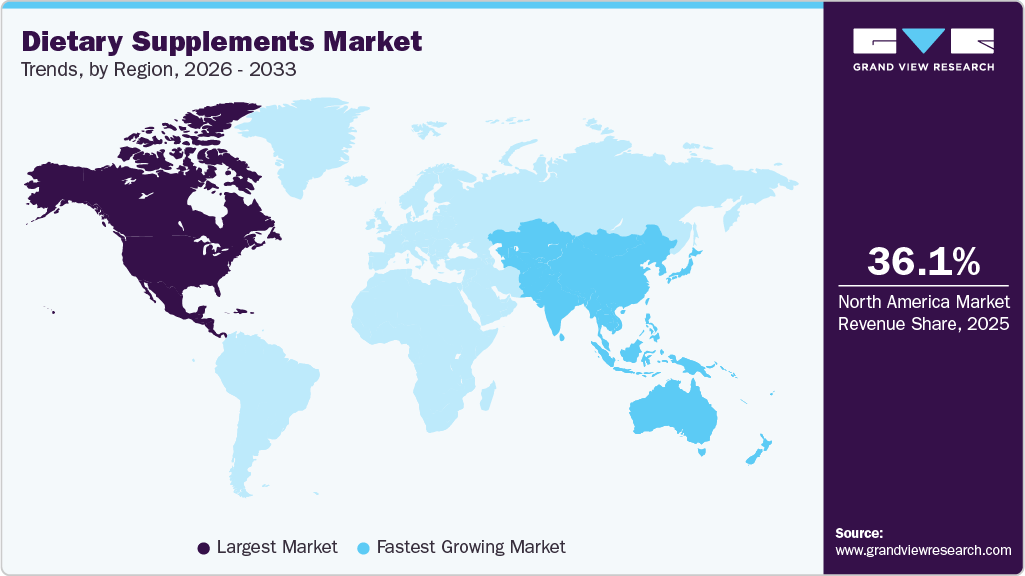
The global dietary supplements market size was valued at USD 209.5 billion in 2025 and is projected to grow from USD 228.2 billion in 2026 to USD 431.7 billion by 2033, at a CAGR of 9.5% from 2026 to 2033. North America dominated the market with the largest revenue share of 36.1% in the global market in 2025. The growth is driven by heightened health consciousness, evolving consumer lifestyles, and increased focus on preventive healthcare.
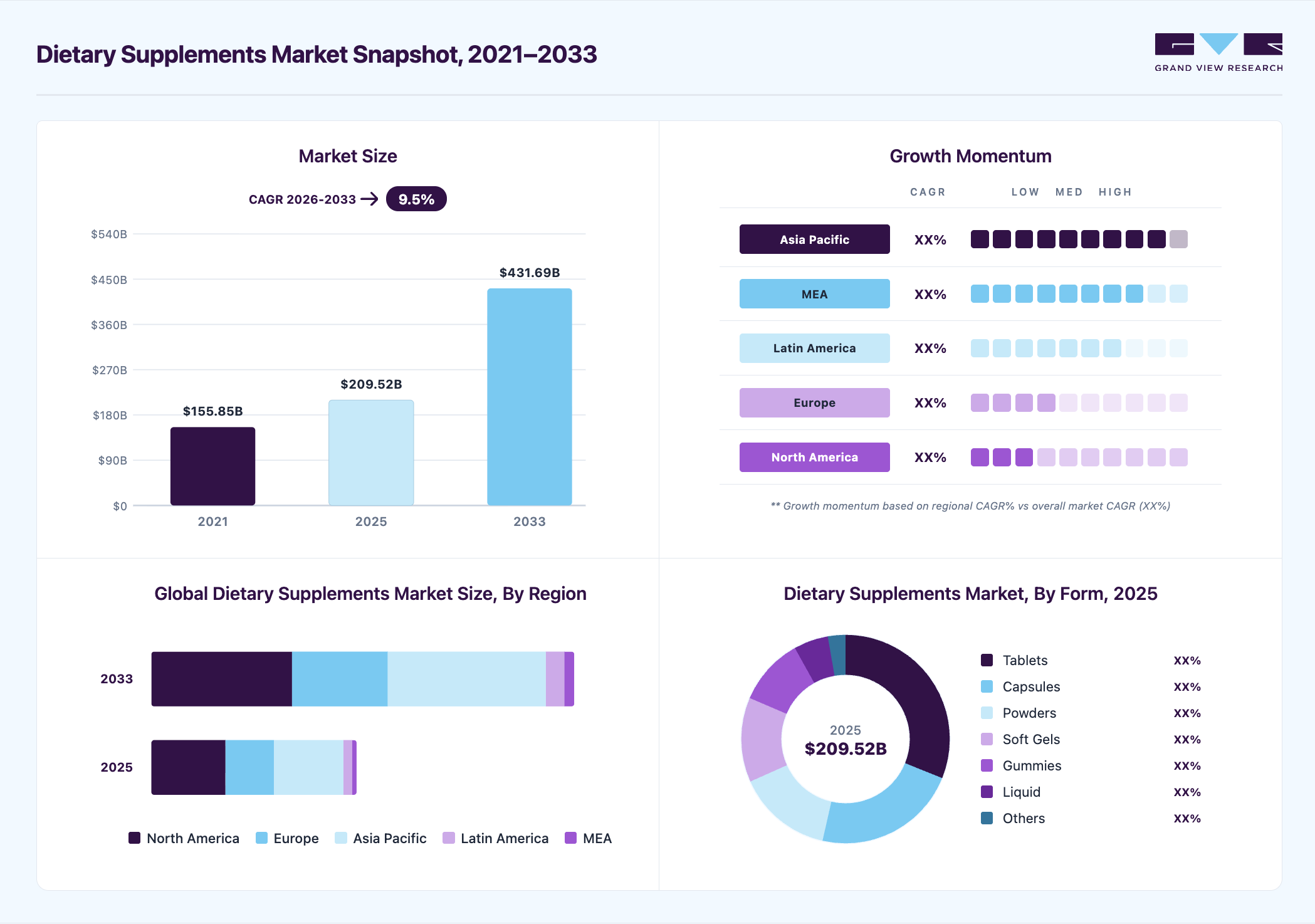 Source: Grand View Research, IR Documents, Primary Interviews, Paid DatabasesTo learn more about this report,
 Download Free Sample Report
 Key Market Trends & Insights
- By ingredient: Vitamins segment held the largest market share of 28.2% in 2025.
- By type: OTC segment held the largest market share of 75.6% in 2025.
- By form: Tablets segment held the largest market share of 31.9% in 2025.
- By application: Energy & Weight Management segment held the largest market share of 29.4% in 2025.
- By end user: Adults segment held the largest market share of 44.6% in 2025.
- By distribution channel: Offline segment held the largest market share of 62.6% in 2025.
Regional Highlights
- Largest regional market: North America (36.1% revenue share, 2025)
- Fastest-growing regional market: Asia Pacific (highest CAGR, 2026-2033)
- By country: The U.S. held the largest market share in 2025.
Market Size & Forecast
- Market size in 2025: USD 209.5 Billion
- Estimated market size in 2026: USD 228.2 Billion
- Projected market size by 2033: USD 431.7 Billion
- CAGR (2026-2033): 9.5%
Three ways to get this report
Buy it, customize it, or ask a question.Ask an Analyst
Analyst response in 1 business day
- AccessReport author, directly
- Reply timeWithin 1 working day
- No sales callDirect answer only
- FormatEmail reply
- CostFree, no cost
Get the Full Report
What the study covers
- FormatsPDF · Excel · Dashboard
- Timeline2026–2033 annual, 2025 base
- Coverage20+ countries, 5 regions
- Companies10+ key players profiled
Customize the Report
20% free customization
- IncludeCountries, segments, points
- TailorTo your product definition
- ExtendDeeper competitor detail
- OrA fully bespoke study
- Turnaround5–10 working days
Dietary Supplement Market Trends
-
Personalized nutrition is gaining traction as brands continue to use biomarker data, genetic testing, and AI to develop supplement recommendations tailored to individual needs rather than relying on generic multivitamin formulations. This shift is pushing companies toward subscription-based models and higher price points, reshaping competitive positioning across the personalized nutrition segment.
-
Non-pill formats are displacing traditional tablets and capsules, as consumer preference moves toward gummies, liquids, powders, and oral strips. This diversification of formats is broadening the customer base, prompting manufacturers to invest in new production lines.
-
Life-stage and condition-specific supplements are growing, especially in women’s health, with products targeting stress, mood, fertility, and menopause. This trend is creating more specialized market segments and increasing formulation complexity for manufacturers.
-
Botanical and clean-label ingredients such as ashwagandha and creatine are gaining popularity as consumers seek natural and science-backed products. However, variations in ingredient quality are making consistent production more challenging, increasing the focus on GMP compliance and quality testing.
The COVID-19 pandemic notably accelerated this trend, leading more individuals to prioritize immunity, vitality, and overall wellness. A primary factor contributing to the increased consumption of dietary supplements is the widespread occurrence of nutritional deficiencies caused by poor dietary habits, hectic schedules, and reliance on processed foods.
The aging population is an irreversible global trend that is a critical driver of the dietary supplements industry. The global population over the age of 65 is a key demographic target for dietary supplement companies as they contribute extensively to the overall industry demand. Although the highest sales are witnessed in the adult category (people aged 25 to 65), penetration is significantly higher in the geriatric population set, with the latter contributing to roughly 30% of worldwide sales.
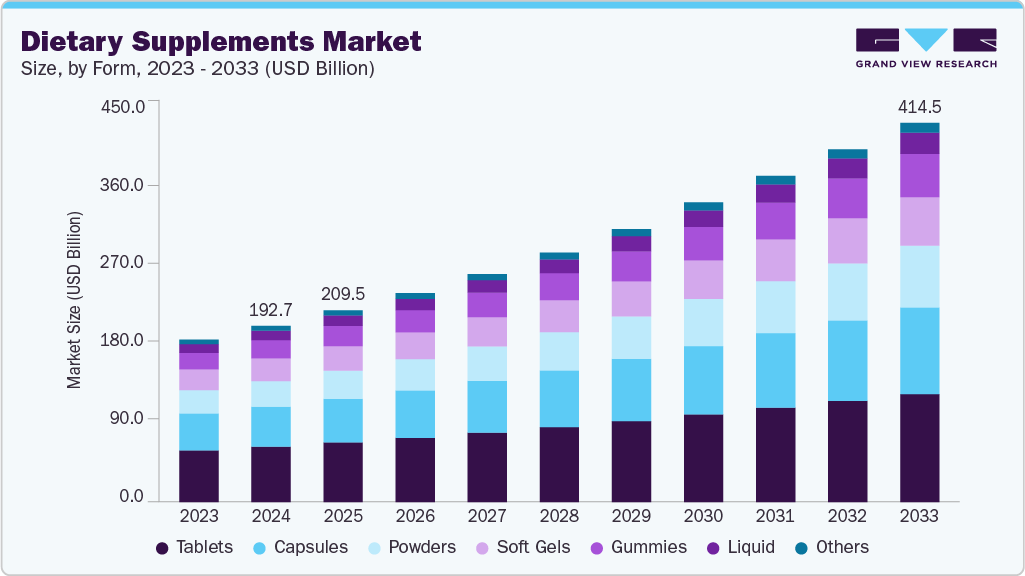 To learn more about this report, Download Free Sample Report
 According to the World Health Organization (WHO), over 2 billion people worldwide suffer from micronutrient deficiencies, including iron, vitamin D, and vitamin B12. In India, studies by the Indian Council of Medical Research (ICMR) indicate that more than 60% of the population does not meet daily nutritional requirements, prompting individuals to seek supplementation as a corrective and preventive measure.
In addition, the rise of personalized nutrition and functional supplements is reshaping consumer preferences. Technological advancements and growing interest in nutrigenomics have led to demand for supplements that target specific health outcomes, such as gut health, cognitive function, stress management, and hormonal balance. Reports show that over 30% of millennials prefer supplements tailored to their unique health concerns, with ingredients such as probiotics, nootropics, adaptogens (e.g., ashwagandha and ginseng), and herbal extracts gaining popularity.
The growing popularity of fitness culture and active lifestyles, particularly among younger demographics, is also a major contributor to the growth of the supplements industry.
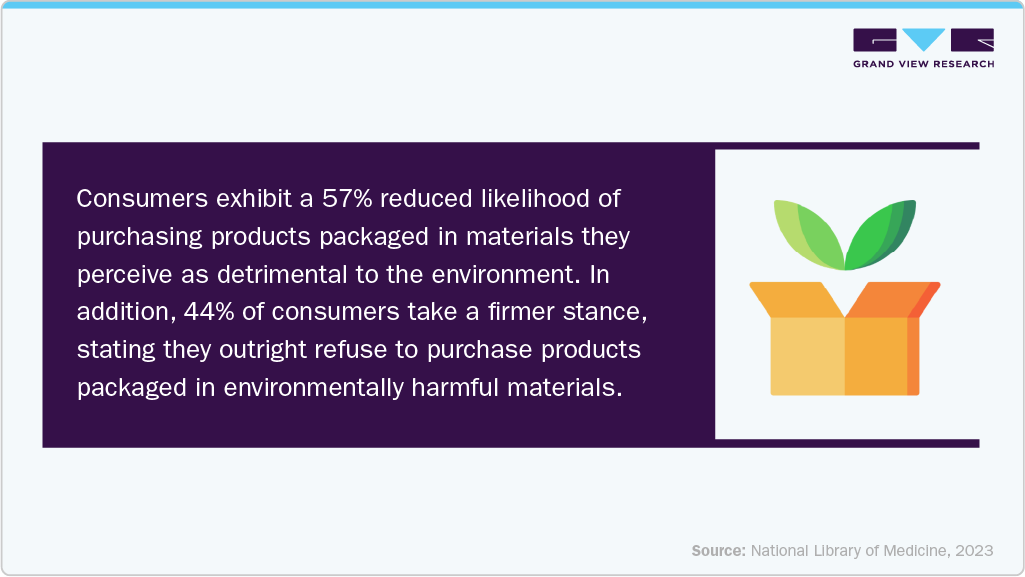
Companies in the industry are adopting technologies such as blockchain and digital traceability systems to comply with the growing consumer demand for supply chain transparency and ingredient traceability. Sustainable sourcing of raw materials is another key initiative undertaken by most players to align with their environmental and social responsibilities and sustainability compliance. Moreover, growing consumer environmental awareness is expected to drive the demand for eco-friendly, sustainable packaging. Research suggests a strong preference for products packaged in environmentally conscious materials, while there is a clear avoidance of packaging deemed harmful to the environment. According to the Buying Green Report 2022 by Trivium Packaging, 86% of consumers aged 45 and above are willing to pay a higher price for sustainable packaging
The dietary supplements market has been witnessing increasing demand for plant-based, natural, and clean-label products, primarily driven by consumer preferences for perceived healthier and more sustainable options. Manufacturers are expected to focus on developing products with natural ingredients, minimal processing, and transparent labeling. The rise of e-commerce, social commerce, and direct-to-consumer (D2C) channels is expected to improve product accessibility for consumers, thus driving market growth.
 To learn more about this report, Download Free Sample Report
 Consumer Insights for Dietary Supplements
 To learn more about this report, Download Free Sample Report
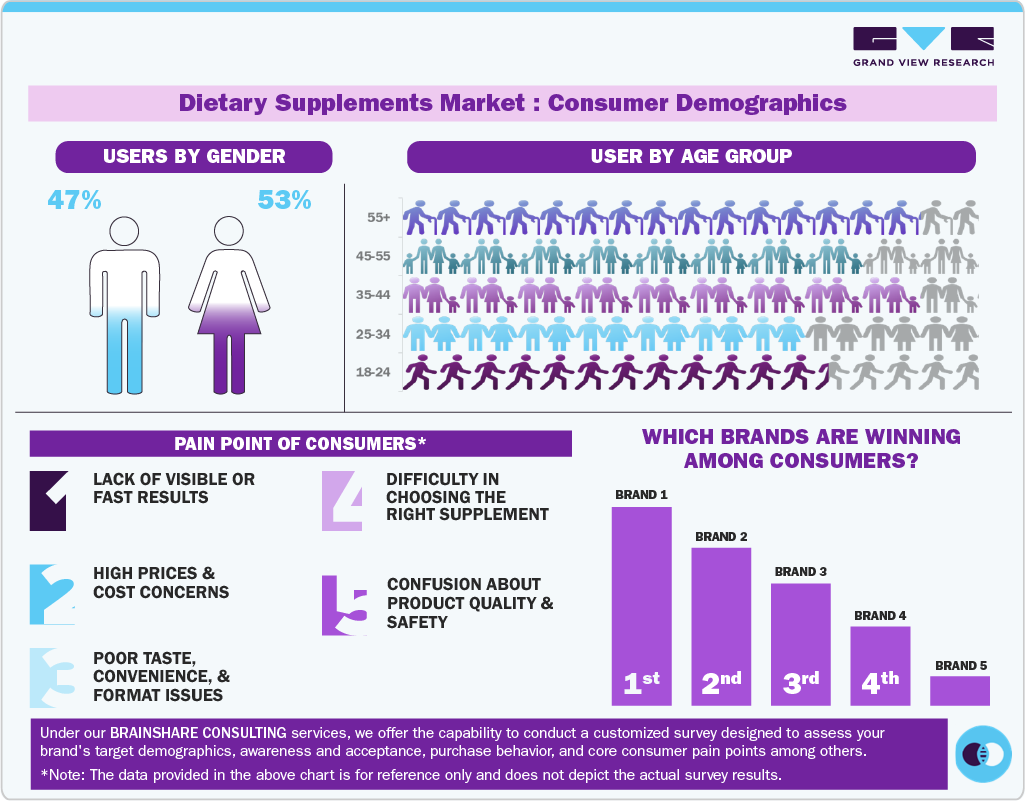
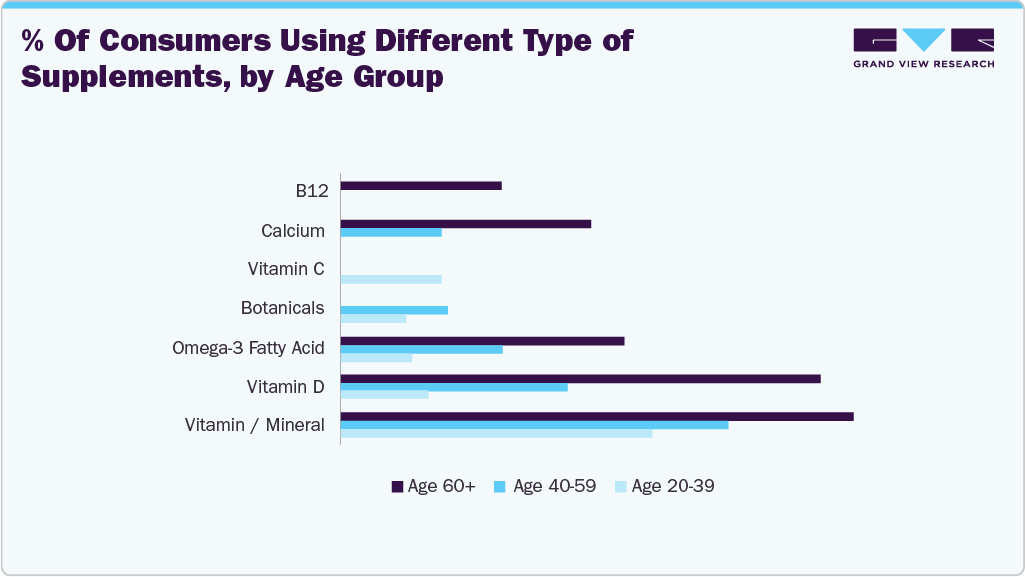
 Consumer trends and preferences for dietary supplements have evolved significantly in recent years, reflecting a growing awareness of health and wellness. One prominent trend is the increasing demand for natural and plant-based supplements. Consumers increasingly seek products made with organic and non-GMO ingredients, as they perceive them as safer and more sustainable. This preference aligns with the broader trend toward cleaner, more transparent labeling, as consumers scrutinize product ingredients and seek supplements with minimal additives and fillers. In the U.S., about 75-77% of adults use dietary supplements, with usage higher among females and older adults. Among children, about one-third use supplements. Older adults have the highest supplement use rates, with 70-74% regularly taking supplements, mainly for joint, heart, and bone health.
 To learn more about this report, Download Free Sample Report
 Fitness enthusiasts and athletes emphasize the importance of holistic nutritional solutions that address diverse aspects of well-being, including bone and joint health, digestive health, immunity, restful sleep, and healthy aging. While recent advancements in weight management offer rapid results, the real challenge lies in maintaining a healthy weight. People are becoming more aware of the connection between weight management and long-term health.
Therefore, there is a growing demand for natural, effective, and safe ingredients in dietary supplements that offer a comprehensive approach to maintaining a healthy lifestyle. The survey conducted by the German Sports University Cologne in 2024 with competitive athletes suggests that for sports dominated by conditional skills, like power, strength, and endurance, there was an increased adoption of dietary supplements among athletes.
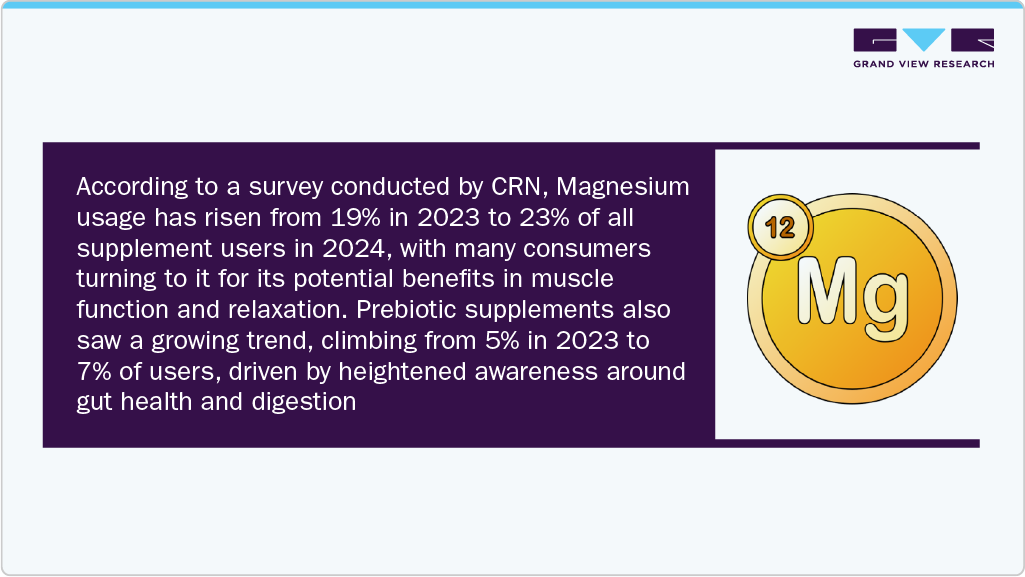
The 2024 Consumer Survey by the Council for Responsible Nutrition (CRN) highlights key consumer trends in the dietary supplement industry, including increased use of specific supplements.
 To learn more about this report, Download Free Sample Report
 With the rising popularity of the food supplements market, consumers are becoming more mindful of their overall health and eating habits. This awareness is driving a parallel increase in the consumption of functional foods and beverages, which offer added health benefits beyond basic nutrition. As individuals seek holistic wellness, they are turning to products enriched with vitamins, probiotics, antioxidants, and plant-based ingredients to support immunity, digestion, energy, and mental well-being alongside their supplement routines.
The botanical supplements market has witnessed notable growth in recent years, particularly driven by rising consumer interest in natural solutions for stress and overall well-being. One standout example is ashwagandha, whose usage has increased significantly from 2% of consumers in 2020 to 8% in 2024, reflecting growing demand for plant-based stress management and mental wellness support.
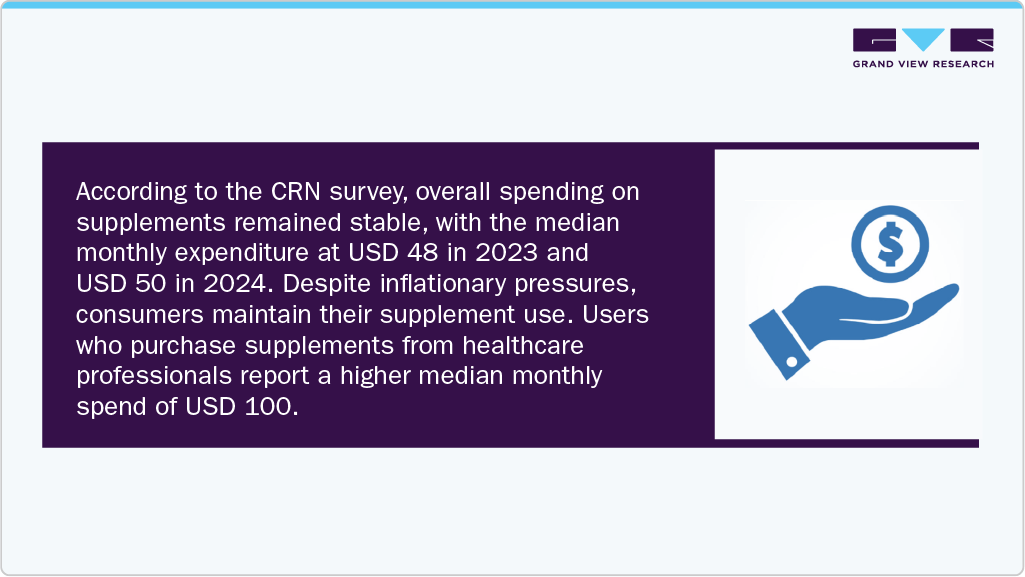
Similarly, melatonin, widely used as a sleep aid, continues to gain traction. Adoption among supplement users has risen from 10% in 2020 to 16% in 2024, underscoring its expanding popularity among consumers seeking improved sleep quality and holistic health solutions. These trends reflect a broader movement towards self-care and wellness, with consumers increasingly turning to supplements to address specific health needs, such as stress, sleep, and digestive health. Furthermore, these products are commonly purchased through a variety of channels, including direct-to-consumer online platforms, health food stores, pharmacies, and, increasingly, mainstream retail outlets such as supermarkets and large retail chains.
 To learn more about this report, Download Free Sample Report
 New companies entering the dietary supplements market are responding to customer needs and interests by offering a range of products, from phytochemical-enriched beverages to plant-based burgers. The Journal of the American College of Nutrition reports that a crucial relationship between nutrition and health, along with the growing self-care movement, are two factors driving the nutraceutical foods market. Innovative foods and brands are available in the market owing to growing interest in functional foods. Today's consumers are more aware than ever of the connection between nutrition and health. Customers are therefore demanding food and drinks that will both support their active lifestyles and offer the best possible health benefits.
Consumers are increasingly seeking products with meaningful functional benefits, such as cognitive support, energy, and stress relief, as well as solutions for issues like inflammation and digestion. Owing to increased awareness of health and wellness, consumers nowadays desire more than simple nourishment from their food and hydration from their beverages.
In response, the food and beverage industry is rapidly adapting to these evolving consumer needs by innovating and developing nutrient-dense foods and drinks that deliver functional benefits. For instance, in November 2024, LALA launched LALA Gold, a new high-protein yogurt line available in both drinkable and spoonable formats. The drinkable yogurt provides 25g of protein and 6g of fiber per 10 oz serving, while the spoonable cups offer 20g of protein, active probiotics, and no added sugar per 5.3 oz serving. Made with real fruit and available in five flavors, Raspberry Key Lime, Blueberry, Cookies & Cream, Vanilla, and Strawberry, LALA Gold is designed to meet the needs of health-conscious consumers seeking nutritious, convenient, and satisfying snack options.
Ingredients Insights
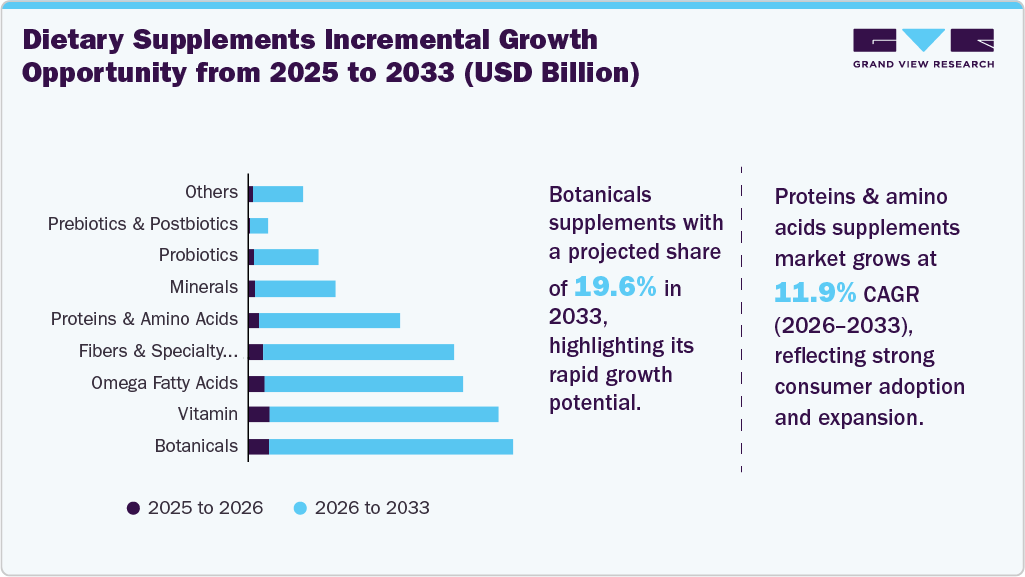
The vitamin supplements market segment accounted for a revenue share of 28.2% in 2025, highlighting its significant contribution to overall industry growth. The growth of this category can be attributed to the growing consumer awareness regarding the nutritional gaps emerging because of busy lifestyles and improper dietary patterns. Consumers are increasingly accommodating vitamin products into their daily diets to ensure adequate nutrient consumption. Bone health (vitamin D) and brain health (Vitamin B) are notable examples of the major vitamin categories witnessing high demand worldwide.
 To learn more about this report, Download Free Sample Report
 The demand for protein & amino acid supplements is expected to grow at a CAGR of 11.9% from 2026 to 2033. Citrulline, creatine, proline, and tyrosine are among the most commonly used amino acids for the production of natural health products. Amino acids are mainly manufactured using plant-derived ingredients such as soybean, corn, and wheat. As the building blocks for protein, their demand is expected to remain robust. Consumers have become health-conscious, leading to the use of products that address their nutritional needs.
Type Insights
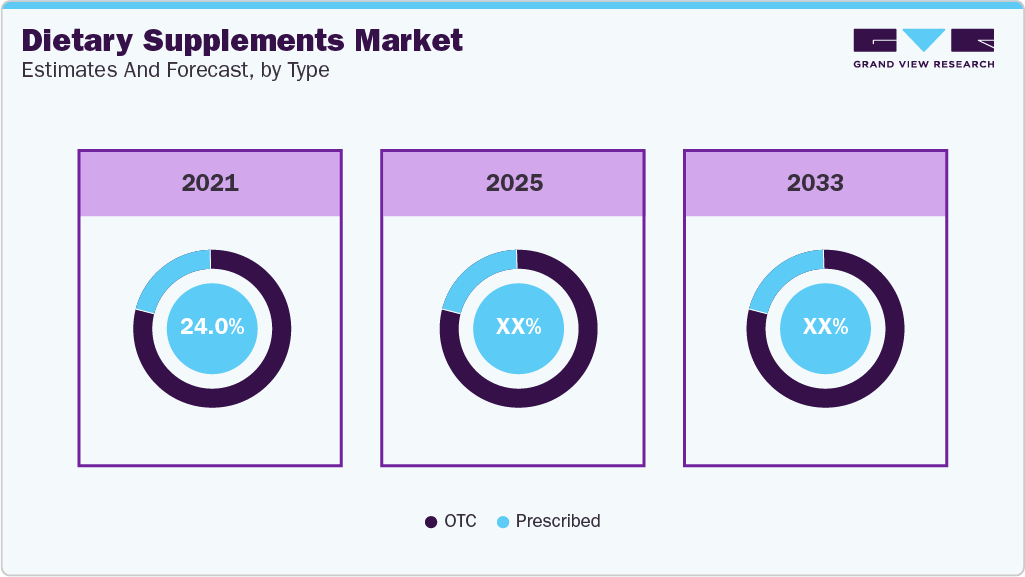
Over-the-counter (OTC) dietary supplements led the dietary supplements industry, accounting for the largest revenue share of 75.6% in 2025. OTC sales are anticipated to witness steady growth over the coming years, owing to the rising consumer awareness regarding the nutritional benefits of these products and the easy accessibility. Preventive healthcare practices are among the major factors driving the growth of this segment. The convenience of direct purchases and cost-effectiveness are expected to promote the sales of the OTC supplements during the forecast period.
 To learn more about this report, Download Free Sample Report
 The demand for prescribed dietary supplements is projected to grow at a CAGR of 8.5% from 2026 to 2033. The demand for prescribed dietary supplements is growing due to rising awareness of preventive healthcare, increasing diagnosis of nutritional deficiencies, and greater trust in medical guidance. Additionally, lifestyle-related disorders, aging populations, and chronic diseases are prompting patients to seek doctor-approved supplements as part of their long-term health management. The assurance of quality, safety, and personalized dosage in prescribed supplements further supports this growing trend.
Form Insights
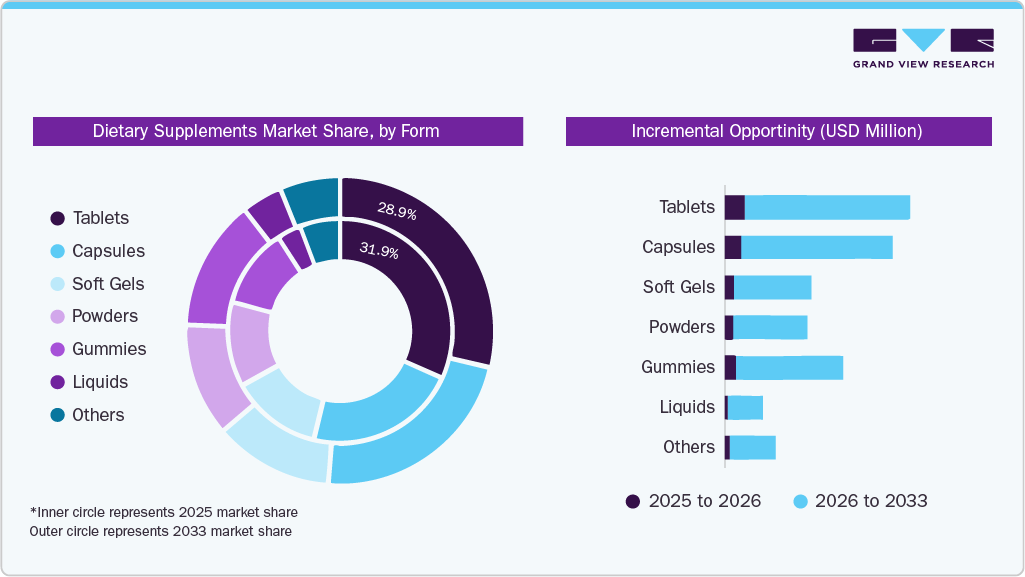
The tablet dietary supplements market segment accounted for the largest revenue share of 31.9% in 2025. Tablets are easy to store, transport, and consume, making them ideal for individuals with busy lifestyles. They also allow for the inclusion of multiple active ingredients in a single dose, supporting combination formulations such as multivitamins or bilayer tablets that offer controlled or sustained release. Additionally, advancements in tablet technology have improved taste masking and bioavailability, enhancing consumer acceptance. The familiarity and trust associated with tablet-based medications also contribute to their rising popularity among health-conscious consumers.
 To learn more about this report, Download Free Sample Report
 The liquid dietary supplements market segment is projected to grow at a CAGR of 10.8% from 2026 to 2033, driven by rising consumer preference for easy-to-consume, fast-absorbing formulations. Their suitability for children, older adults, and individuals with swallowing difficulties supports widespread adoption. Innovations in flavors, functional blends, and ready-to-drink formats further enhance appeal. Increasing demand for personalized nutrition, clean-label ingredients, and convenient delivery formats is expected to strengthen growth prospects for liquid supplements across global markets.
Application Insights
The energy & weight management supplements segment led the dietary supplements industry, accounting for a revenue share of 29.4% in 2025, supported by rising consumer focus on fitness, metabolic health, and active lifestyles. Increasing adoption of thermogenic blends, caffeine-based formulas, and natural ingredients such as green tea extract and L-carnitine is driving growth. Expanding gym culture, digital fitness trends, and demand for quick, convenient energy solutions continue to boost this segment, particularly among millennials, athletes, and busy professionals.
The prenatal health supplements market segment is projected to grow at a CAGR of 11.1% from 2026 to 2033, owing to the increased awareness about the importance of maternal nutrition in supporting fetal development and reducing pregnancy-related complications. Healthcare providers commonly recommend supplements such as folic acid, iron, calcium, and DHA to support the baby's growth and the mother's overall health. Rising maternal age, lifestyle-related deficiencies, and improved access to prenatal care are further driving the use of supplements during pregnancy.
End User Insights
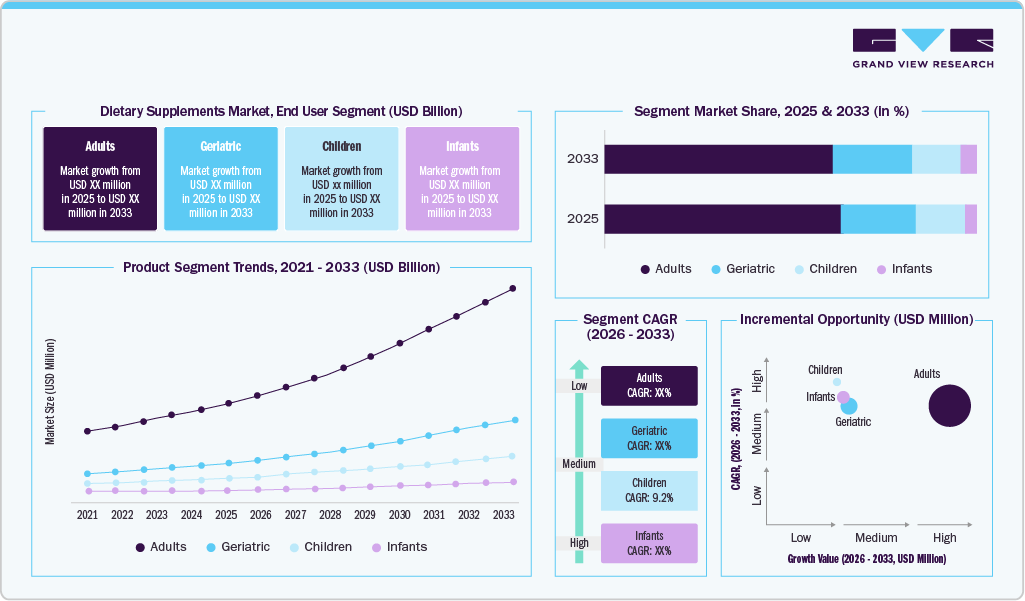
The dietary supplements for adults segment dominated the dietary supplements industry, accounting for a revenue share of 44.6% in 2025. The demand for dietary supplements is growing among adults due to increased health awareness, busy lifestyles, and the need to fill nutritional gaps caused by unbalanced diets. Adults are increasingly using supplements to support immunity, energy, digestion, mental well-being, and fitness. Concerns about aging, stress, and chronic health issues also drive them to seek convenient, preventive solutions to maintain overall health and wellness.
 To learn more about this report, Download Free Sample Report
 Dietary supplements for infants are projected to grow at a CAGR of 12.4% from 2025 to 2033. The demand for dietary supplements among infants is growing due to increased awareness of early childhood nutrition, rising concerns about nutrient deficiencies, and pediatricians' recommendations for supplements such as vitamin D, iron, and omega-3 fatty acids. Factors such as premature births, picky eating habits, and lack of breastfeeding in some cases further drive the need for supplemental support to ensure healthy growth, immunity, and brain development during the crucial early years.
Distribution Channel Insights
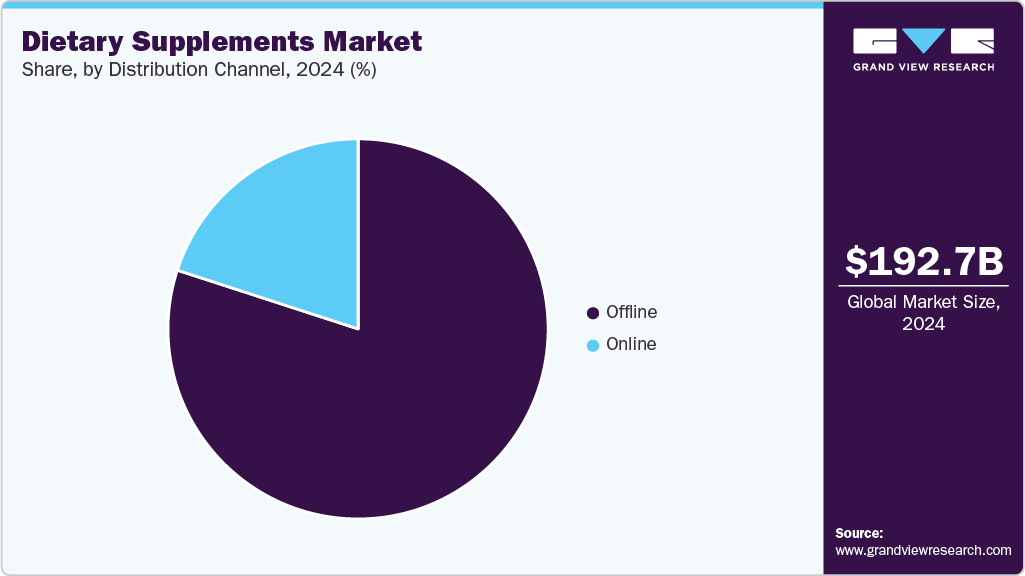
The sales of dietary supplements through offline channels accounted for a share of around 62.6% of the global revenue in 2025, due to consumers' preference for trust, personalized guidance, and the assurance of product authenticity. Pharmacies, health stores, and nutrition clinics offer direct interactions with pharmacists or healthcare professionals, allowing buyers to make informed decisions based on expert advice. This is especially important for first-time users, elderly consumers, or those purchasing prescribed supplements. In regions with limited digital literacy or lower internet penetration, offline retail continues to be the primary purchasing route, further driving growth in physical sales of dietary supplements.
 To learn more about this report, Download Free Sample Report
 The sales of dietary supplements through online channels are projected to grow at a CAGR of 11.4% from 2026 to 2033. E-commerce platforms offer detailed product descriptions, reviews, and comparisons, enabling informed decisions without visiting physical stores. The rise of direct-to-consumer (D2C) brands, subscription models, and targeted social media marketing has further boosted online purchases. In addition, consumers increasingly trust online platforms for certified, high-quality supplements, often at competitive prices. The availability of personalized solutions and the growing trend of digital health and wellness are also driving this shift toward online supplement consumption.
Regional Insights
The dietary supplements industry in North America accounted for a global revenue share of 36.13% in 2025. North America has a vast population facing increased obesity levels and lifestyle-related diseases owing to their dietary habits, high disposable income, and availability of several processed & ready-to-eat foods, which are not necessarily good for consumer health. The ‘transitioning face’ of food has evolved into functional foods & supplements, which can provide numerous health benefits beyond basic nutrition. With respect to this, products such as whole, fortified, enriched, or enhanced foods and dietary supplements, including carotenoids, probiotics, and CoQ10, potentially have beneficial effects on health when consumed as part of a varied diet on a regular basis at effective levels.
Largest Dietary Supplement Markets by Country
Country
% Global Share
CAGR (2026- 2033)
US
32.8%
8.3%
China
13.6%
10.5%
Japan
7.0%
11.5%
Italy
4.3%
8.6%
Germany
4.1%
9.4%
India
2.8%
13.2%
France
2.7%
8.3%
UK
2.5%
8.9%
Brazil
2.4%
9.7%
Canada
2.1%
9.6%
 To learn more about this report, Download Free Sample Report
 U.S. Dietary Supplements Market Trends
The dietary supplements industry in the U.S. accounted for a revenue share of 91.4% in 2025.Factors fueling interest in dietary supplements in the U.S. include rising healthcare costs, changes in food laws affecting label and product claims, rapid advances in science and technology, a growing geriatric population, and growing interest in attaining wellness through diet.
The Canada dietary supplements market is projected to grow at a CAGR of 7.6% from 2026 to 2033, driven by rising health consciousness, an aging population, and demand for preventive wellness solutions. Increasing consumer preference for natural, clean-label, and personalized nutrition products is further accelerating the industry expansion across the country.
Europe Dietary Supplements Market Trends
The dietary supplements industry in Europe is projected to grow at a CAGR of 7.6% from 2026 to 2033. The European Society for Clinical Nutrition and Metabolism (ESPEN) governs and awards grants to businesses in the nutrition sector, and it also recognizes the best-performing organizations in the industry. Such initiatives have encouraged participants to develop highly beneficial and innovative products, thereby boosting industry growth. Growing technological innovation in the nutraceuticals sector offers new opportunities in Europe. The Federation of European Nutrition Societies (FENS) funds and invests in various nutritional food and nutricosmetic businesses. The federation operates and nurtures the growth of such businesses in 26 countries in the region.
The dietary supplements market in the UK is projected to grow at a CAGR of 7.9% from 2026 to 2033. UK consumers now perceive health in terms of preventing illness rather than treating it. As a result, Europe has been experiencing high demand for dietary supplements over the years. Increasing stress levels and the presence of an aging population are some of the other factors fueling the demand for dietary supplements in this country.
The Germany dietary supplements market is projected to grow at a CAGR of 7.7% from 2026 to 2033. The market growth is fueled by growing clinical evidence supporting the benefits and effectiveness of these supplements in disease treatment and the maintenance of general health. Dietary supplements are being increasingly consumed in the country for the treatment of inflammatory bowel disease (IBD), infectious diarrhea, and lactose intolerance.
Asia Pacific Dietary Supplements Market Trends
The dietary supplements industry in Asia Pacific is projected to grow at a CAGR of 9.4% from 2026 to 2033. The Asia Pacific market is anticipated to witness increasing demand fo dietary supplements as key participants are introducing their brands in the untapped markets of Southeast Asia. China, Japan, and India are among the largest markets for dietary supplements in the Asia Pacific, owing to the presence of a large consumer base in these countries. Japan and Australia have experienced heightened awareness regarding the health benefits of dietary supplements over the years, which is expected to strengthen the regional market growth over the forecast period.
The dietary supplements market in China accounted for a revenue share of 39.8% in 2025. Individuals in China have been increasingly focusing on their health in the past few years, which has boosted the demand for dietary supplements in the country. The rising demand for these supplements can also be attributed to the diverse flavor options available in terms of the grab-and-go variety. The government of China has taken numerous initiatives in recent years to promote the benefits of healthy eating and a healthy lifestyle. It has also taken steps to raise the nutrient intake among consumers, along with a focus on building a nutrient-fortified food industry and the development of healthy food products in the near future.
The Japan dietary supplements market is projected to grow at a CAGR of 10.2% from 2026 to 2033. The growing number of fitness clubs across the country has been contributing to the increasing product demand. At a macro level, various factors have been contributing to the growth of the market in Japan. Prominent among them are increasing healthcare costs, rising cases of mal-digestion, and a rapidly growing geriatric population. Probiotics, vitamins, minerals, omega fatty acids, prebiotics, and enzyme ingredients have enjoyed steady growth in the country.
The dietary supplements market in India is projected to grow at a CAGR of 10.4% from 2026 to 2033, owing to changing lifestyles, rapid urbanization, rising health consciousness, and increasing per capita income. In addition, the growing incidence of lifestyle diseases such as malnourishment, overweight, and high blood pressure, coupled with the high cost of medical treatments, is expected to increase the level of health awareness among consumers, which, in turn, is anticipated to fuel the demand for dietary supplements.
Central & South America Dietary Supplements Market Trends
The dietary supplements industry in Central & South America is projected to grow at a CAGR of 8.4% from 2026 to 2033. Young and adult consumers are more receptive to health and wellness trends, which will likely drive the sales of dietary supplement products. The increasing number of consumers following a healthy lifestyle, coupled with untapped opportunities in Central & South America, is expected to drive the market growth over the forecast period.
The dietary supplements market in Brazil is projected to grow at a CAGR of 8.1% from 2026 to 2033, driven by rising health awareness, increasing gym participation, and growing interest in preventive wellness. Consumers are adopting vitamins, minerals, protein powders, and energy-support supplements to maintain active lifestyles. Regulatory support for clean-label and plant-based formulations, coupled with expanding e-commerce accessibility, is further accelerating market penetration. Urbanization and higher disposable incomes continue to strengthen demand across diverse consumer segments.
Middle East & Africa Dietary Supplements Market Trends
The dietary supplements industry in the Middle East & Africa is projected to grow at a CAGR of 9.0% from 2026 to 2033. The market growth is mainly driven by rising disposable incomes and increasing awareness among consumers regarding the health benefits of dietary supplements. Transitioning demographics in the region, including the rise of the young & working population, have increased the spending on products related to health and well-being.
The South Africa dietary supplements market is projected to grow at a CAGR of 8.6% from 2026 to 2033, supported by rising interest in preventive health and nutritional deficiencies across urban populations. Demand for vitamins, immune-boosting supplements, and sports nutrition products is increasing as consumers prioritize wellness and active lifestyles. Growing retail penetration, government-led health awareness programs, and broader acceptance of herbal and plant-based formulations further strengthen market expansion, particularly among younger, health-conscious consumers.
Key Dietary Supplements Company Insights
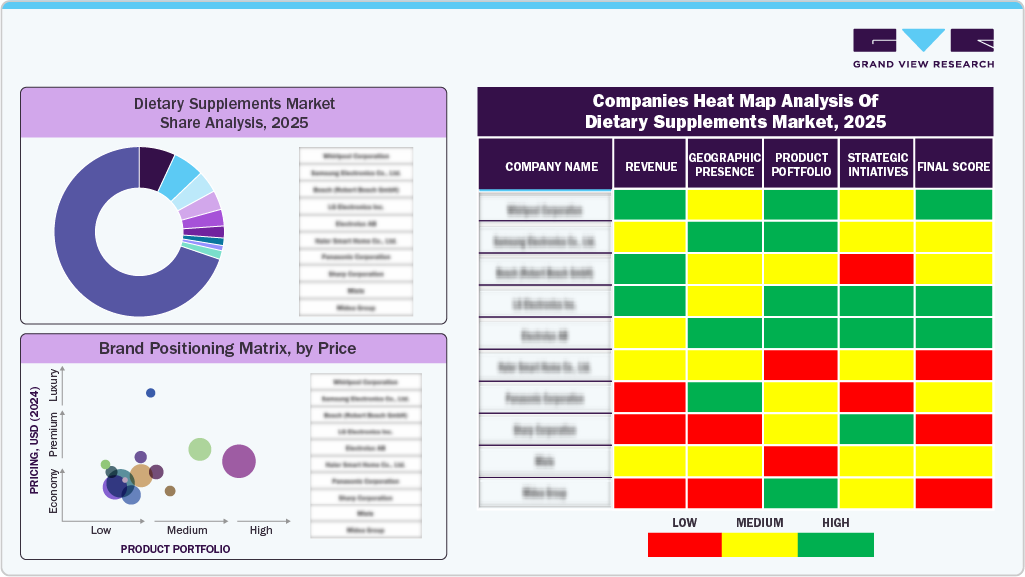
Established companies and emerging players in the dietary supplements market are creating a competitive environment by emphasizing product innovation, quality, and strategic pricing. This heightened competition is driven by the need for ongoing investment in advanced manufacturing facilities, automation, and skilled professionals to ensure operational efficiency and regulatory compliance. The market landscape is further influenced by rising consumer demand for health and wellness solutions.
Growing awareness of chronic health issues such as diabetes, obesity, and nutrient deficiencies is encouraging consumers to seek targeted and preventive nutrition through dietary supplements. This shift in consumer behavior is fueling the demand for specialized formulations, including plant-based supplements, allergen-free options, and condition-specific blends, creating significant opportunities for manufacturers and suppliers who can meet these evolving health-conscious needs.
 To learn more about this report, Download Free Sample Report
 Key Dietary Supplements Companies:
The following key companies have been profiled for this study on the dietary supplements market.
- Amway Corp.
- Abbott
- Bayer AG
- Glanbia plc
- Pfizer Inc.
- Archer Daniels Midland
- NU SKIN
- GlaxoSmithKline plc.
- Herbalife Nutrition Ltd.
- Nature's Sunshine Products, Inc.
- XanGo, LLC
- RBK Nutraceuticals Pty Ltd
- American Health
- International Flavors & Fragrances Inc.
- Good Health New Zealand
- Nature's Bounty
- NOW Foods
Recent Developments
-
In January 2026, The Vitamin Shoppe announced it had rolled out AG1, the science-backed foundational nutrition supplement, across more than 640 retail locations in New Jersey and online, strengthening its product portfolio and national distribution partnership to expand consumer access
-
In November 2025, French contract manufacturer ANJAC Health & Beauty completed the acquisition of Slovenian nutraceutical group Health Chain Group (HCG), integrating its PharmaLinea, Hermes Consilium, and ErgoPharma units to expand its clinical‑nutrition portfolio, global market reach, and production capacity
-
In August 2025, Vitanergy Health US Inc. unveiled three new clean-label, vegan dietary supplements: D3 multivitamin gummies, B-complex gummies with folate, and a Rejuvenate & Glow 4-in-1 capsule, designed to support women’s daily nutritional needs and sold through major online retailers.
-
In February 2025, Vitaboom and GetHealthy announced a strategic partnership to transform the personalized nutrition industry. By combining Vitaboom’s expertise in nutritional supplements with GetHealthy’s advanced digital health platform, the collaboration aims to deliver customized supplement recommendations and wellness plans to consumers. The partnership leverages AI-driven insights and user data to create tailored nutrition solutions, making it easier for individuals to achieve their health goals. This initiative is expected to set a new standard for personalized wellness and improve overall health outcomes for users.
-
In October 2024, Vantage Nutrition launched higher concentration VitaCholine in transparent liquid capsules, offering a unique and visually appealing dosage form that delivers between 275mg to 550mg of free choline per capsule. This launch reflects Vantage Nutrition’s commitment to quality, innovation, and rapid market delivery, with the new capsules set to be showcased at Supply Side West in Las Vegas.
Dietary Supplements Market Report Scope
Report Attribute
Details
Market size in 2025
USD 209.5 billion
Estimated Market size in 2026
USD 228.2 billion
Projected Market size by 2033
USD 431.7 billion
Growth rate
CAGR of 9.5% from 2026 to 2033
Actuals
2021 - 2025
Forecast period
2026 - 2033
Quantitative units
Revenue in USD billion and CAGR from 2026 to 2033
Report coverage
Revenue forecast, company ranking, competitive landscape, growth factors, and trends
Segments covered
Ingredient, type, form, application, end user, distribution channel, ingredient-form, form-end user, form-application, and region
Regional scope
North America; Europe; Asia Pacific; Central & South America; Middle East & Africa
Country scope
U.S.; Canada; Mexico; UK; Germany; France; Italy; Spain; Poland; Russia, China; India; Japan; Australia & New Zealand; South Korea; Taiwan; Brazil; South Africa; UAE; Saudi Arabia
Key companies profiled
Amway Corp.; Abbott; Bayer AG; Glanbia plc; Pfizer Inc.; Archer Daniels Midland; NU SKIN; GlaxoSmithKline plc.; Herbalife Nutrition Ltd.; Nature's Sunshine Products, Inc.; XanGo, LLC; RBK Nutraceuticals Pty Ltd; American Health; International Flavors & Fragrances Inc; Good Health New Zealand; Nature's Bounty; NOW Foods
Customization scope
Free report customization (equivalent up to 8 analysts’ working days) with purchase. Addition or alteration to country, regional & segment scope.
Pricing and purchase options
Avail customized purchase options to meet your exact research needs. Explore purchase options
Global Dietary Supplements Market Report Segmentation
This report forecasts revenue growth at the global, regional & country levels and provides an analysis of the latest trends and opportunities in each of the sub-segments from 2021 to 2033. For this study, Grand View Research has segmented the global dietary supplements market report based on ingredient, type, form, application, end user, distribution channel, ingredient-form, form-end user, form-application, and region:
-
Ingredients Outlook (Revenue, USD Billion, 2021 - 2033)
-
Vitamins
-
Multivitamin
-
Vitamin A
-
Vitamin B
-
Vitamin C
-
Vitamin D
-
Vitamin K
-
Vitamin E
-
-
Botanicals
-
Minerals
-
Calcium
-
Potassium
-
Magnesium
-
Iron
-
Zinc
-
Others (selenium, chromium, copper)
-
-
Protein & Amino Acids
-
Collagen
-
Others
-
-
Fibers & Specialty Carbohydrates
-
Omega Fatty Acids
-
Probiotics
-
Prebiotics & Postbiotics
-
Others
-
-
Type Outlook (Revenue, USD Billion, 2021 - 2033)
-
OTC
-
Prescribed
-
-
Form Outlook (Revenue, USD Billion, 2021 - 2033)
-
Tablets
-
Capsules
-
Softgels
-
Powder
-
Gummies
-
Liquid
-
Others
-
-
Application Outlook (Revenue, USD Billion, 2021 - 2033)
-
Energy & Weight Management
-
General Health
-
Bone & Joint Health
-
Gastrointestinal Health
-
Immunity
-
Cardiac Health
-
Diabetes
-
Anti-cancer
-
Lungs Detox/Cleanse
-
Skin/ Hair/ Nails
-
Sexual Health
-
Brain/Mental Health
-
Insomnia
-
Menopause
-
Anti-aging
-
Prenatal Health
-
Others
-
-
End User Outlook (Revenue, USD Billion, 2021 - 2033)
-
Adults
-
Millennials
-
Male
-
Female
-
Pregnant Women
-
Non-pregnant Women
-
-
-
Gen X
-
Male
-
Female
-
Pregnant Women
-
Non-pregnant Women
-
-
-
Gen Z
-
Male
-
Female
-
Pregnant Women
-
Non-pregnant Women
-
-
-
Boomers
-
Male
-
Female
-
-
-
Geriatric
-
Children
-
Infants
-
-
Distribution Channel Outlook (Revenue, USD Billion, 2021 - 2033)
-
Offline
-
Hypermarkets/Supermarkets
-
Pharmacies
-
Specialty Stores
-
Practioner
-
Others
-
-
Direct Sales (MLM)
-
D2C
-
Online
-
Amazon
-
Others
-
-
Online
-
-
Ingredient-Form Outlook (Revenue, USD Billion, 2021 - 2033)
-
Vitamin
-
Tablets
-
Capsules
-
Soft Gels
-
Powders
-
Gummies
-
Liquid
-
Others
-
Multivitamin
-
Tablets
-
Capsules
-
Soft Gels
-
Powders
-
Gummies
-
Liquid
-
Others
-
-
Vitamin A
-
Tablets
-
Capsules
-
Soft Gels
-
Powders
-
Gummies
-
Liquid
-
Others
-
-
Vitamin B
-
Tablets
-
Capsules
-
Soft Gels
-
Powders
-
Gummies
-
Liquid
-
Others
-
-
Vitamin C
-
Tablets
-
Capsules
-
Soft Gels
-
Powders
-
Gummies
-
Liquid
-
Others
-
-
Vitamin D
-
Tablets
-
Capsules
-
Soft Gels
-
Powders
-
Gummies
-
Liquid
-
Others
-
-
Vitamin K
-
Tablets
-
Capsules
-
Soft Gels
-
Powders
-
Gummies
-
Liquid
-
Others
-
-
Vitamin E
-
Tablets
-
Capsules
-
Soft Gels
-
Powders
-
Gummies
-
Liquid
-
Others
-
-
-
-
Mineral
-
Tablets
-
Capsules
-
Soft Gels
-
Powders
-
Gummies
-
Liquid
-
Others
-
Calcium
-
Tablets
-
Capsules
-
Soft Gels
-
Powders
-
Gummies
-
Liquid
-
Others
-
-
Potassium
-
Tablets
-
Capsules
-
Soft Gels
-
Powders
-
Gummies
-
Liquid
-
Others
-
-
Magnesium
-
Tablets
-
Capsules
-
Soft Gels
-
Powders
-
Gummies
-
Liquid
-
Others
-
-
Iron
-
Tablets
-
Capsules
-
Soft Gels
-
Powders
-
Gummies
-
Liquid
-
Others
-
-
Zinc
-
Tablets
-
Capsules
-
Soft Gels
-
Powders
-
Gummies
-
Liquid
-
Others
-
-
Others (selenium, chromium, copper)
-
Tablets
-
Capsules
-
Soft Gels
-
Powders
-
Gummies
-
Liquid
-
Others
-
-
-
-
Botanicals
-
Tablets
-
Capsules
-
Soft Gels
-
Powders
-
Gummies
-
Liquid
-
Others
-
-
Protein & amino acids
-
Tablets
-
Capsules
-
Soft Gels
-
Powders
-
Gummies
-
Liquid
-
Others
-
Collagen
-
Tablets
-
Capsules
-
Soft Gels
-
Powders
-
Gummies
-
Liquid
-
Others
-
-
Others
-
Tablets
-
Capsules
-
Soft Gels
-
Powders
-
Gummies
-
Liquid
-
Others
-
-
-
-
Fibers & Specialty Carbohydrates
-
Tablets
-
Capsules
-
Soft Gels
-
Powders
-
Gummies
-
Liquid
-
Others
-
-
Omega Fatty Acids
-
Tablets
-
Capsules
-
Soft Gels
-
Powders
-
Gummies
-
Liquid
-
Others
-
-
Probiotics
-
Tablets
-
Capsules
-
Soft Gels
-
Powders
-
Gummies
-
Liquid
-
Others
-
-
Prebiotics & Postbiotics
-
Tablets
-
Capsules
-
Soft Gels
-
Powders
-
Gummies
-
Liquid
-
Others
-
-
Others
-
Tablets
-
Capsules
-
Soft Gels
-
Powders
-
Gummies
-
Liquid
-
Others
-
-
-
Form-End User Outlook (Revenue, USD Billion, 2021 - 2033)
-
Tablets
-
Adults
-
Millennials
-
Male
-
Female
-
Pregnant Women
-
Non-pregnant Women
-
-
-
Gen X
-
Male
-
Female
-
Pregnant Women
-
Non-pregnant Women
-
-
-
Gen Z
-
Male
-
Female
-
Pregnant Women
-
Non-pregnant Women
-
-
-
Boomers
-
Male
-
Female
-
-
-
Geriatric
-
Children
-
Infants
-
-
Capsules
-
Adults
-
Millennials
-
Male
-
Female
-
Pregnant Women
-
Non-pregnant Women
-
-
-
Gen X
-
Male
-
Female
-
Pregnant Women
-
Non-pregnant Women
-
-
-
Gen Z
-
Male
-
Female
-
Pregnant Women
-
Non-pregnant Women
-
-
-
Boomers
-
Male
-
Female
-
-
-
Geriatric
-
Children
-
Infants
-
-
Softgels
-
Adults
-
Millennials
-
Male
-
Female
-
Pregnant Women
-
Non-pregnant Women
-
-
-
Gen X
-
Male
-
Female
-
Pregnant Women
-
Non-pregnant Women
-
-
-
Gen Z
-
Male
-
Female
-
Pregnant Women
-
Non-pregnant Women
-
-
-
Boomers
-
Male
-
Female
-
-
-
Geriatric
-
Children
-
Infants
-
-
Powders
-
Adults
-
Millennials
-
Male
-
Female
-
Pregnant Women
-
Non-pregnant Women
-
-
-
Gen X
-
Male
-
Female
-
Pregnant Women
-
Non-pregnant Women
-
-
-
Gen Z
-
Male
-
Female
-
Pregnant Women
-
Non-pregnant Women
-
-
-
Boomers
-
Male
-
Female
-
-
-
Geriatric
-
Children
-
Infants
-
-
Gummies
-
Adults
-
Millennials
-
Male
-
Female
-
Pregnant Women
-
Non-pregnant Women
-
-
-
Gen X
-
Male
-
Female
-
Pregnant Women
-
Non-pregnant Women
-
-
-
Gen Z
-
Male
-
Female
-
Pregnant Women
-
Non-pregnant Women
-
-
-
Boomers
-
Male
-
Female
-
-
-
Geriatric
-
Children
-
Infants
-
-
Liquid
-
Adults
-
Millennials
-
Male
-
Female
-
Pregnant Women
-
Non-pregnant Women
-
-
-
Gen X
-
Male
-
Female
-
Pregnant Women
-
Non-pregnant Women
-
-
-
Gen Z
-
Male
-
Female
-
Pregnant Women
-
Non-pregnant Women
-
-
-
Boomers
-
Male
-
Female
-
-
-
Geriatric
-
Children
-
Infants
-
-
Others
-
Adults
-
Millennials
-
Male
-
Female
-
Pregnant Women
-
Non-pregnant Women
-
-
-
Gen X
-
Male
-
Female
-
Pregnant Women
-
Non-pregnant Women
-
-
-
Gen Z
-
Male
-
Female
-
Pregnant Women
-
Non-pregnant Women
-
-
-
Boomers
-
Male
-
Female
-
-
-
Geriatric
-
Children
-
Infants
-
-
-
Form-Application Outlook (Revenue, USD Billion, 2021 - 2033)
-
Tablets
-
Energy & Weight Management
-
General Health
-
Bone & Joint Health
-
Gastrointestinal Health
-
Immunity
-
Cardiac Health
-
Diabetes
-
Anti-cancer
-
Lungs Detox/Cleanse
-
Skin/ Hair/ Nails
-
Sexual Health
-
Brain/Mental Health
-
Insomnia
-
Menopause
-
Anti-aging
-
Prenatal Health
-
Others
-
-
Capsules
-
Energy & Weight Management
-
General Health
-
Bone & Joint Health
-
Gastrointestinal Health
-
Immunity
-
Cardiac Health
-
Diabetes
-
Anti-cancer
-
Lungs Detox/Cleanse
-
Skin/ Hair/ Nails
-
Sexual Health
-
Brain/Mental Health
-
Insomnia
-
Menopause
-
Anti-aging
-
Prenatal Health
-
Others
-
-
Softgels
-
Energy & Weight Management
-
General Health
-
Bone & Joint Health
-
Gastrointestinal Health
-
Immunity
-
Cardiac Health
-
Diabetes
-
Anti-cancer
-
Lungs Detox/Cleanse
-
Skin/ Hair/ Nails
-
Sexual Health
-
Brain/Mental Health
-
Insomnia
-
Menopause
-
Anti-aging
-
Prenatal Health
-
Others
-
-
Powders
-
Energy & Weight Management
-
General Health
-
Bone & Joint Health
-
Gastrointestinal Health
-
Immunity
-
Cardiac Health
-
Diabetes
-
Anti-cancer
-
Lungs Detox/Cleanse
-
Skin/ Hair/ Nails
-
Sexual Health
-
Brain/Mental Health
-
Insomnia
-
Menopause
-
Anti-aging
-
Prenatal Health
-
Others
-
-
Gummies
-
Energy & Weight Management
-
General Health
-
Bone & Joint Health
-
Gastrointestinal Health
-
Immunity
-
Cardiac Health
-
Diabetes
-
Anti-cancer
-
Lungs Detox/Cleanse
-
Skin/ Hair/ Nails
-
Sexual Health
-
Brain/Mental Health
-
Insomnia
-
Menopause
-
Anti-aging
-
Prenatal Health
-
Others
-
-
Liquid
-
Energy & Weight Management
-
General Health
-
Bone & Joint Health
-
Gastrointestinal Health
-
Immunity
-
Cardiac Health
-
Diabetes
-
Anti-cancer
-
Lungs Detox/Cleanse
-
Skin/ Hair/ Nails
-
Sexual Health
-
Brain/Mental Health
-
Insomnia
-
Menopause
-
Anti-aging
-
Prenatal Health
-
Others
-
-
Others
-
Energy & Weight Management
-
General Health
-
Bone & Joint Health
-
Gastrointestinal Health
-
Immunity
-
Cardiac Health
-
Diabetes
-
Anti-cancer
-
Lungs Detox/Cleanse
-
Skin/ Hair/ Nails
-
Sexual Health
-
Brain/Mental Health
-
Insomnia
-
Menopause
-
Anti-aging
-
Prenatal Health
-
Others
-
-
-
Regional Outlook (Revenue, USD Billion, 2021 - 2033)
-
North America
-
U.S.
-
Canada
-
Mexico
-
-
Europe
-
Germany
-
UK
-
France
-
Italy
-
Spain
-
Poland
-
Russia
-
-
Asia Pacific
-
China
-
Japan
-
India
-
South Korea
-
Australia & New Zealand
-
Taiwan
-
-
Central & South America
-
Brazil
-
-
Middle East & Africa
-
UAE
-
Saudi Arabia
-
South Africa
-
-
Frequently Asked Questions About This Report
The energy & weight management supplements segment held the highest market share in 2025, while prenatal health supplements is the fastest-growing segment.
Key players are Amway Corp., Abbott, Bayer AG, Glanbia plc, Pfizer Inc., Archer Daniels Midland, NU SKIN, GlaxoSmithKline plc., Herbalife Nutrition Ltd., Nature's Sunshine Products, Inc., XanGo, LLC, RBK Nutraceuticals Pty Ltd, American Health, International Flavors & Fragrances Inc., Good Health New Zealand, Nature's Bounty, NOW Foods
The offline segment accounted for the largest share in 2025, while online is the fastest-growing segment.
The vitamins segment held the market with the largest revenue share of 28.2% in 2025, while protein & amino acids is the fastest-growing segment.
Key factors include the growing consumer trend of preventive healthcare and the aging population. Furthermore, over the past few years, the growing sales of sports nutrition and energy & weight management supplements in key markets such as the U.S. and China, along with new product launches, are likely to have a significant impact on the industry over the projected period.
North America dominated with a revenue share of 36.1% in 2025.
Asia Pacific is the fastest-growing region over the forecast period.
The OTC segment held the market with the largest revenue share of 75.6% in 2025, while prescribed is the fastest-growing segment
The tablets segment held the highest market share in 2025, while liquid dietary supplements is the fastest-growing segment.
Dietary Supplements Market By Country
- U.S. Dietary Supplements Market
- Canada Dietary Supplements Market
- Mexico - North America Dietary Supplements Market
- Germany Dietary Supplements Market
- France Dietary Supplements Market
- Italy Dietary Supplements Market
- Spain Dietary Supplements Market
- Russia Dietary Supplements Market
- Japan Dietary Supplements Market
- China Dietary Supplements Market
- India Dietary Supplements Market
- South Korea Dietary Supplements Market
- Taiwan Dietary Supplements Market
- Brazil Dietary Supplements Market
- South Africa Dietary Supplements Market
- U.K. Dietary Supplements Market
- Poland Dietary Supplements Market
- Anz Dietary Supplements Market
About the Author(s)
Nutraceuticals & Functional Foods Research Team
Consumer Goods · Nutraceuticals & Functional FoodsThis report was authored by the nutraceuticals & functional foods research team at Grand View Research - comprising two research analysts, one senior research analyst, and one industry expert - with specialized expertise in the nutraceuticals & functional foods segment of the consumer goods industry. All findings are based on proprietary consumer goods databases, executive interviews, and regulatory analysis, subject to internal peer review prior to publication.
Last Updated:
Speak to Analyst

Customize this report to your needs - add regions, segments, or data points, with 20% free customization.
Or view our licence options:


ISO 9001:2015 & 27001:2022 Certified
We are GDPR and CCPA compliant! Your transaction & personal information is safe and secure. For more details, please read our privacy policy.


