
- Home
- »
- Medical Devices
- »
-
Hyperpigmentation Treatment Market Size Report 2026-2033GVR Report cover
![Hyperpigmentation Treatment Market (2026 - 2033)Report]()
Hyperpigmentation Treatment Market (2026 - 2033)
Size, Share & Trends Analysis Report By Indication (Age Spots, Melasma), By Application (Chemical Peels, Energy-based Therapy, Microdermabrasion, Microneedling), By Skin Type, By End Use, By Region, And Segment Forecasts
Market Size, 2025
$1.5BMarket Estimate, 2026
$1.6BMarket Forecast, 2033
$2.2BCAGR, 2026–2033
4.7%Hyperpigmentation Treatment Market Summary
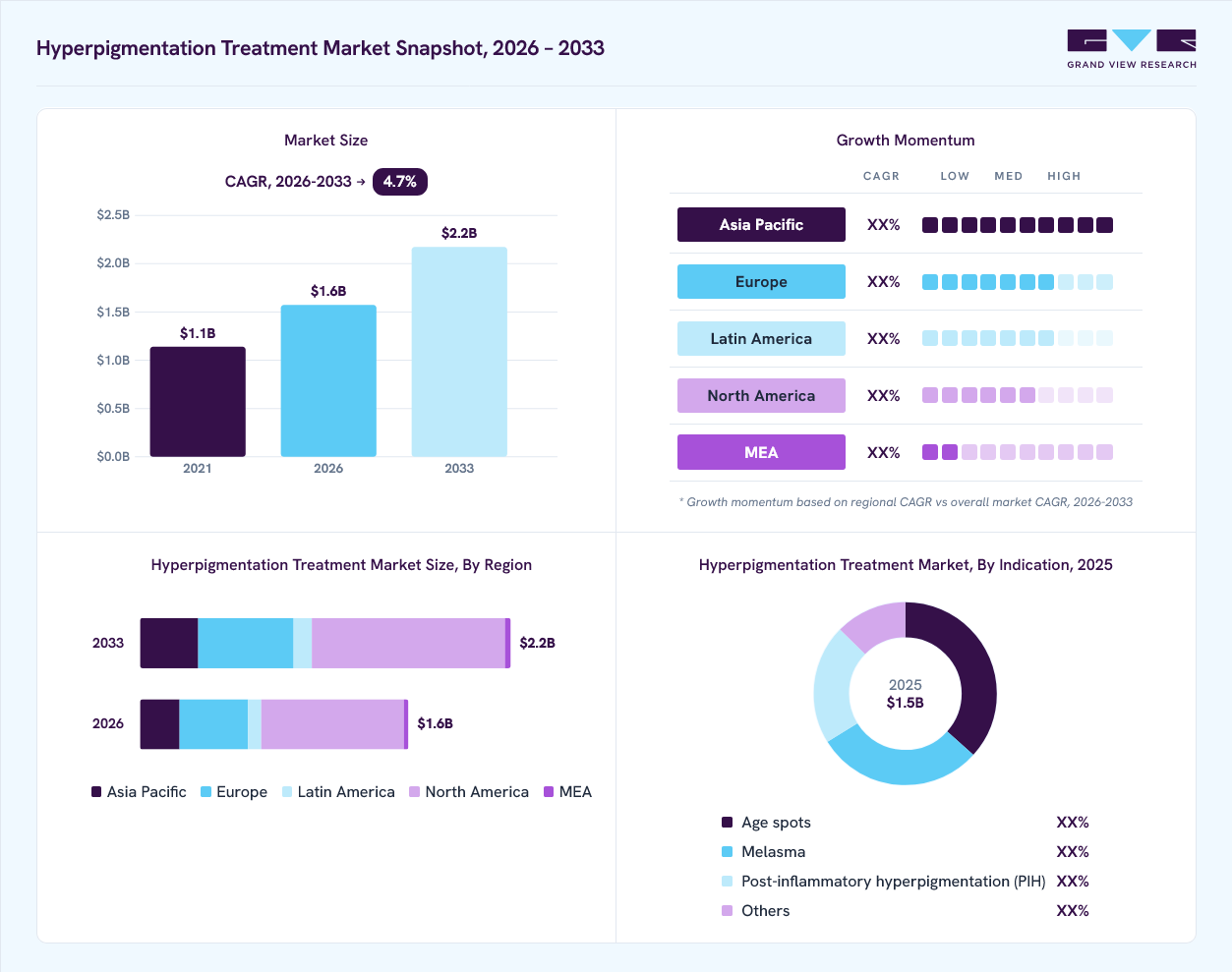
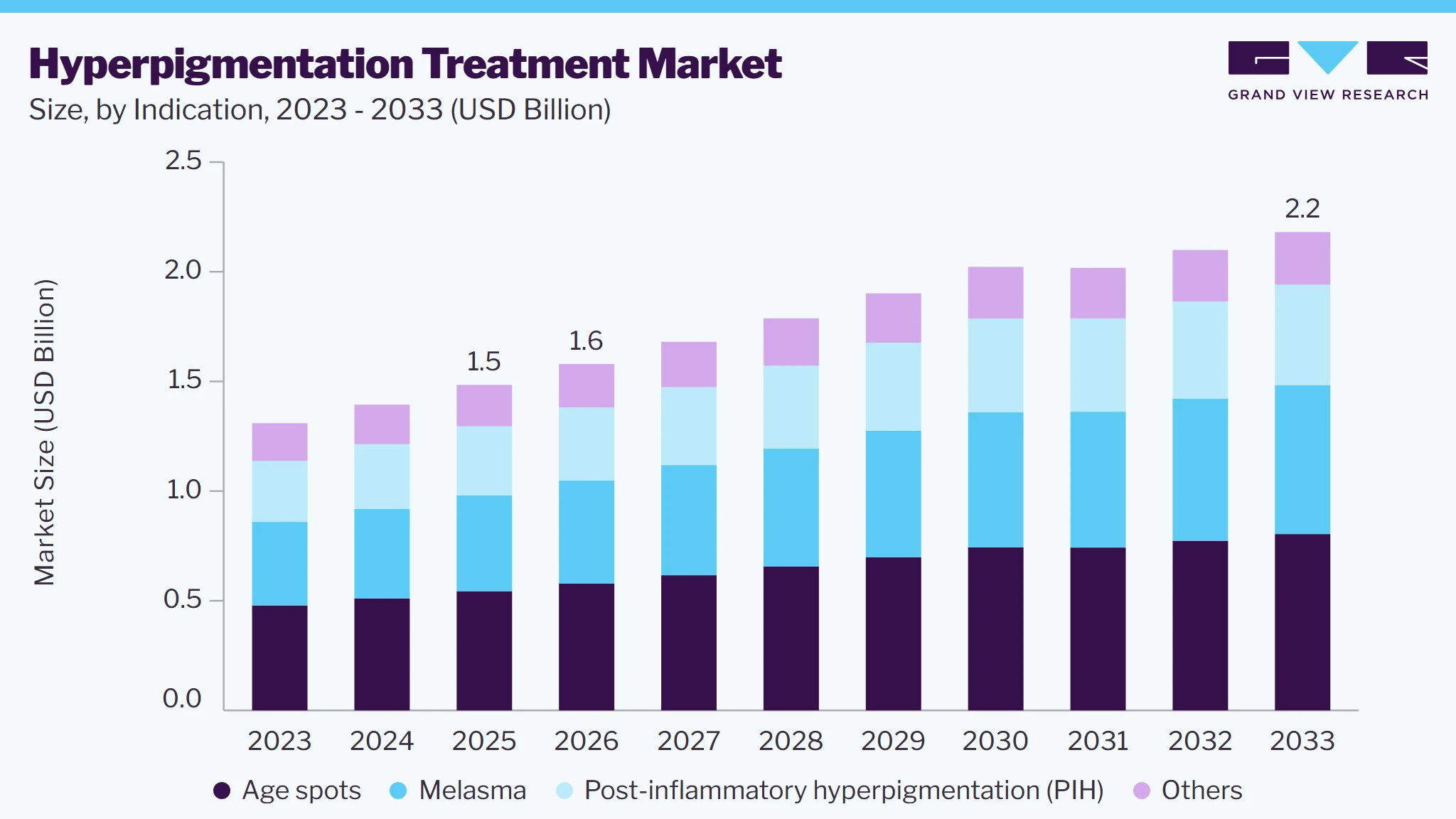
The global hyperpigmentation treatment market size was valued at USD 1.5 billion in 2025 and is projected to grow from USD 1.6 billion in 2026 to USD 2.2 billion by 2033, at a CAGR of 4.7% from 2026 to 2033. The market in North America dominated with a revenue share of 53.4% in 2025. The market is driven by a growing societal emphasis on skin health and appearance, driving individuals to seek treatments for hyperpigmentation.
Key Market Trends & Insights
- By application: Energy-based therapy segment held the largest market share of 68.5% in 2025.
- By end use: Dermatology clinics segment held the largest market share of 49.4% in 2025.
- By skin type: Fitzpatrick skin type III & IV segment held the largest market share of 39.5% in 2025.
- By indication: Age spots segment held the largest market share of 36.6% in 2025.
Regional Highlights
- Largest regional market: North America (53.4% revenue share, 2025)
- Fastest-growing regional market: Asia Pacific (highest CAGR, 2026-2033)
- By country: The U.S. held the largest market share in 2025.
Market Size & Forecast
- Market size in 2025: USD 1.5 Billion
- Estimated market size in 2026: USD 1.6 Billion
- Projected market size by 2033: USD 2.2 Billion
- CAGR (2026-2033): 4.7%
In addition, advancements in aesthetic technologies and procedures, such as laser therapy, chemical peels, and micro needling, are making treatments more effective and accessible. The rise in disposable income and the increasing affordability of aesthetic procedures are also contributing to market growth. Furthermore, the availability of a wide range of treatment options and the expansion of dermatology clinics and aesthetic centers across the globe are fuelling the market expansion.Moreover, the market is also driven by the growing elderly population, which is particularly vulnerable to hyperpigmentation. The prevalence of hyperpigmentation in the geriatric population is primarily due to prolonged sun exposure over the years, leading to age spots and uneven skin tone. Additionally, age-related hormonal changes and a decrease in skin regeneration contribute to the development and persistence of hyperpigmentation in older adults. According to the World Health Organization, the elderly population (above 60 years) is expected to reach 2.1 billion by 2050, representing a significant opportunity for growth in the hyperpigmentation treatment market. The aging population is seeking effective treatments for skin discoloration, which is driving innovation and adoption of advanced therapies.
Moreover, the hyperpigmentation treatment market is experiencing growth due to heightened awareness about skincare and a rising demand for innovative solutions. According to a 2022 report by the National Library of Medicine, the importance of skincare significantly increased during the pandemic, while makeup usage declined. Consumers are now more inclined to seek specialized treatments, including topical creams, serums, chemical peels, and laser therapies, to address dark spots, achieve an even skin tone, and restore radiance. Additionally, the expansion of skincare brands and clinics offering these specialized treatments has further fuelled market growth.
The market is anticipated to grow due to technological advancements in hyperpigmentation treatment products. For instance, in March 2020, SkinCeuticals' introduced its 15% TCA (trichloroacetic acid) Peel. This professional chemical peel, designed for in-office use, provides precise application with consistent delivery and predictable results, boasting a 19% improvement in hyperpigmentation appearance. These innovative products enhance the effectiveness and safety of hyperpigmentation treatments, appealing to a wider consumer base and driving market growth.
Market Dynamics
The hyperpigmentation treatment market is gaining significant traction as dermatology clinics, aesthetic centers, medical spas, hospitals, and skincare providers increasingly adopt advanced therapeutic and cosmetic solutions to address various pigmentary disorders. These treatments encompass a broad range of products and technologies, including topical depigmenting agents, prescription medications, chemical peels, laser therapies, intense pulsed light (IPL) treatments, microneedling-based delivery systems, and advanced cosmeceutical formulations designed to reduce excess melanin production and improve skin tone uniformity.
These treatment modalities enable healthcare professionals to effectively manage conditions such as melasma, post-inflammatory hyperpigmentation (PIH), solar lentigines, age spots, freckles, and other pigmentation disorders. Hyperpigmentation treatment solutions help patients achieve improved skin clarity, more even skin tone, enhanced appearance, and greater self-confidence. Increasing emphasis on aesthetic appearance, preventive skincare, personalized dermatological care, and advanced skin rejuvenation procedures is driving the adoption of hyperpigmentation treatment solutions across both medical and cosmetic settings.
The hyperpigmentation treatment market is expanding rapidly due to the increasing prevalence of pigmentation disorders and growing consumer demand for aesthetic skin treatments. Factors such as prolonged ultraviolet (UV) exposure, hormonal fluctuations, aging, acne-related inflammation, environmental pollution, and lifestyle changes contribute significantly to the development of hyperpigmentation conditions worldwide. Melasma, post-inflammatory hyperpigmentation, and age-related pigmentation concerns are becoming increasingly common across diverse patient populations, creating substantial demand for effective treatment solutions.
The growing popularity of cosmetic dermatology procedures and heightened awareness regarding skin health are further accelerating market growth. Consumers increasingly seek non-invasive and minimally invasive treatments that improve skin appearance while requiring minimal downtime. Advances in laser technologies, topical formulations, combination therapies, and personalized skincare regimens have significantly improved treatment outcomes, encouraging broader adoption. Social media influence, beauty trends, and increasing disposable incomes have also contributed to greater acceptance of aesthetic treatments globally. As consumers continue prioritizing skin health and appearance, demand for hyperpigmentation treatment solutions is expected to grow substantially.
Despite strong growth potential, the hyperpigmentation treatment market faces challenges associated with high treatment costs and variability in clinical outcomes. Advanced treatment options such as laser therapies, IPL procedures, prescription combination therapies, and long-term dermatological treatment plans can be expensive, particularly when multiple treatment sessions are required to achieve optimal results. Limited reimbursement coverage for cosmetic dermatology procedures further increases out-of-pocket expenses for patients.
Additionally, treatment outcomes can vary significantly depending on skin type, pigmentation severity, treatment adherence, underlying causes, and practitioner expertise. Certain patients may experience recurrence of pigmentation, treatment resistance, post-treatment irritation, or post-inflammatory hyperpigmentation, particularly in individuals with darker skin tones. The need for prolonged treatment duration, ongoing sun protection, and maintenance regimens may reduce patient compliance and satisfaction. Furthermore, increasing regulatory scrutiny regarding skin-lightening ingredients and concerns surrounding product safety can create challenges for manufacturers and healthcare providers. These factors may slow market penetration and limit broader adoption despite growing demand for pigmentation management solutions.
Market Concentration & Characteristics
The hyperpigmentation treatment market is highly fragmented, indicating a limited number of major players dominating the industry. This fragmentation suggests a competitive landscape where key companies are vying to hold significant market share and establish their brand presence through extensive research and development capabilities and elongated service offerings.
The market is witnessing ongoing research and development activities driven by the increasing prevalence of pigmentation disorders and the need for effective therapies. Major market players are investing in R&D initiatives to develop innovative treatments, such as drug therapies for conditions like vitiligo, and exploring the use of corticosteroids for treating pigmentation disorders.
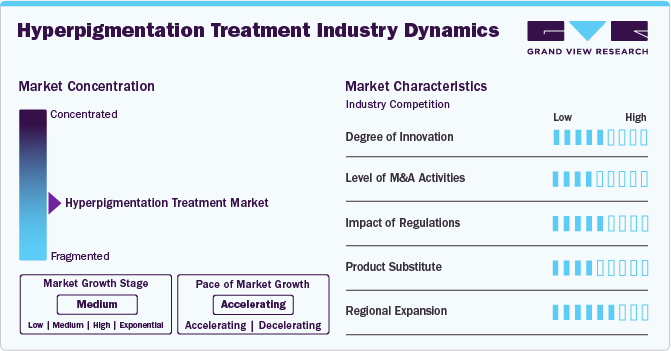
The hyperpigmentation treatment market has recently seen a surge in merger and acquisition (M&A) activities, for instance in December 2021, DermBiont, Inc., a clinical-stage biotech firm specializing in targeted topical therapeutics for skin diseases, completed a $28 million Series A2 funding round alongside the acquisition of Chromaderm, another clinical-stage biotech company. This strategic move aims to bolster DermBiont's portfolio with Chromaderm's innovative topical melanin inhibitor, marking a significant step towards advancing first-in-class treatments for skin brightening, melasma, and other melanin-related skin conditions.
The regulatory scenario in the global hyperpigmentation treatment market is complex and varies by region. In the U.S., the Food and Drug Administration (FDA) regulates hyperpigmentation treatment products as cosmetics or drugs, depending on their intended use and ingredients. In Europe, the European Medicines Agency (EMA) and the European Commission regulate these products under the European Union's (EU) cosmetics and pharmaceutical legislation. In Asia, regulations vary by country, with some following the Association of Southeast Asian Nations (ASEAN) guidelines for cosmetics and pharmaceuticals.
Major players in the global hyperpigmentation treatment market are actively pursuing market expansion strategies. For instance, in March 2021, Colorescience, renowned for its dermatologist-endorsed specialty skincare and cosmetics, has announced the expansion of its best-selling Even Up series, specifically targeting hyperpigmentation treatments. This move underscores the brand's commitment to providing innovative solutions for skin discoloration, catering to the growing demand for effective hyperpigmentation products.
Analyst Perspective
The hyperpigmentation treatment market is driven by the increasing prevalence of pigmentary disorders, rising awareness of skin health, growing demand for minimally invasive aesthetic procedures, and advancements in dermatological technologies. Increasing concerns about melasma, post-inflammatory hyperpigmentation, age spots, photodamage, and uneven skin tone are creating opportunities for pharmaceutical companies, skincare manufacturers, dermatologists, and aesthetic treatment providers. Innovations in laser technologies, energy-based devices, chemical peels, microneedling, topical depigmenting agents, and personalized skincare are improving treatment outcomes. The market is further supported by the adoption of combination therapies, expanding aesthetic clinics, and growing demand for evidence-based skin correction treatments. Rising aesthetic awareness, disposable incomes, and better access to dermatological care are expected to sustain market growth across medical and cosmetic skincare sectors.
Indication Insights
Based on indication, the age spots segment led the market with the largest revenue share of 36.6% in 2025. Age spots, also known as liver spots or solar lentigines, are caused by prolonged sun exposure and the natural aging process, leading to hyperpigmentation in older adults. The increasing prevalence of these age-related skin conditions among the aging population is a key driver of this segment. An important fact is that approximately 90% of individuals over the age of 60 exhibit some form of age spots. Rising awareness and demand for aesthetic treatments, along with advancements in dermatological procedures, have further bolstered the segment's growth.
The melasma segment is expected to grow at the fastest CAGR of 5.4% from 2026 to 2033. The rising incidence of melasma, particularly among women, is driving a growing demand for effective treatment options. This demand is further fuelled by increasing awareness about skin health and the availability of advanced treatment modalities, such as laser therapy and chemical peels. A notable example is a study published in Dermatology Times in June 2023, which highlighted the promising results of microneedling combined with glutathione in the treatment of melasma. This innovative approach has shown significant efficacy, adding to the array of advanced treatments available for this condition.
As the demand for aesthetic treatments continues to rise, the melasma segment is poised for significant expansion in the coming years. The combination of increased awareness, advancements in treatment options, and the ongoing development of new therapeutic approaches are expected to drive sustained growth in the melasma treatment market. This trend underscores the broader movement towards personalized and effective skincare solutions, reflecting a shift in consumer preferences and technological progress in dermatology.
Application Insights
Based on application, the energy-based therapy segment led the market with the largest revenue share of 68.5% in 2025. This significant market share can be attributed to the growing popularity and effectiveness of treatments such as laser therapy, intense pulsed light (IPL), and radiofrequency (RF) in managing hyperpigmentation. Advancements in these technologies have led to safer, more efficient, and minimally invasive procedures, appealing to a broad range of patients seeking cosmetic improvements.
Additionally, rising consumer awareness about aesthetic treatments and increasing disposable incomes have further propelled the demand for energy-based therapies. The availability of skilled professionals and continuous innovation in energy-based devices also contribute to the segment's dominance in the global hyperpigmentation treatment market.
The microneedling segment is expected to grow at the fastest CAGR of 5.0% from 2026 to 2033. This growth is attributed to their effectiveness in treating various skin conditions, including hyperpigmentation. The procedure's minimally invasive nature, coupled with its ability to stimulate collagen production and enhance skin texture, has made it a popular choice among patients and dermatologists alike. Recent innovations, such as the combination of microneedling with topical agents like glutathione, have shown promising results in improving treatment outcomes, further boosting the segment's growth. Additionally, the rising demand for non-surgical aesthetic treatments and the growing consumer awareness about advanced skincare options are expected to contribute significantly to the expansion of the microneedling segment in the global hyperpigmentation treatment market.
Skin Type Insights
Based on skin type, the fitzpatrick skin type III & IV segment led the market with the largest revenue share of 39.5% in 2025. This dominance is attributed to the higher prevalence of hyperpigmentation disorders in individuals with these skin types. The Fitzpatrick skin type III is characterized by light brown skin that tans easily and rarely burns, while type IV is characterized by moderate brown skin that rarely burns and tans easily. These skin types are more prevalent in populations from Asia, Latin America, and the Mediterranean, where hyperpigmentation disorders such as melasma and post-inflammatory hyperpigmentation are common. Additionally, the increasing awareness and understanding of hyperpigmentation therapeutic interventions, as well as the availability of advanced treatment options, have contributed to the growth of this segment.
The Fitzpatrick skin type V & VI segment is expected to grow at the fastest CAGR of 5.1% from 2026 to 2033. This growth is driven by the increasing recognition of the unique dermatological needs of individuals with darker skin tones, who are more prone to hyperpigmentation issues such as melasma and post-inflammatory hyperpigmentation. The rising availability and development of specialized treatments and products tailored for these skin types are also contributing to the segment's expansion. Innovations in laser technologies and skincare formulations that are safe and effective for darker skin tones are gaining popularity. Additionally, the growing awareness and demand for inclusive and diverse skincare solutions, coupled with increasing disposable incomes in emerging markets, are expected to further propel the growth of the Fitzpatrick skin type V & VI segment in the global hyperpigmentation treatment market.
End-use Insights
Based on end use, the dermatology clinics segment led the market with the largest revenue share of 49.4% in 2025. This dominance is attributed to the high level of trust and expertise associated with dermatology clinics, making them the preferred choice for patients seeking professional and effective hyperpigmentation treatments. Dermatology clinics offer a wide range of advanced treatment options, including laser therapies, chemical peels, and microneedling. The availability of personalized treatment plans and comprehensive follow-up care at these clinics further enhances patient outcomes and satisfaction. Additionally, the increasing prevalence of skin disorders, growing awareness about skin health, and rising demand for cosmetic dermatology services have significantly boosted the revenue share of dermatology clinics in the global hyperpigmentation treatment market.
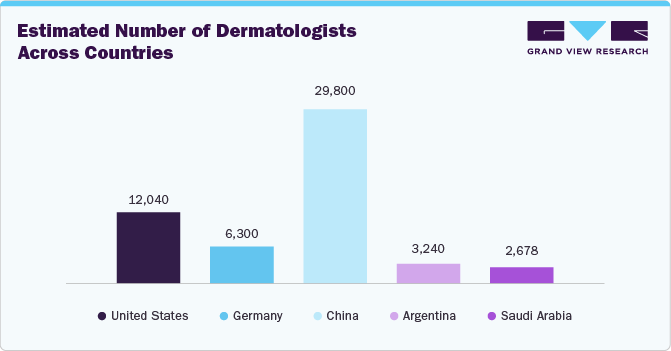
In the hyperpigmentation treatment market, the dermatology clinics segment shows significant variations in market size across different countries. The U.S. holds a substantial share with nearly 12,040 dermatologists and a comparatively higher number of dermatologists per million patients; in addition, China has nearly 30,000 dermatologists with sub-par distribution. These figures reflect the growing global emphasis on dermatological treatments for hyperpigmentation, driven by increasing awareness and demand for such procedures.
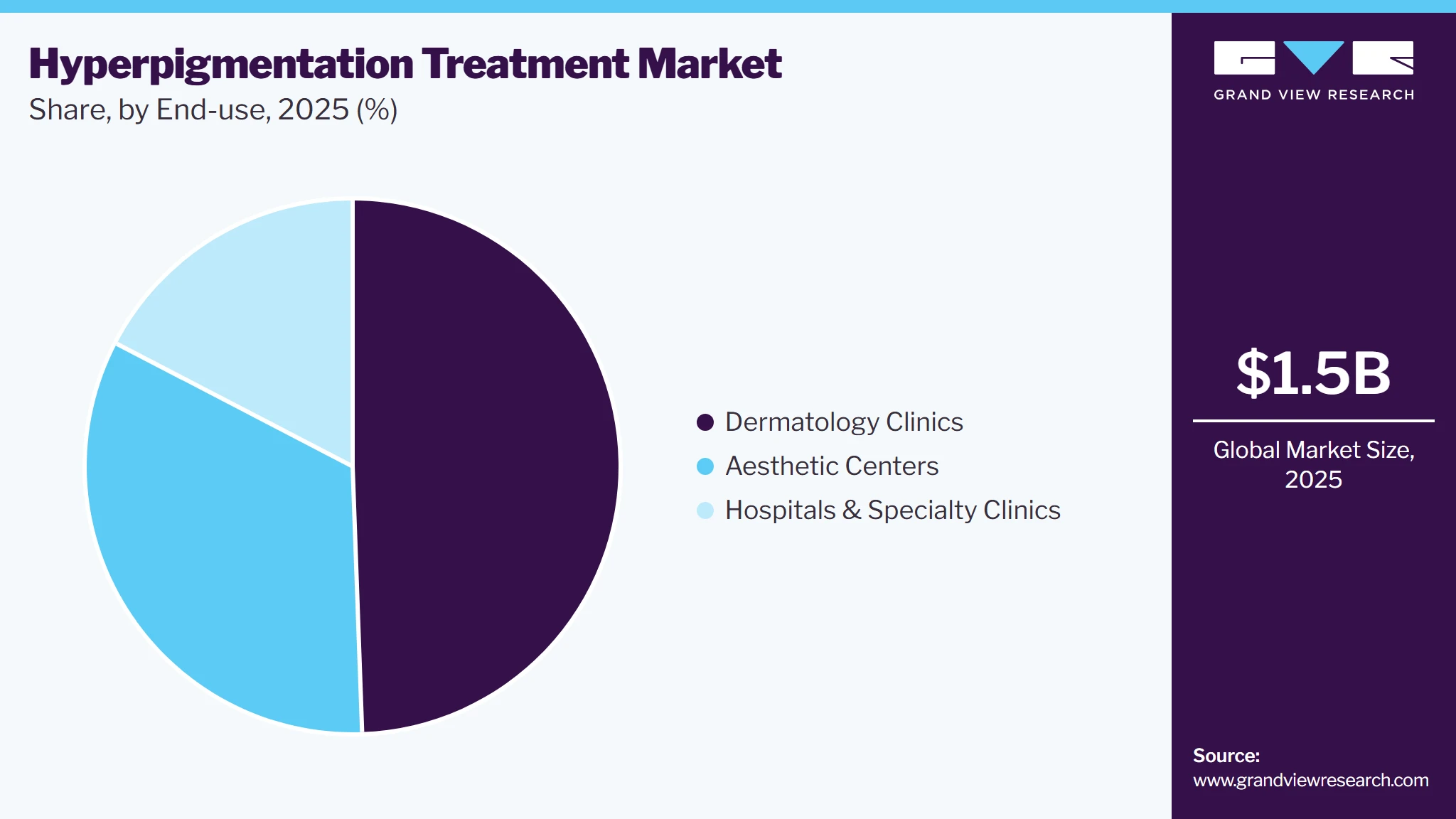
The aesthetic centers segment is expected to grow at the fastest CAGR of 5.1% from 2026 to 2033. This growth is driven by the increasing demand for non-invasive and minimally invasive cosmetic procedures to treat hyperpigmentation. Aesthetic centre, known for offering a wide range of advanced treatments such as chemical peels, laser therapies, and microdermabrasion, are becoming increasingly popular among patients seeking effective and convenient skincare solutions. The rise in disposable incomes, greater awareness of aesthetic treatments, and the growing trend towards maintaining youthful and healthy skin are further propelling the segment's expansion.
Regional Insights
North America dominated the hyperpigmentation treatment market with the largest revenue share of 53.4% in 2025 due to the region's advanced healthcare infrastructure, high adoption rate of innovative medical technologies, and increasing consumer awareness about skin health. The presence of key market players and a significant number of dermatology clinics and aesthetic centres offering a wide range of hyperpigmentation treatment options also contribute to North America's dominance. Additionally, the region's strong emphasis on cosmetic procedures, coupled with a higher disposable income among the population, drives the demand for hyperpigmentation treatments. The growing prevalence of skin conditions and the increasing focus on skincare further bolster the market in North America.

U.S. Hyperpigmentation Treatment Market Trends
The hyperpigmentation treatment market in U.S. held the largest share in the North America region in 2025 due to factors such as a large population seeking aesthetic treatments, high disposable income, advanced healthcare infrastructure, and a strong presence of key market players. Additionally, the increasing awareness about skin health and beauty standards in the U.S. contribute to the market's growth.
Hyperpigmentation treatment market in Mexico is anticipated to witness lucrative growth during the forecast period, driven by factors such as a rising middle-class population, increasing disposable income, and growing awareness about skincare and aesthetic treatments. Additionally, the availability of advanced treatment options and the presence of skilled dermatologists contribute to the market's expansion in Mexico.
Europe Hyperpigmentation Treatment Market Trends
Europe hyperpigmentation treatment market is showing lucrative growth due to the high prevalence of pigmentation disorders among the aging population, especially those aged 65 and above, who constitute one of the world's oldest demographics. This demographic factor, combined with the region's advanced healthcare infrastructure and the presence of major market players offering effective treatment options, positions Europe as a key driver of growth in the global hyperpigmentation treatment market.
Germany hyperpigmentation treatment market dominated the market with the largest revenue share of 20.6% in 2025. Germany has an advanced healthcare system, high consumer awareness about skincare, and the availability of a wide range of treatment options, including both medical procedures and over-the-counter products. The market's success in Germany can also be attributed to the growing demand for aesthetic treatments among the population, driven by societal pressures and the desire for clear, blemish-free skin.
The hyperpigmentation treatment market in France held the second-largest market share in 2025. The market is driven by the high standard of healthcare infrastructure, a well-established cosmetic industry, and a growing preference for advanced skincare solutions among the population. Additionally, the presence of leading dermatology clinics and aesthetic centres offering innovative treatment options contributes to the market's growth in Germany.
Asia Pacific Hyperpigmentation Treatment Market Trends
Hyperpigmentation treatment market in Asia Pacific market is expected to witness the fastest CAGR of 5.7% from 2026 to 2033. This growth is driven by the increasing prevalence of hyperpigmentation disorders, rising awareness about skincare, and growing demand for cosmetic treatments in countries such as China, India, and Japan. Furthermore, the presence of a large patient pool, improving healthcare infrastructure, and increasing disposable incomes are also expected to drive the market growth in the Asia Pacific region.
Hyperpigmentation treatment market in Japan held the largest revenue market share of 25.3% in 2025 due to the country's significant focus on research and development, increased demand for cosmetic treatments, and a large patient population. The market growth is driven by the availability of advanced treatment options, growing awareness about skincare, and improving healthcare infrastructure. Additionally, the country's large population and increasing disposable incomes have contributed to the growth of the hyperpigmentation treatment market.
China hyperpigmentation treatment market held the second largest market share in the Asia Pacific region. This is due to the strong focus on skincare and beauty, technological advancements in treatment options, and a well-developed healthcare infrastructure. The market benefits from a high level of consumer awareness about hyperpigmentation and a willingness to invest in effective treatments. Additionally, the presence of leading dermatological clinics and aesthetic centres offering a wide range of advanced treatments further propels the market in China.
India hyperpigmentation treatment market is anticipated to witness the CAGR of 6.2% during the forecast period. This is due to the increasing urbanization and changing lifestyles in the country have led to higher exposure to environmental stressors, contributing to the prevalence of pigmentation disorders. Coupled with this, the growing middle class with disposable income is seeking aesthetic treatments, including hyperpigmentation therapies. The market is further stimulated by introducing innovative treatments and growing skincare awareness among Indian consumers. In addition, the government's push towards improving healthcare infrastructure and the presence of international brands entering the Indian market is expected to accelerate the market's growth.
Latin America Pacific Hyperpigmentation Treatment Market Trends
Latin America's hyperpigmentation treatment market is expected to witness lucrative growth during the forecast period. The increasing awareness about skincare and the growing demand for aesthetic treatments among the region's population are significant contributors to this growth. Additionally, the market is benefiting from the introduction of advanced treatment options, including lasers and topical medications, which are proving effective in managing pigmentation disorders. Economic stability in certain countries, coupled with the influx of international brands and the expansion of local businesses, is also playing a crucial role in boosting the market's growth.
The hyperpigmentation treatment market in Brazil is expected to grow due to the increasing prevalence of pigmentation disorders among the population, coupled with the rising demand for aesthetic treatments. The market is also being propelled by the introduction of innovative treatment options, such as lasers and topical medications, which are gaining popularity for their effectiveness in managing hyperpigmentation. Additionally, Brazil's economic stability and the growing middle class with disposable income are contributing to the increased accessibility and affordability of these treatments, further stimulating market growth.
MEA Hyperpigmentation Treatment Market Trends
The MEA hyperpigmentation treatment market is expected to grow at a lucrative growth due to the growing population, increasing disposable income, and rising awareness about skincare and aesthetic treatments. However, the ongoing war in the region served as a significant restraining factor impacting this growth. The conflict disrupted supply chains, healthcare infrastructure, and access to treatment, leading to a potential slowdown in market expansion. Additionally, uncertainties and safety concerns due to the conflict resulted in a decrease in consumer spending on cosmetic treatments, further affecting market growth.
The hyperpigmentation treatment market in South Africa held the largest revenue market share during 2025. This is due to growing awareness about skin health and beauty standards, an increasing demand for cosmetic procedures, and a well-established healthcare infrastructure. In addition, the availability of advanced treatment options and the presence of skilled dermatologists and healthcare professionals contribute to the market's growth in South Africa.
Key Hyperpigmentation Treatment Company Insights
The hyperpigmentation treatment market is experiencing substantial expansion, propelled by key companies broadening their service lines and incorporating cutting-edge technologies to secure a larger market presence and engage a broader audience. In May 2024, Regen Wellness introduced microneedling for healthy skin rejuvenation. Microneedling offers several benefits, including the treatment of acne scars, hyperpigmentation, and uneven skin texture, making it a versatile solution for various skin concerns.
Key Hyperpigmentation Treatment Companies
The following key companies have been profiled for this study on the hyperpigmentation treatment market.
-
Sedgh Plastic Surgery
-
Dermatologikum Berlin
-
Skin Deep Laser Services
-
Medical Beauty Cologne
-
Dermatology Private Clinic Dr. med. Aresu Naderi
-
The Harley Street Dermatology Clinic
-
Premier Laser Clinic UK Ltd.
-
Qazi Cosmetic Center
-
ABBY SKIN CLINIC
-
The Marbella Vein & Beauty Clinic
Competitive Benchmarking
Category
Operating Strategies
Competitive Edge
Weakness
Established Players (Sedgh Plastic Surgery; Dermatologikum Berlin; Skin Deep Laser Services; Medical Beauty Cologne; Dermatology Private Clinic)
- Focus on expanding comprehensive hyperpigmentation treatment portfolios including topical depigmenting agents, chemical peels, laser therapies, intense pulsed light (IPL) treatments, microneedling procedures, combination treatment protocols, and personalized skincare regimens. Strengthen strategic partnerships with dermatologists, aesthetic physicians, hospitals, skincare companies, and aesthetic centers to enhance treatment adoption and long-term market penetration. Invest heavily in clinical validation, practitioner training programs, advanced diagnostic technologies, and treatment innovations to support growing demand for pigmentation correction procedures.
- Strong brand recognition, extensive patient trust, established referral networks, and broad treatment portfolios support market leadership. Large-scale clinical experience, regulatory expertise, and long-standing relationships with dermatologists and aesthetic practitioners provide significant competitive advantages and strengthen treatment credibility. Comprehensive pigmentation management solutions covering melasma, post-inflammatory hyperpigmentation, age spots, and complex pigmentary disorders facilitate cross-selling opportunities and long-term patient retention.
- Large organizations often experience slower innovation and treatment adoption cycles due to extensive validation, regulatory compliance, and operational requirements. Premium pricing strategies may limit accessibility in cost-sensitive markets. Dependence on highly trained dermatologists and aesthetic specialists, along with evolving regulatory requirements for aesthetic procedures and skincare products, can constrain expansion in certain regions.
Emerging Players (Qazi Cosmetic Center; ABBY SKIN CLINIC; and The Marbella Vein & Beauty Clinic)
- Focus on specialized hyperpigmentation treatment solutions targeting melasma, post-inflammatory hyperpigmentation, age-related pigmentation, and skin tone correction. Develop personalized treatment protocols combining advanced laser technologies, chemical peels, microneedling, prescription skincare products, and regenerative dermatology approaches. Emphasize patient-centered treatment planning, digital consultation services, practitioner education, and expansion into high-growth aesthetic markets.
- Faster innovation cycles and greater operational flexibility enable rapid adoption of emerging pigmentation treatment technologies and customized treatment protocols. Specialized expertise in pigmentation management, laser dermatology, ethnic skin treatment, and personalized skincare solutions provides differentiation. Ability to address complex and treatment-resistant pigmentation disorders through tailored approaches supports targeted market positioning and patient satisfaction.
- Limited financial resources, smaller marketing budgets, and narrower geographic presence restrict large-scale commercialization and expansion efforts. Lower brand recognition, limited clinical datasets compared with established market leaders, and dependence on specialist expertise may slow broader market adoption. Intense competition from established dermatology networks, aesthetic centers, and global skincare companies can further challenge long-term growth and scalability.
Recent Developments
-
In March 2024, L’Oréal Groupe launched Melasyl, a breakthrough molecule targeting localized pigmentation problems like age spots and post-acne marks. Melasyl-enhanced formulas are designed to be effective for all skin tones, improving overall appearance.
-
In May 2024, The UltraClear fiber laser has received FDA clearance for two expanded indications in the hyperpigmentation treatment market, signaling its efficacy and safety for a broader range of skin conditions.
-
In October 2022, Galderma introduced a new formulation in collaboration with Alastin Skincare, the A-Luminate Brightening Serum, designed to reduce the appearance of pigmentation. This launch highlights the companies' commitment to advancing hyperpigmentation treatment options.
-
In March 2020, SkinCeuticals unveiled its Smart TCA Peel, a state-of-the-art trichloroacetic acid peeling system targeting all signs of aging with precision. This launch signifies SkinCeuticals' dedication to advancing hyperpigmentation treatment solutions.
Hyperpigmentation Treatment Market Report Scope
Report Attribute
Details
Market size in 2025
USD 1.5 billion
Estimated market size in 2026
USD 1.6 billion
Projected market size by 2033
USD 2.2 billion
Growth rate
CAGR of 4.7% from 2026 to 2033
Historical data
2021 - 2024
Forecast period
2026 - 2033
Quantitative units
Revenue in USD million/billion and CAGR from 2026 to 2033
Report coverage
Revenue forecast, company ranking, competitive landscape, growth factors, and trends
Segments covered
Indication, application, skin type, end use, region
Regional scope
North America; Europe; Asia Pacific; Latin America; MEA
Country scope
U.S.; Canada; Mexico; UK; Germany; France; Italy; Spain; Denmark; Sweden; Norway: Japan; China India; Australia; Thailand; South Korea; Brazil; Argentina; South Africa; Saudi Arabia; UAE; Kuwait
Key companies profiled
Sedgh Plastic Surgery; Dermatologikum Berlin; Skin Deep Laser Services; Medical Beauty Cologne; Dermatology Private Clinic Dr. med. Aresu Naderi; The Harley Street Dermatology Clinic; Premier Laser Clinic UK Ltd.; Qazi Cosmetic Center; ABBY SKIN CLINIC; and The Marbella Vein & Beauty Clinic
Customization scope
Free report customization (equivalent up to 8 analysts' working days) with purchase. Addition or alteration to country, regional & segment scope.
Pricing and purchase options
Avail customized purchase options to meet your exact research needs. Explore purchase options
Global Hyperpigmentation Treatment Market Report Segmentation
This report forecasts revenue growth at the global, regional, and country levels and provides an analysis on the latest industry trends in each of the sub-segments from 2021 to 2033. For this study, Grand View Research has segmented the global hyperpigmentation treatment market report based on indication, applicaton, skin type, end-use, and region:
-
Indication Outlook (Revenue, USD Million, 2021 - 2033)
-
Age spots
-
Melasma
-
Post-inflammatory hyperpigmentation (PIH)
-
Others
-
-
Application Outlook (Revenue, USD Million, 2021 - 2033)
-
Energy-based Therapy
-
Laser
-
Intense Pulse Light (IPL)
-
Others
-
-
Chemical Peels
-
Microdermabrasion
-
Microneedling
-
-
Skin Type Outlook (Revenue, USD Million, 2021 - 2033)
-
Fitzpatrick skin type I & II
-
Fitzpatrick skin type III & IV
-
Fitzpatrick skin type V & VI
-
-
End-use Outlook (Revenue, USD Million, 2021 - 2033)
-
Dermatology Clinics
-
Aesthetic Centers
-
Hospitals & Specialty Clinics
-
-
Regional Outlook (Revenue, USD Million, 2021 - 2033)
-
North America
-
U.S.
-
Canada
-
Mexico
-
-
Europe
-
UK
-
Germany
-
France
-
Italy
-
Spain
-
Denmark
-
Sweden
-
Norway
-
-
Asia Pacific
-
Japan
-
China
-
India
-
Australia
-
South Korea
-
Thailand
-
-
Latin America
-
Brazil
-
Argentina
-
-
Middle East & Africa (MEA)
-
South Africa
-
Saudi Arabia
-
UAE
-
Kuwait
-
-
Research Methodology
The hyperpigmentation treatment market figures in this report are based on a proven research process that combines executive interviews with secondary research from proprietary databases, company filings, and recognized regulatory and institutional sources. Market size is built through value-chain sizing - reconciling supply-side and demand-side estimates - and triangulated with bottom-up and top-down approaches. Every estimate passes multiple levels of expert validation before publication, with each hyperpigmentation treatment segment quantified using the revenue-capture definitions in the table below.
Segment Definition
Segment - Indication
Revenue capture definition
Age Spots
Revenue generated from products, procedures, and treatment solutions used to manage age spots (solar lentigines) caused by cumulative sun exposure and aging. This segment includes topical depigmenting agents, chemical peels, laser treatments, IPL therapies, microneedling procedures, and combination treatment protocols aimed at reducing localized hyperpigmentation and improving skin tone uniformity.
Melasma
Revenue generated from treatments specifically designed to address melasma, a chronic pigmentary disorder characterized by symmetrical facial hyperpigmentation. This segment includes prescription therapies, topical brightening agents, chemical peels, energy-based treatments, microneedling-assisted drug delivery, and long-term maintenance regimens administered through medical and aesthetic settings.
Post-inflammatory Hyperpigmentation (PIH)
Revenue generated from products and procedures used to treat post-inflammatory hyperpigmentation resulting from acne, eczema, skin injury, cosmetic procedures, or inflammatory skin conditions. The segment includes topical depigmenting formulations, laser treatments, chemical peels, microneedling therapies, and combination dermatological treatment approaches.
Others
Revenue generated from treatments addressing other pigmentation disorders, including freckles, congenital hyperpigmentation, drug-induced pigmentation, periorbital hyperpigmentation, café-au-lait macules, and other localized or generalized pigmentary conditions not classified under the above categories.
Segment - Application
Revenue capture definition
Energy-based
Revenue generated from energy-based hyperpigmentation treatment modalities, including laser systems, intense pulsed light (IPL) devices, radiofrequency-assisted technologies, fractional laser therapies, and other light-based platforms used to reduce pigmentation and improve skin appearance.
Chemical Peels
Revenue generated from superficial, medium-depth, and deep chemical peel procedures utilizing glycolic acid, salicylic acid, trichloroacetic acid (TCA), lactic acid, mandelic acid, and other peeling agents for the treatment of pigmentation disorders and skin discoloration.
Microdermabrasion
Revenue generated from microdermabrasion procedures used to exfoliate the outer skin layers, improve skin texture, and reduce superficial pigmentation concerns. This segment includes treatment procedures, consumables, and associated skincare products utilized during pigmentation management.
Microneedling
Revenue generated from microneedling procedures and associated products used for hyperpigmentation treatment through collagen induction, enhanced transdermal delivery of depigmenting agents, and skin remodeling. The segment includes standalone and combination microneedling treatment protocols.
Segment - Skin Type
Revenue capture definition
Fitzpatrick Skin Type I & II
Revenue generated from hyperpigmentation treatments administered to patients with very fair to fair skin types (Fitzpatrick I and II). This segment captures treatment utilization, product sales, and procedural revenues associated with this patient population.
Fitzpatrick Skin Type III & IV
Revenue generated from hyperpigmentation treatments administered to patients with medium to olive skin tones (Fitzpatrick III and IV). This segment includes treatment solutions specifically selected to address pigmentation concerns while minimizing treatment-related complications in these skin types.
Fitzpatrick Skin Type V & VI
Revenue generated from hyperpigmentation treatments administered to patients with darker skin tones (Fitzpatrick V and VI). This segment includes specialized products and procedures designed to effectively manage pigmentation disorders while reducing the risk of treatment-induced pigmentation changes and adverse effects.
Segment - End-use
Revenue capture definition
Dermatology Clinics
Revenue generated from hyperpigmentation treatment products, prescription therapies, diagnostic services, and aesthetic procedures performed within dermatology clinics and skin specialty practices.
Aesthetic Centers
Revenue generated from hyperpigmentation treatment procedures and skincare products provided through aesthetic centers, medical spas, cosmetic treatment facilities, and beauty-focused clinics offering pigmentation correction services.
Hospitals & Specialty Clinics
Revenue generated from hyperpigmentation treatment products, advanced dermatological procedures, laser therapies, and clinical management services delivered through hospitals, multispecialty healthcare institutions, and specialty dermatology centers.
Estimation Model
Layer Name
Key Question
Description
Scope Definition
What is being sized?
Define hyperpigmentation treatment categories.
Segment the market.
Establish geographic boundaries (Global, North America, Europe, Asia Pacific, Latin America, and MEA).
Align on base year & forecast horizon (2026-2033).
Build the Product Base
How large is total addressable market?
Assess the prevalence of melasma, post-inflammatory hyperpigmentation (PIH), age spots, sunspots, and other pigmentary disorders globally.
Analyze treatment-seeking behavior across different age groups and skin types.
Estimate utilization of prescription, over-the-counter, and procedural treatment options.
Forecast future demand based on demographic and lifestyle trends.
Estimate Penetration
What portion is transitioning to next-generation smart systems?
Analyze adoption rates of topical therapies, laser procedures, chemical peels, and combination treatments.
Assess awareness regarding skin pigmentation disorders and treatment availability.
Examine regional variations in treatment accessibility and affordability.
Validate estimates using sales data, practitioner surveys, and patient utilization trends.
Revenue Conversion
How does unit volume become market revenue?
Collect Average Selling Prices (ASPs).
Segment revenue by treatment type, application, end use, and geography.
Estimate manufacturer and service provider market shares.
Triangulate and validate.
Delivered Customizations
This report has been delivered with the following In-depth customizations
Client Request
Customization Delivered
Value Adds
Competitive Landscape Analysis
Conducted a comprehensive competitive landscape assessment for the hyperpigmentation treatment market, covering topical depigmenting agents, prescription therapies, chemical peels, laser systems, IPL devices, cosmeceuticals, and combination treatment solutions. The study evaluated company positioning, product portfolio differentiation, treatment efficacy, clinical evidence, regulatory approvals, distribution strategies, strategic partnerships, mergers and acquisitions, and geographic expansion initiatives. It benchmarked pharmaceutical companies, skincare brands, and aesthetic device manufacturers to identify market share dynamics, innovation trends, pricing strategies, and competitive factors influencing adoption.
Enables stakeholders to understand the competitive dynamics of the hyperpigmentation treatment market, benchmark technological and product capabilities, evaluate differentiation strategies, identify partnership and acquisition opportunities, and strengthen market positioning across medical and aesthetic treatment segments.
Segment by Product Analysis
Conducted a detailed segment-level analysis across topical treatments, prescription medications, laser therapies, chemical peels, IPL treatments, and combination therapy approaches. The study assessed patient demand patterns, treatment efficacy trends, pricing structures, physician preferences, consumer adoption rates, treatment frequencies, and emerging innovations in pigment correction technologies. It further evaluated advancements in skin-lightening formulations, regenerative skincare, and personalized dermatological treatments influencing future market growth.
Enables stakeholders to identify high-growth treatment categories, understand evolving patient and physician preferences, evaluate innovation opportunities, assess competitive intensity within individual segments, and align product development and commercialization strategies with emerging market trends.
Macroeconomic Analysis
Conducted an in-depth assessment of macroeconomic, demographic, and healthcare factors influencing the hyperpigmentation treatment market, including increasing aesthetic awareness, aging populations, rising disposable incomes, urbanization, sun exposure patterns, healthcare expenditure, and demand for cosmetic dermatology services. The study analyzed regulatory developments, reimbursement environments, supply chain dynamics, inflationary pressures, and advancements in dermatological treatment technologies affecting market growth. Additionally, it evaluated the impact of social media influence, beauty standards, preventive skincare trends, and expanding dermatology clinic infrastructure on treatment adoption.
Enables stakeholders to understand the key economic, demographic, healthcare, and regulatory factors driving or restraining market growth. The analysis supports strategic planning, investment prioritization, pricing optimization, market entry decisions, and long-term risk assessment across regional and global hyperpigmentation treatment markets.
Frequently Asked Questions About This Report
Some key players operating in the hyperpigmentation treatment market include Sedgh Plastic Surgery, Dermatologikum Berlin, Skin Deep Laser Services, Medical Beauty Cologne, Dermatology Private Clinic Dr. med. Aresu Naderi, The Harley Street Dermatology Clinic, Premier Laser Clinic UK Ltd., Qazi Cosmetic Center, ABBY SKIN CLINIC, and The Marbella Vein & Beauty Clinic
The market is expected to grow due to several factors, such as the growing concern among people regarding their aesthetic appearance, the increasing number of skin injuries, and technological advancements supplementing new device launches.
The fitzpatrick skin type III & IV segment led with a 39.5% revenue share in 2025, while the fitzpatrick skin type v & VI is the fastest-growing segment.
Dermatology clinics segment held the largest share (over 49.0%) in 2025.
The global hyperpigmentation treatment market size was valued at USD 1.5 billion in 2025 and is estimated at USD 1.6 billion for 2026.
The global hyperpigmentation treatment market is expected to grow at a CAGR of 4.7% from 2026 to 2033, reaching USD 2.2 billion by 2033.
North America dominated the market with a revenue share of 53.4% in 2025, owing to the high aesthetic consciousness among people and the rapid adoption of advanced products.
The age spots segment led with a 36.6% revenue share in 2025, while the melasma segment is the fastest-growing indication.
The energy-based therapy segment led with a 68.5% revenue share in 2025, while the microneedling segment is the fastest-growing application.
Asia Pacific is the fastest-growing region over the forecast period.
About the Author(s)
Medical Devices Research Team
Healthcare · Medical DevicesThis report was authored by the medical devices research team at Grand View Research - comprising two research analysts, one senior research analyst, and one industry expert - with specialized expertise in the medical devices segment of the healthcare industry. All findings are based on proprietary healthcare databases, executive interviews, and regulatory analysis, subject to internal peer review prior to publication.
Last Updated:
Speak to Analyst


Customize this report to your needs — add regions, segments, or data points, with 20% free customization.
Or view our licence options:


ISO 9001:2015 & 27001:2022 Certified
We are GDPR and CCPA compliant! Your transaction & personal information is safe and secure. For more details, please read our privacy policy.


