
- Home
- »
- Medical Devices
- »
-
Hyaluronic Acid-based Dermal Fillers Market Report 2026-2033GVR Report cover

Hyaluronic Acid-based Dermal Fillers Market (2026 - 2033)
Size, Share & Trends Analysis Report By Application (Wrinkle Removal, Lip Augmentation, Rhinoplasty), By Product (Single Phase Products, Duplex Products), By Region, And Segment Forecasts
Market Size, 2025
$4.9BMarket Estimate, 2026
$5.5BMarket Forecast, 2033
$11.0BCAGR, 2026–2033
10.5%Hyaluronic Acid-based Dermal Fillers Market Summary
The global hyaluronic acid-based dermal fillers market size was valued at USD 4.9 billion in 2025 and is projected to grow from USD 5.5 billion in 2026 to USD 11.0 billion by 2033, at a CAGR of 10.5% from 2026 to 2033. North America dominated the global market with the largest revenue share of 39.9% in 2025. The primary factors driving the market growth are the rising demand for non-invasive aesthetic treatment procedures and increasing awareness regarding the application of HA in the beauty segment.
 Source: Grand View Research, IR Documents, Primary Interviews, Paid DatabasesTo learn more about this report,
 Download Free Sample Report
 Key Market Trends & Insights
- By application: Wrinkle removal segment led the market with the largest revenue share of 28.7% in 2025.
- By product: Single-phase product segment led the market with the largest revenue share of 54.4% in 2025.
Regional Highlights
- Largest regional market: North America (39.9% revenue share, 2025)
- Fastest-growing regional market: Asia Pacific (highest CAGR, 2026-2033)
- By country: The U.S. held the largest market share in 2025.
Market Size & Forecast
- Market size in 2025: USD 4.9 Billion
- Estimated market size in 2026: USD 5.5 Billion
- Projected market size by 2033: USD 11.0 Billion
- CAGR (2026-2033): 10.5%
Three ways to get this report
Buy it, customize it, or ask a question.Ask an Analyst
A direct answer, usually in 1 working day
- AccessReport author, directly
- Reply timeWithin 1 working day
- No sales callDirect answer only
- FormatEmail reply
- CostFree, no cost
Get the Full Report
What the study covers
- FormatsPDF · Excel · Dashboard
- Timeline2026–2033 annual, 2025 base
- Coverage20+ countries, 5 regions
- Companies10+ key players profiled
Customize the Report
20% free customization
- IncludeCountries, segments, points
- TailorTo your product definition
- ExtendDeeper competitor detail
- OrA fully bespoke study
- Turnaround5–10 working days
According to the American Society of Plastic Surgeons (ASPS) 2024 report, hyaluronic acid (HA) fillers remain one of the most in-demand minimally invasive treatments, with over 5.3 million procedures performed to enhance facial features, including 1.58 million lip enhancement treatments. In addition, the increased investment in R&D for novel advanced innovations in dermal products is driving the market's growth.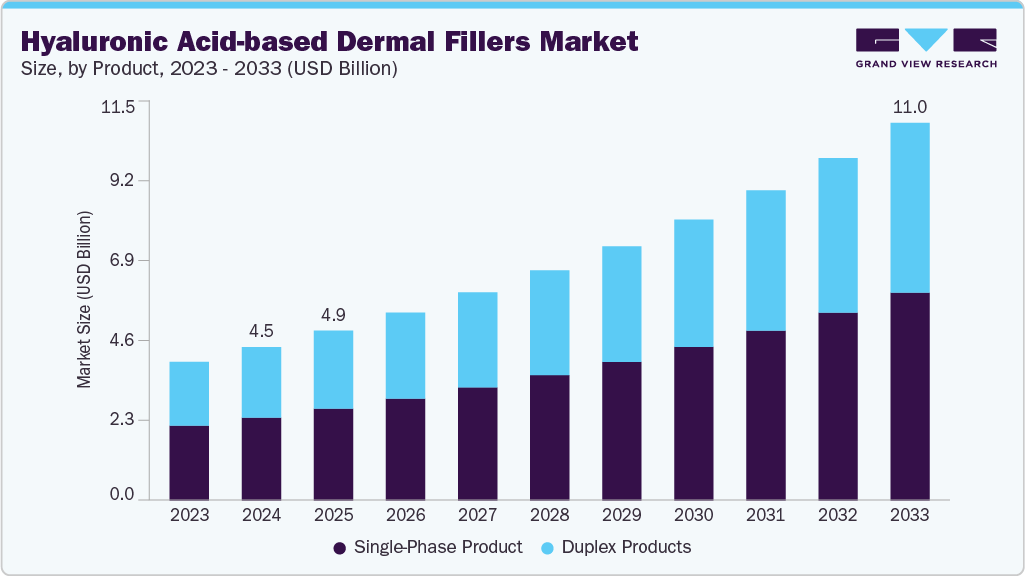 To learn more about this report, Download Free Sample Report
 Themarket expansion is majorly influenced by the aging population worldwide. The large economies are experiencing demographic change as the number of people in the older age categories is rising, and the need for beauty products to fight the visible signs of aging and preserve a youthful look is increasing. As a result, there has been a substantial increase in the need for injectable that alleviate in a visible way wrinkles, fine lines, and other skin-related issues caused by aging. According to an article published by Simbo AI, those aged 40-54 comprise almost 49% of all dermal filler procedures, and the 55-69 age group makes up approximately 37% of the treatments. This pattern is indicative of an increasing number of older people opting for less invasive cosmetic treatments, which is expected to drive the adoption of hyaluronic acid dermal fillers. Similarly, as per the Australia's 2023 Intergenerational Report, by 2050, the country's population aged 65 to 84 years is projected to more than double, and the population of those aged 85 years & over is expected to quadruple. This demographic shift is increasing the number of specialized clinics that cater to the needs of the elderly.
Market Dynamics
Hyaluronic acid (HA)-based dermal fillers are gaining significant traction as they enable dermatologists, plastic surgeons, aesthetic physicians, and medical spas to provide safe, minimally invasive facial rejuvenation and contouring procedures. These fillers utilize cross-linked hyaluronic acid formulations, advanced rheology technologies, customizable gel consistencies, and precision injection techniques to restore facial volume, smooth wrinkles, enhance facial contours, and improve skin hydration. HA fillers help practitioners address the growing global demand for non-surgical aesthetic treatments by supporting personalized treatment plans, natural-looking outcomes, immediate results, and minimal recovery time. Their reversibility, established safety profile, and versatility across multiple facial indications have made them one of the most widely adopted aesthetic injectable solutions worldwide.
The increasing preference for minimally invasive cosmetic treatments is a major factor driving the growth of the hyaluronic acid-based dermal fillers market. Growing aesthetic awareness, rising disposable incomes, expanding social media influence, and an aging population seeking youthful appearances have significantly increased demand for non-surgical facial enhancement procedures. Patients are increasingly choosing HA fillers as an alternative to surgical interventions due to their convenience, shorter recovery periods, lower procedural risks, and immediate visible outcomes. HA fillers are widely used for facial volume restoration, wrinkle correction, lip augmentation, jawline enhancement, and skin rejuvenation, enabling practitioners to deliver personalized aesthetic results. Furthermore, ongoing advancements in filler formulations, longer-lasting products, and increasing acceptance of preventive aesthetic treatments among younger consumers are accelerating market expansion globally. For instance, in February 2025, the U.S. Food and Drug Administration (FDA) approved Evolus’ Evolysse Form and Evolysse Smooth injectable hyaluronic acid gels, marking one of the most significant technological advancements in HA dermal fillers in recent years and expanding the range of minimally invasive facial rejuvenation options available to aesthetic practitioners and patients.
Although HA-based dermal fillers offer immediate aesthetic improvements and a favorable safety profile, their temporary nature remains a significant restraint to market growth. Unlike permanent surgical procedures, most HA fillers gradually degrade within 6 to 18 months, requiring repeat treatments to maintain desired outcomes. This creates a long-term financial commitment for patients, particularly those seeking treatment across multiple facial areas.
Key cost- and adoption-related restraints include:
• Temporary Results Requiring Repeat Treatments
• High Cumulative Long-Term Treatment Costs
• Product Variability and Need for Touch-Up Procedures
• Risk of Adverse Events Requiring Corrective Treatment
• Limited Reimbursement and Out-of-Pocket Payment Burden
• Price Sensitivity in Emerging Aesthetic Markets
Market Concentration & Characteristics
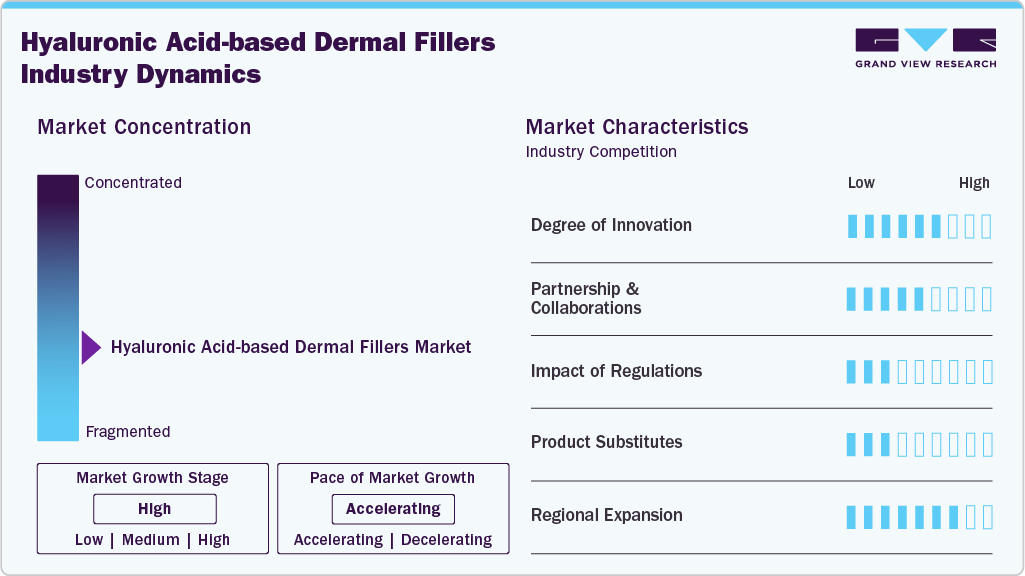
The hyaluronic acid (HA)-based dermal fillers market is moderately fragmented, with top players such as Allergan Aesthetics (AbbVie Inc.), Galderma, and Merz Aesthetics dominating the market with a significant share, with strong product portfolios. A major driving factor for market growth is the rising demand for non-invasive aesthetic procedures among consumers, along with constant innovations in biocompatible formulations that offer longer-lasting results, ensuring not only safety but also natural-looking outcomes. According to the report published by International Society of Aesthetic Plastic Surgery in June 2025, hyaluronic acid (filler) procedures increased by 5.2% to 6.3 million. This shows rising adoption of these dermal fillers across different consumer class. These innovations such as cross-linking technology and personalized filler formulations continue to enhance performance and durability, thereby increasing consumer trust and market growth.
Thedegree of innovation in the hyaluronic acid (HA)-based dermal fillers industry is high, mainly due to new technologies and ways of treatment. For instance, smart cross-linking techniques provide fillers that can last for a longer time but still be flexible and have a natural look. The arrival of biostimulatory agents like calcium hydroxylapatite and polynucleotides is changing the concept of fillers as pure volumizing products to become those that can stimulate collagen production for rejuvenated skin which will last longer. Clinics use AI-assisted facial mapping to improve precision, symmetry, and personalization of the treatments. Moreover, the use of combination therapies which involve HA fillers and energy-based skin treatments like lasers or radiofrequency is getting increasingly popular, as supported by the research on safety and compatibility that is getting better.
 To learn more about this report, Download Free Sample Report
 Thegrowth of the hyaluronic acid (HA)-based dermal fillers industry is majorly influenced by strategic partnerships and collaborations. Such collaborations allow the partnered enterprises to speed up product innovation, extend their market penetration, and deepen their relationships with customers. For example, Sisram Medical Ltd. has sealed a strategic partnership agreement with Prollenium Medical Technologies Inc. for the exclusive distribution of the Revanesse HA filler collection in different countries including Germany, Austria, Switzerland, Australia & New Zealand.
The regulatory framework drives the growth of the hyaluronic acid (HA)-based dermal fillers industry by ensuring the safety, quality, and clinical efficacy of the products. For instance, the U.S. FDA and the European Medicines Agency (EMA) collaborate to provide detailed guidelines covering aspects like product approval, manufacturing, and post-market surveillance. All these measures put in place by the regulatory agencies assure product safety and effectiveness. In summary, stringent regulations that are continually being updated are leading to a safer and more transparent market environment.
Product substitutes for hyaluronic acid (HA)-based dermal fillers provide different mechanisms and durations. Similarly, Poly-L-lactic Acid (PLLA) filler and Calcium Hydroxylapatite (CaHA) filler can adhere to collagen, resulting in longer-lasting outcomes. For deep wrinkles and volume loss, Polymethylmethacrylate (PMMA)-based fillers are employed as semi-permanent fillers. Furthermore, the popularity of non-injectable procedures, such as PDO thread lifts, laser resurfacing, and autologous fat transfers, is on the rise as a source of skin rejuvenation and facial contouring, replacing HA. These replacements broaden patient options and the competitive dynamics of the aesthetic market.
Theglobal hyaluronic acid-based dermal fillers industry has shown significant regional expansion. Companies are implementing region-specific strategies to increase their international presence. As an example, Croma-Pharma GmbH in June 2023 a joint venture with China National Biotech Group (CNBG) to market its Princess filler range in China and Hong Kong, which is a major step for the company to deepen its penetration in Asia. Besides, the company also started a clinical trial for its Princess Volume Plus Lidocaine in China in June 2023, thereby affirming its long-term commitment to regional growth and development.
Analyst Perspective
The hyaluronic acid-based dermal fillers market is positioned at the intersection of several long-term aesthetic and healthcare trends, including the growing preference for minimally invasive cosmetic procedures, increasing consumer focus on facial rejuvenation and healthy aging, and continuous advancements in injectable aesthetic technologies. Rising concerns related to facial volume loss, wrinkles, fine lines, skin laxity, and age-related structural changes are creating significant opportunities for hyaluronic acid filler manufacturers and aesthetic service providers as consumers seek effective, non-surgical solutions that deliver immediate, natural-looking results with minimal recovery time.
In addition, the expanding acceptance of aesthetic treatments among both younger and older patient populations, coupled with increasing social media influence and growing awareness of preventive aesthetics, is accelerating demand across dermatology clinics, plastic surgery centers, and medical spas. Technological innovations in cross-linking technologies, rheology optimization, high-cohesivity gels, and specialized filler formulations for different facial indications are improving product longevity, safety, precision, and patient satisfaction.
Product Insights
Based on product, the single-phase product segment led the market with the largest revenue share of 54.4% in 2025, the growth is driven by superior injectability, smooth tissue integration, and predictable aesthetic outcomes which makes them the preferred choice among clinicians and patients. The growing demand for minimally invasive and natural-looking cosmetic procedures has further strengthened this segment’s dominance. Dermatologists increasingly favor single-phase fillers for soft-tissue facial correction, as the uncross-linked hyaluronic acid content stimulates collagen and elastin production, promoting youthful and healthy skin. In addition, manufacturers continue to innovate in delivery systems and syringe design to improve precision and patient comfort. For instance, in February 2025, Evolus, Inc. announced U.S. Food and Drug Administration (FDA) approval for its new hyaluronic-acid (HA) gels, Evolysse Form and Evolysse Smooth. These factors are driving the growth of single-phase segment on the market.
The duplex products segment is witnessing second fastest of 10.23% CAGR growth during the forecast period driven by its combined strong structural lift with predictable handling features that suit high-volume, deep-contour, and wrinkle-correction procedures. It also offers superior volumizing power, longer in-tissue persistence, and greater control for clinicians performing cheek, chin, and deep-fold augmentation. These performance advantages drive clinician preference and procurement by specialty clinics, helping the duplex segment lead market revenues. Strong ongoing investments in R&D and regulatory activity from major players further reinforce market growth. For instance, in January 2024, Galderma announced regulatory approval for Restylane SHAYPE, a high-firmness hyaluronic acid injectable designed for deep chin augmentation, signaling strong investment in advanced duplex fillers.
Application Insights
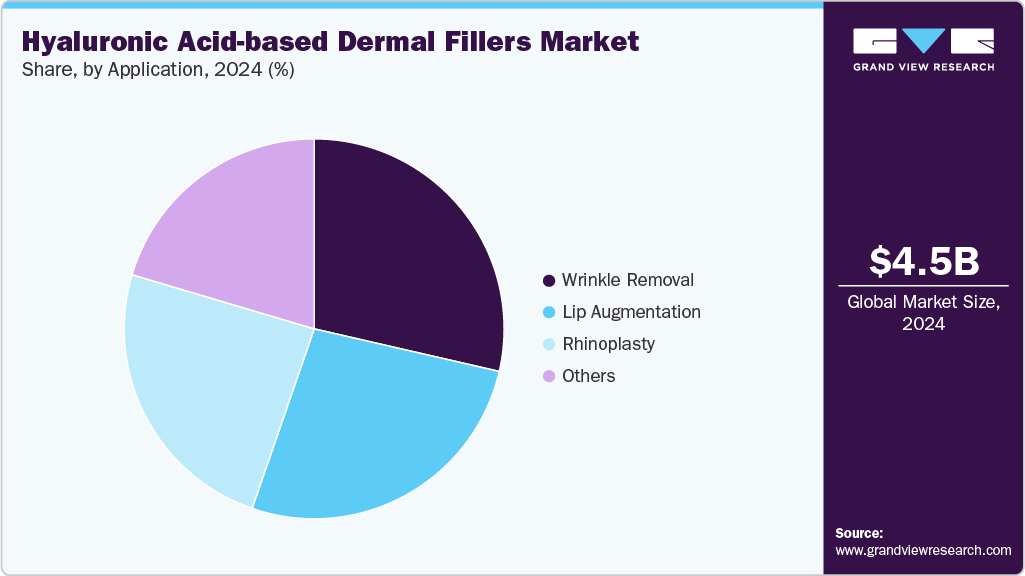
Based on application, the wrinkle removal segment led the market with the largest revenue share of 28.7% in 2025. The growth is driven by the global aging population and rising demand for minimally invasive aesthetic care solutions. Chronological changes reduced collagen and elastin production, and cumulative photoaging from UV exposure causes the wrinkling, which thins the dermis and deepens lines. HA fillers correct wrinkles by restoring lost volume, physically smoothing folds, and promoting fibroblast activity and collagen remodeling for longer-lasting benefits. Regulatory approvals and clear safety guidance for dermal fillers reinforce clinician confidence and patient uptake. In addition, growth in non-surgical procedures, as supported by international procedure surveys, has expanded access to wrinkle treatments, making HA fillers a core tool in aesthetic practice.
 To learn more about this report, Download Free Sample Report
 The lip augmentation segment is witnessing significant growth during the forecast period. The growth is driven by patient demand for natural-looking volume, the reversible and biocompatible nature of HA, and growing procedural adoption in aesthetic clinics. HA fillers are used to restore contour, enhance vermilion border definition, and soften perioral lines through targeted, minimally invasive injections that allow precise shaping and predictable reversibility. Moreover, the availability of dedicated dermal fillers in the market drives the growth of the segment. For instance, Galderma’s Restylane Kysse was specifically approved for lip augmentation and perioral rhytids, reinforcing product innovation tailored to lips. similarly, Allergan’s JUVÉDERM Volbella designed for lips/perioral lines highlights smooth integration and longer-lasting outcomes favored by practitioners. Together, product innovation and patient preference for controlled and reversible enhancement drive the growth of segment.
Regional Insights
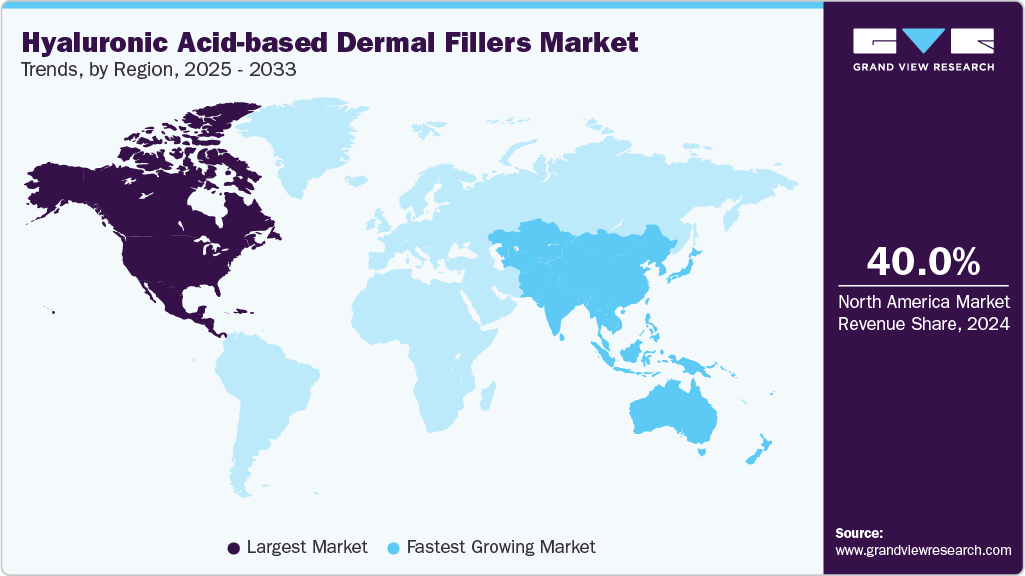
North America dominated the hyaluronic acid-based dermal fillers market with the largest revenue share of 39.9% in 2025. The North American hyaluronic acid-based dermal fillers market is witnessing significant growth, primarily driven by widespread clinical adoption, high consumer awareness and well-developed aesthetic practices. Providers are investing in differentiated product portfolios and training to meet preferences for targeted, minimally invasive facial contouring, while clinic networks and dermatology groups scale service lines to capture repeat treatments. Regulatory milestones and product launches have reinforced clinician confidence in advanced HA formulations and specialized indications, supporting uptake across the region. In addition, continued growth in minimally invasive injectables, which supports predictable, service-level demand for HA fillers across the region driving the growth of market.
 To learn more about this report, Download Free Sample Report
 The hyaluronic acid-based dermal fillers market in the U.S. held the largest share in the North America region in 2025. The U.S. hyaluronic acid- based dermal fillers market is experiencing steady growth, driven by strong physician networks, surgeon/dermatologist procedural volumes, and rapid incorporation of new, indication-specific HA products into practice. The American Society of Plastic Surgeons' 2024 procedural data show dermal fillers remain a top category, prompting clinics to broaden HA-based service suites, including periorbital, chin, midface, and invest in training and safety protocols. Similarly, the stringent regulatory approval procedures, such as the FDA's device/approval guidance and SSEDs for new HA devices, ensure consumers' trust and safety. Thus, higher clinician confidence and faster uptake of clinically differentiated HA dermal fillers drive the growth of the market across the country.
Europe Hyaluronic Acid-based Dermal Fillers Market Trends
The European hyaluronic acid-based dermal fillers marketis being reshaped by stringent regulatory frameworks and elevated product-safety scrutiny across member states. Recent EU regulatory updates and amendments to cosmetic-product oversight have pushed manufacturers and distributors to bolster ingredient transparency, technical documentation, and supply-chain traceability. That regulatory focus, combined with strong private clinic networks in major capitals, is accelerating demand for HA formulations that emphasize safety data, reversible profiles, and clinician training programs. As a result, suppliers are prioritizing compliant product dossiers and clinician education to navigate the evolving European regulatory environment.
The hyaluronic acid-based dermal fillers market in the UK is steadily growing. The environment is being defined by a public-policy push to reduce “cosmetic cowboy” activity and raise standards for injectable services. Recent government measures and public briefings aim to introduce licensing and stronger oversight for non-surgical aesthetic clinics; that policy trajectory is driving clinic consolidation, higher compliance costs, and a shift toward medically led providers who can demonstrate governance and patient-safety systems. These rising focus on regulatory compliance and enhancing product safety, driving the customer attraction towards effective aesthetics treatment option and it is expected to fuel the growth of market.
Asia Pacific Hyaluronic Acid-based Dermal Fillers Market Trends
Hyaluronicacid (HA) dermal fillers are gaining traction in the Asia-Pacific region, which has turned out to be a major market due to consumer fascination with beauty and anti-aging treatments, the quick expansion of aesthetic clinics, and the establishment of local innovation hubs. In general, China, Japan, South Korea, and other countries in Southeast Asia are progressively employing HA fillers for non-invasive, inexpensive facial cosmetic procedures. What the region wants is natural-looking results, where HA products can deliver both moisture and slight volume restoration. These factors contribute to the growth of the market in the region.
Japan’s hyaluronic acid (HA)-based dermal fillers market is shaped by cautious patient preferences and strict regulatory oversight. Similarly, the Pharmaceuticals and Medical Devices Agency (PMDA) have modernized submission and digital review processes, helping shorten approval times. Products are typically adopted only after strong safety evidence, and treatments are usually delivered by specialist dermatologists and plastic surgeons. This makes Japan an attractive market for HA dermal fillers with high safety and efficacy which is expected to contribute to the higher demand for HA dermal fillers in the market.
Latin America Hyaluronic Acid-based Dermal Fillers Market Trends
In Latin America, cultural emphasis on aesthetic appearance and established medical-tourism corridors are major demand drivers for HA dermal fillers. Patients travel within the region for cost-effective treatments, and private clinic chains use bundled services to capture both domestic and inbound demand. The region’s dynamics favor product portfolios that can be reliably registered and supported locally, where manufacturers are increasingly focused on local distribution. This medical-tourism and clinical-support model is central to HA dermal fillers uptake across the region.
Thehyaluronic acid-based dermal fillers market in Brazil is growing. Country’s well-established cosmetic culture makes it a high-demand market for hyaluronic acid (HA) dermal fillers, especially for facial contouring and lip enhancement. Regulatory oversight through ANVISA and renewed regulatory agendas have increased the emphasis on correct product classification, labelling, and safety documentation, which raises the bar for market entrants but also improves clinician confidence in approved HA products.
Middle East & Africa Hyaluronic Acid-based Dermal Fillers Market Trends
The demand for hyaluronic acid (HA)-based dermal fillers in the Middle East is primarily influenced by beauty-conscious lifestyles, medical tourism, and high per-capita expenditure on beauty services. Innovations in HA products, such as hybrid and regenerative formulations, are majorly being introduced at local industry events like Dubai Derma, which is an important platform in the region. For instance, in April 2025, AEZIAN presented its hybrid HA filler ‘i·NOVA’ at Dubai Derma 2025, emphasizing the company's goal for the global expansion. Such factors are propelling the growth of the market.
The demand for HA fillers in Saudi Arabia isdriven by rising disposable income, Vision 2030-linked healthcare and retail modernization, and increasing female participation in the workforce, all of which lead to higher discretionary spending on aesthetics. The local landscape is shifting toward medically led clinics and hospital-affiliated aesthetic units. This institutional shift, together with regional supplier activity, is accelerating the uptake of HA products that carry clear safety profiles and clinician training packages for in-hospital or regulated outpatient delivery. Saudi market entrants typically prioritize regulatory clearance and hospital partnerships.
Key Hyaluronic Acid-based Dermal Filler Company Insights
The hyaluronic acid-based dermal fillers market is highly competitive, with key players such Allergan, Galderma LaboratoriesL.P., Merz Pharmaceuticals, Genzyme Corporation, Anika Therapeutics Inc., LG Life Sciences LTD (LG Chem). The major companies undertake various organic and inorganic strategies such as product introduction, collaborations, and regional expansion to serve the unmet needs of their customers.
Key Hyaluronic Acid-based Dermal Filler Companies
The following key companies have been profiled for this study on the hyaluronic acid-based dermal fillers market.
-
Allergan
-
Galderma LaboratoriesL.P.
-
Merz Pharmaceuticals
-
Genzyme Corporation
-
Anika Therapeutics Inc.
-
LG Life Sciences
-
LTD (LG Chem)
-
Bio plus Co. Ltd.
-
Sculpt Luxury
-
Dermal Fillers Ltd.
-
Bioxis Pharmaceutical
-
Sinclair Pharma Laboratories
-
Vivacy
-
Bohus Biotech AB
Competitive Benchmarking
Category
Operating Strategies
Competitive Edge
Weakness
Established Players (Allergan, Galderma, Merz Pharma, Sinclair Pharma)
- Focus on expanding comprehensive facial aesthetics portfolios including HA fillers, collagen stimulators, skin boosters, and combination treatment protocols. Invest heavily in next-generation cross-linking technologies, longer-lasting formulations, and large-scale clinical studies.
- Expand globally through direct sales teams, physician education programs, and strategic partnerships with aesthetic clinics and hospitals.
- Strong brand recognition and high physician trust built through extensive clinical evidence and long-term safety data. Broad product portfolios addressing facial volumization, wrinkle correction, lip enhancement, jawline contouring, and skin rejuvenation. Robust regulatory approvals, global distribution networks, and significant marketing resources support premium pricing and market leadership.
- High R&D, regulatory, and commercialization costs associated with maintaining product leadership. Premium pricing may limit accessibility in price-sensitive markets. Dependence on mature aesthetic markets can constrain growth rates. Increasing competition from biostimulatory injectables, hybrid fillers, and lower-cost regional manufacturers may impact margins.
Emerging Players (Vivacy, LG Chem, BioPlus Co., Ltd., Bioxis Pharmaceuticals))
- Focus on cost-competitive HA filler products, specialized facial indications, and regional market expansion. Emphasize innovative rheology profiles, skin hydration technologies, and physician-friendly injection characteristics.
- Target medical spas, independent aesthetic clinics, and emerging markets through distributor-led sales models and competitive pricing strategies.
- Greater operational agility and faster product launches in niche aesthetic segments. Ability to offer competitively priced fillers tailored to local market requirements. Strong focus on practitioner training, customized treatment approaches, and underserved geographic markets enables faster penetration.
- Limited global brand awareness and smaller commercial infrastructure compared with industry leaders. Restricted marketing budgets and fewer large-scale clinical studies may affect physician adoption. Dependence on distributors can limit market control. Greater exposure to regulatory challenges, pricing pressure, and competitive responses from established multinational companies.
Recent Developments
-
In September 2025, Obagi Medical received FDA approval for its first hyaluronic acid dermal filler, branded as “Obagi saypha MagIQ”. This product marks Obagi Medical’s entry into the U.S. dermal-filler market, with a planned launch in 2026.
-
In October 2024, Evolus, Inc. announced its Estyme injectable hyaluronic acid gels received certification under the EU’s new Medical Device Regulation (MDR), covering four distinct HA gel products. This achievement positions Evolus to expand its presence in the European dermal filler market and reach a broader international customer base.
-
In June 2023, Croma‑Pharma enrolled the first patient in its Phase 3 clinical trial of the hyaluronic acid dermal filler Princess Volume Plus Lidocaine in China. The randomized, multi‑center study targets mid‑facial volume insufficiency in around 600 patients across 15 clinical centers. This initiative supports Croma‑Pharma’s expansion in the Asia‑Pacific aesthetics market through its joint venture with China National Biotech Group (CNBG).
Hyaluronic Acid-based Dermal Fillers Market Report Scope
Report Attribute
Details
Market size in 2025
USD 4.9 billion
Estimated market size in 2026
USD 5.5 billion
Projected market size by 2033
USD 11.0 billion
Growth rate
CAGR of 10.5% from 2026 to 2033
Historical data
2021 - 2024
Forecast period
2026 - 2033
Quantitative units
Revenue in USD million/billion and CAGR from 2026 to 2033
Report coverage
Revenue forecast, company ranking, competitive landscape, growth factors, and trends
Segments covered
Product, application, region
Regional scope
North America; Europe; Asia Pacific; Latin America; MEA
Country scope
U.S.; Canada; Germany; UK; France; Italy; Spain; Norway; Russia, Denmark; Sweden; China; Japan; India; South Korea; Australia; Thailand; Singapore, Malaysia, Taiwan, Vietnam, Philippines, Brazil; Argentina; Mexico, Saudi Arabia; South Africa; UAE; Kuwait;
Key companies profiled
Allergan; Galderma LaboratoriesL.P.; Merz Pharmaceuticals; Genzyme Corporation; Anika Therapeutics Inc.; LG Life Sciences; LTD (LG
Chem); Bio plus Co. Ltd.; Sculpt Luxury; Dermal Fillers Ltd.; Bioxis Pharmaceutical; Sinclair Pharma Limited; Vivacy; Bohus Biotech AB
Customization scope
Free report customization (equivalent up to 8 analysts' working days) with purchase. Addition or alteration to country, regional & segment scope.
Pricing and purchase options
Avail customized purchase options to meet your exact research needs. Explore purchase options
Global Hyaluronic Acid-based Dermal Fillers Market Report Segmentation
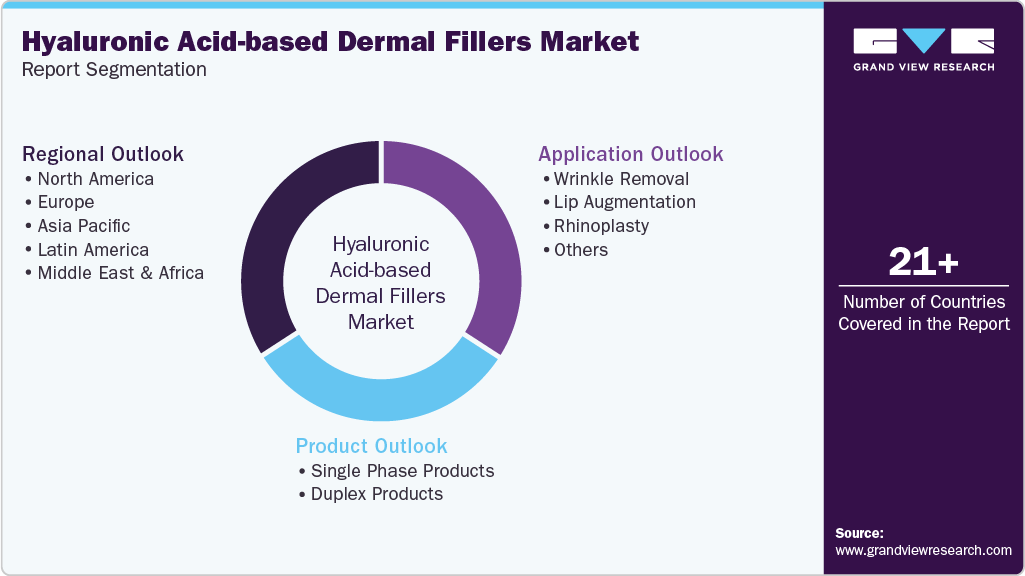
This report forecasts revenue growth at country levels and provides an analysis of the latest industry trends and opportunities in each of the sub-segments from 2021 to 2033. For the purpose of this study, Grand View Research has segmented the global hyaluronic acid dermal fillers market report on the basis of product, application, and region:
 To learn more about this report, Download Free Sample Report
 -
Product Outlook (Revenue, Million, 2021 - 2033)
-
Single Phase Products
-
Duplex Products
-
-
Application Outlook (Revenue, Million, 2021 - 2033)
-
Wrinkle Removal
-
Lip Augmentation
-
Rhinoplasty
-
Others
-
-
Region Outlook (Revenue, Million, 2021 - 2033)
-
North America
-
U.S.
-
Canada
-
-
Europe
-
UK
-
Germany
-
France
-
Italy
-
Spain
-
Denmark
-
Sweden
-
Norway
-
Russia
-
-
Asia Pacific
-
China
-
Japan
-
South Korea
-
Thailand
-
Australia
-
Singapore
-
Malaysia
-
Taiwan
-
India
-
Vietnam
-
Philippines
-
-
Latin America
-
Brazil
-
Argentina
-
Mexico
-
-
Middle East & Africa
-
South Africa
-
Saudi Arabia
-
UAE
-
Kuwait
-
-
Research Methodology
The hyaluronic acid-based dermal fillers market figures in this report are based on a proven research process that combines executive interviews with secondary research from proprietary databases, company filings, and recognized regulatory and institutional sources. Market size is built through value-chain sizing - reconciling supply-side and demand-side estimates - and triangulated with bottom-up and top-down approaches. Every estimate passes multiple levels of expert validation before publication, with each hyaluronic acid-based dermal fillers segment quantified using the revenue-capture definitions in the table below.
Segment Definition
Segment - Product
Revenue capture definition
Single-Phase Product
Single-phase or monophasic hyaluronic acid fillers consist of a homogeneous gel structure in which cross-linked HA is uniformly distributed throughout the product. These fillers are manufactured as a smooth, cohesive gel, providing even integration into surrounding tissues and enabling precise volumization with a natural feel. Due to their high cohesivity and smooth consistency, monophasic fillers are widely used for lip augmentation, facial contouring, nasolabial fold correction, and mid-face volume restoration. Their ability to spread evenly and maintain structural integrity makes them particularly suitable for areas requiring smooth aesthetic outcomes and long-lasting results.
Duplex Products
Duplex or biphasic hyaluronic acid fillers contain cross-linked HA particles suspended within a non-cross-linked HA carrier gel. This particle-based structure provides greater lifting capacity and projection, making these fillers effective for correcting deep wrinkles, facial folds, and significant volume loss. Biphasic fillers offer enhanced moldability and support, allowing practitioners to sculpt facial contours and restore structural volume in areas such as the cheeks, chin, and jawline. Their differentiated particle sizes and rheological properties enable treatment customization based on the depth of injection and desired aesthetic outcome.
Segment - Application
Revenue capture definition
Wrinkle Removal
This segment includes hyaluronic acid-based dermal fillers used for the correction of facial wrinkles, fine lines, and folds resulting from aging, repetitive facial movements, and loss of skin elasticity. HA fillers are commonly administered to treat nasolabial folds, marionette lines, forehead lines, and perioral wrinkles by restoring lost volume and enhancing skin smoothness. The segment represents a significant share of the market due to the growing demand for minimally invasive anti-aging treatments, increasing aesthetic awareness, and the rising aging population seeking facial rejuvenation procedures with immediate and natural-looking results.
Lip Augmentation
This segment comprises hyaluronic acid fillers used to enhance lip volume, shape, contour, and symmetry. HA fillers are widely preferred for lip augmentation due to their biocompatibility, reversibility, and ability to provide customizable and natural aesthetic outcomes. These procedures are increasingly popular among both younger consumers seeking fuller lips and older patients aiming to restore age-related volume loss. Growing social media influence, evolving beauty standards, and increasing acceptance of cosmetic enhancements continue to support demand within this segment.
Rhinoplasty
This segment includes the use of hyaluronic acid fillers in non-surgical rhinoplasty procedures, often referred to as liquid rhinoplasty. HA fillers are injected to improve nasal contours, smooth dorsal humps, enhance nasal symmetry, elevate the nasal bridge, and correct minor aesthetic irregularities without the need for surgical intervention. The segment is gaining traction due to increasing patient preference for minimally invasive procedures that offer immediate results, reduced costs, minimal downtime, and lower procedural risks compared to traditional surgical rhinoplasty.
Others
This segment encompasses all other aesthetic and reconstructive applications of hyaluronic acid-based dermal fillers, including cheek augmentation, chin enhancement, jawline contouring, temple restoration, tear trough correction, facial volume restoration, scar correction, and skin rejuvenation procedures. HA fillers are increasingly utilized for comprehensive facial harmonization and customized aesthetic treatments aimed at enhancing overall facial balance and youthful appearance. Continuous advancements in filler formulations and growing practitioner expertise are expanding the range of indications addressed within this segment.
Delivered Customizations
This report has been delivered with the following In-depth customizations
CLIENT REQUEST
CUSTOMIZATION DELIVERED
VALUE ADDS
Product Innovation and Portfolio Assessment of Hyaluronic Acid-Based Dermal Fillers
Conducted a comprehensive assessment of hyaluronic acid filler technologies, cross-linking platforms, rheological properties, and product differentiation strategies across major global manufacturers. The analysis evaluated filler characteristics including cohesivity, elasticity (G'), lifting capacity, longevity, injection depth, and indication-specific performance. The study further assessed advancements in monophasic, biphasic, and hybrid HA formulations, alongside innovations in skin boosters, lidocaine-integrated fillers, and next-generation long-duration products designed for facial contouring and skin rejuvenation.
This analysis enables stakeholders to understand how technological innovation is shaping product performance, practitioner preferences, and patient outcomes. It highlights emerging opportunities in premium filler segments, regenerative aesthetics, and personalized treatment protocols while identifying product differentiation factors that support brand positioning, physician adoption, and long-term commercial growth.
Macroeconomic Analysis of the Hyaluronic Acid-Based Dermal Fillers Market
Conducted a detailed geographic assessment of the HA filler market across North America, Europe, Asia-Pacific, Latin America, and the Middle East & Africa. The study evaluated the impact of rising disposable incomes, demographic shifts, aesthetic awareness, medical tourism trends, urbanization, and healthcare expenditure on treatment adoption.
The analysis further examined consumer demand patterns, aging populations, social media influence, male aesthetics adoption, and the expanding network of dermatology clinics, aesthetic centers, and medical spas.
Competitive Landscape Analysis
Conducted a detailed assessment of leading HA filler manufacturers and emerging aesthetic injectable companies across major regions. The analysis evaluated product portfolios, pricing strategies, distribution networks, physician engagement programs, regulatory approvals, and clinical evidence supporting product performance. Furthermore, the study assessed competitive differentiation based on filler technology, product longevity, safety profiles, brand equity, practitioner training initiatives, and market penetration across facial aesthetic applications.
This analysis enables stakeholders to understand competitive positioning, benchmark market shares, identify growth opportunities, and evaluate innovation pipelines. It supports corporate strategy, partnership development, acquisition targeting, and product portfolio optimization by uncovering competitor strengths, commercialization approaches, and emerging market trends within the global HA filler industry.
Frequently Asked Questions About This Report
The global hyaluronic acid-based dermal fillers market size was estimated at USD 4.9 billion in 2025 and is expected to reach USD 5.5 billion in 2026.
The global hyaluronic acid-based dermal fillers market is expected to grow at a compound annual growth rate of 10.5% from 2026 to 2033, reaching USD 11.0 billion by 2033.
By product, the single-phase product segment led with a 54.1% revenue share in 2025 and is the fastest-growing segment.
Key factors driving market growth include rising demand for non-invasive aesthetic treatment procedures and increasing awareness of HA applications in the beauty segment.
North America dominated the hyaluronic acid-based dermal fillers market, accounting for 39.9% of revenue in 2025.
Asia Pacific is the fastest-growing region over the forecast period.
Wrinkle removal held the largest revenue share in 2025, while lip augmentation is the fastest-growing area.
Key players in the hyaluronic acid-based dermal fillers market include Allergan, Galderma Laboratories L.P., Merz Pharmaceuticals, Genzyme Corporation, Anika Therapeutics Inc., LG Life Sciences, Ltd. (LG Chem); Bio plus Co. Ltd., Sculpt Luxury, Dermal Fillers Ltd., Bioxis Pharmaceutical; Sinclair Pharma Limited; Vivacy; Bohus Biotech AB
About the Author(s)
Medical Devices Research Team
Healthcare · Medical DevicesThis report was authored by the medical devices research team at Grand View Research - comprising two research analysts, one senior research analyst, and one industry expert - with specialized expertise in the medical devices segment of the healthcare industry. All findings are based on proprietary healthcare databases, executive interviews, and regulatory analysis, subject to internal peer review prior to publication.
Last Updated:
Speak to Analyst

Customize this report to your needs - add regions, segments, or data points, with 20% free customization.
Or view our licence options:


ISO 9001:2015 & 27001:2022 Certified
We are GDPR and CCPA compliant! Your transaction & personal information is safe and secure. For more details, please read our privacy policy.


