
- Home
- »
- Medical Devices
- »
-
Healthcare Contract Research Organization Market Report, 2033GVR Report cover

Healthcare Contract Research Organization Market (2026 - 2033)
Size, Share & Trends Analysis Report By Type (Drug Discovery, Pre-clinical, Clinical), By Service (Project Management/Clinical Supply Management, Data Management), By Therapeutic Area, By Molecule, By Region, And Segment Forecasts
Market Size, 2025
$59.6BMarket Estimate, 2026
$63.7BMarket Forecast, 2033
$105.7BCAGR, 2026–2033
7.5%Healthcare Contract Research Organization Market Summary
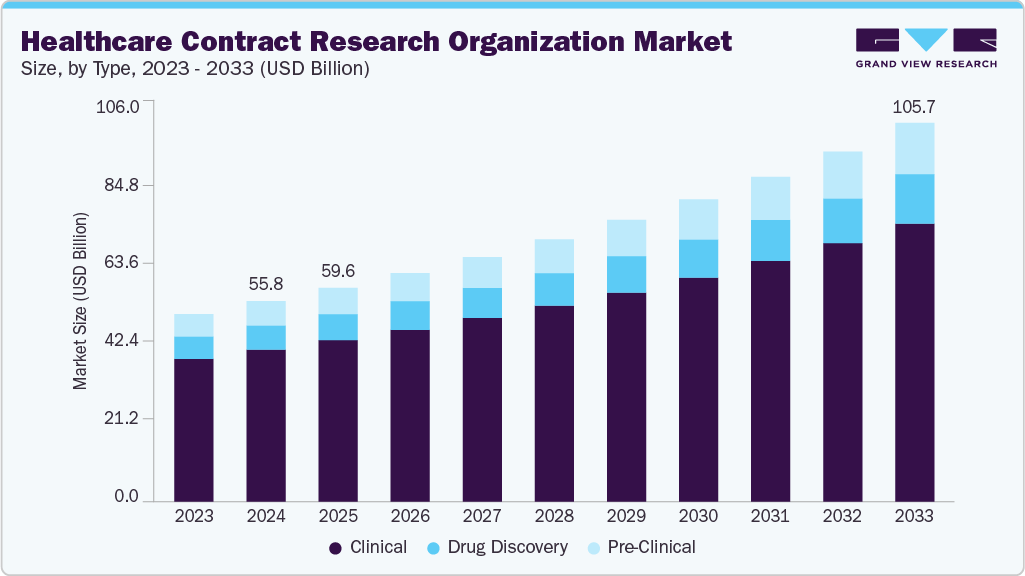
The global healthcare contract research organization (CRO) market size was valued at USD 59.6 billion in 2025 and is projected to grow from USD 63.7 billion in 2026 to USD 105.7 billion by 2033, at a CAGR of 7.5% from 2026 to 2033. The market in North America dominated with a revenue share of 40.2% in 2025. The market growth is driven by increasing investments in drug development, growing R&D activities, expanding regulatory requirements, and the globalization of trials.
 Source: Grand View Research, IR Documents, Primary Interviews, Paid DatabasesTo learn more about this report,
 Download Free Sample Report
 Key Market Trends & Insights
- By molecule: Pharmaceutical segment held the largest market share of 76.8% in 2025.
- By type: Clinical segment held the largest market share of 75.4% in 2025.
- By therapeutic area: Oncology segment held the largest market share of 30.8% in 2025.
- By service: Clinical monitoring segment held the largest market share of 19.8% in 2025.
Regional Highlights
- Largest regional market: North America (40.2% revenue share, 2025)
- Fastest-growing regional market: Asia Pacific (highest CAGR, 2026-2033)
- By country: The U.S. held the largest market share in 2025.
Market Size & Forecast
- Market size in 2025: USD 59.6 Billion
- Estimated market size in 2026: USD 63.7 Billion
- Projected market size by 2033: USD 105.7 Billion
- CAGR (2026-2033): 7.5%
Three ways to get this report
Buy it, customize it, or ask a question.Ask an Analyst
Analyst response in 1 business day
- AccessReport author, directly
- Reply timeWithin 1 working day
- No sales callDirect answer only
- FormatEmail reply
- CostFree, no cost
Get the Full Report
What the study covers
- FormatsPDF · Excel · Dashboard
- Timeline2026–2033 annual, 2025 base
- Coverage20+ countries, 5 regions
- Companies10+ key players profiled
Customize the Report
20% free customization
- IncludeCountries, segments, points
- TailorTo your product definition
- ExtendDeeper competitor detail
- OrA fully bespoke study
- Turnaround5–10 working days
The increasing complexity of clinical trials and the rising demand for efficient and cost-effective drug development solutions are expected to drive the market. Besides, factors contributing to market growth include the rise in chronic and rare diseases, which have led to a significant increase in clinical studies globally, fueling demand for outsourced research services. In addition, advancements in technologies such as real-world evidence, artificial intelligence, and remote patient monitoring are enhancing trial efficiency and patient engagement. The growth of clinical trial activities in emerging economies, backed by skilled professionals and lower operational costs, is contributing to the expansion of the healthcare CRO market.Contract research organizations (CROs) offer a range of expertise in conducting clinical trials across multiple geographies and in developing drugs in specific therapeutic areas, which is one of the major factors driving market growth in the pharmaceutical industry. Besides, reliance on CROs has increased due to rising pressure on drug developers regarding clinical data management, evolving regulatory requirements, and stringent safety standards, further creating a growing demand for services. In addition, most pharmaceutical and medical device companies are outsourcing drug/device production, leading to increased clinical trials, with trial privatization fueling greater engagement in developed countries. Also, global research networks are witnessing healthcare CRO and healthcare contract development and manufacturing organization market expansion to enhance service delivery, supporting market growth. For instance, in September 2025, RSSL, a CRO, and ERBC, a specialist in preclinical research and regulatory studies, announced a partnership combining preclinical expertise and GMP analytical capabilities to deliver consistent drug development support, streamline processes, accelerate timelines, and enhance regulatory outcomes globally.
 To learn more about this report, Download Free Sample Report
 Moreover, the increasing burden of non-communicable diseases (NCDs) and the rapidly growing aging population are contributing to market growth. For instance, in April 2026, the CDC estimated that over 90% of adults aged 65 and above have at least one chronic health condition. This increasing burden of chronic diseases is anticipated to drive the complexity of clinical trials, necessitating more specialized protocols, longer study durations, and advanced data management solutions. In addition, rising life expectancy increases morbidity, leading to more age-related diseases such as dysfunction and dementia. This further underscores the need for proper management of chronic diseases, along with digital technologies that transform the entire drug development process. The advent of mobile & wearables, Artificial Intelligence (AI), cloud technology, and associated platforms now enable the collection of frequent, precise, & multidimensional data during trials. These advanced technologies have the potential to enable innovative trial designs that facilitate easy recruitment & retention, improve the patient experience, and establish novel endpoints in clinical studies.
Furthermore, as clinical trials become increasingly globalized, companies navigate diverse regulatory frameworks across multiple geographies. The rising stringency of regulatory bodies such as the FDA, EMA, and local health authorities has propelled the need for robust compliance systems. CROs offer professional regulatory knowledge and standardized processes to ensure trials meet global standards. They also provide continuous support for documentation and ethics submissions. CROs allow sponsors to achieve faster market access by mitigating compliance risks and accelerating approvals. As regulatory environments become more complex, reliance on CROs has intensified, driving sustained growth in the healthcare CRO market.
Market Dynamics
The healthcare contract research organization (CRO) market is witnessing sustained growth as pharmaceutical, biotechnology, and medical device companies increasingly outsource research and clinical development activities to improve efficiency, reduce operational costs, and accelerate product commercialization. Growing clinical trial complexity, stringent regulatory requirements, expanding biologics pipelines, and rising adoption of decentralized trial models are reshaping outsourcing strategies globally. Technology integration, particularly artificial intelligence, advanced analytics, and remote patient monitoring, is further enhancing trial execution and patient engagement capabilities.
The increasing complexity and cost of drug development continue to drive demand for CRO services globally. Pharmaceutical and biotechnology companies are increasingly outsourcing clinical development, regulatory affairs, clinical monitoring, and data management activities to improve productivity while maintaining cost discipline. Oncology, biologics, cell and gene therapies, and rare disease pipelines require specialized expertise that many sponsors prefer to access externally rather than build internally. Furthermore, decentralized clinical trials, AI-enabled patient recruitment, remote monitoring, and real-world evidence generation are improving trial efficiency and accelerating timelines. Emerging markets across Asia-Pacific continue attracting outsourced studies due to lower operating costs, large patient pools, and improving regulatory environments, creating additional demand for CRO partnerships.
Additionally, supply chain diversification initiatives and sourcing strategies are creating new outsourcing opportunities, particularly in Asia-Pacific markets. Pharmaceutical companies are prioritizing resilient and geographically diversified manufacturing networks, further strengthening the role of CDMOs as strategic partners. These factors collectively position outsourcing as one of the strongest long-term growth engines for the healthcare CDMO industry.
Despite strong growth prospects, CROs face increasing pressure from sponsors seeking greater oversight of critical development programs. Large pharmaceutical companies are selectively bringing strategic functions such as clinical operations management, data analytics, and trial oversight back in-house to improve control over quality, timelines, and intellectual property. At the same time, sponsors are demanding outcome-based pricing models and greater operational transparency, placing pressure on CRO margins. Industry participants are also facing challenges related to talent shortages, rising labor costs, and evolving regulatory expectations across multiple jurisdictions. While AI and automation are expected to improve productivity, they also create uncertainty regarding future service differentiation. Sponsors increasingly expect CRO partners to provide advanced analytics, risk-based monitoring, and digital trial capabilities, raising investment requirements for service providers. Smaller CROs may struggle to fund these investments, potentially leading to consolidation and intensified competition across the market.
Market Concentration & Characteristics
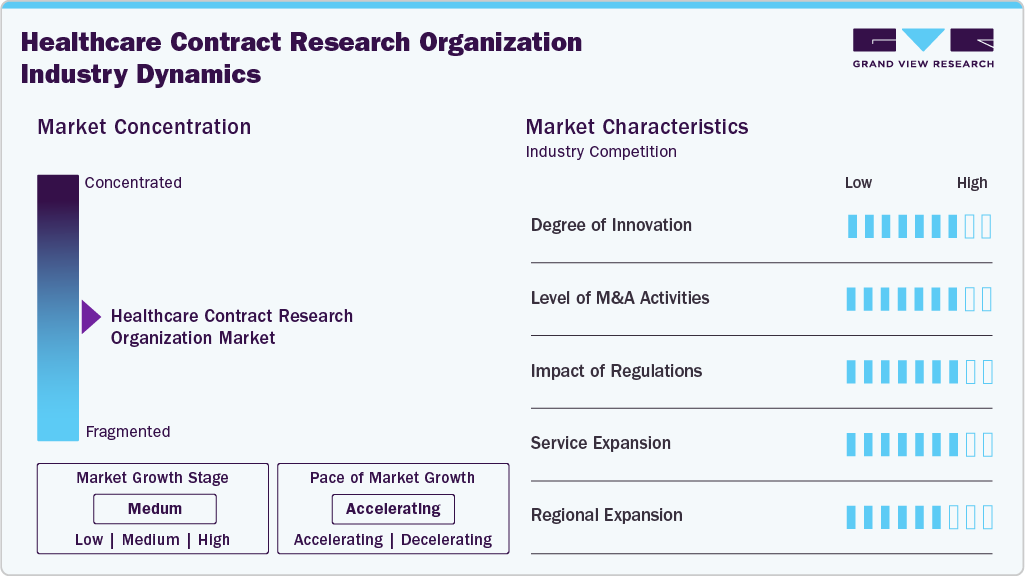
The healthcare contract research organization (CRO) market is at a moderate growth stage, with accelerating growth. The market is characterized by the degree of innovation, level of M&A activities, regulatory impact, service expansion, and regional expansion.
The adoption of innovative technologies, including AI, decentralized trials, digital biomarkers, and real-world evidence analytics, has enhanced operational efficiency and data quality. CROs investing in innovative solutions can offer differentiated services, shorten development timelines, and attract clients seeking advanced capabilities for complex or novel therapeutic programs.
 To learn more about this report, Download Free Sample Report
 Mergers and acquisitions are transforming the market, enabling firms to expand service portfolios, geographic reach, and therapeutic expertise. Consolidation enhances operational scale, integration of niche capabilities, and access to new client segments, while strategic acquisitions allow CROs to increase market competitiveness and revenue growth potential.
Stringent global regulatory frameworks for pharmaceuticals and medical devices drive demand for CRO expertise. Compliance with evolving guidelines, data integrity requirements, and patient safety standards necessitates sophisticated operational and regulatory capabilities.
CROs are broadening their offerings beyond core clinical trials to include early-phase research, real-world evidence, regulatory consulting, analytics, and post-market surveillance. This expansion allows clients to access integrated solutions, simplify outsourcing, enhance project continuity, and position CROs as strategic partners capable of addressing diverse development and commercialization needs.
Geographic diversification is increasingly pursued to access cost efficiencies, diverse patient populations, and emerging markets. Expansion into Asia, Latin America, and Eastern Europe enables faster recruitment, regulatory advantages, and localized expertise. CROs benefit from scalable operations, increased client engagement, and competitive positioning in the global clinical development ecosystem.
Analyst Perspective
The healthcare CRO market is expected to remain on a robust growth trajectory as pharmaceutical and biotechnology companies increasingly prioritize capital-efficient R&D models and accelerated development timelines. Future competitive differentiation will be driven less by scale alone and more by the ability to integrate AI-enabled trial execution, decentralized research capabilities, real-world evidence generation, and specialized therapeutic expertise. As biologics, cell therapies, gene therapies, and precision medicine pipelines expand, demand for highly specialized CRO partners is expected to increase significantly. Over the next decade, market leaders are likely to strengthen their positions through technology investments, strategic acquisitions, and integrated service offerings, while niche providers will capture value through therapeutic specialization and flexible delivery models.
Opportunity Analysis
The healthcare contract research organization (CRO) market is experiencing new growth opportunities attributed to the rapid evolution of clinical research models and the increasing need for efficient drug development processes. Currently, most pharmaceutical, biotechnology, and medical device companies are increasingly outsourcing research activities to CROs to reduce operational costs, improve productivity, and accelerate time-to-market for new therapies. Besides, the rising complexity of clinical trials, particularly in oncology, rare diseases, immunology, and personalized medicine, has increased the demand for specialized CRO expertise, advanced analytics, and regulatory support services.
Moreover, growing adoption of decentralized and virtual clinical trials is further transforming the market landscape. CROs are increasingly integrating digital health technologies, artificial intelligence, wearable devices, telemedicine platforms, and remote patient monitoring tools to improve patient recruitment, engagement, and retention. These technologies enhance real-time data collection and trial efficiency while reducing geographic barriers to patient participation. Furthermore, the increasing focus on biologics, biosimilars, gene therapies, and precision medicine is creating demand for highly specialized clinical research capabilities. In addition, emerging markets such as India, China, Brazil, and Southeast Asian countries are becoming attractive destinations for clinical trials market due to their large patient populations, lower trial costs, improving healthcare infrastructure, and supportive regulatory reforms, creating long-term expansion opportunities for CRO service providers globally. Such factors are expected to drive the market growth.
Impact of U.S. Tariffs on the Global Healthcare Contract Research Organization (CRO) Market
The imposition of tariffs on branded and patented pharmaceutical imports by the U.S. has a major impact across the healthcare ecosystem, with significant implications for the global healthcare contract research organization (CRO) market. This tariff policy threatens to escalate drug costs, disrupt supply chains, and delay clinical trials requiring steady access to pharmaceuticals. According to the report of the American Hospital Association (AHA), September 2025, shortages in critical drugs for cancer, heart disease, and organ failure could place patient lives at risk, highlighting the severity of the issue. CROs, which depend on continuous access to investigational drugs and ingredients, face rising operational complexity and pressure to diversify sourcing while maintaining trial continuity.
 To learn more about this report, Download Free Sample Report
 Technological advancements are transforming the healthcare contract research organization (CRO) market by improving operational efficiency, accelerating clinical development timelines, and enhancing patient-centric trial execution. In the market, the growing adoption of decentralized clinical trials (DCTs) has enabled CROs to utilize telemedicine platforms, wearable devices, e-consent systems, and virtual patient monitoring solutions to improve patient recruitment, retention, and engagement. These digital approaches reduce geographic barriers, increase participation from diverse patient populations, and enable continuous real-world data collection.
Artificial intelligence (AI) and machine learning (ML) technologies are increasingly integrated into clinical research processes to optimize protocol design, predict patient enrollment patterns, improve site selection, and identify potential safety risks at earlier stages of development. These technologies automate repetitive tasks, reducing manual errors and improving overall trial efficiency. In addition, cloud-based clinical trial management systems and integrated digital data ecosystems are enhancing collaboration among sponsors, CROs, investigators, and regulatory authorities. Real-world evidence (RWE), advanced analytics, and big data platforms support regulatory submissions, post-market surveillance, and commercialization strategies. Furthermore, digital biomarkers, remote sensors, and connected health devices are improving patient adherence, enabling continuous monitoring, and strengthening data accuracy across global clinical trials. Such technological advancements are expected to drive the market.
 To learn more about this report, Download Free Sample Report
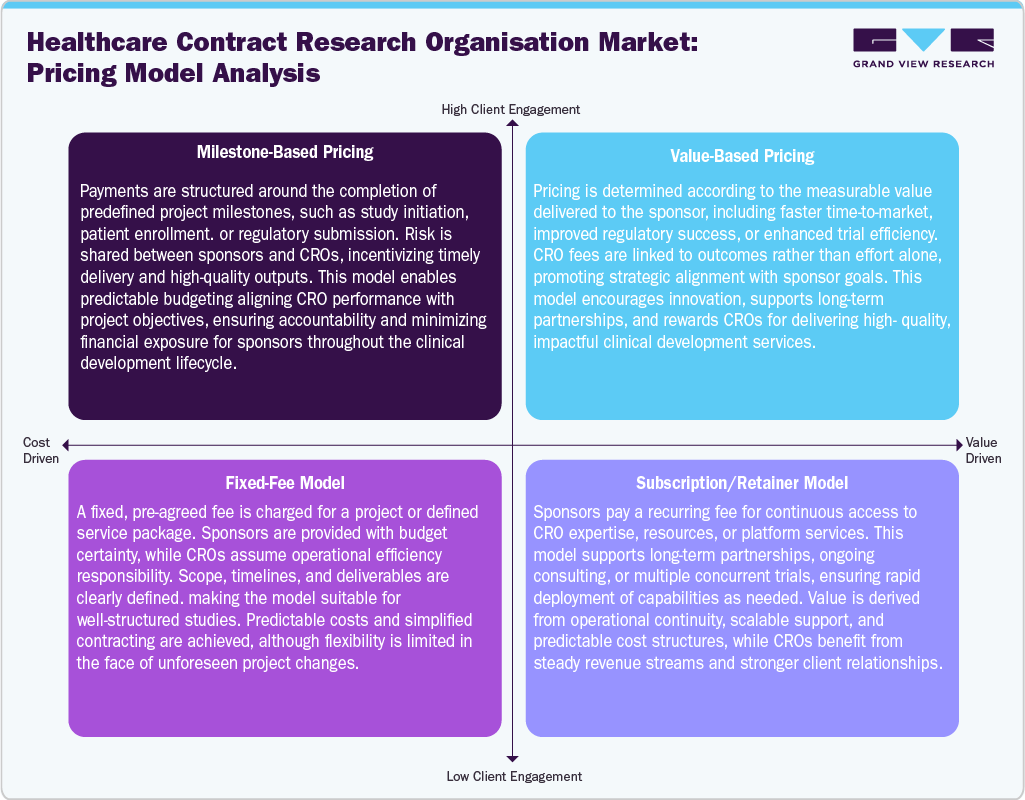
 In the healthcare contract research organization (CRO) market, various pricing models are employed to meet the diverse needs of clinical trials, sponsor expectations, and project complexities. Milestone-based pricing is commonly used in large, long-duration clinical trials. In this model, payments are made upon the completion of specific milestones, such as patient enrollment, data analysis, or regulatory submissions. This approach promotes timely execution, accountability, and efficiency. Another model gaining popularity is value-based pricing. As sponsors increasingly prioritize measurable outcomes such as faster trial completion, improved patient retention, regulatory approval success, and overall cost optimization, the CRO’s compensation is tied to the value delivered rather than merely the services rendered. Besides, fixed-fee pricing is prevalent for projects with defined scopes, timelines, and deliverables. This offers sponsors budget predictability while allowing CROs to manage operational risks effectively. Furthermore, subscription or retainer-based models are becoming more common in long-term partnerships, granting ongoing access to clinical, regulatory, and data management expertise. These flexible pricing strategies enable sponsors to optimize costs while enhancing scalability, efficiency, and strategic collaboration throughout clinical development programs.
Type Insights
On the basis of type, in 2025, the clinical segment held the largest market share in the market, accounting for a revenue share of 75.4%. Segment growth is driven by the increasing outsourcing of clinical trials, the rising prevalence of chronic and rare diseases, and the growing demand for faster drug development. As research advances, most pharmaceutical companies are increasingly focusing on strict budgets and timelines, prompting a preference for outsourcing to CROs or setting up dedicated clinical trial labs. Besides, higher spending on complex Phase II and Phase III trials, combined with the expansion of biologics and personalized medicine pipelines, has led to a rising demand for more specialized CRO services.
In addition, globalization supports the market trend by increasing patient enrollment activities, with companies turning to regions such as Central & Eastern Europe, Asia Pacific, Latin America, and the Middle East to achieve cost efficiencies and access diverse patient populations. In addition, decentralized trial models, AI-enabled analytics, and digital patient monitoring technologies are improving operational efficiency and accelerating study timelines, further strengthening demand for clinical CRO services.
The pre-clinical segment is emerging as the fastest-growing area within the healthcare contract research organization (CRO) market. This growth is driven by increasing demand for early-stage drug development services, including in vitro and in vivo testing, toxicology studies, and pharmacokinetic evaluations. Pharmaceutical and biotechnology companies are outsourcing pre-clinical activities to CROs to optimize costs, adhere to strict timelines, and leverage specialized expertise and advanced laboratory infrastructure. In addition, rising investments in drug discovery, the emergence of complex biologics, and the focus on accelerating time-to-market for novel therapies are further fueling the segment expansion.
Service Insights
On the basis of service segment, in 2025, clinical monitoring dominated with 19.8%, generating the largest revenue due to the growing number of clinical trials and the rising demand for monitoring services. Outsourcing to CROs has increased over the past decade, driven by cost efficiency and specialized expertise. Advancements such as smart analytics and real-time data acquisition are enhancing monitoring accuracy, enabling early detection of drug safety or toxicity issues and enabling timely corrective actions, such as trial redesign or termination. In addition, IT and consulting companies are supporting the innovation in clinical monitoring platforms and further contributing to segment growth. For instance, in February 2025, Paradigm Biopharmaceuticals selected Advanced Clinical as its CRO for a pivotal Phase III osteoarthritis trial of iPPS, following strong Phase II results, due to its expertise, capabilities, and strategic alignment.
Similarly, in February 2025, Oracle Life Sciences was recognized in the Everest Group Life Sciences CTMS Products PEAK Matrix Assessment 2024 for its advanced clinical trial management capabilities. The company continues to strengthen its clinical research operations by offering integrated CTMS solutions that support sponsors and CROs through seamless connectivity with EHRs, EDCs, and other clinical systems. The platform supports improving trial efficiency, regulatory compliance, real-time data visibility, and collaboration across global clinical trial networks.
Regulatory/medical affairs are expected to witness the fastest growth driven by rising R&D, clinical trial applications, product registrations, and expanding drug pipelines. The growing need for faster product approvals, strict compliance requirements, and greater efficiency in resource utilization is driving outsourcing. In addition, CROs are using expansion strategies to strengthen their global presence. Such factors are expected to drive the regional experts specializing in pharmaceutical and biopharmaceutical regulatory support.
Therapeutic Area Insights
On the basis of therapeutic areas, oncology represented the largest segment in the market with 30.8% share in 2025, driven by the rising global prevalence of cancer and the urgent need for innovative therapies. Cancer research requires highly complex, large-scale clinical trials with advanced designs, extensive patient recruitment, and strict regulatory compliance, making outsourcing to CROs increasingly essential.
Currently, the number of cancer cases and cancer-associated deaths is rising across the globe. For instance, the cancer burden across the globe is expected to be 28.4 million cases in 2040. Although new cancer therapies are being discovered, many patients continue to live with cancer, as the cost of current cancer therapy is not affordable to the general public. Therefore, oncology studies are expected to rise with clear tolerability studies. The main aim is to evaluate doses and their adverse effects, which includes testing about 70% of experimental drugs. Hence, ongoing clinical trials are a major step toward developing affordable treatment options for patients in need. Thus, as the number of cancer cases grows, CROs provide specialized expertise, global networks, and advanced technologies to manage oncology trials efficiently, supporting drug development pipelines for targeted therapies, immuno-oncology, and precision medicine.
The CNS disorders segment is projected to witness a notable growth during the forecast period, as these conditions represent a significant share of the global health burden and affect diverse population groups. Approximately 50 million Americans live with neurological disorders, with a similar prevalence seen worldwide. The rising incidence of conditions such as Alzheimer’s, stroke, and Parkinson’s is closely tied to the rapidly aging population. According to the WHO, the global population aged 60 and above is expected to increase from 1.4 billion in 2020 to 2.1 billion by 2050, driving demand for advanced CNS-focused research and treatments.
Molecule Insights
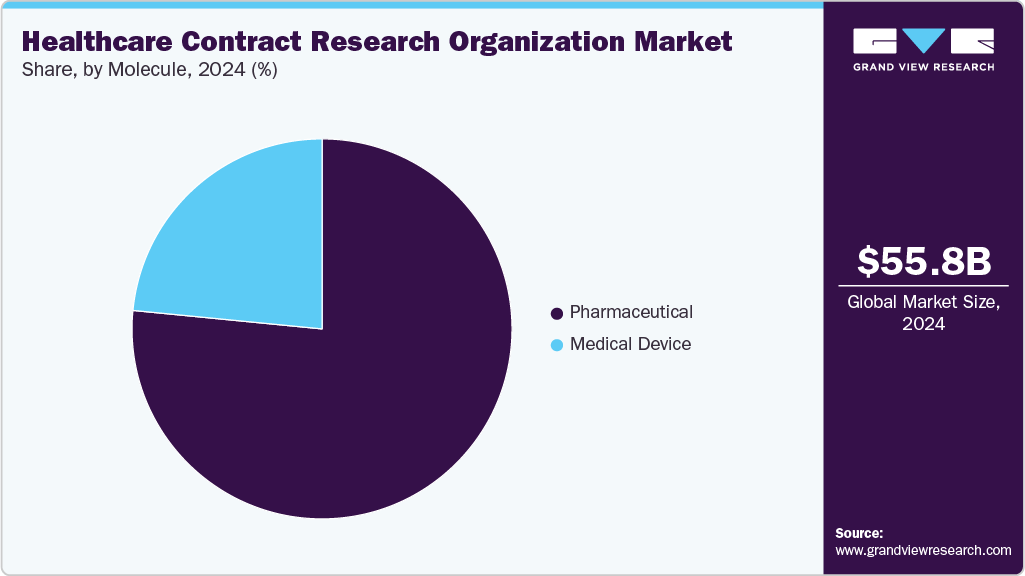
On the basis of molecules, the pharmaceutical segment accounted for 76.8%, generating the largest share in 2025. The pharmaceutical segment is further sub-segmented into small molecule and biologics. The growth of this segment is driven by the rising number of promising small molecules in the global therapeutic market and the increasing use of specialty medicines. Small molecules, including APIs and finished drugs, contribute significantly to pharmaceutical sales, fueling demand for CRO outsourcing. These services help reduce costs, ensure faster drug production, and optimize operational efficiency. Outsourcing also allows companies to focus on R&D and facility management. Notably, according to the U.S. FDA, small molecules accounted for the largest share of new drug approvals, highlighting the need for clinical monitoring in the market.
Similarly, the biologics sub-segment is expected to grow at the fastest CAGR over the estimated period. The healthcare CRO provides specialized biologics services, including monoclonal antibodies and vaccines, through advanced bioanalytical testing, process development, and clinical support. Their expertise accelerates complex drug development, ensuring regulatory compliance, data accuracy, and faster time to market for biopharmaceutical innovations. Such factors are expected to drive the market.
 To learn more about this report, Download Free Sample Report
 The medical device segment is projected to grow at a significant CAGR over the forecast period. The segment growth is driven by diverse materials, complex product designs, and the rising number of small to mid-sized manufacturers. Stringent regulatory norms and supportive government initiatives further drive CRO demand worldwide. Besides, CROs offer specialized expertise, therapeutic insights, and strategic guidance, enabling faster product development and market entry. By streamlining compliance and accelerating innovation, CROs play a vital role in advancing medical device research and development. These factors are expected to significantly enhance the reliance on CROs for medical device studies and clinical support worldwide.
Regional Insights
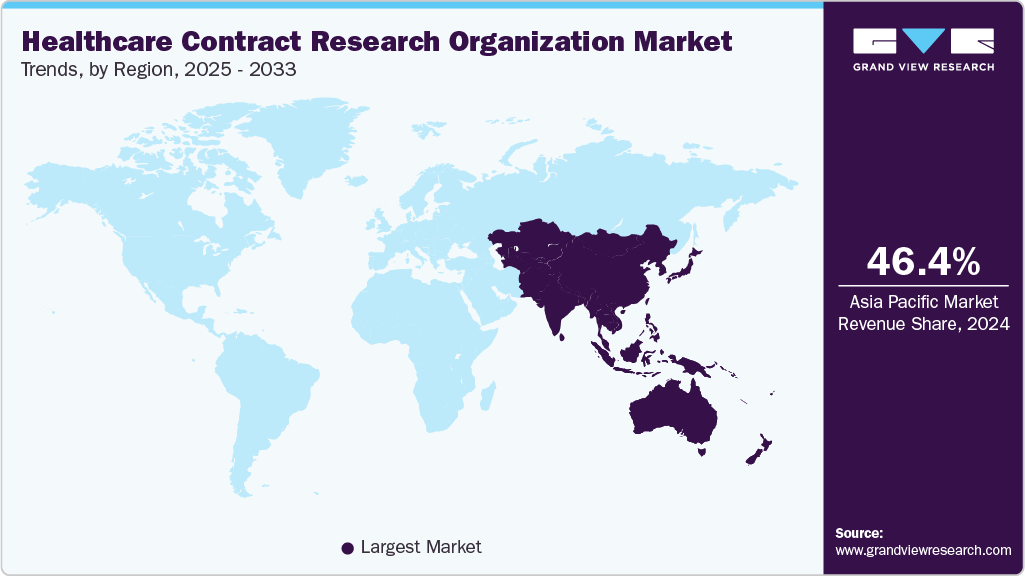
The North America healthcare Contract Research Organization (CRO) industry held the largest revenue share of 40.2% in 2025. Market growth is driven by expanding clinical trials market, increasing numbers of clinical trials, high R&D spending, and the outsourcing of trials. In addition, the growing biosimilars & biologics industry, along with the globalization of clinical trials, is expected to drive growth in the healthcare CRO market during the forecast period. Other factors contributing to market growth include the rising prevalence of chronic diseases, complex clinical trials, and increasing outsourcing by biopharma sponsors. Advanced technologies such as AI, decentralized trials, and real-world evidence analytics are being adopted to improve efficiency and reduce timelines. Key players, including IQVIA, Parexel, PPD, and ICON, are expanding capabilities through M&A and service diversification. Strong regulatory expertise, integrated offerings, and innovation in digital platforms continue to differentiate market leaders and attract global clients.
 To learn more about this report, Download Free Sample Report
 U.S. Healthcare Contract Research Organization (CRO) Market Trends
The healthcare contract research organization industry in the U.S. accounted for the largest market share in North America, owing to rising R&D activities, thorough drug development, and the growing biosimilars & biologics industry. In addition, established CROs in the country are focusing on adopting technological advancements to ensure the smooth operation of their businesses and gain a competitive edge. For instance, in September 2025, ACL Digital acquired U.S.-based Symbiance, strengthening its clinical research footprint and integrating AI-driven data management, pharmacovigilance, and end-to-end CRO capabilities. Such strategic acquisitions, coupled with digital transformation and regulatory expertise, are intensifying competition and enabling scalable, patient-centric solutions across the U.S. clinical development ecosystem.
Canada healthcare contract research organization industry is expected to grow at a significant CAGR during the forecast period, driven by government support & funding and the growing biopharma and med-tech sector. Technological advancements, including AI, virtual reality diagnostics, and digital health platforms, are enhancing trial efficiency and patient engagement. For instance, in August 2025, the Government of Canada expanded healthcare to Indigenous communities through the CAN Health Network and the Virtual Health Hub, which are enabling remote trial access, supporting homegrown innovation, and strengthening healthcare delivery, positioning CROs to leverage both advanced technologies & national healthcare initiatives for growth and broader patient inclusion.
Europe Healthcare Contract Research Organization Market Trends
The healthcare contract research organization (CRO) industry in Europe is expected to grow at a notable CAGR during the forecast period, driven by rising clinical trial activity, the adoption of precision medicine, and innovations in drug development. Besides, increasing demand for specialized testing services, the expanding market for biologics & biosimilars, and technological advancements in research are anticipated to drive the market growth.
Some other factors supporting market growth are the presence of a skilled workforce, robust regulatory frameworks, and an established pharmaceutical ecosystem. Besides, an increasing number of decentralized trials and digital technologies, such as AI and blockchain, are improving efficiency and patient engagement, contributing to market growth. In addition, the growing demand for specialized services, including oncology and rare disease studies, is expected to boost clinical research across Europe.
The Germany healthcare contract research organization industry held the largest share in 2025, fueled by rising R&D investment, increasing healthcare awareness, and technological innovations. Focusing on precision medicine and advanced therapies strengthens innovation in clinical trial approaches. Enhanced collaboration between CROs and academic institutions further accelerates research capabilities and strengthens Germany's position in global clinical development.
The healthcare contract research organization industry in the UK accounted for a notable share in Europe in 2025. The country's growth is driven by rising clinical trial activity, an increasing number of partnerships between public & private organizations, shifting outsourcing trends, and advancements in biotechnology. The market is advancing through decentralized trials, AI, and big data integration for analytics, and an emphasis on rare disease studies, with a shift toward a patient-centric approach. Stringent regulations and Brexit-related changes are influencing the market, prompting CROs to expand their services and geographic presence to meet evolving client requirements and maintain compliance.
Asia Pacific Healthcare Contract Research Organization Market Trends
The healthcare contract research organization (CRO) industry in the Asia Pacific is projected to experience the fastest growth during the forecast period, driven by a large patient population and increased outsourcing in the biopharmaceutical industry, particularly during clinical R&D stages, boosting regional clinical studies. The country's minimal import-export regulations accelerate processes, while China's vast patient pool and regulatory adjustments support its largest market share. Access to treatment-naive patients in these countries promotes advanced outsourcing of clinical trials and related services, enhancing efficiency and supporting the region's rapid expansion in the global CRO landscape. Such factors are expected to drive the market over the estimated time period.
The China healthcare contract research organization industry accounted for the largest share in the Asia Pacific in 2025. The market growth is driven by strong government support for medical research, expansion of the biotechnology sector, and rising demand for innovative therapies. Besides, the country is emerging as a key hub for early-phase trials, particularly in oncology, neurology, and rare diseases. Local CROs capitalize on China's large patient population, digital health technologies, and favorable regulatory environment to support clinical development and market expansion.
The healthcare contract research organization industry in Japan is driven by the expanding pharmaceutical sector, rising healthcare expenditure, and heightened awareness, as well as by government and institutional initiatives supporting clinical research and development across the country.
The India healthcare contract research organization industry is projected to register a considerable CAGR during the forecast period, driven by its large patient base, cost advantages, and growing clinical trial expertise. The country is emerging as a preferred destination for Phase II and III studies, especially in oncology, cardiovascular, and infectious diseases. Rising healthcare infrastructure investment, government research support, and a favorable regulatory framework further propel CRO market growth.
Latin America Healthcare Contract Research Organization Market Trends
Thehealthcare contract research organization (CRO) industry in Latin Americais projected to register a significant CAGR during the forecast period, driven by growing demand for clinical trials market across therapeutic areas such as oncology and infectious diseases. The region's diverse patient base, cost advantages, and developing healthcare infrastructure attract global pharmaceutical sponsors. Regulatory reforms and collaborations between local and international CROs enhance research capabilities, while the adoption of digital technologies and data analytics further strengthens Latin America's role in global clinical research and development.
The Brazil healthcare contract research organization industry is experiencing robust growth. Its large, diverse patient population offers unique opportunities for clinical trials, especially in oncology, cardiovascular, and infectious disease areas. Improvements in the regulatory environment, coupled with increased focus on research and development, further enhance Brazil's appeal as a destination for global pharmaceutical companies.
Middle East & Africa Healthcare Contract Research Organization Market Trends
The healthcare contract research organization industry in the Middle East is growing steadily due to strategic geopolitical positioning and strategic investments in biotechnology infrastructure. In addition, countries like Saudi Arabia and the UAE are emerging as regional hubs, attracting global CDMOs through incentives, infrastructure, and government visionary initiatives. Major players such as Lonza, WuXi AppTec, Catalent, Thermo Fisher Scientific, and Piramal Pharma Solutions are actively expanding operations in the region. Thus, growing strong commitment to the development & implementation of CRO services is expected to drive the market over the estimated time period.
The South Africa healthcare contract research organization industry is expected to depict a robust CAGR during the forecast period, as the country emerges as a key destination for clinical trials in sub-Saharan Africa. Its well-developed infrastructure, diverse patient population, and cost advantages attract global pharmaceutical sponsors. Strong regulatory frameworks, skilled workforce, and growing focus on research in infectious diseases, oncology, and chronic conditions further drive CRO demand, strengthening South Africa's position in the global healthcare CRO market.
Key Healthcare Contract Research Organization Company Insights
Major players in the global market are pursuing various strategic initiatives, including acquisitions, mergers, service launches, partnerships, expansions, and collaborations, to expand geographic presence and strengthen competitive positioning. For example, in June 2025, Fortrea and Emery Pharma have partnered to provide rapid MNP testing of rifampin for safe, FDA-compliant DDI studies, enabling sponsors to accelerate trials, ensure participant safety, and generate high-quality clinical data.
Key Healthcare Contract Research Organization Companies
The following key companies have been profiled for this study on the healthcare contract research organization market.
-
ICON Plc
-
Charles River Laboratories
-
Syneos Health
-
IQVIA Inc.
-
GVK Biosciences Private Limited (Aragen)
-
LabCorp
-
Parexel International Corporation
-
Thermo Fisher Scientific
-
CTI Clinical Trial & Consulting
-
PSI
-
Medpace
-
Ergomed
-
WuXi AppTec
-
Worldwide Clinical Trials
-
Medidata Solutions, Inc
-
Pharmaron GMBH
-
SGS SA
-
KCR S.A.
-
Advanced Clinical Research Services, LLC
-
Pharm-Olam, LLC (Allucent)
Competitive Benchmarking
Category
Operating Strategies
Competitive Edge
Weakness
Established Players (IQVIA, ICON Plc.;Parexel)
- Offer end-to-end service platforms spanning discovery, clinical development, regulatory support, and commercialization.
- Invest heavily in AI-enabled trial management, decentralized clinical trials (DCTs), and real-world evidence (RWE) capabilities.
- Extensive global site networks and established relationships with sponsors, investigators, and regulators.
- Deep therapeutic expertise and integrated data assets that improve recruitment efficiency and trial execution.
- Large organizational structures can reduce agility and increase project complexity.
- Premium pricing models may limit competitiveness among emerging biotech clients.
Emerging Players (Allucent, Advanced Clinical, KCR, Ergomed)
- Focus on niche therapeutic areas, rare diseases, and specialized regulatory services.
- Pursue flexible Functional Service Provider (FSP) and hybrid outsourcing models to attract mid-sized biotech sponsors
- Faster decision-making and greater customization for sponsor-specific requirements.
- Strong client engagement and specialized scientific expertise in targeted segments.
- Limited geographic coverage and investigator networks compared with global CRO leaders.
- Lower scale can constrain investments in advanced digital platforms and AI infrastructure.
Recent Developments
-
In December 2025, Avetra, a next-generation CRO, entered the market with a site-focused operational approach intended to strengthen collaboration among sponsors, CROs, and investigative research centers. The company leverages a network of over 350 experienced clinical research sites across the U.S., along with an integrated in-house central laboratory, to enhance trial efficiency, improve transparency, and support more streamlined, reliable clinical trial management processes.
-
In September 2025, ACL Digital acquired Symbiance, a technology-driven CRO, to enhance AI-powered clinical research, pharmacovigilance, and data services. This acquisition strengthens ACL Digital’s end-to-end global clinical research and life sciences capabilities.
-
In September 2025, StarTrials expanded its operations into key Asian markets, establishing offices and local partnerships to enhance clinical trial operations, patient recruitment, and data quality, accelerating drug development timelines and regional CRO capabilities.
Healthcare Contract Research Organization Market Report Scope
Report Attribute
Details
Market size in 2025
USD 59.6 billion
Estimated market size in 2026
USD 63.7 billion
Projected market size by 2033
USD 105.7 billion
Growth rate
CAGR of 7.5% from 2026 to 2033
Historical data
2021 - 2025
Forecast period
2026 - 2033
Quantitative units
Revenue in USD million/billion and CAGR from 2026 to 2033
Report coverage
Revenue forecast, company ranking, competitive landscape, growth factors, and trends
Segments covered
Type, service, therapeutic area, molecule, region
Regional scope
North America; Europe; Asia Pacific; Latin America; MEA
Country scope
U.S.; Canada; Mexico; Germany; UK; France; Italy; Spain; Norway; Denmark; Sweden; China; Japan; India; South Korea; Australia; Thailand; Singapore; Brazil; Argentina; Saudi Arabia; South Africa; UAE; Qatar; Oman; Kuwait
Key companies profiled
ICON Plc, Charles River Laboratories, Syneos Health, IQVIA Inc., GVK Biosciences Private Limited (Aragen), LabCorp, Parexel International Corporation, Thermo Fisher Scientific, CTI Clinical Trial & Consulting, PSI, Medpace, Ergomed, WuXi AppTec, Worldwide Clinical Trials, Medidata Solutions, Inc, Pharmaron GMBH, SGS SA, KCR S.A., Advanced Clinical Research Services, LLC, Pharm-Olam, LLC (Allucent).
Customization scope
Free report customization (equivalent up to 8 analysts' working days) with purchase. Addition or alteration to country, regional & segment scope.
Pricing and purchase options
Avail customized purchase options to meet your exact research needs. Explore purchase options
Global Healthcare Contract Research Organization Market Report Segmentation
This report forecasts revenue growth at global, regional, and country levels and provides an analysis of the latest industry trends across each sub-segment from 2021 to 2033. For this study, Grand View Research has segmented the global healthcare contract research organization market report based on type, service, therapeutic area, molecule and region.
-
Type Outlook (Revenue, USD Million, 2021 - 2033)
-
Drug Discovery
-
Target Validation
-
Lead Identification
-
Lead Optimization
-
-
Pre-Clinical
-
Clinical
-
Phase I Trial Services
-
Phase II Trial Services
-
Phase III Trial Services
-
Phase IV Trial Services
-
-
-
Service Outlook (Revenue, USD Million, 2021 - 2033)
-
Project Management/Clinical Supply Management
-
Data Management
-
Regulatory/Medical Affairs
-
Medical Writing
-
Clinical Monitoring
-
Quality Management/ Assurance
-
Bio-statistics
-
Investigator Payments
-
Laboratory
-
Sterility Testing
-
Container/Closure Testing
-
Extractables and Leachable Testing
-
Environmental Monitoring (Including Microbiology Testing)
-
Disinfectant Efficacy Studies
-
Others
-
-
Patient And Site Recruitment
-
Technology
-
Others
-
-
Therapeutic Area Outlook (Revenue, USD Million, 2021 - 2033)
-
Oncology
-
CNS Disorders
-
Infectious Diseases
-
Immunological Disorders
-
Cardiovascular Diseases
-
Respiratory Diseases
-
Diabetes
-
Ophthalmology
-
Pain Management
-
Others
-
-
Molecule Outlook (Revenue, USD Million, 2021 - 2033)
-
Pharmaceutical
-
Small Molecules
-
Biologics
-
-
Medical Device
-
-
Regional Outlook (Revenue, USD Million, 2021 - 2033)
-
North America
-
U.S.
-
Canada
-
Mexico
-
-
Europe
-
UK
-
Germany
-
France
-
Italy
-
Spain
-
Denmark
-
Sweden
-
Norway
-
-
Asia Pacific
-
Japan
-
China
-
India
-
Australia
-
Thailand
-
South Korea
-
-
Latin America
-
Brazil
-
Argentina
-
-
Middle East & Africa
-
South Africa
-
UAE
-
Saudi Arabia
-
Kuwait
-
Qatar
-
Oman
-
-
Research Methodology
The healthcare contract research organization market figures in this report are based on a proven research process that combines executive interviews with secondary research from proprietary databases, company filings, and recognized regulatory and institutional sources. Market size is built through value-chain sizing - reconciling supply-side and demand-side estimates - and triangulated with bottom-up and top-down approaches. Every estimate passes multiple levels of expert validation before publication, with each healthcare contract research organization segment quantified using the revenue-capture definitions in the table below.
Segment Definition
Segment
Definition
Drug Discovery
Early-stage research activities focused on identifying and optimizing therapeutic candidates.
Target Validation
Scientific confirmation that a biological target is associated with a disease pathway.
Lead Identification
Screening and selection of promising compounds with therapeutic potential.
Lead Optimization
Refinement of lead compounds to improve efficacy, safety, and pharmacokinetic properties.
Pre-Clinical
Laboratory and animal studies conducted before human testing to establish safety and biological activity.
Clinical
Human trials conducted to evaluate safety, efficacy, dosage, and long-term outcomes of investigational products.
Phase I
First-in-human studies assessing safety, tolerability, and dosage.
Phase II
Studies evaluating efficacy and side effects in targeted patient populations.
Phase III
Large-scale trials confirming efficacy and safety before regulatory submission.
Phase IV
Post-marketing studies assessing long-term safety and real-world effectiveness.
Market estimation Approach - Bottom-up Market estimation
Description
Identifying the key players in the Healthcare CRO market based on parameters such as revenues, service portfolio, strategic initiatives among others
Analyzing and determining the global and regional revenues of the key market players
Estimating the segment-specific revenues commanded by key players in the market
Estimating revenues on a segment and sub segment level commanded by the major players in the Healthcare CRO market (regional and global)
Extrapolating sum of revenues of key players to arrive at global market size based on the market share commanded by key market players
Delivered Customizations
This report has been delivered with the following In-depth customizations
Client Request
Customization Delivered
Value Adds
Healthcare CRO Market Trends & Opportunity Assessment
Assessment of global clinical research outsourcing trends, pharmaceutical and biotechnology R&D investments, decentralized clinical trial (DCT) adoption, AI-enabled trial execution, therapeutic area demand shifts, outsourcing penetration rates, strategic partnerships, M&A activity, and regional growth opportunities.
Identifies high-growth outsourcing segments, emerging technologies, investment hotspots, evolving sponsor requirements, and untapped opportunities across the clinical development value chain.
Competitive Landscape & Market Positioning Assessment
Evaluation of established and emerging CROs based on service portfolio breadth, therapeutic expertise, global site networks, technology capabilities, regulatory track record, geographic reach, customer base, strategic partnerships, and operational scalability.
Highlights competitive intensity, market share dynamics, differentiation strategies, partnership opportunities, acquisition targets, and potential market-entry pathways.
Technology, Regulatory & Future Growth Outlook
Analysis of AI and analytics adoption, decentralized trial technologies, patient recruitment platforms, real-world evidence (RWE) capabilities, risk-based monitoring solutions, regulatory compliance trends, and future outsourcing opportunities in precision medicine, biologics, and advanced therapies.
Supports technology investment prioritization, regulatory readiness, capability expansion planning, operational optimization, and long-term strategic growth initiatives.
Frequently Asked Questions About This Report
On the basis of molecules, the pharmaceutical segment accounted for 76.8%, generating the largest share in 2025.
The clinical segment dominated the healthcare contract research organization market with a share of 75.4% in 2025.
The market growth is driven by increasing investments in drug development, growing R&D activities, expanding regulatory requirements, and the globalization of trials. In addition, the increasing complexity of clinical trials and the rising demand for efficient and cost-effective drug development solutions are expected to drive the market.
North America dominated with a 40.2% revenue share in 2025.
Asia Pacific is the fastest-growing region over the forecast period.
On the basis of service segment, in 2025, clinical monitoring dominated with 19.8%, generating the largest revenue due to the growing number of clinical trials and the rising demand for monitoring services.
On the basis of therapeutic areas, oncology represented the largest segment in the market with 30.8% share in 2025, driven by the rising global prevalence of cancer and the urgent need for innovative therapies.
Key players include ICON Plc, Charles River Laboratories, Syneos Health, IQVIA Inc., GVK Biosciences Private Limited (Aragen), LabCorp, Parexel International Corporation, Thermo Fisher Scientific, CTI Clinical Trial & Consulting, PSI, Medpace, Ergomed, WuXi AppTec, Worldwide Clinical Trials, Medidata Solutions, Inc, Pharmaron GMBH, SGS SA, KCR S.A., Advanced Clinical Research Services, LLC, Pharm-Olam, LLC (Allucent).
The global healthcare contract research organization market size was valued at USD 59.6 billion in 2025 and is estimated at USD 63.7 billion for 2026.
The global healthcare contract research organization market is expected to grow at a CAGR of 7.5% from 2026 to 2033, reaching USD 105.7 billion by 2033.
About the Author(s)
Medical Devices Research Team
Healthcare · Medical DevicesThis report was authored by the medical devices research team at Grand View Research - comprising two research analysts, one senior research analyst, and one industry expert - with specialized expertise in the medical devices segment of the healthcare industry. All findings are based on proprietary healthcare databases, executive interviews, and regulatory analysis, subject to internal peer review prior to publication.
Last Updated:
Speak to Analyst

Customize this report to your needs - add regions, segments, or data points, with 20% free customization.
Or view our licence options:


ISO 9001:2015 & 27001:2022 Certified
We are GDPR and CCPA compliant! Your transaction & personal information is safe and secure. For more details, please read our privacy policy.


