- Home
- »
- Homecare & Decor
- »
-
Culinary Tourism Market Size & Share Report, 2026-2033GVR Report cover
![Culinary Tourism Market (2026 - 2033)Report]()
Culinary Tourism Market (2026 - 2033)
Size, Share & Trends Analysis Report By Activity (Culinary Trails, Cooking Classes), By Booking Mode (Online Travel Agencies, Tour Operators), By Tourist Type, By Region, and Segment Forecasts
Market Size, 2025
$16.1BMarket Estimate, 2026
$19.1BMarket Forecast, 2033
$76.4BCAGR, 2026–2033
21.9%Culinary Tourism Market Summary
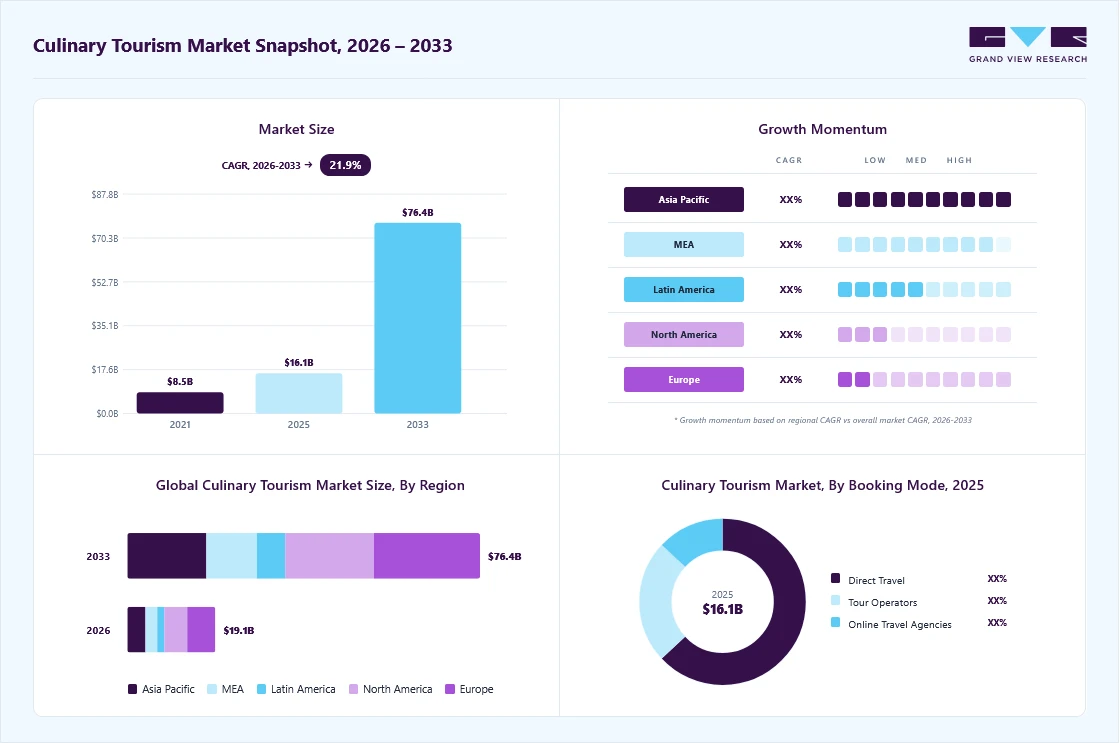
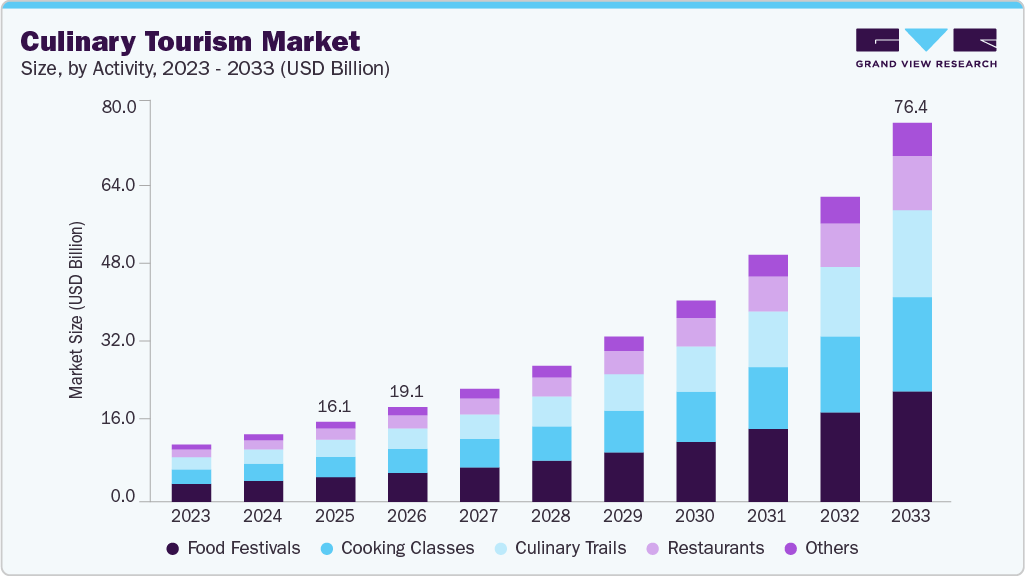
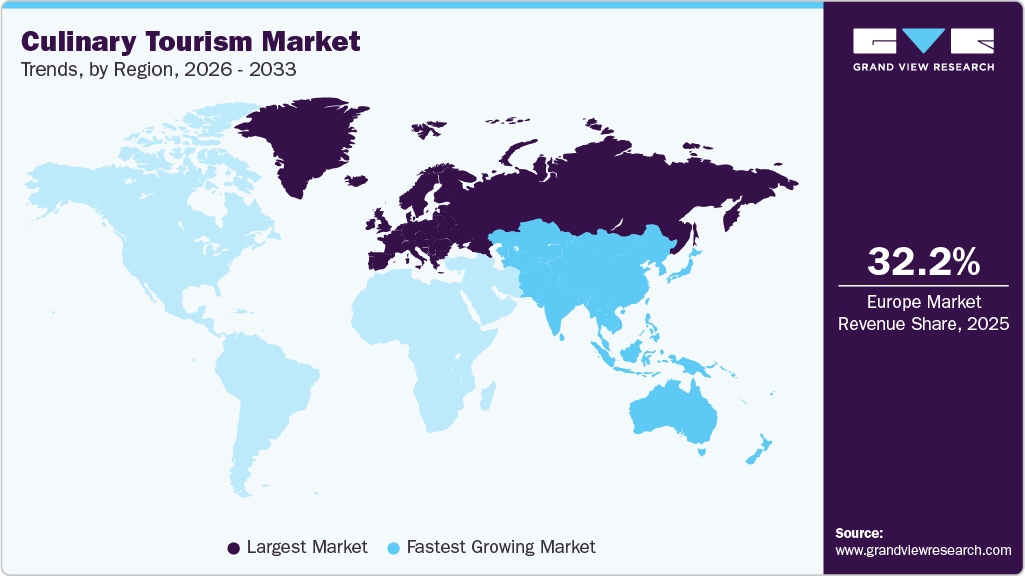
The global culinary tourism market size was valued at USD 16.1 billion in 2025 and is projected to grow from USD 19.1 billion in 2026 to USD 76.4 billion by 2033, at a CAGR of 21.9% from 2026 to 2033. The market in Europe dominated with a revenue share of 32.2% in 2025. Growth of the market can be attributed to the increasing consumer spending on travel & tourism, coupled with tourists’ desire to try food products made of locally sourced ingredients, which has resulted in increased food travelers, who explore new cultures through food worldwide.
Key Market Trends & Insights
- By activity: The food festivals category segment led the market with the largest revenue share of 30.9% in 2025.
- By booking mode: The direct travel segment category led the market with the largest revenue share of 63.0% in 2025.
- By tourist type: The existential tourists segment led the market with the largest revenue share of 42.2% in 2025.
Regional Highlights
- Largest regional market: Europe (32.2% revenue share, 2025)
- Fastest-growing regional market: Asia Pacific (highest CAGR, 2026-2033)
- The culinary tourism industry in the Italy held the largest revenue share in 2025.
Market Size & Forecast
- Market size in 2025: USD 16.1 Billion
- Estimated market size in 2026: USD 19.1 Billion
- Projected market size by 2033: USD 76.4 Billion
- CAGR (2026-2033): 21.9%
The primary driver of the culinary tourism industry is the growing desire to explore local dishes, connect with locals, and gain deeper insight into the destination, its history, and culture. In 2025, more than half of travellers across generations now prioritise food when planning trips, and about 81% actively look forward to culinary adventures abroad, indicating that authentic local cuisine is a significant motivator for travel decisions and cultural engagement.As of 2025, nearly fifty culinary traditions and food-related cultural practices have been recognized on UNESCO’s Representative List of the Intangible Cultural Heritage of Humanity, highlighting the growing global acknowledgment of foodways, traditional cooking skills, and shared dining customs as vital components of cultural identity and heritage worldwide.
The growing involvement of governments and tourism associations in promoting culinary tourism is emerging as a key trend in the culinary market and the broader food tourism market. Authorities are increasingly positioning local cuisine as a strategic tool for destination branding through national food festivals, gastronomic trails, recognition of heritage foods, and chef-exchange initiatives. Such public-private collaborations not only enhance the global visibility of regional cuisines but also support local farmers, restaurants, and hospitality businesses. This structured policy is strengthening both the culinary and food tourism markets as organized, high-potential growth segments within the wider travel and hospitality industry.
For instance, in September 2025, the Ministry of Tourism organised the 4th edition of World Food India at Bharat Mandapam to promote India’s diverse culinary heritage and position the country as a global food tourism destination. Held in New Delhi, the event showcased traditional cuisines, indigenous ingredients, sustainable food practices, and export opportunities, highlighting the government’s strategic efforts to strengthen culinary tourism and enhance India’s global gastronomic presence.
According to a blog by World Expeditions, various locations are famous for various types of food items available that are popular due to any local ingredient used blended with any internationally preferred food. For instance, traditional Peruvian cuisine mainly relied on staples like corn, chilies, and the wide variety of potatoes (with over 3000 types). However, the staple dishes in Peru have evolved into a rich blend of local and international influences, attracting various tourists to the country. The fusion includes elements from Spanish, African, French, Asian, Italian, and British cuisines. This unique mix of flavors, cultures, and traditions has turned Peru, especially Lima and Cusco, into emerging global culinary hubs.
Consumer Insights
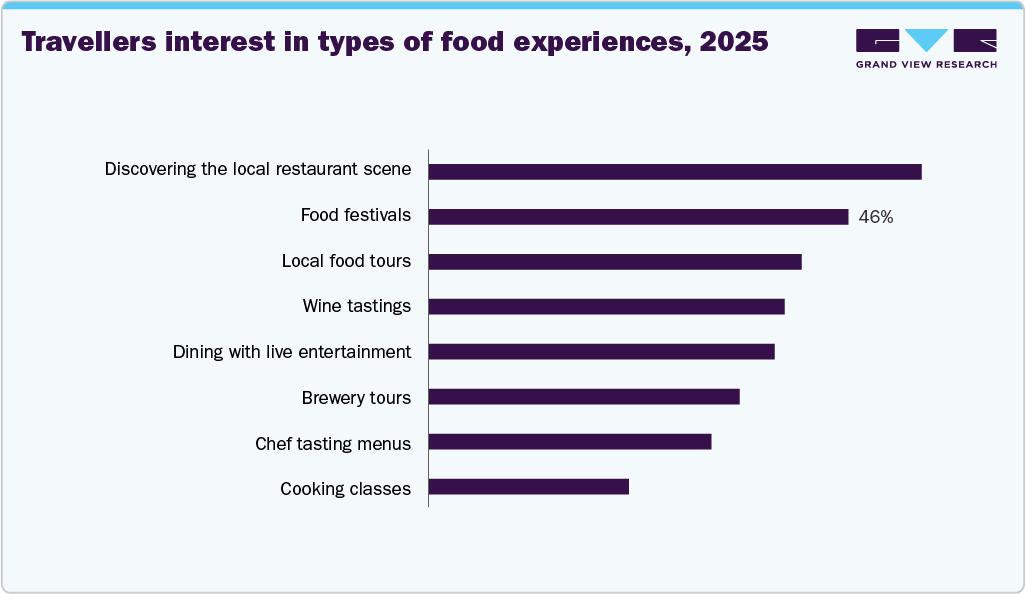
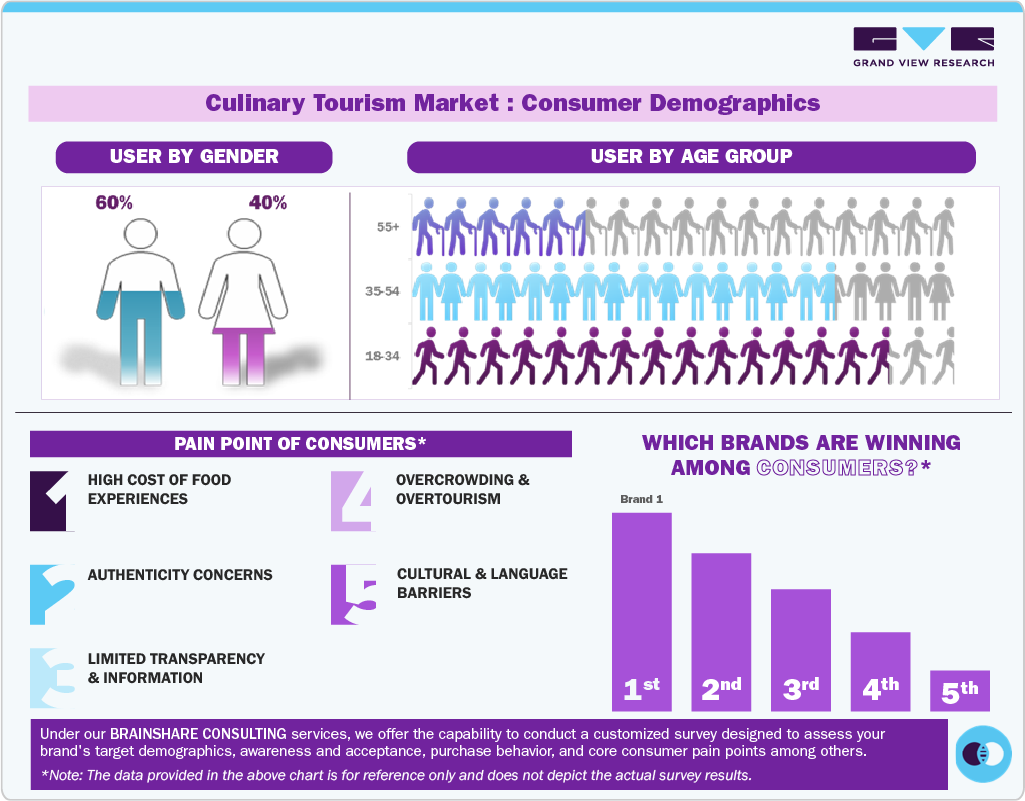
Culinary tourism industry plays a significant role in the hospitality industry, as it helps increase ADR, food and beverage (F&B) revenue, and customer loyalty. Many travellers now plan their trips around food experiences. About 50% of global travellers reserve restaurants before booking their flights, and nearly one in five plan their entire trip around specific restaurants or culinary experiences. This shows that food is no longer just part of travel; it is often the main reason for choosing a destination.
Age: According to the surveys, Millennials make up the largest group of culinary tourists, accounting for around 40% of the market, as they prefer authentic, immersive, and shareable food experiences. Gen Z also shows strong interest, especially in sustainable and ethically sourced food, and they rely heavily on digital platforms to discover new places. Gen X continues to participate steadily, often visiting wine regions, food festivals, and well-known culinary destinations. Gen Alpha, though still young, influences family travel choices through interest in interactive and educational food activities. Research by Marriott International in 2025 shows that luxury culinary tourism is a key travel driver, with 88% of affluent travellers saying that discovering new foods is essential when choosing a destination.
Global surveys consistently show that food is the top experience travellers seek, making it one of the most dependable demand drivers in the hospitality industry across age groups, income levels, and regions. In 2024, a Hilton study involving 10,000 travellers from nine countries found that culinary experiences ranked as the top priority for more than half of respondents across Millennials, Gen Z, Gen X, and Baby Boomers. Similarly, research by American Express in 2025 revealed that 81% of travellers look forward to food experiences when travelling abroad, highlighting the growing importance of gastronomy in travel planning.
Activity Insights
The food festivals segment led the market with the largest revenue share of 30.92% in 2025. Events, food festivals, and culinary tours are major drivers of the culinary tourism industry, as they attract travellers to new destinations by offering diverse and immersive food experiences. Food festivals ensure variety and provide visitors with an all-round cultural and gastronomic exposure. For instance, the Qatar International Food Festival attracted over 365,000 visitors during its 11-day run in 2025, showcasing regional and international cuisines and cultural performances, underscoring the strong draw of large-scale food events. Similarly, countries such as Ireland host well-known festivals, such as Taste of Dublin and the Burren Slow Food Festival, held in 2025, further strengthening food-led destination appeal.
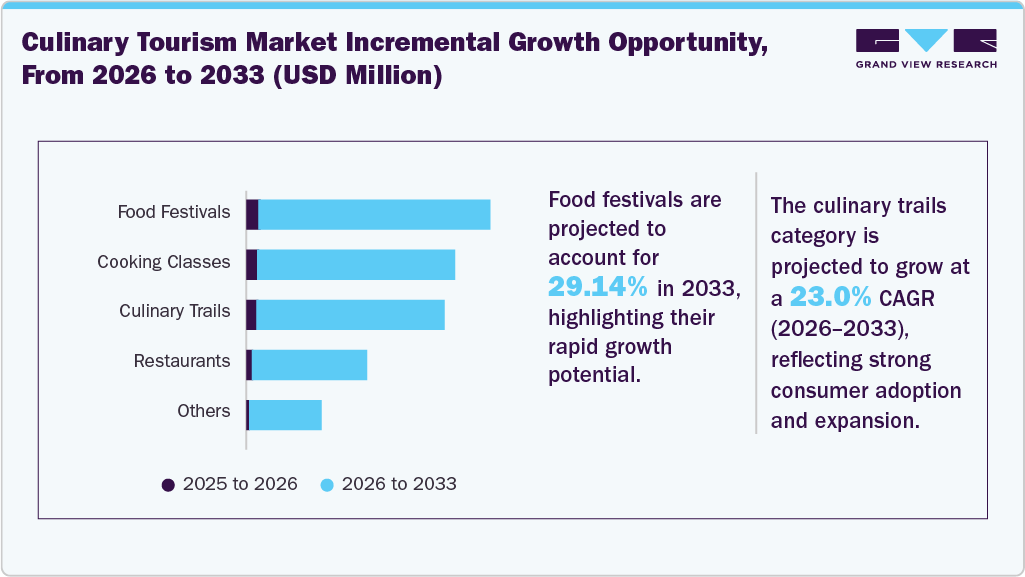
The culinary trails category segment is anticipated to witness at the fastest CAGR of 23.0% from 2026 to 2033. Culinary trails bring together the finest food and beverage offerings of a region, either to spotlight a signature dish or cuisine or to showcase the diversity of local producers. In March 2025, Long Island introduced the South Shore Trail as part of the Long Island Seafood Cuisine Trail initiative to promote local seafood businesses, aquaculture products, and the region’s coastal culinary heritage. Such government-led initiatives strengthen destination branding, support local food enterprises, and contribute to the growing popularity of the culinary trails segment within the culinary tourism industry.
Booking Mode Insights
The direct travel segment led the market with the largest revenue share of 62.96% in 2025. Sales channels that provide optimal deals on flights, hotels, and rental cars aid travelers in exploring online options. Airlines websites are positioned as one of the most convenient one-stop shops that offer bundled vacation packages. Offering tour packages directly through their websites and booking engines becomes a viable and efficient strategy for airlines, leveraging existing resources to enhance their travel offerings.
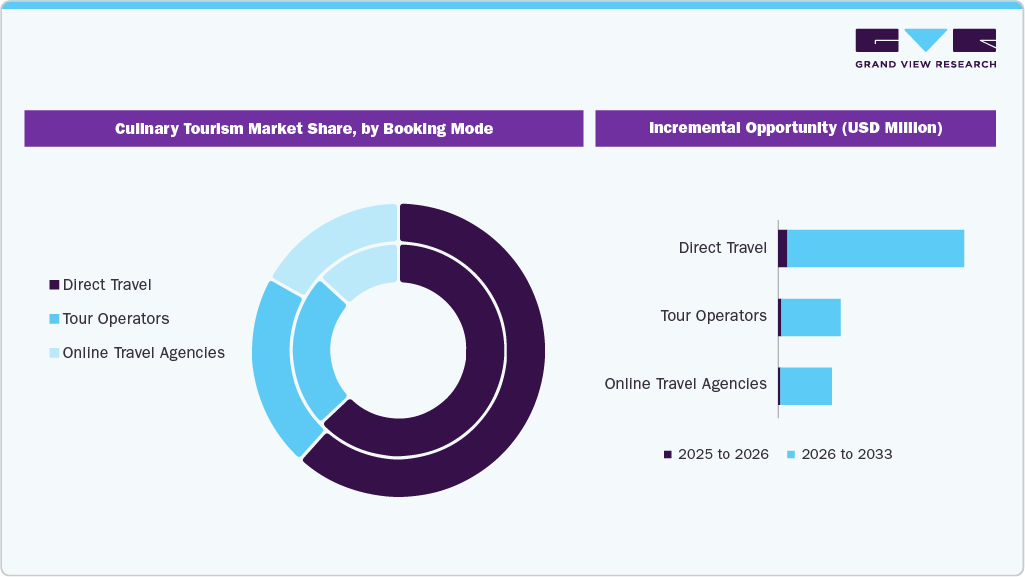
The online travel agencies (OTAs) segment is anticipated to witness at the fastest CAGR of 25.7% from 2026 to 2033. Online travel agencies (OTAs) offer convenience for tourists by providing critical information and comparison options, ensuring transparency, and the convenience of instant bookings and confirmation. The rising penetration of the internet and smartphones, coupled with shifting consumer preferences, is accelerating market growth.
Tourist Type Insights
The existential segment led the market with the largest revenue share of 42.18% in 2025. Travelers actively seek local and regional culinary experiences, opting for eateries popular among the locals. The demographic of existentialists displays a relaxed and laid-back disposition, showing a preference for simple and rustic dining venues over gourmet and 5-star restaurants. Furthermore, the tourists’ express interest in engaging activities such as cooking schools, cooking classes, fishing trips, vineyard tours, and attendance at food festivals.
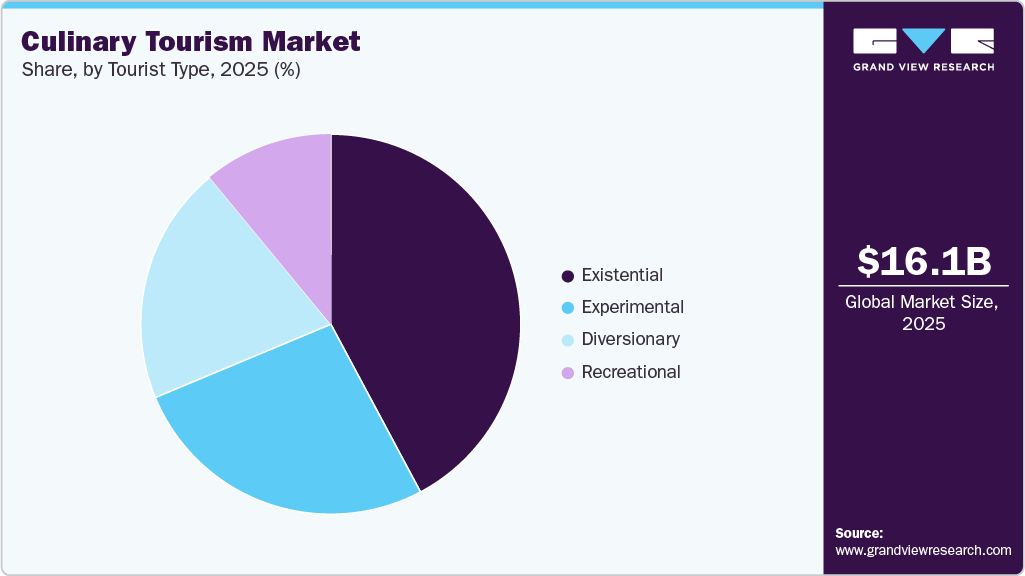
The diversionary segment is anticipated to witness at the fastest CAGR of 22.1% from 2026 to 2033. Diversionary tourists enjoy socializing and being involved in food festivities, prioritizing the experience over ambiance. They prefer streamlined access to dining information, favoring recommendations and curated top 10 lists over extensive research.
Regional Insights
The culinary tourism market in North America is anticipated to grow at a rapid CAGR of 21.3% from 2026 to 2033. Digital food discovery and evolving foodie culture are major trends shaping the North American culinary tourism industry. Social media platforms such as Instagram and TikTok, as well as food review apps and online travel platforms, strongly influence travellers’ dining decisions. Millennials and Gen Z rely on digital content to discover hidden gems, trending restaurants, food trucks, and unique culinary experiences. Viral food trends and influencer recommendations increasingly shape destination choices and dining reservations. At the same time, the growth of large-scale food festivals and culinary events continues to drive visitor traffic across North America, significantly contributing to the tourism industry. Seafood festivals, barbecue competitions, wine expos, and multicultural food celebrations attract substantial domestic and international audiences. These events not only showcase regional specialties and local chefs but also stimulate local economies by increasing tourism spending, hotel occupancy rates, and overall food and beverage revenues in the tourism industry.
U.S. Culinary Tourism Market Trends
The culinary tourism market in the U.S. held the significant revenue share of 75.39% in the North America in 2025. Culinary tourism is increasingly used as an economic growth strategy across the U.S., with state tourism boards and city destination marketing organizations integrating food experiences into their branding and promotional campaigns. By highlighting regional specialties, food festivals, culinary trails, and chef-driven dining scenes, destinations aim to attract more visitors and differentiate themselves in a competitive travel market. This strategy not only increases tourist arrivals but also boosts hotel occupancy rates and strengthens revenue generation across the hospitality and food and beverage sectors, reinforcing the economic impact of the culinary tourism industry.
The Mexico culinary tourism market is anticipated to witness at a significant CAGR of 22.0% from 2026 to 2033. The culinary tourism in Mexico is evolving through the rise of artisanal mezcal trails, corn heritage celebrations, and regionally significant dishes rooted in cultural identity. Oaxaca has become a major attraction for travellers interested in traditional mole recipes, vibrant local markets, and authentic mezcal tasting experiences. Moving beyond the global image of tacos and tequila, Mexico is increasingly promoting its terroir-driven cuisine, indigenous culinary traditions, and sustainable food practices, appealing to both luxury travellers and culturally curious explorers.
Europe Culinary Tourism Market Trends
Europe dominated the global culinary tourism market with the largest revenue share of 32.18% in 2025. Travellers across Europe increasingly prefer authentic local and regional cuisine that reflects cultural heritage and traditional cooking practices, driving growth in the market. Destinations such as Tuscany, Provence, the Basque Country, and the Balkans attract visitors through traditional dishes, local markets, and farm-to-table experiences. At the same time, Europe’s strong culinary heritage supports themed food trails, including wine routes in Bordeaux and Tuscany, cheese tours in the Netherlands and Switzerland, and olive oil trails in Spain and Greece. These structured gastronomic experiences enhance destination appeal, encourage longer stays, and boost spending within the tourism food and beverage industry.
The culinary tourism market in Italy accounted for the largest market revenue share in Europe in 2025. The Slow Food and farm-to-table movement, which originated in Italy, continues to shape the country’s culinary tourism landscape by promoting sustainable, locally sourced, and seasonal cuisine. Agritourism farms (agriturismi), organic producers, and farm-to-table restaurants are gaining popularity among travellers who seek authentic rural experiences and traditional food practices. This growing preference for ethical, heritage-based dining strengthens Italy’s position in the tourism food and beverage market, as visitors increasingly value transparency, quality ingredients, and cultural depth in their culinary journeys. Culinary festivals and food events also play a significant role in attracting both domestic and international tourists. Celebrations such as the Alba White Truffle Fair, Sagra del Pesce in Camogli, and Eurochocolate in Perugia showcase regional specialties and seasonal products, enhancing destination appeal. These events not only celebrate Italy’s gastronomic heritage but also generate significant tourism revenue by encouraging more extended stays and higher visitor spending.
The France culinary tourism market is anticipated to witness at a significant CAGR of 21.9% from 2026 to 2033. The culinary tourism in France is strongly driven by its distinct regional gastronomic identities. Different areas of France offer unique flavors and traditional specialties, such as wines from Burgundy, herbs and Mediterranean cuisine from Provence, cheeses from Normandy, and seafood from Brittany. Travellers increasingly seek authentic, locally rooted dishes that reflect the history, climate, and culture of each region, making regional diversity a significant attraction in France’s culinary tourism industry. In addition, France’s global reputation for fine dining significantly strengthens its culinary tourism appeal. Cities such as Paris and Lyon are renowned for their Michelin-starred restaurants and haute cuisine, attracting luxury travellers and food enthusiasts from around the world. The country’s strong fine-dining culture, innovative chefs, and emphasis on culinary artistry continue to position France as a leading destination for premium gastronomic experiences.
Asia Pacific Culinary Tourism Market Trends
The culinary tourism market in the Asia Pacific is anticipated to witness at the fastest CAGR of 23.4% from 2026 to 2033. Across the Asia Pacific region, there is a strong and growing demand for authentic and immersive culinary experiences, as travelers increasingly seek deeper cultural connections rather than just dining at popular restaurants. Tourists want hands-on engagement, such as cooking classes in Bangkok, street-food explorations in Penang, sushi-making workshops in Tokyo, or traditional tea ceremonies in Kyoto, that allow them to understand the history, ingredients, and cultural significance of local dishes. This shift reflects a broader preference for experiential travel, where food becomes a gateway to storytelling, heritage preservation, and meaningful interaction with local communities, making authenticity a key competitive factor in the Asia Pacific culinary tourism industry.
The Philippines culinary tourism market held a significant revenue share in 2025. The Philippines is increasingly promoting itself as a destination where food plays a central role in travel experiences, strengthening the market growth. Through a government-supported roadmap targeting 2029, the country aims to become a leading culinary tourism hub by developing regional food circuits, guided market experiences, and storytelling that highlights local ingredients and traditions. From Ilocos-style empanadas to the spicy dishes of the Bicol region, every province showcases its own unique culinary identity. Recent tourism campaigns place as much emphasis on gastronomy as on beaches and natural attractions, reflecting a deliberate strategic move toward food-led destination branding.
The culinary tourism market in Japan is anticipated to witness at a significant CAGR of 23.0% from 2026 to 2033. Although Tokyo and Osaka remain prominent culinary hotspots, Japan’s growing appeal in food tourism increasingly stems from its regional destinations. Travellers are venturing into coastal fishing villages for freshly prepared sushi, exploring refined kaiseki dining in Kyoto, and visiting traditional sake breweries in Niigata. These lesser-known locations are capitalizing on UNESCO-recognized food heritage, seasonal culinary festivals, and immersive dining experiences to attract visitors seeking deeper authenticity and cultural richness beyond major metropolitan centers.
The South Korea culinary tourism market is anticipated to witness a substantial CAGR of 21.5% from 2026 to 2033. The South Korea is experiencing rapid growth in its culinary appeal, driven by the worldwide popularity of K-culture. The country offers a diverse food landscape, ranging from traditional temple cuisine in serene mountain settings to vibrant street food districts in Seoul. By blending deep-rooted culinary heritage with modern dining innovation, South Korea presents a unique gastronomic identity. Strong government backing has further strengthened its food narrative, elevating staples such as kimchi, fermented soybean dishes, and contemporary Korean fine dining into major attractions for both Gen Z travellers and high-end luxury visitors.
Central & South America Culinary Tourism Market Trends
The culinary tourism market in Central & South America is anticipated to witness a significant CAGR of 21.9% from 2026 to 2033. Coffee, wine, and specialty beverage tourism are becoming strong growth drivers in the regional market. Countries such as Colombia and Brazil attract visitors through coffee plantation tours, bean-to-cup experiences, and farm stays that showcase local production methods. Similarly, renowned wine regions in Chile and Argentina draw tourists with vineyard tours, wine tastings, and harvest festivals. These specialty beverage experiences increasingly complement food itineraries, encouraging longer stays and higher visitor spending while deepening cultural engagement.
Middle East & Africa Culinary Tourism Market Trends
The culinary tourism market in the Middle East & Africa is anticipated at a substantial CAGR during the forecast period. Culinary tourism in the Middle East & Africa is strongly driven by the region’s rich cultural diversity and deep-rooted food heritage. From traditional Emirati and Levantine dishes in the United Arab Emirates and Saudi Arabia to tagines and couscous in Morocco and indigenous braai traditions in South Africa, the region offers highly distinctive culinary identities shaped by trade routes, migration, and local ingredients. Tourists are increasingly drawn to authentic experiences such as traditional cooking methods, heritage food markets, tribal cuisines, and festive meals that reflect centuries-old customs, making food an essential gateway to understanding local culture and history.
Key Culinary Tourism Company Insights
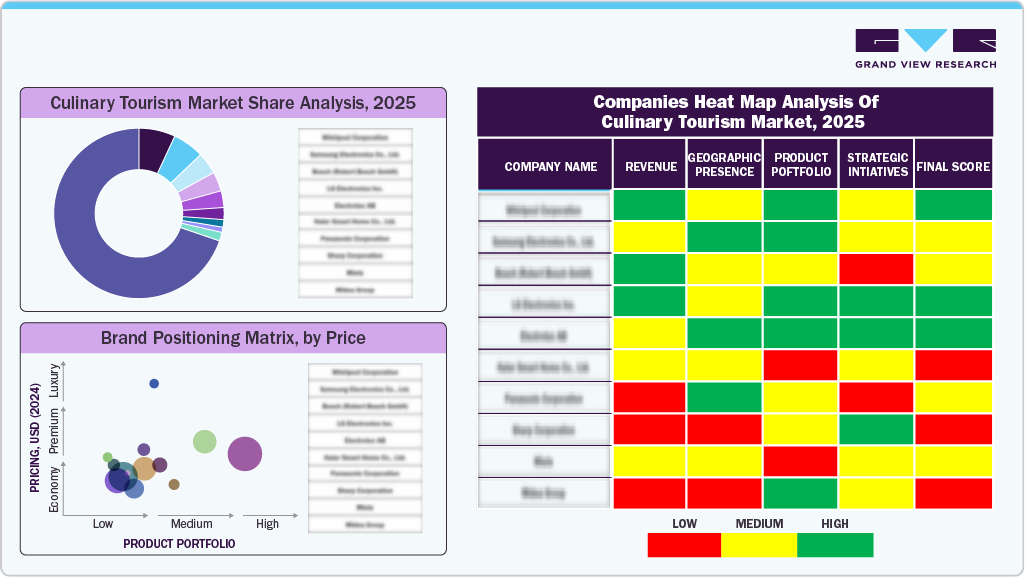
The culinary tourism industry is characterized by the significant presence of both domestic and international players, each with a substantial market share in the respective regions.
Key players operating in the market are focusing on strategic measures to drive company growth and to solidify their positions in the global market. For instance, TUI Group (TUI AG) is focusing on the continuous expansion of its customer base and increasing bookings of its tours and travel activities through its destination management and digital platform. The company also aims to expand the distribution of its products via third parties. To achieve the same, the company is ready to incur additional expenses and develop its digital platform.
Key Culinary Tourism Companies:
The following key companies have been profiled for this study on the culinary tourism market.
- Abercrombie & Kent USA, LLC
- Greaves Travel Ltd
- India Food Tour
- Classic Journeys, LLC
- The FTC4Lobe Group
- The Travel Corporation
- Gourmet on Tour
- Culinary Adventures International
- Culinary Tours
- Butterfield & Robinson Inc.
Recent Developments
-
In January 2026, Tokyo introduced a vegetarian omakase sushi experience designed to welcome vegan and plant-based travellers into one of Japan’s most iconic culinary traditions, where chefs create multi-course sushi menus using only vegetables and plant-based ingredients while still honoring the techniques and cultural rituals of traditional omakase dining; this innovation by Tabimori, Inc. aims to make Tokyo’s food scene more inclusive and appealing to the growing global community of vegan tourists, enhancing the city’s gastronomy offerings and broadening its appeal as a destination for diverse dietary preferences.
-
In December 2025, The Kenya Tourism Board has introduced initiatives and partnerships, including events like the Week of Italian Cuisine in the World and collaborations with international chefs, to showcase traditional dishes, local food experiences, and modern culinary innovations to global markets, to increase visitor spending, supporting local businesses, and create jobs while positioning Kenya as a leading culinary tourism destination in Africa.
-
In October 2025, Indonesia launched Wonderful Indonesia Gourmet (WIG), a new flagship gastronomy tourism initiative by the Indonesian Ministry of Tourism in collaboration with the Indonesia Gastronomy Network, aimed at showcasing the country’s rich culinary heritage and elevating its food scene on the global stage. The programme kicked off with the Indonesia Gourmet Guide, featuring curated restaurants in Jakarta and Bali, alongside events such as talks, artisan food markets, and restaurant weeks to promote sustainable gastronomy, local small businesses, and authentic dining experiences.
-
In October 2025, Ho Chi Minh City launched a series of diverse culinary tourism programmes as part of its broader tourism strategy to make gastronomy a core draw for both domestic and international visitors, showcasing the city’s vibrant food scene by linking dining, shopping, and sightseeing experiences and helping position the destination as a leading culinary hub in Vietnam and the region.
Culinary Tourism Market Report Scope:
Report Attribute
Details
Market size in 2025
USD 16.1 billion
Estimated market size in 2026
USD 19.1 billion
Projected market size by 2033
USD 76.4 billion
Growth rate
CAGR of 21.9% from 2026 to 2033
Base year for estimation
2025
Historical data
2021 - 2024
Forecast period
2026 - 2033
Quantitative units
Revenue in USD million/billion, and CAGR from 2026 to 2033
Report coverage
Revenue forecast, company ranking, competitive landscape, growth factors, and trends
Segments covered
Activity, booking mode, tourist type, region
Region covered
North America; Europe; Asia Pacific; Central & South America; Middle East & Africa
Country covered
U.S.; Canada; Mexico; UK; Germany; France; Spain; Italy; China; Japan; India; South Korea; Vietnam; Brazil; UAE
Key companies profiled
Abercrombie & Kent USA, LLC; Greaves Travel Ltd; India Food Tour; Classic Journeys, LLC; The FTC4Lobe Group; The Travel Corporation; Gourmet on Tour; Culinary Adventures International; Culinary Tours; Butterfield & Robinson Inc.
Customization scope
Free report customization (equivalent to up to 8 analysts’ working days) with purchase. Addition or alteration to country, regional & segment scope.
Pricing and purchase options
Avail customized purchase options to meet your exact research needs. Explore purchase options
Global Culinary Tourism Market Report Segmentation
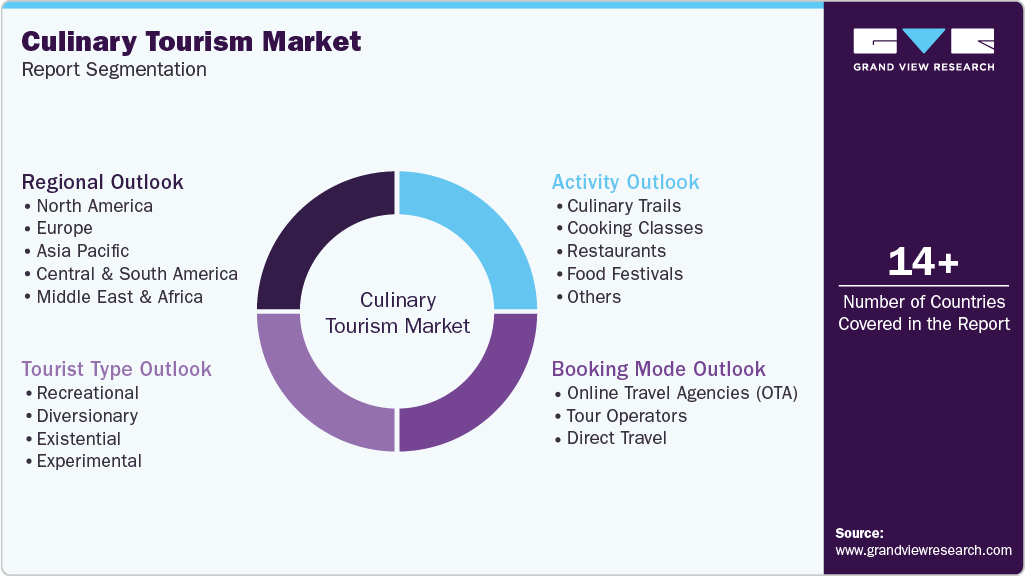
This report forecasts revenue growth at global, regional & country levels and provides an analysis of the latest trends and opportunities in each of the sub-segments from 2021 to 2033. For this study, Grand View Research has segmented the global culinary tourism market report based on the activity, booking mode, tourist type, and region.
-
Activity Outlook (Revenue, USD Million, 2021 - 2033)
-
Culinary Trails
-
Cooking Classes
-
Restaurants
-
Food Festivals
-
Others
-
-
Booking Mode Outlook (Revenue, USD Million, 2021 - 2033)
-
Online Travel Agencies (OTA)
-
Tour Operators
-
Direct Travel
-
-
Tourist Type Outlook (Revenue, USD Million, 2021 - 2033)
-
Recreational
-
Diversionary
-
Existential
-
Experimental
-
-
Regional Outlook (Revenue, USD Million, 2021 - 2033)
-
North America
-
U.S.
-
Canada
-
Mexico
-
-
Europe
-
UK
-
Germany
-
France
-
Spain
-
Italy
-
-
Asia-Pacific
-
China
-
India
-
Japan
-
South Korea
-
Vietnam
-
-
Middle East & Africa
-
UAE
-
-
Central & South America
-
Brazil
-
-
Frequently Asked Questions About This Report
The global culinary tourism market was estimated at USD 16.1 billion in 2025 and is expected to reach USD 19.1 billion in 2026.
The global culinary tourism market is expected to grow at a compound annual growth rate of 21.9% from 2026 to 2033 to reach USD 76.4 billion by 2033.
Europe dominated the culinary tourism market with a share of 32.2% in 2025.
Some of the key players operating in the culinary tourism market include Abercrombie & Kent USA, LLC, Greaves Travel Ltd, India Food Tour, Classic Journeys, LLC, The FTC4Lobe Group, The Travel Corporation, Gourmet on Tour, Culinary Adventures International, Culinary Tours, Butterfield & Robinson Inc.
Key factors that are driving the culinary tourism market growth include increasing consumer spending on travel & tourism, coupled with tourists’ desire to try food products made of locally sourced ingredients, have resulted in increased food travelers.
The food festivals category segment led with a 30.9% revenue share in 2025, while culinary trails category is the fastest-growing segment.
Direct travel segment held the largest revenue share 63.0% in 2025, while online travel agencies is the fastest-growing area.
Existential tourists held the largest share (over 42.2%) in 2025 and diversionary is the fastest-growing market.
About the Author(s)
Homecare & Decor Research Team
Consumer Goods · Homecare & DecorThis report was authored by the homecare & decor research team at Grand View Research - comprising two research analysts, one senior research analyst, and one industry expert - with specialized expertise in the homecare & decor segment of the consumer goods industry. All findings are based on proprietary consumer goods databases, executive interviews, and regulatory analysis, subject to internal peer review prior to publication.
Last Updated:
Speak to Analyst

Customize this report to your needs — add regions, segments, or data points, with 20% free customization.
Or view our licence options:


ISO 9001:2015 & 27001:2022 Certified
We are GDPR and CCPA compliant! Your transaction & personal information is safe and secure. For more details, please read our privacy policy.