
- Home
- »
- Digital Media
- »
-
Conversational AI Market Size And Share Report, 2026-2033GVR Report cover
![Conversational AI Market Size, Share & Trends Report]()
Conversational AI Market (2026 - 2033) Size, Share & Trends Analysis Report By Component (Solutions, Managed Services, Professional Services), By Type (Chatbots, Intelligent virtual assistant (IVA)), By Deployment, By Technology, By End User, By Region, And Segment Forecasts
Market Size, 2025
$14.3BMarket Estimate, 2026
$17.7BMarket Forecast, 2033
$78.9BCAGR, 2026–2033
23.8%Conversational AI Market Summary
The global conversational AI market size was valued at USD 14.3 billion in 2025 and is projected to grow from USD 17.7 billion in 2026 to USD 78.9 billion by 2033, growing at a CAGR of 23.8% from 2026 to 2033. North America is expected to hold a significant share of the global chatbot market, with a revenue share of over 31.1%by 2025. The key factors influencing the growth of the conversational AI industry are rising demand and reduced chatbot development costs, AI-powered customer support services, and omnichannel deployment.
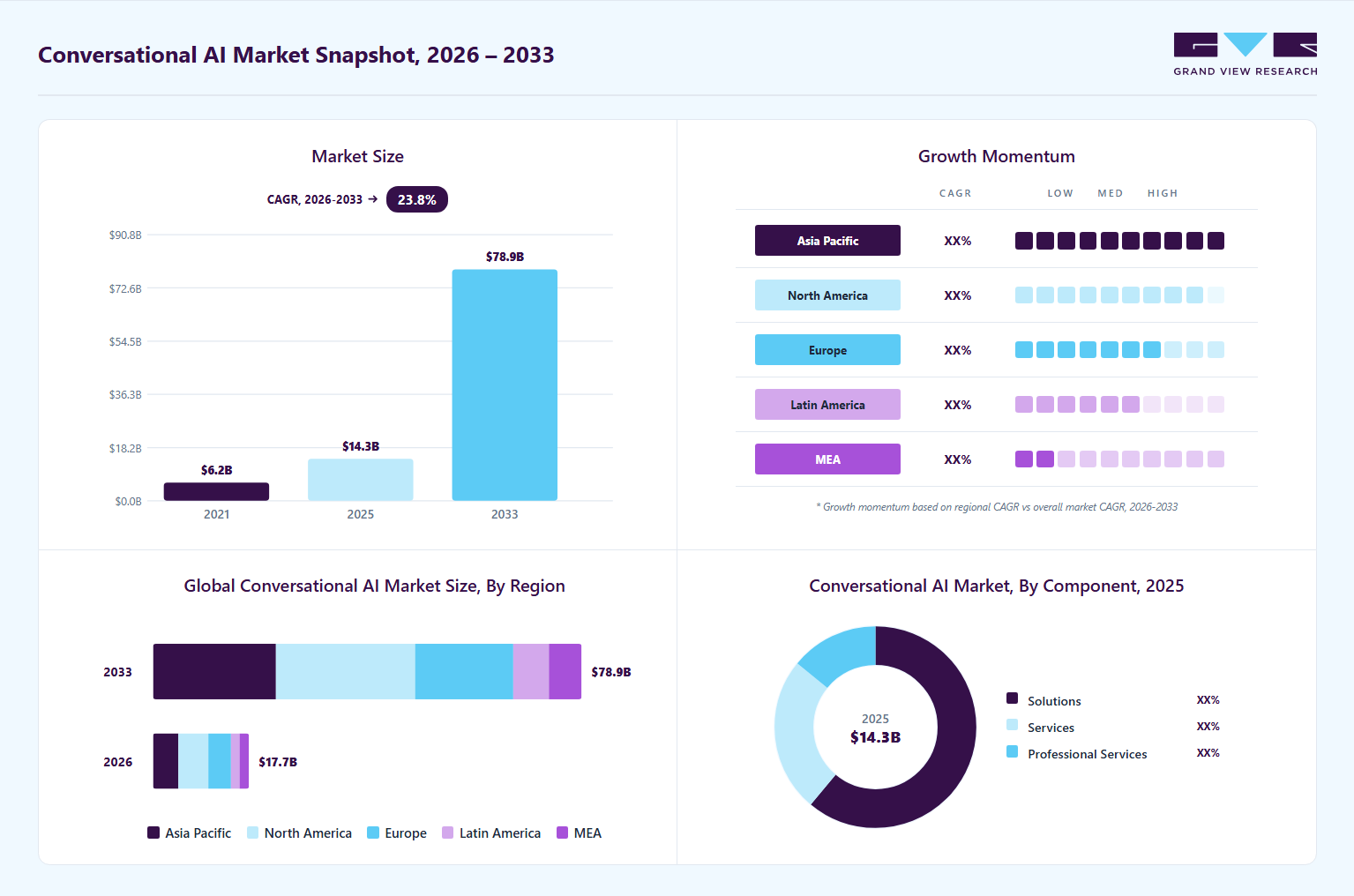
Key Market Trends & Insights
- By on component: Solutions segment led the market with the largest revenue share of 61.0% in 2025.
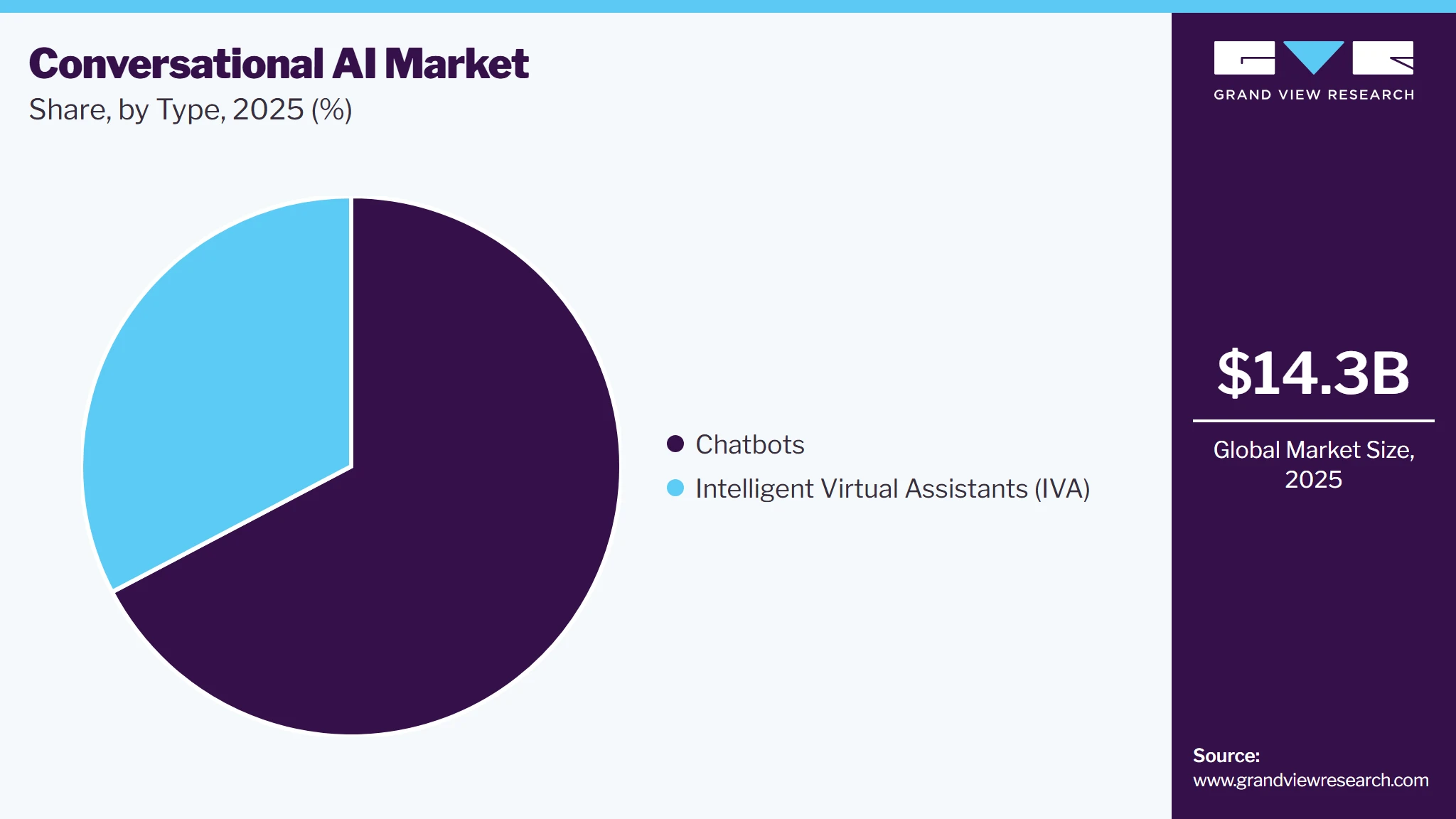
- By on type: Chatbots segment led the market with the largest revenue share of 67.3% in 2025.
- By on deployment: On-premise segment led the market with the largest revenue share of 62.4% in 2025.
- By on technology, Natural Language Processing (NLP) segment led the market with the largest revenue share of 45.3% in 2025.
- By on end use: Retail and e-commerce segment led the market with the largest revenue share of 21.1% in 2025.
Regional Highlights
- Largest regional market: North America (31.1%revenue share, 2025)
- Fastest-growing regional market: Asia Pacific (highest CAGR, 2026-2033)
- By country: The U.S. held the largest market share in 2025
Market Size & Forecast
- Market size in 2025: USD 14.3 Billion
- Estimated market size in 2026: 17.7 Billion
- Projected market size by 2033: USD 78.9 Billion
- CAGR (2026-2033): 38.2%
Three ways to get this report
Buy it, customize it, or ask a question.Get the Full Report
What the study covers
- FormatsPDF · Excel · Dashboard
- Timeline2026–2033 annual, 2025 base
- Coverage20+ countries, 5 regions
- Companies10+ key players profiled
Customize the Report
20% free customization
- IncludeCountries, segments, points
- TailorTo your product definition
- ExtendDeeper competitor detail
- OrA fully bespoke study
- Turnaround5–10 working days
Ask an Analyst
A direct answer, usually in 1 working day
- AccessReport author, directly
- Reply timeWithin 1 working day
- No sales callDirect answer only
- FormatEmail reply
- CostFree, no cost
AI-powered messaging and speech-based apps are rapidly uprooting contemporary mobile and web applications and are consequently expected to emerge as a new mode of communication. Numerous industry leaders, including Google, Amazon, and Walmart, have successfully implemented conversational AI within their customer service operations. This strategic integration offers substantial advantages, such as 24/7 availability of intelligent chatbots, enabling rapid issue resolution and enhanced customer convenience. Furthermore, conversational AI facilitates personalized interactions by leveraging past customer preferences to tailor responses effectively. By concurrently serving multiple customers, conversational AI significantly minimizes wait times, thereby optimizing the overall customer experience.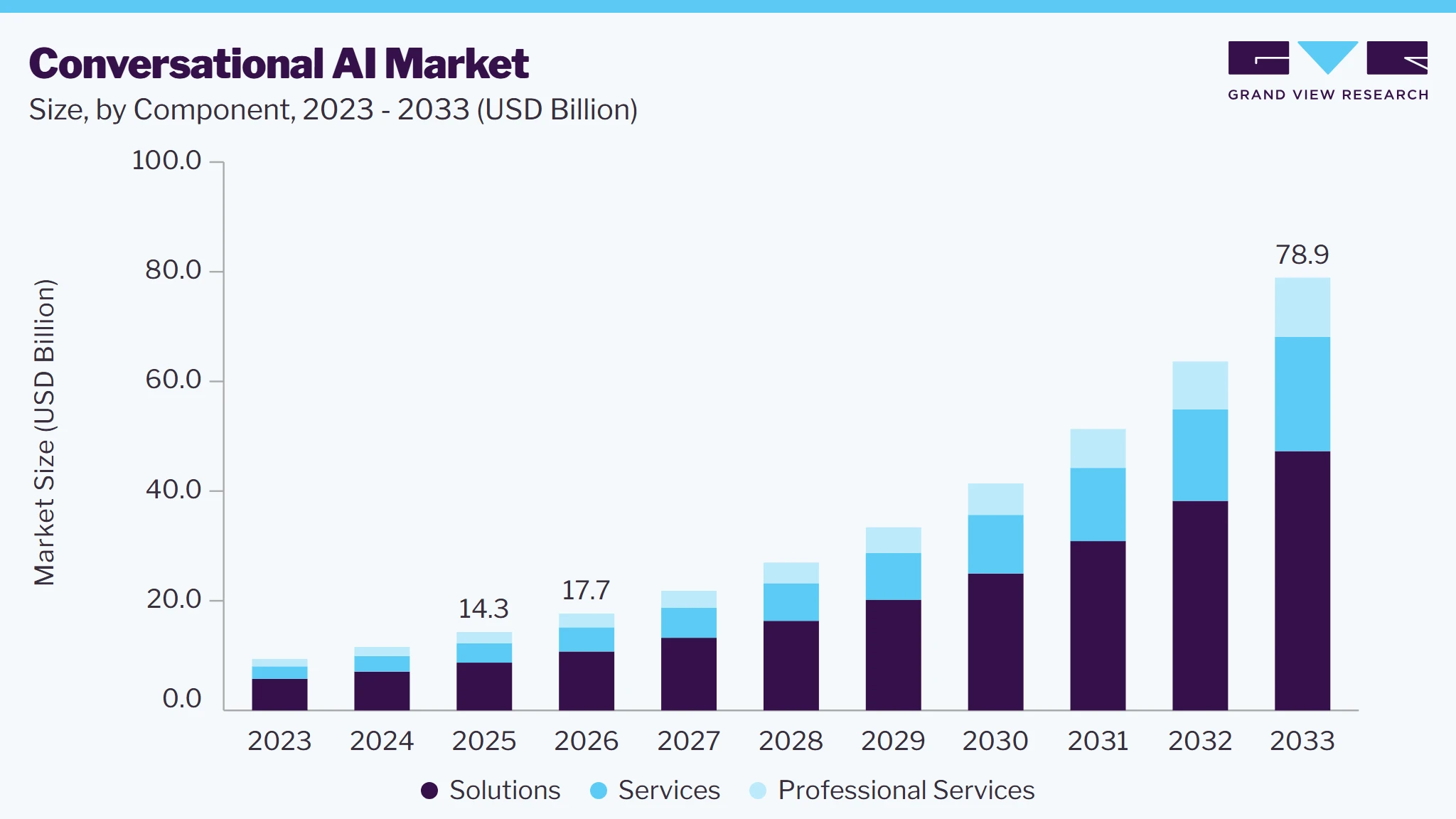
In January 2024, Walmart leveraged Generative AI to enhance its customer experience, building upon a long history of AI/ML in retail. By understanding customer needs through NLP models and leveraging its vast data, Walmart can personalize product recommendations and streamline the shopping process. Walmart's GenAI Search allows customers to express their needs in natural language, generating comprehensive product lists and simplifying the decision-making process. This technology aims to save customers time and effort, enabling them to focus on enjoying life rather than spending hours shopping.
The creation of hybrid conversational AI models that mix generative and discriminative methods is rising. These models might be more effective and efficient when doing tasks like picture classification, language translation, and natural language processing. Many development initiatives are underway for the effective and efficient use of these technologies for enterprise use cases to solve actual business problems. Numerous generative Al businesses have emerged to use Al's capacity to provide human-like responses in a conversational context. It could transform how users communicate with technology by enabling more natural and human-like discussions that are catered to unique requirements and tastes.
Conversational AI excels as a foundation for co-pilot systems and digital assistants, enabling seamless interaction through natural language. These AI-powered tools enhance productivity across various domains, from customer service (e.g., Ada AI Agent) to professional software (e.g., Microsoft 365 Copilot) and software development (e.g., GitHub Copilot). Empirical evidence demonstrates significant productivity gains, with 70% of Microsoft 365 Copilot users reporting increased productivity and 88% of GitHub Copilot users experiencing faster work completion. For instance, Intellias leverages this technology through IntellAssistant, a platform that accelerates the development and deployment of custom digital assistants for clients, reducing development time from six months to just one by providing a pre-built infrastructure and customizable functionalities.
Public sector organizations are leaning increasingly towards using conversational AI platforms as governments worldwide attempt to allow broad-scale digital transformation and reimagine the citizen experience. The development of mobile devices and the rise of digital native populations are fostering a trend where individuals expect to be able to interact with their governments instantly online. More public sector organizations will adopt conversational Al to increase productivity and efficiency, improving the overall process of digitally providing citizen services to satisfy this demand.
The cognitive competencies of a conversational AI chatbot can be utilized in online assistance to consumers in their purchase journey. Nowadays, conversational AI products offer support for a restricted number of languages, and most virtual assistants and chatbots are better compatible with English. However, conversational AI offerings have initiated serving support for regional languages, and the implementation of these products is gaining significant prominence across the globe. Prominent market participants are focused on enhancing their product and service offerings. For instance, recently, support for seven new languages for actions on Google Assistant has been offered by Google. With this upgradation, Google currently delivers support for 16 languages.
Market Dynamics
The global conversational AI market is expanding due to increasing demand for automated customer engagement and personalized user experiences across industries. Organizations are integrating conversational AI into customer service, sales, and operational workflows to improve efficiency and reduce costs. Advancements in natural language processing (NLP), generative AI, and large language models are improving the accuracy and capabilities of conversational platforms. Growing adoption of cloud-based deployment models is making conversational AI solutions more accessible to businesses of all sizes.
Organizations across industries are increasingly adopting AI-powered virtual assistants and chatbots to automate customer interactions and improve service efficiency. These solutions enable businesses to handle large volumes of inquiries without significantly increasing operational costs. Financial institutions, healthcare providers, retailers, and telecommunications companies are integrating conversational AI into their customer engagement strategies. The ability to provide instant responses and continuous support is improving customer satisfaction and retention. Advancements in language understanding capabilities are making virtual assistants more effective in handling complex interactions. This growing adoption is contributing to the expansion of the conversational AI market.
Technology providers are continuously enhancing chatbot and virtual assistant capabilities through investments in generative AI and advanced language models. Businesses are deploying these solutions across websites, mobile applications, messaging platforms, and contact centers to create consistent customer experiences. Conversational AI is also being utilized for internal functions such as employee support, knowledge management, and workflow automation. The increasing availability of cloud-based platforms is reducing deployment barriers for organizations of different sizes. Strategic partnerships and product development initiatives by market participants are expanding the range of conversational AI applications. These developments are supporting broader adoption across global markets.
Organizations adopting conversational AI often process large volumes of customer data, including personal, financial, and behavioral information. Protecting this data from unauthorized access, breaches, and misuse remains a significant concern for businesses across industries. Regulatory frameworks governing data collection, storage, and usage are becoming increasingly stringent, requiring organizations to implement robust security measures. Compliance with these regulations can increase operational complexity and implementation costs. Concerns regarding data sovereignty and cross-border data transfers further add to deployment challenges. These factors can slow the adoption of conversational AI solutions in certain markets.
Customers are becoming more aware of how their information is collected and utilized by AI-powered platforms. Any incident involving data leaks or inadequate security controls can negatively affect user trust and brand reputation. Organizations must invest in encryption, access management, monitoring systems, and governance frameworks to safeguard sensitive information. Ensuring transparency in data usage practices is also becoming an important requirement for maintaining customer confidence. The need for continuous security updates and risk management increases the resources required to operate conversational AI systems.
Rowing deployment of AI-driven conversational interfaces is driven by enterprises seeking scalable, always-available interaction systems across customer service, support, and internal operations. This shift is enabled by improvements in natural language processing, model accuracy, and seamless integration with enterprise software ecosystems. Organizations deploy these systems to handle high query volumes efficiently, reduce response times, and improve service consistency without proportional increases in human effort. It also helps standardize responses across channels such as web, mobile, and enterprise applications, improving overall operational control.
This expansion is also supported by increasing use of conversational AI in productivity functions such as document creation, scheduling, workflow automation, and knowledge retrieval. Users and employees rely on these tools to streamline repetitive tasks, reduce manual effort, and improve execution speed across daily workflows. Cloud-based delivery models and API-driven architectures further enable easy embedding of conversational interfaces across platforms and industry applications. Over time, this is contributing to deeper integration of AI assistants within core business processes and digital ecosystems.
Market Concentration & Characteristics
The market sits in a moderately concentrated structure, where a limited set of large technology ecosystems hold meaningful influence, while a long tail of specialized vendors and startups continues to compete across specific use cases and industries. This prevents full dominance by a small number of players, keeping the competitive landscape balanced. Competitive intensity remains high due to rapid feature parity across providers and frequent model upgrades, which continuously alter positioning across enterprise and consumer deployments.
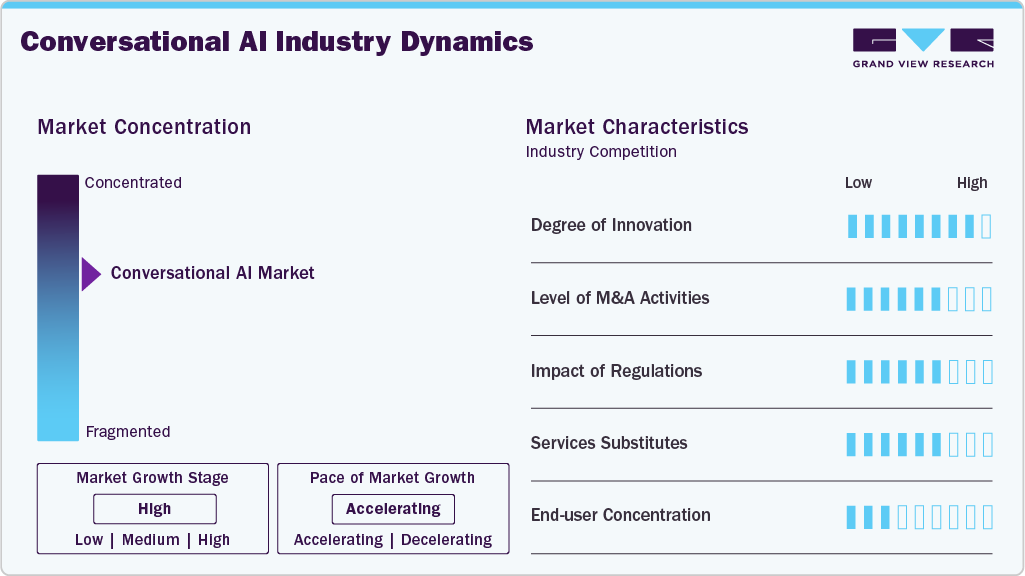
At the same time, concentration is gradually increasing in enterprise deployments due to platform integration, cloud ecosystem control, and bundling of AI capabilities into broader software suites. However, innovation from newer entrants and open-source models continues to sustain competitive diversity, preventing the market from shifting into a highly concentrated structure. Over the medium term, the market is expected to consolidate selectively around end-to-end AI platforms, while niche and domain-specific solutions continue to preserve fragmentation in specialized applications.
Analyst Perspective
The conversational AI market is gaining momentum as organizations increasingly adopt AI-driven tools to improve customer engagement and streamline business processes. Rapid progress in generative AI, natural language processing, and speech technologies is enabling conversational systems to handle more complex interactions with greater accuracy. Competition is shifting from standalone chatbot offerings toward comprehensive platforms that support multiple business functions and communication channels. Organizations are seeking solutions that can integrate with existing systems while maintaining security, compliance, and scalability. Companies that offer reliable, user-friendly, and industry-focused conversational AI solutions are likely to strengthen their position as adoption continues to expand across global markets.
Component Insights
Based on component, the solutions segment led the market with the largest revenue share of 61.0% in 2025. The leading share is attributed to companies' large-scale implementation of in-house conversational AI technologies. Moreover, AI-enhanced support systems can offer users accessibility to services and round-the-clock assistance, enabling organizations to deliver dependable customer service. For instance, In January 2022, Visionstate Corp. introduced innovative Vicci 2.0, a state-of-the-art conversational chatbot artificial intelligence (AI) powered customer service kiosk. Visionstate is implementing this technology on its Vicci 2.0 platform to serve on-site customer service influenced by artificial intelligence. The Vicci 2.0 platform can back a broad range of consumers through its modification capability to support various languages.
The service segment registered a CAGR growth of 24.7% over the forecast period. Major players in the market, like Accenture, offer wholesome AI training and system integration services to enable businesses to implement AI advancements in their communication services. The company's Conversational AI Platform is created to handle organizations' usual problems when executing conversational AI solutions. These challenges include delivering at pace, enhancing from proof of concept to enterprise-level, and how to operate a living system. By centralizing the maintenance, design, creation, and publishing of conversational experiences in a common platform, organizations can enable scaling across the enterprise by breaking conventional silos.
Type Insights
Based on type, the chatbots segment led the market with the largest revenue share of 67.3% in 2025. Prominent development in machine learning and NLP in chatbots is augmenting market growth. Chatbots are primarily used for collecting data. In addition, customers can engage with chatbots to obtain clarity about any product or service or if they need to book any appointments. With the advancement of Natural Language Processing (NLP) technology, chatbots can now comprehend and produce language like that of humans. Deep learning models and machine learning algorithms have been essential in improving chatbot accuracy and contextual awareness.
The Intelligent Virtual Assistants (IVA) segment registered a CAGR growth in the forecast period. There are numerous conversational AI service providers in the market, developing virtual assistants and chatbots with restricted user-personalized characteristics. By continuously learning from interactions, IVAs become more efficient over time, personalizing user experiences and anticipating needs to provide proactive help. Examples of IVAs include Apple’s Siri, Amazon’s Alexa, and Google Assistant, which are capable of executing voice commands, integrating with smart devices, and enhancing the way users interact with technology. This technology is transforming industries by offering scalable, 24/7 service and improving overall user satisfaction.
Deployment Insights
Based on deployment, the on-premise segment led the market with the largest revenue share of 62.4% in 2025. This is attributable to the flexibility delivered to the customer, due to which the transaction is done only once. The costs are relatively cheaper than expenditures incurred on the cloud by the consumer. Strict rules or concerns about data privacy and security may exist in some sectors, such as healthcare, banking, or government. Organizations have complete control over their data and lower the risk of data breaches or unauthorized access by keeping conversational AI On-Premises which is fueling the market growth. Moreover, when real-time communication and minimal latency are essential, On-Premises conversational AI is useful. Organizations reduce network latency and guarantee quick reaction times by deploying the conversational AI system locally, which is crucial for time-sensitive applications.
The cloud segment registered the highest CAGR growth in the forecast period owing to the rising prominence of cloud-based technologies and services in businesses across the globe.Platforms for cloud conversational AI are frequently updated with new functions, enhancements, and developments in machine learning and NLP. By doing this, organizations benefit from the newest innovations and advancements without having to invest significantly in infrastructure or software changes.Global access to cloud conversational AI technologies enables companies to service clients in various time zones and geographical locations. Their universal accessibility increases the impact and reach of conversational AI applications.
Technology Insights
Based on technology, the Natural Language Processing (NLP) segment led the market with the largest revenue share of 45.3% in 2025. NLP ensures the processing of large quantities of natural language data. It also enables streamlining of the documentation processes to enhance their efficiency, including documentation accuracy. For instance, SAP (Systems, Applications, and Products in Data Processing) SE (Societas Europaea), a global operating software company based in Europe, developed current applications with improved, automated capabilities like automatic translation and the Incident Solution Matching service based on machine learning and artificial intelligence (AI) advancements. Moreover, Speech recognition systems that translate spoken words into written text are included in NLP. Thus, voice-based interactions with users can be facilitated by conversational AI systems that can process and comprehend spoken inputs.
The Automatic Speech Recognition (ASR) segment registered the highest CAGR growth over the forecast period. ASR facilitates the creation of speech user interfaces that let people converse verbally with conversational AI systems. ASR systems enable natural and intuitive interactions by transcribing spoken inputs, giving users hands-free and eye-free experiences. Moreover, due to differences in pronunciation, background noise, and other circumstances, ASR systems produce transcriptions that could be inaccurate. Methods including mistake correction algorithms and confidence scores are used to increase the accuracy of transcriptions and determine the degree of confidence in the recognized speech.
End User Insights
Based on end use, the retail and e-commerce segment led the market with the largest revenue share of 21.1% in 2025. Through persuasive, more expressive, and intelligent conversational AI tools and techniques, retail and e-commerce industries serve customers better. Conversational AI enables companies to provide chatbots and virtual assistants for round-the-clock customer service. These AI-powered customer service representatives can respond to frequent consumer questions, give product details, help with order tracking, and provide after-sale assistance. Conversational AI minimizes response times and increases customer satisfaction by providing immediate, personalized support.
The automotive segment registered the highest CAGR growth over the forecast period.AI voice assistants can serve vehicle controls, alerts, real-time recommendations, and much more, catering to passengers and drivers for a more convenient daily commute.By offering voice-guided directions, real-time traffic updates, and contextual information about nearby sites of interest, AI improves navigation systems. Voice commands can be used by drivers to input locations, seek alternate routes, or inquire about gas stations, dining options, or parking facilities in the area.
The conversational AI healthcare chatbot is one of the most influential and mature AI-powered healthcare technologies established so far, which stands to radically change the way patients, payers, and medical care providers interact with one another. These bots also play a crucial part in providing vital healthcare information to specifically targeted people at the right time. Healthcare or Medical chatbots can be implemented to achieve various objectives, from revealing valuable insights and improving healthcare systems to assisting medical personnel and improving patient experience.
Regional Insights
North America dominated the conversational AI market with the largest revenue share of 31.1% in 2025. The region's widespread adoption of emerging technologies and the rapidly increasing need for customer support services powered by artificial intelligence are both driving market progress. Furthermore, most organizations in North America are investing in technological advancements to satisfy and help their customers' requirements. The rapidly growing health consciousness among the population also fuels the demand for conversational AI. The healthcare industry in North America is advancing to implement augmented and virtual reality, robotics, and AI. This would help deliver intelligent services and technologies for evidence-based health and focus on preventive and collaborative care.

U.S. Conversational AI Market Trends
The conversational AI market in the U.S. held the largest share in the North America region in 2025. This surge is driven by increasing demand for personalized customer interactions across various sectors, including retail, healthcare, and finance, as businesses leverage AI to enhance user engagement and streamline operations24. The integration of advanced technologies like natural language processing and generative AI is further propelling this growth, enabling more human-like interactions and efficient customer support solutions
Europe Conversational AI Market Trends
Europe’s conversational AI market is also growing as in Europe. This expansion is fueled by the increasing demand for AI-driven customer support services and the rising adoption of omnichannel communication strategies. Notably, sectors such as retail, banking, and automotive are leveraging conversational AI to enhance customer engagement and streamline operations. The integration of advanced technologies like natural language processing (NLP) and automated speech recognition is further driving innovation within the market. Additionally, the growing emphasis on personalized customer experiences through social media platforms presents significant opportunities for market players to expand their offerings and reach more consumers effectively.
Asia Pacific Conversational AI Market Trends
The Asia Pacific conversational AI market is anticipated to grow at a significant CAGR from 2026 to 2033. The Asia Pacific region is projected to witness the highest growth during the forecast period, attributed to increasing awareness among organizations about innovative customer support services and technologies. In addition, increasing development in the e-commerce sector, rising acceptance of conversational AI in the retail industry, technological advancement in consulting and healthcare, and progressing internet penetration in this region are fueling the use and demand of the market.
Key Conversational AI Company Insights
The market is characterized by strong competition, with a few major worldwide competitors owning a significant market share. The major focus is developing new products and collaborating among the key players.
-
Microsoft is a leading technological company that offers a diverse range of products and services, with a strong emphasis on enhancing productivity through innovative solutions. Among its key offerings is Microsoft 365 Copilot, which integrates advanced AI capabilities into the Microsoft 365 suite, helping businesses streamline workflows and focus on essential tasks. Additionally, Microsoft provides Microsoft Teams, a comprehensive platform for online meetings, collaboration, and communication, facilitating seamless teamwork in hybrid work environments. The company's commitment to conversational AI is evident in its Copilot feature, designed to act as a personal assistant that supports users with intelligent responses and suggestions across various applications. This focus on AI-driven tools positions Microsoft as a pivotal player in transforming how organizations operate and interact in the digital age. With solutions tailored for business needs, Microsoft continues to empower organizations to harness the full potential of technology for enhanced efficiency and collaboration.
-
IBM is a major player in the conversational AI market, offering a suite of advanced AI tools and solutions designed to enhance business operations. Their services include the IBM Watson platform, which enables businesses to leverage AI for customer engagement, data-driven decision-making, and automation of IT infrastructure. Additionally, IBM provides tailored AI models optimized for scalability, allowing organizations to transition from pilot projects to full-scale implementations. With a focus on secure hybrid cloud solutions and robust consulting services, IBM empowers companies to innovate responsibly and efficiently in the age of AI.
Key Conversational AI Companies:
The following key companies have been profiled for this study on the conversational AI market.
-
Google
-
Microsoft
-
Amazon Web Services, Inc.
-
IBM
-
Oracle
-
Nuance Communications, Inc.
-
FIS
-
SAP SE
-
Artificial Solutions
-
Kore.ai, Inc.
-
Avaamo
-
Conversica, Inc.
-
Jio Haptik Technologies Limited
-
Rasa Technologies Inc.
-
Solvvy
-
Pypestream Inc.
-
Kasisto
-
Cognigy
Competitive Benchmarking
Category Operating Strategies Competitive Edge Weakness Established Players (Google, Microsoft, Amazon Web Services (AWS), IBM, Oracle, Nuance Communications) Focus on expanding enterprise-scale conversational AI platforms through investments in AI innovation and cloud infrastructure.Strengthen market presence by integrating AI capabilities across product portfolios and expanding through partnerships and acquisitions. Strong global presence with extensive AI, cloud, and enterprise software ecosystems.Large customer base and significant financial resources for continuous innovation. Higher implementation costs and complex solution architectures.Slower adaptation to niche market requirements due to large-scale operations. Emerging Players (Artificial Solutions, Kore.ai, Avaamo, Conversica, Jio Haptik Technologies Limited) Focus on industry-specific and customized conversational AI solutions to address specialized customer requirements.Expand market reach through rapid innovation, flexible deployments, and strategic technology partnerships. High flexibility in customization and faster deployment of solutions.Strong focus on niche applications and industry-specific conversational AI capabilities. Limited global reach and smaller customer base.Lower financial resources for large-scale R&D and market expansion. Recent Developments
-
In October 2024, Microsoft announced significant advancements in its Cloud for Healthcare platform, aimed at transforming patient care and enhancing healthcare workflows. The new innovations include multimodal medical imaging AI models in Azure AI Studio, which facilitate the integration of diverse healthcare data types. Additionally, Microsoft Fabric now offers comprehensive data solutions that streamline access to patient insights, while the healthcare agent service in Copilot Studio aims to automate administrative tasks and improve clinical workflows. Collaborations with leading healthcare organizations are underway to develop AI solutions that alleviate nursing burdens, allowing professionals to focus more on patient care. Microsoft emphasizes its commitment to responsible AI practices to ensure these technologies positively impact the healthcare ecosystem.
-
In March 2023, Nuance Communications launched Dragon Ambient eXperience (DAX) Express, a new AI-powered clinical documentation solution. Built upon the successful DAX platform and leveraging OpenAI's GPT-4, DAX Express automates the creation of clinical notes by combining conversational and ambient AI. This solution aims to reduce administrative burdens for clinicians, allowing them to focus on patient care. DAX Express integrates seamlessly with existing Dragon Medical solutions and the electronic medical record, enhancing efficiency and improving the overall healthcare experience.
Conversational AI Market Report Scope
Report Attribute
Details
Market size in 2025
USD 14.3 billion
Estimated market size in 2026
USD 17.7 billion
Projected market size by 2033
USD 78.9 billion
Growth rate
CAGR of 23.8% from 2026 to 2033
Base year for estimation
2025
Historical data
2021 – 2024
Forecast period
2026 – 2033
Quantitative units
Revenue in USD million/billion and CAGR from 2026 to 2033
Report coverage
Revenue forecast, company ranking, competitive landscape, growth factors, and trends
Segments covered
Component, type, deployment, technology, end use, region
Regional scope
North America; Europe; Asia Pacific; Latin America; MEA
Country scope
U.S.; Canada; Mexico; Germany; UK; France; China; Japan; India; Australia; South Korea; Brazil; KSA; UAE; South Africa
Key companies profiled
Google; Microsoft; Amazon Web Services, Inc.; IBM; Oracle; Nuance Communications, Inc.; FIS; SAP SE; Artificial Solutions; Kore.ai, Inc.; Avaamo; Conversica, Inc.; Jio Haptik Technologies Limited; Rasa Technologies Inc.; Solvvy; Pypestream Inc.; Kasisto; Cognigy.
Customization scope
Free report customization (equivalent up to 8 analysts' working days) with purchase. Addition or alteration to country, regional & segment scope.
Pricing and purchase options
Avail customized purchase options to meet your exact research needs. Explore purchase options
Global Conversational AI Market Report Segmentation
This report forecasts revenue growth at global, regional, and country levels and provides an analysis of the latest industry trends and opportunities in each of the sub-segments from 2021 to 2033. For this study, Grand View Research has segmented the conversational AI market report based on component, type, deployment, technology, end user, and region:
-
Component Outlook (Revenue, USD Million; 2021 - 2033)
-
Solutions
-
Managed Services
-
Professional Services
-
Training and Consulting
-
System Integration and Implementation
-
Support and Maintenance
-
-
-
Type Outlook (Revenue, USD Million; 2021 - 2033)
-
Chatbots
-
Intelligent virtual assistant (IVA)
-
-
Deployment Outlook (Revenue, USD Million; 2021 - 2033)
-
On-Premises
-
Cloud
-
-
Technology Outlook (Revenue, USD Million; 2021 - 2033)
-
Natural Language Processing (NLP)
-
ML and Deep Learning
-
Automatic Speech Recognition (ASR)
-
-
End User Outlook (Revenue, USD Million; 2021 - 2033)
-
BFSI
-
Healthcare
-
IT and Telecom
-
Retail and eCommerce
-
Education
-
Media and Entertainment
-
Automotive
-
Others (Government, Hospitality, Manufacturing, etc.)
-
-
Regional Outlook (Revenue, USD Million; 2021 - 2033)
-
North America
-
U.S.
-
Canada
-
Mexico
-
-
Europe
-
Germany
-
UK
-
France
-
-
Asia Pacific
-
China
-
Japan
-
India
-
Australia
-
South Korea
-
-
Latin America
-
Brazil
-
-
Middle East and Africa (MEA)
-
KSA
-
UAE
-
South Africa
-
-
Research Methodology
Segment Definition
Segment - Component
Revenue capture definition
Solutions
Revenue is captured from conversational AI software platforms, chatbots, virtual assistants, and voice assistants offered through subscription, licensing, or usage-based pricing models. This includes cloud-based and on-premises solutions deployed across customer service, sales, and business operations.
Managed Services
Revenue is generated through the ongoing management, monitoring, and optimization of conversational AI systems by third-party service providers. These services are typically delivered through recurring contracts that ensure system performance, security, and operational continuity.
Professional Services
Revenue is derived through consulting, training, system integration, implementation, support, and maintenance services linked to conversational AI deployments. These services enable organizations to design, customize, integrate, optimize, and manage conversational AI solutions across their lifecycle, ensuring performance stability, scalability, and continuous improvement over time.
Segment - Type
Revenue capture definition
Chatbots
Value is generated from AI-powered chatbots deployed across websites, mobile applications, messaging platforms, and customer service channels. These solutions automate customer interactions, respond to queries, and support business processes through subscription, licensing, or usage-based pricing models.
Intelligent virtual assistant (IVA)
Income is generated from intelligent virtual assistants that use advanced natural language processing and AI capabilities to deliver personalized and context-aware interactions. These solutions are used across customer support, employee assistance, and workflow automation applications and are typically offered through subscription or enterprise licensing models.
Segment - Deployment
Revenue capture definition
On-Premises
Revenue is captured from conversational AI solutions deployed within an organization's own IT infrastructure. This includes software licensing, implementation, customization, and maintenance services that provide greater control over data security and system management.
Cloud
Value is generated from conversational AI solutions delivered through cloud-based platforms on subscription or usage-based models. These solutions offer scalability, remote accessibility, and reduced infrastructure requirements, making them suitable for organizations of various sizes.
Segment - Technology
Revenue capture definition
Natural Language Processing (NLP)
Conversational AI systems that understand, interpret, and generate human language create value across applications such as chatbots, virtual assistants, sentiment analysis, and automated customer interactions.
ML and Deep Learning
AI models and algorithms that enable systems to learn from data, improve response accuracy, and enhance decision-making over time drive value through advanced personalization, intent recognition, and predictive conversational capabilities.
Automatic Speech Recognition (ASR)
Technologies that convert spoken language into text for processing by conversational AI systems generate value in voice assistants, contact centers, and voice-enabled customer service applications, enabling seamless voice interactions.
Segment - Industry Vertical
Revenue capture definition
BFSI
In financial services, conversational AI generates revenue through applications such as customer support, virtual banking assistants, fraud detection, account management, and financial advisory services, improving engagement and operational efficiency.
Healthcare
Healthcare applications drive revenue through conversational AI used for patient engagement, appointment scheduling, symptom assessment, and information services, enhancing accessibility and administrative efficiency for providers.
IT and Telecom
Enterprise operations generate revenue from conversational AI deployed in customer service automation, technical support, service management, and employee assistance, enabling efficient handling of large inquiry volumes.
Retail and eCommerce
In retail environments, conversational AI contributes to revenue through customer support, product recommendations, order tracking, and personalized shopping experiences, improving engagement and conversion outcomes.
Education
Education-focused deployments generate revenue through conversational AI used for student engagement, virtual learning assistance, admissions inquiries, and administrative services, supporting better communication and access.
Media and Entertainment
Media and digital platforms create revenue using conversational AI for content discovery, audience engagement, customer support, and personalized recommendations, enhancing user experience and retention.
Automotive
Automotive use cases generate revenue through conversational AI supporting customer service, vehicle assistance, sales engagement, and connected vehicle experiences, improving interaction quality and service efficiency.
Others (Government, Hospitality, Manufacturing, etc.)
Across broader industries, conversational AI drives revenue through citizen services, guest support, employee assistance, and operational automation, improving service delivery and workflow efficiency.
Estimation Model
Layer Name
Key Question
Description
Market Demand Layer
Who needs conversational AI?
Includes enterprises and consumers involved in knowledge work, customer interaction, and task automation. Covers support, content creation, coding, and workflow assistance use cases. This defines the demand base.
Access Layer
Who can be reached via conversational AI?
Includes users and enterprises with internet access, cloud readiness, and system integration capability. Device availability and SaaS maturity act as key filters for inclusion. This defines the technically reachable base.
Adoption Layer
Who actively uses conversational AI?
Covers users who actively engage with AI tools on a regular basis across enterprise and consumer settings. Usage is driven by trust, ease of use, and workflow integration. This represents the engaged user base.
Monetisation Layer
How is value monetised in conversational AI?
Convert active usage into revenue through subscriptions, API usage, enterprise licensing, and embedded AI features within platforms. This layer defines how engagement translates into monetisable value streams.
Delivered Customizations
This report has been delivered with the following In-depth customizations
Client Request
Customization Delivered
Value Adds
Market Entry & Expansion
AssessmentRegion and industry-specific entry models based on demand patterns, infrastructure readiness, regulatory environment, and enterprise adoption maturity across target geographies.
Reduces entry uncertainty, improves capital allocation efficiency, and enables faster and more scalable market penetration aligned with local adoption conditions and enterprise readiness.
Product Positioning &
Competitive IntelligenceUse-case and vertical-specific competitor benchmarking across feature sets, pricing structures, model capabilities, integration depth, and ecosystem partnerships within conversational AI deployments.
Identifies competitive gaps, strengthens differentiation strategy, and highlights white-space opportunities in product capabilities and go-to-market positioning.
Customer & End-User
Insights StudyBehavioral and workflow-based segmentation across enterprise teams and consumer cohorts, including usage frequency, engagement depth, and adoption maturity in conversational AI tools.
Improves product design decisions, enhances user engagement quality, and increases retention through stronger alignment with real-world usage behavior and unmet user needs.
Frequently Asked Questions About This Report
The global conversational AI market size was estimated at USD 14.3 billion in 2025 and is expected to reach USD 17.7 billion in 2026.
Some key players operating in the conversational AI market include Google, Microsoft, Amazon Web Services, Inc., IBM, Oracle, Nuance Communications, Inc., FIS; among others.
Key factors that are driving the market growth include rising investment in advanced technologies and increasing demand for AI-powered customer support services.
Asia Pacific is the fastest-growing region over the forecast period.
North America accounted for the highest value share in 2025 owing to Al's strong research and development capabilities in developed economies, research institutes, and several prominent Al enterprises in this region.
The Solutions segment led with a 61.0% revenue share in 2025, while Solutions is the fastest-growing segment.
The Chatbots segment led with a 67.3% revenue share in 2025, while Intelligent Virtual Assistants (IVA) is the fastest-growing segment.
The On-Premise segment led with a 62.4% revenue share in 2025, while cloud is the fastest-growing segment.
The global conversational AI market is expected to grow at a compound annual growth rate of 23.8% from 2026 to 2033 to reach USD 78.9 billion by 2033.
About the Author(s)
Digital Media Research Team
Technology · Digital MediaThis report was authored by the digital media research team at Grand View Research - comprising two research analysts, one senior research analyst, and one industry expert - with specialized expertise in the digital media segment of the technology industry. All findings are based on proprietary technology databases, executive interviews, and regulatory analysis, subject to internal peer review prior to publication.
Last Updated:
Speak to Analyst


Customize this report to your needs - add regions, segments, or data points, with 20% free customization.
Or view our licence options:


ISO 9001:2015 & 27001:2022 Certified
We are GDPR and CCPA compliant! Your transaction & personal information is safe and secure. For more details, please read our privacy policy.


