- Home
- »
- Medical Devices
- »
-
UK Retail & Clinical Wellness Market, Industry Report, 2033GVR Report cover
![UK Retail And Clinical Wellness Market Size, Share & Trends Report]()
UK Retail And Clinical Wellness Market (2026 - 2033) Size, Share & Trends Analysis Report By Type (Core Clinical Wellness, Preventive Health & Diagnostics, Lifestyle & Preventive Nutrition, Mental Wellbeing & Sleep Health, Digital Health & Connected Wellness), And Segment Forecasts
- Report ID: GVR-4-68040-835-4
- Number of Report Pages: 100
- Format: PDF
- Historical Range: 2021 - 2025
- Forecast Period: 2026 - 2033
- Industry: Healthcare
- Report Summary
- Table of Contents
- Segmentation
- Methodology
- Download FREE Sample
-
 Download Sample Report
UK Retail & Clinical Wellness Market Summary
The UK retail and clinical wellness market size was estimated at USD 53.01 billion in 2025 and is expected to reach an estimated value of USD 74.79 billion by 2033, growing at a CAGR of 4.42% from 2026 to 2033. Key market growth drivers include the increasing focus on prevention and self-care, the rising use of privately funded healthcare and wellness services, the growing adoption of e-commerce, digital health & technology-enabled wellness, and the increasing demand for evidence-based, “clinical-grade” wellness and quality assurance.
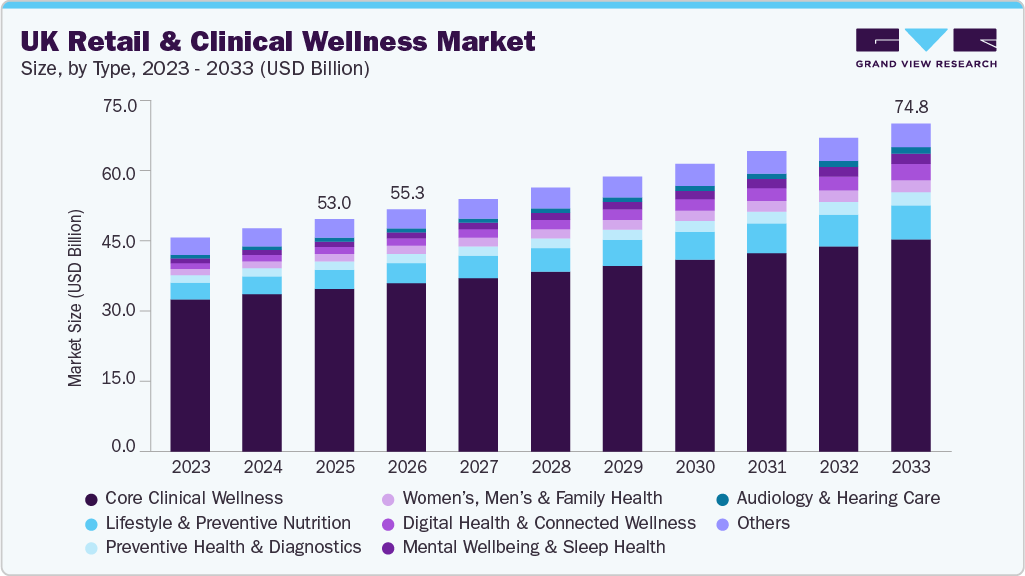
Rising consumer interest in preventive health and self-care is driving demand in the market. Shoppers are increasingly purchasing vitamins, functional foods, at-home diagnostics, wearables, and apps, while also seeking accessible clinical services to avoid hospital visits. This willingness to invest in wellbeing, including nutrition, sleep, mental health, and fitness, is boosting sales of health-focused groceries, over-the-counter products, and digital subscriptions, creating new opportunities and margins for retailers.
Case Study by W-Wellness published in September 2025: Supplement Consumption as a Driver of Preventive Wellness in the UK
Introduction: Supplements Become a Mainstream Part of Wellness:
Supplements have moved from niche products to everyday essentials for UK consumers. With 61% of individuals taking supplements daily, they now play a central role in preventive health and self-care, reflecting a broader shift toward proactive well-being.
Key Findings:
-
Daily Usage: 61% of Brits use supplements every day.
-
Most Popular: Vitamin D is taken by 54%, making it the top choice.
-
Self-Guided Decisions: 43% research supplements independently.
-
Influencer Impact: 23% try supplements due to trends or influencers.
-
Information Overload: 24% feel overwhelmed by online supplement advice.
Rising Adoption Reflects a Preventive-Health Mindset:
Frequent use of Vitamin D, C, B12, protein, and multivitamins reflects a growing awareness of the importance of immunity, nutrition, and long-term health. Nearly half use supplements “to improve general health,” indicating alignment with preventive healthcare.
Consumer Autonomy and Self-Led Research
With 43% relying on their own online research, consumers feel empowered but are also exposed to misinformation, inconsistent dosing, and unnecessary products due to limited clinical oversight.
Influence of Digital Platforms:
Social media significantly shapes supplement choices, with 23% of respondents being influenced by trends or creators. This broadens the category but also increases the need for evidence-based guidance.
Consumer Pain Points and Market Gaps:
-
Information overload (24%)
-
Low confidence in self-research (10%)
-
Cost-related discontinuation (25%)
-
Lack of visible results (20%)
These findings highlight opportunities for clearer, expert-backed, and personalized wellness solutions.
Need for Trusted Retail & Clinical Guidance:
Consumers increasingly value:
-
Transparent ingredients
-
Quality sourcing
-
Personalized recommendations
-
Easy, sustainable supplement routines
This underscores the important role of retailers and clinical wellness providers in guiding safe and effective supplement use.
Strategic Implications for the Market:
-
Expansion of vitamins, protein, immunity, and health categories
-
Integration of personalized nutrition and diagnostics
-
Growing digital-health opportunities (apps, tele-nutrition, AI tools)
-
Rising demand for credible, evidence-backed products
Conclusion:
Supplement use in the UK reflects a growing trend in preventive health ownership. Increasing daily use, digital discovery, and unmet guidance needs indicate that retail and clinical wellness sectors must evolve to provide trusted, personalized, and accessible preventive health solutions.
Meanwhile, NHS and government strategies now prioritize prevention and self-management, shifting care from hospitals to community and digital settings. This shift creates new commissioning and partnership opportunities for clinical wellness providers, remote monitoring vendors, and retail clinics that demonstrate positive outcomes and cost savings. For instance, the NHS Diabetes Prevention Program (DPP) identifies individuals at high risk of developing type 2 diabetes and offers community-based lifestyle interventions, including structured education, diet and exercise plans, and digital coaching, aiming to prevent disease before it develops.
The increasing adoption of digital health tools primarily drives the market, as it encourages consumers to engage with their health and how traditional wellness retailers operate. As patients and wellness seekers increasingly use smartphone apps, wearables, telehealth platforms, and remote-monitoring devices, there’s a strong shift toward self-care and preventive health, rather than just reacting to illness. According to CloudXperte's December 2024 report, over the past few years, the UK has witnessed a significant surge in mobile healthcare app usage, with over 318,000 healthcare apps currently available, nearly double the number in 2015, and approximately 200 new apps added daily. This growth of the UK retail and clinical wellness industry is fueled by the rising adoption of smartphones, heavy investments in digital health, and consumer demand for convenience, access to medical records, prescription management, test results, and appointment scheduling. Studies indicate that 79% of consumers prefer providers offering digital interactions, while 50% are likely to switch to a competitor if they offer better technology solutions. In January 2024, NHS England launched the Pharmacy First advanced service, enabling community pharmacists to assess and treat seven common conditions without the need for a GP appointment. These conditions include earache, sore throat, sinusitis, insect bites, uncomplicated urinary tract infections (UTIs) in women, impetigo, and shingles.
Moreover, consumer wellness is also changing as more UK consumers are willing to spend on online wellness, and they increasingly treat digital tools as part of their daily self-care routine. This drives demand for digital-health-enabled products (such as wearable devices) and for wellness retailers to partner with or build platforms that enable consumers to monitor, track, and act on their health data.
Consumer spending trends and insights from early 2025:
Category
Trend / Growth
Key Demographics
Insights / Implications
Gym & Fitness Spending
+11% over Christmas, +4% in January
18-34 (+8% YoY)
35-44 (+7% YoY)
Younger consumers prioritizing health over nightlife; proactive commitment to fitness
Specialist Grocery Products
+6%
Older generations, 65+ (+9%)
Health-conscious food choices are rising; older consumers are increasingly shopping online
Home Meal Services
+11%
65+
Shift toward convenient, healthy eating solutions; supports growth in e-commerce among older adults
E-commerce / Online Spending
+7% YoY
18-24 (+8%), 65+ (+8%)
Digital adoption is rising across generations; retailers must ensure online services are user-friendly
Overall Nutrition & Fitness Spending
+6%
Broad across age groups
Reflects sustained commitment to healthier lifestyles post-holiday; “New Year, New Me” mindset in action
Source: British Retail Consortium
Moreover, consumer behavior in the UK is shifting rapidly, with an increasing number of individuals proactively managing their health and wellness instead of waiting to become ill. According to the Simon-Kucher Better Health Report, 81% of UK consumers report increased awareness of prevention over the past five years, the highest among seven European markets. Awareness among individuals aged 30 to 45 reaches 91%. While 77% of UK consumers use wearables, health apps, or supplements, slightly below the European average, they continue to rely on healthcare professionals when selecting preventive products. This highlights the ongoing need for credible expert advice. Digital adoption is on the rise, with 63% of consumers influenced by AI when purchasing preventive products, and nearly 90% of individuals under 30 engaging with AI tools.
According to the Global Wellness Institute, the UK wellness economy is experiencing robust growth in public health, prevention, and personalized medicine. This is particularly relevant for supermarkets seeking to move beyond transactional retail and become wellness destinations. There is a major opportunity to embed in-store preventive health services such as health screening kiosks, nutrition advice, health coaching, or partner with clinical wellness brands to deliver personalized wellness journeys. Such services could leverage shopper loyalty programs, such as loyalty card data, to provide tailored wellness product recommendations or nudges for improved health outcomes.
Market Concentration & Characteristics
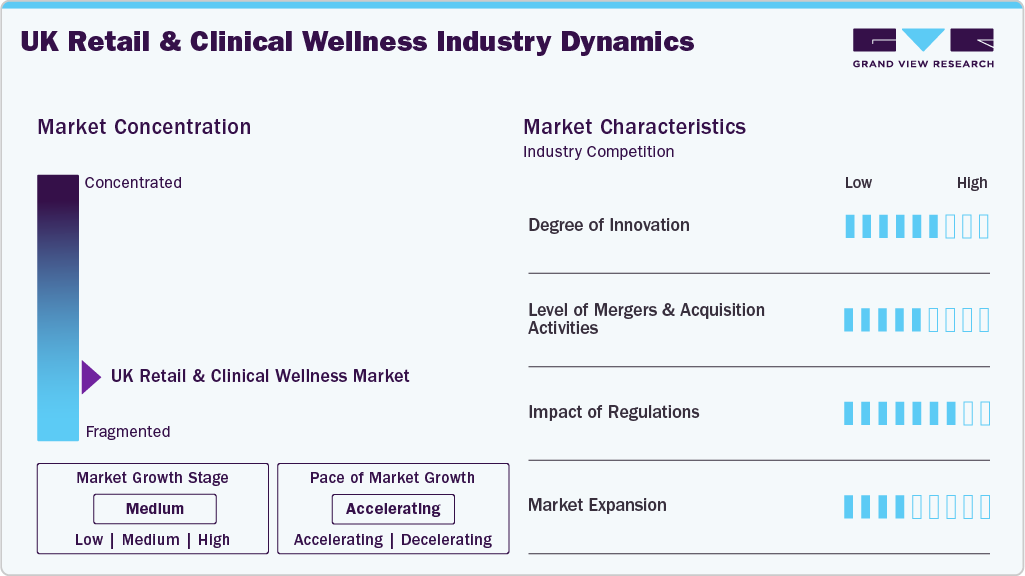
The market is fragmented, with numerous small players entering the market and launching innovative new products. The degree of innovation is high, and the level of merger & acquisition activities is medium. The impact of regulations on the market is high, and the service expansion of players is medium.
The degree of innovation in the industry is high. Recent research by Abbott’s bio wearable brand, Lingo, shows that 2025 is emerging as a pivotal year for wellness technology in the UK. Over 50% of UK adults now own a health-tracking device, ranging from smartwatches and fitness trackers to advanced continuous glucose monitoring (CGM) systems. This adoption marks a shift from reactive healthcare to proactive, data-driven wellness management, where individuals utilize technology to optimize their daily health habits.
The market players are leveraging strategies such as collaborations, partnerships, and acquisitions to promote the reach of their offerings and increase their service capabilities. In March 2025, Walgreens Boots Alliance (the parent of Boots UK) entered into a definitive agreement to be acquired by Sycamore Partners, providing Boots with more flexibility to execute its health services growth strategy.
“For nearly 125 years, Walgreens, and for 175 years, Boots, along with their portfolio of trusted brands, have been integral to the lives of patients and customers. Sycamore has deep respect for WBA’s talented and dedicated team members, and we are committed to stewarding the Company’s iconic brands,” said Managing Director of Sycamore Partners. “This transaction reflects our confidence in WBA’s pharmacy-led model and essential role in driving better outcomes for patients, customers and communities.”
Regulations play a crucial role in the market, dictating operational standards and care delivery. Key regulators and enforcement:
-
Care Quality Commission (CQC): Registration and inspection of providers delivering regulated health or social-care activities (private clinics, independent practitioners, some wellness clinics). If you provide clinical services to patients, you may need CQC registration, meet the Fundamental Standards, and be inspected.
-
ASA / CAP (Advertising Standards Authority / Committee of Advertising Practice): Policing advertising and marketing content. Health/medical/effectiveness claims require appropriate clinical evidence and must not mislead. ASA publishes specific guidance on substantiation for health, beauty, and slimming claims. Enforcement includes ad bans and public rulings.
Market players employ a strategy of service expansion to enhance their service capabilities and expand the reach of their service offerings. For instance, in January 2024, Healthily and Recordati Italia announced a groundbreaking partnership aimed at advancing digital self-care and improving patient support across therapeutic areas. Through this collaboration, Recordati will leverage Healthily’s AI-powered symptom assessment and trusted medical content to enhance patients' access to reliable health information and their ability to manage their conditions.
Type Insights
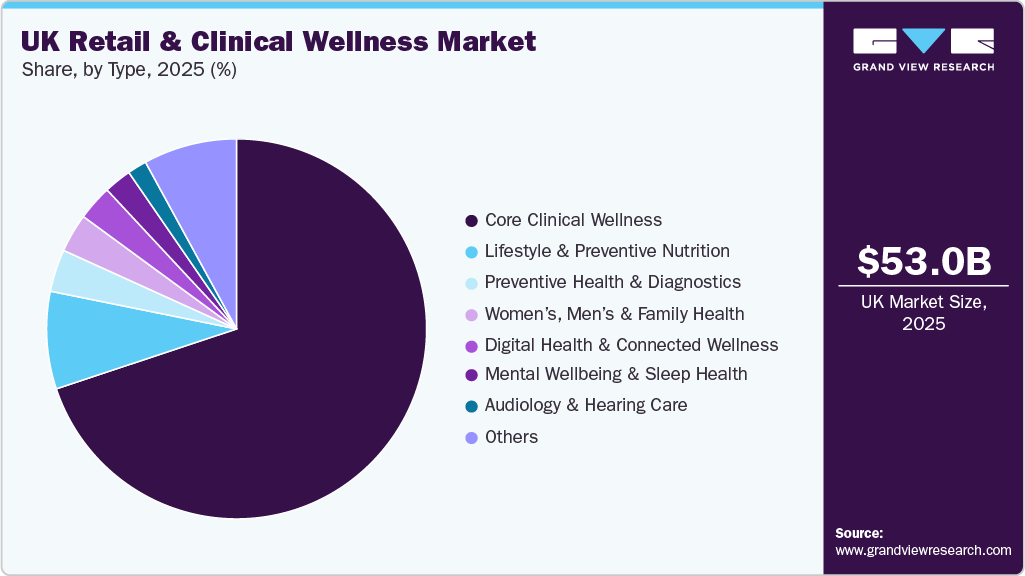
The core clinical wellness segment dominated the UK retail and clinical wellness market, accounting for a revenue share of 69.90% in 2025. This can be attributed to the rising consumer interest in prevention, self-care, and personalized wellness, particularly among younger cohorts, which is driving an expansion of retail demand for clinically framed services, supplements, and functional products. In addition, the rapid digital adoption of remote triage, apps, connected diagnostics, and data-driven, personalized programs is lowering delivery costs and raising consumer expectations for seamless, omnichannel care. In May 2025, NHS England launched an “Amazon-style” prescription tracking feature in the NHS App, now available at 1,500 high-street pharmacies, including all Boots. It enables patients to track their prescriptions in real-time, reducing unnecessary trips to the pharmacy and improving convenience and efficiency.
The digital health and connected-wellness segment is anticipated to grow at the fastest CAGR during the forecast period. This is driven by rapid technological advancements and shifting consumer behavior. On the clinical side, sustained NHS and government programs, such as the long-term plan, national digital strategy, and the rollout of virtual wards/remote monitoring, are creating a procurement pull for remote patient monitoring, electronic records, and integrated care pathways. In November 2025, Virgin Media O2 (VM O2) entered a landmark, multi-year partnership with Starlink Direct to Cell to significantly improve mobile coverage in rural parts of the UK. Through this collaboration, O2 is expected to introduce a new service called O2 Satellite, which utilizes Starlink’s constellation of over 650 low-Earth orbit (LEO) satellites to connect directly to compatible mobile handsets.
Key UK Retail And Clinical Wellness Company Insights
Key companies in the UK retail and clinical wellness industry include major national providers such as Boots UK, Superdrug Health Clinics, Tesco Health, Well Pharmacy, Pharmacy2U, LloydsDirect, Specsavers, Vision Express, Optical Express, and wellness retailers like Holland & Barrett. They are complemented by rapidly growing digital and hybrid platforms, including Numan, Manual, Healthily, Livi, Babylon Health, Medichecks, Thriva, MyFitnessPal, Ada Health, Oviva, and Echo.
Together, these players combine retail clinics, pharmacies, optical services, at-home diagnostics, and digital health platforms to meet rising demand for convenient, preventive, and accessible wellness solutions. Their competitive strength lies in technology integration, nationwide accessibility, and expansion through partnerships and digital innovation, positioning them at the center of the UK’s evolving retail and clinical wellness landscape.
Key UK Retail And Clinical Wellness Market Companies:
Suppliers:- Boots UK.
- Superdrug Health Clinics
- Tesco Health
- Well Pharmacy
- Pharmacy2U
- LloydsDirect
- Specsavers
- Vision Express
- Optical Express
- Randox Health
- Medichecks
- Thriva
- Numan
- Manual
- Holland & Barrett
- Numan
- Manual
- Healthily
- Livi
- Babylon Health
- MyFitnessPal
- Medichecks
- Ada Health
- Oviva
- Echo
Recent Developments
- In April 2025, Pharmacy2U partnered with ORCHA, the digital‑health app assessment platform, to launch a “Pharmacy2U App Hub” that gives patients access to a selection of clinically‑assured health apps through its platform.
Liz Ashall-Payne, Founder of ORCHA
"This initiative is helping individuals across the UK avoid unsafe, unreliable health apps and instead access clinically assured, data-protected, and user-friendly technologies from Pharmacy2U. "
-
In March 2025, Tesco partnered with Our Future Health to open two new clinics inside Tesco stores (Hexham and West Durrington), allowing customers to take part in large-scale health research focused on disease prevention.
Dr Raghib Ali, Chief Executive and Chief Medical Officer of Our Future Health
“Taking part in Our Future Health is a way to represent your community in discoveries about diseases and improve the future of healthcare. We want people from all backgrounds to take part, so that everyone can benefit. By volunteering, you’ll be helping people live longer, healthier lives through health research.”
- In January 2025, Numan launched its digital health coaching platform with an integrated AI assistant, marking a significant step in expanding personalized, technology-driven healthcare. The new AI assistant is designed to provide users with real-time guidance across various areas, including weight management, sexual health, cardiovascular risk assessment, and overall wellness.
A clinical scientist at Numan, said:
“As an automated monitoring and evaluation system, Aegis addresses a key challenge in healthcare AI: ensuring rigorous oversight and clinical accuracy, even as systems scale to support thousands - or millions - of patients.”
UK Retail And Clinical Wellness Market Report Scope
Report Attribute
Details
Market size value in 2026
USD 55.26 billion
Revenue forecast in 2033
USD 74.79 billion
Growth rate
CAGR of 4.42% from 2026 to 2033
Actual data
2021 - 2025
Forecast data
2026 - 2033
Quantitative units
Revenue in USD billion and CAGR from 2026 to 2033
Report coverage
Revenue forecast, company ranking, competitive landscape, growth factors, and trends
Segments covered
Type
Country scope
UK
Key companies profiled
Boots UK; Superdrug Health Clinics; Tesco Health; Well Pharmacy; Pharmacy2U; LloydsDirect; Specsavers; Vision Express; Optical Express; Randox Health; Medichecks; Thriva; Numan; Manual; Holland & Barrett; Numan; Manual; Healthily; Livi; Babylon Health; MyFitnessPal; Medichecks; Ada Health; Oviva; Echo
Customization scope
Free report customization (equivalent up to 8 analysts working days) with purchase. Addition or alteration to country, regional & segment scope.
Pricing and purchase options
Avail customized purchase options to meet your exact research needs. Explore purchase options
UK Retail And Clinical Wellness Market Report Segmentation
This report forecasts revenue growth at the country level and provides an analysis of the latest industry trends in each of the sub-segments from 2021 to 2033. For this study, Grand View Research has segmented the UK retail and clinical wellness market report based on type:
-
Type Outlook (Revenue, USD Billion, 2021 - 2033)
-
Core Clinical Wellness
-
Pharmacy Services
-
Optical Services
-
-
Preventive Health & Diagnostics
-
Preventive Screenings
-
At-home & In-store Diagnostics
-
Digital Health Assessments
-
-
Lifestyle & Preventive Nutrition
-
Vitamins & Dietary Supplements (VDS)
-
Sports & Weight Management Nutrition
-
Personalized Nutrition & Gut Health
-
-
Mental Wellbeing & Sleep Health
-
Mental Wellness & Stress Management
-
Sleep & Relaxation
-
-
Women’s, Men’s & Family Health
-
Women’s Health
-
Men’s Health
-
Pediatric & Family Wellness
-
-
Digital Health & Connected Wellness
-
Teleconsultation & Online Doctor Services
-
Chronic Disease Management Platforms
-
Mental & Behavioral Health Apps
-
Women’s Digital Health
-
AI-Powered Health Tracking & Preventive Tools
-
-
Audiology & Hearing Care
-
Hearing Assessments & Screening
-
Hearing Aid Dispensing & Fitting
-
Aftercare & Maintenance Services
-
Digital Audiology & Remote Hearing Care
-
-
Frequently Asked Questions About This Report
b. The UK retail and clinical wellness market size was estimated at USD 53.01 billion in 2025 and is expected to reach USD 55.26 billion in 2026.
b. The UK retail and clinical wellness market is expected to grow at a compound annual growth rate of 4.42% from 2026 to 2033 to reach USD 74.79 billion by 2033.
b. Core clinical wellness dominated the type segment with a share of 69.90% in 2025. This can be attributed to the rising consumer interest in prevention, self-care and personalized wellness, especially among younger cohorts which are expanding retail demand for clinically framed services, supplements and functional products.
b. Key companies in the UK retail and clinical wellness market include major national providers such as Boots UK, Superdrug Health Clinics, Tesco Health, Well Pharmacy, Pharmacy2U, LloydsDirect, Specsavers, Vision Express, Optical Express, and wellness retailers like Holland & Barrett. They are complemented by rapidly growing digital and hybrid platforms including Numan, Manual, Healthily, Livi, Babylon Health, Medichecks, Thriva, MyFitnessPal, Ada Health, Oviva, and Echo
b. Key market drivers include the increasing focus on prevention and self-care, rising use of privately funded healthcare and wellness services, growing adoption of e-commerce, digital health & technology-enabled wellness and increasing demand for evidence-based, “clinical-grade” wellness and quality assurance


Share this report with your colleague or friend.
Need a Tailored Report?
Customize this report to your needs — add regions, segments, or data points, with 20% free customization.


ISO 9001:2015 & 27001:2022 Certified
We are GDPR and CCPA compliant! Your transaction & personal information is safe and secure. For more details, please read our privacy policy.
Trusted market insights - try a free sample
See how our reports are structured and why industry leaders rely on Grand View Research. Get a free sample or ask us to tailor this report to your needs.