
- Home
- »
- Pharmaceuticals
- »
-
Rosacea Treatment Market Size & Share Report, 2026-2033GVR Report cover

Rosacea Treatment Market (2026 - 2033)
Size, Share & Trends Analysis Report By Drug Class (Antibiotics, Alpha Agonists, Retinoids, Corticosteroids), By Mode Of Administration (Topical, Oral), By Region, And Segment Forecasts
Market Size, 2025
$2.2BMarket Estimate, 2026
$2.4BMarket Forecast, 2033
$3.9BCAGR, 2026–2033
7.3%Rosacea Treatment Market Summary
The global rosacea treatment market size was valued at USD 2.2 billion in 2025 and is projected to grow from USD 2.4 billion in 2026 to USD 3.9 billion by 2033, at a CAGR of 7.3% from 2026 to 2033. North America dominated the global market with the largest revenue share of 38.6% in 2025. The increasing prevalence of rosacea is largely due to urbanization, environmental changes, and lifestyle shifts, particularly among fair-skinned individuals.
 Source: Grand View Research, IR Documents, Primary Interviews, Paid DatabasesTo learn more about this report,
 Download Free Sample Report
 Key Market Trends & Insights
- By drug class: Antibiotics segment led the market with the largest revenue share of 54.2% in 2025.
- By mode of administration: Topical segment led the market with the largest revenue share of 62.4% in 2025.
Regional Highlights
- Largest regional market: North America (38.6% revenue share, 2025)
- Fastest-growing regional market: Asia Pacific (highest CAGR, 2026-2033)
- By country: The rosacea treatment market in the U.S. held the largest share in the North America region in 2025.
Market Size & Forecast
- Market size in 2025: USD 2.2 Billion
- Estimated market size in 2026: USD 2.4 Billion
- Projected market size by 2033: USD 3.9 Billion
- CAGR (2026-2033): 7.3%
Three ways to get this report
Buy it, customize it, or ask a question.Ask an Analyst
Analyst response in 1 business day
- AccessReport author, directly
- Reply timeWithin 1 working day
- No sales callDirect answer only
- FormatEmail reply
- CostFree, no cost
Get the Full Report
What the study covers
- FormatsPDF · Excel · Dashboard
- Timeline2026–2033 annual, 2025 base
- Coverage20+ countries, 5 regions
- Companies10+ key players profiled
Customize the Report
20% free customization
- IncludeCountries, segments, points
- TailorTo your product definition
- ExtendDeeper competitor detail
- OrA fully bespoke study
- Turnaround5–10 working days
As more cases are diagnosed, the demand for effective treatments is rising. As rosacea is more common in middle-aged and older adults, the rapidly rising aging population globally is contributing to the demand for effective treatments. With these rising numbers, there is a greater need for improved treatment and management options. These factors combined are driving the high incidence of rosacea worldwide. To learn more about this report, Download Free Sample Report
 Advancements in rosacea treatments have led to new options such as targeted biologics, oral medications, and topical treatments. These innovative therapies offer more effective and personalized treatment plans for patients, contributing to the growth of the rosacea treatment industry. In addition, the use of combination therapies, such as combining antibiotics with topical treatments or light therapy with oral medications, has become more common. These combinations improve patient outcomes by addressing multiple aspects of the condition simultaneously. Hence, the demand for these advanced treatments is increasing. These developments are expanding treatment choices and driving further growth in the market.
Rosacea can cause visible facial redness, pimples, and visible blood vessels, which often have significant cosmetic and psychological effects on patients. Treatments that improve their looks and boost self-esteem are in high demand as people place more importance on their appearance. Non-invasive treatments, such as laser therapy, Intense Pulsed Light (IPL) treatments, and other dermatological procedures, are becoming increasingly popular for managing rosacea. This growing demand for non-invasive options is contributing to the expansion of the rosacea treatment industry.
Market Dynamics
The rosacea treatment market is experiencing steady growth driven by increasing awareness of chronic inflammatory skin disorders, rising diagnosis rates, and growing demand for therapies that provide sustained symptom control. The market is benefiting from advancements in topical formulations, oral medications, and targeted therapies that improve management of facial erythema and inflammatory lesions. Growing access to dermatology services and increasing patient willingness to seek treatment for quality-of-life improvement are also supporting market expansion. A notable industry development highlights this trend. For instance, in 2025, pharmaceutical companies continued to strengthen their dermatology portfolios through investments in inflammatory skin disease treatments and lifecycle management strategies for established rosacea therapies. The market is also influenced by the shift toward personalized treatment approaches and the increasing use of combination therapies to address multiple symptoms simultaneously. However, treatment costs, limited awareness in some developing regions, and the recurrent nature of the condition continue to present challenges for long term disease management and market penetration.
The increasing prevalence of rosacea and improving diagnosis rates are significant drivers of the rosacea treatment market. Growing awareness among patients and healthcare professionals has led to earlier identification and treatment of the condition, particularly in regions with established dermatology care networks. Rosacea is a chronic inflammatory skin disorder that often requires long term management, creating sustained demand for prescription therapies and specialist consultations. The expansion of dermatology clinics, teledermatology services, and patient education initiatives has further improved access to diagnosis and treatment. In addition, rising concern regarding facial appearance and skin health has encouraged more individuals to seek medical intervention rather than relying solely on cosmetic products. Pharmaceutical companies are responding by expanding treatment options that address different rosacea subtypes and symptom profiles. A recent industry development demonstrates this trend. For instance, in 2025, several dermatology focused companies increased investments in awareness campaigns and physician engagement programs aimed at improving recognition of inflammatory skin disorders, including rosacea. These efforts contributed to greater patient identification and treatment uptake across key markets. As healthcare systems continue to emphasize early diagnosis and chronic disease management, the growing number of diagnosed patients is expected to support continued demand for rosacea therapies and related dermatological services.
One of the primary restraints affecting the rosacea treatment market is the recurrent nature of the disease and the limitations of currently available therapies in delivering complete and permanent symptom resolution. Rosacea is a chronic condition characterized by periods of flare ups and remission, which often require ongoing treatment and lifestyle management. While existing topical and oral therapies can effectively control symptoms, many patients experience recurring redness, inflammation, and skin sensitivity after treatment discontinuation. This can lead to frustration, reduced treatment adherence, and variability in clinical outcomes. In addition, some therapies may be associated with tolerability concerns or prolonged treatment durations, which can affect patient satisfaction. The absence of universally effective treatment options for all rosacea subtypes also creates challenges for healthcare providers seeking personalized disease management strategies. A notable example reflects this market challenge. For instance, in 2025, dermatology experts and patient advocacy discussions continued to emphasize the need for therapies capable of providing more durable disease control and improved management of persistent facial erythema. Such concerns highlight existing treatment gaps despite the availability of multiple therapeutic options. These limitations may restrict treatment adoption in certain patient groups and can influence prescribing decisions, thereby moderating overall market growth.
The growing focus on targeted treatment approaches presents a substantial opportunity for the rosacea treatment market. Advances in understanding the inflammatory and vascular mechanisms underlying rosacea are encouraging the development of therapies that address specific disease pathways rather than only managing visible symptoms. Pharmaceutical companies are increasingly investing in research programs focused on improving efficacy, reducing adverse effects, and enhancing long term disease control. Personalized treatment strategies that consider symptom severity, rosacea subtype, and individual patient characteristics are gaining attention among dermatologists. In addition, the integration of digital health tools and teledermatology platforms is improving patient monitoring and supporting tailored treatment plans. The market is also benefiting from increasing interest in combination therapies that address multiple manifestations of the disease simultaneously. A significant industry example highlights this opportunity. For instance, in 2025, ongoing clinical research efforts explored novel anti-inflammatory and immune modulating approaches for chronic skin disorders, including rosacea, with the objective of improving treatment precision and patient outcomes. These developments reflect the broader trend toward targeted dermatology therapeutics. As scientific understanding of rosacea continues to evolve, the introduction of innovative and personalized therapies is expected to create new growth opportunities for manufacturers and healthcare providers across global markets.
Analyst Perspective
The rosacea treatment market is positioned for steady growth, supported by increasing diagnosis rates, rising awareness of chronic inflammatory skin conditions, and continued demand for therapies that improve symptom control and quality of life. Market participants are focusing on product innovation, enhanced topical formulations, and targeted treatment approaches to address unmet patient needs. The competitive landscape is characterized by the presence of both multinational pharmaceutical companies and specialized dermatology firms, creating a balance between commercial scale and therapeutic innovation. Future growth is expected to be driven by expanding access to dermatological care, growing adoption of personalized treatment strategies, and ongoing research into novel therapeutic mechanisms.
Drug Class Insights
Based on drug class, the antibiotics segment led the market with the largest revenue share of 54.2% in 2025. These medications, including metronidazole and doxycycline, effectively reduce inflammation and bacterial presence, addressing the condition's primary symptoms. Their long-standing use and proven efficacy have made them a staple in treatment protocols. In addition, the high rate of prescriptions and patient adherence to antibiotic regimens contribute to the segment's robust market position in the rosacea treatment industry. The growing awareness of rosacea and its treatments further supports the demand for antibiotics among healthcare providers.
 To learn more about this report, Download Free Sample Report
 The alpha agonists segment is anticipated to grow at the highest CAGR of 7.5% over the forecast period, fueled by their effectiveness in managing facial erythema associated with rosacea. Products such as Mirvaso and Rhofade specifically target redness, offering patients rapid relief from visible symptoms. The increasing recognition of these agents as viable treatment options has led to greater adoption among dermatologists. As more patients seek solutions for persistent redness, the alpha agonists segment is expected to gain traction, reflecting a shift toward more specialized therapies in the rosacea treatment industry.
Mode Of Administration Insights
Based on mode of administration, the topical segment led the market with the largest revenue share of 62.4% in 2025, which can be attributed to its convenience and effectiveness in treating localized symptoms. Both patients and physicians prefer topical treatments such as gels and creams due to their ease of application and direct action on affected areas. The availability of various formulations that combine multiple active ingredients enhances their appeal. Furthermore, ongoing research into new topical agents continues to expand treatment options, solidifying the dominance of this segment in the rosacea treatment industry.
The oral segment is projected to grow at a significant CAGR over the forecast period due to its effectiveness in treating more severe cases of rosacea. Oral antibiotics provide systemic relief from inflammation and bacterial infection, which can be crucial for patients with extensive or resistant symptoms. The rising prevalence of rosacea among diverse populations drives demand for oral therapies as part of comprehensive treatment plans. As healthcare providers increasingly recognize the importance of combination therapy, oral treatments are expected to see sustained growth alongside topical options.
Regional Insights
North America dominated the Rosacea Treatment market with the largest revenue share of 38.6% in 2025 due to a combination of factors, including high consumer awareness and advanced healthcare infrastructure. The region benefits from a well-established network of dermatology specialists adept at diagnosing and treating rosacea effectively. In addition, continuous innovation in treatment options and frequent drug approvals contribute to market growth. Increased exposure to environmental triggers also elevates the incidence of rosacea, further driving demand for effective treatments in this region.
 To learn more about this report, Download Free Sample Report
 U.S. Rosacea Treatment Market Trends
The Rosacea Treatment market in the U.S. held the largest share in the North America region in 2025, fueled by high healthcare expenditure and access to advanced medical treatments. The presence of leading pharmaceutical companies and ongoing research initiatives enhance the availability of innovative therapies tailored for rosacea patients. Patient education campaigns have also improved recognition of symptoms, prompting individuals to seek timely treatment. This proactive approach among consumers increases prescription rates for effective therapies, reinforcing the country's leading position within the North American market.
Europe Rosacea Treatment Market Trends
Europe rosacea treatment market held a substantial market share in 2025, driven by increasing awareness and accessibility to dermatological care. The region benefits from a strong emphasis on skincare and health education, leading to early diagnosis and management of rosacea symptoms among patients. In addition, advancements in treatment technologies and a growing portfolio of effective medications support market expansion. The rising number of clinical studies focused on rosacea also contributes to a better understanding of treatment options available in Europe.
Asia Pacific Rosacea Treatment Market Trends
Asia Pacific rosacea treatment market is expected to register the highest CAGR of 8.8% over the forecast period, which can be attributed to improving healthcare infrastructure and rising disposable incomes. As economies grow within this region, there is an increased focus on health awareness and access to medical care, leading more individuals to seek treatment for skin conditions such as rosacea. The growing prevalence of skin disorders due to environmental factors drives demand for effective treatments. Enhanced availability of dermatological services further supports this growth trajectory.
The China rosacea treatment market dominates the Asia Pacific with a significant revenue share in 2025, driven by rapid urbanization and changing lifestyle factors contributing to skin conditions. Increased exposure to pollution and stressors in urban environments has led to a rise in skin-related issues among the population, including rosacea. Moreover, increased awareness about skin health through media and educational platforms encourages individuals to seek appropriate treatments. The expansion of healthcare facilities offering specialized dermatological services also plays a crucial role in supporting this market's growth in China.
Key Rosacea Treatment Company Insights
Some key companies operating in the market are AbbVie Inc., Bayer AG, Bausch Health Companies Inc., Nestlé Skin Health, and Sol-Gel Technologies Ltd. Companies are undertaking strategic initiatives, such as mergers, acquisitions, and product launches, to expand their market presence and address the evolving healthcare demands in the rosacea treatment market.
-
AbbVie Inc. offers a range of products for treating rosacea. These include brimonidine tartrate (Mirvaso), a topical gel that quickly reduces facial redness; metronidazole and azelaic acid, which help decrease inflammation and lesions; and ivermectin (Soolantra), which addresses inflammation and targets Demodex mites. The company is dedicated to developing innovative therapies that manage the various symptoms of rosacea and improve dermatology patient care.
-
Bayer AG offers various products for rosacea treatment. It offers Finacea (azelaic acid) Foam, 15%, which is designed to manage inflammatory papules and pustules associated with mild to moderate rosacea. The company also offers Finacea gel containing azelaic acid for similar uses. The company emphasizes patient support by providing resources that enhance treatment adherence and educate patients about managing rosacea.
Key Rosacea Treatment Companies:
The following key companies have been profiled for this study on the rosacea treatment market.
-
AbbVie Inc.
-
Bayer AG
-
Bausch Health Companies Inc.
-
Nestlé Skin Health
-
Sol-Gel Technologies Ltd.
-
Mayne Pharma Group Limited
-
LEO Pharma A/S
-
Pfizer Inc.
-
Aclaris Therapeutics, Inc.
-
Galderma
Competitive Benchmarking
Category
Operating Strategies
Competitive Edge
Weakness
Large Diversified Pharmaceutical and Healthcare Companies (AbbVie Inc., Bayer AG, Pfizer Inc., Nestlé Skin Health, Bausch Health Companies Inc.)
- Expand dermatology portfolios through product lifecycle management, geographic expansion, physician engagement programs, and strategic acquisitions. Invest in research focused on inflammatory skin disorders and support commercialization of established rosacea therapies through extensive distribution networks. Strengthen market presence through collaborations with dermatology clinics and healthcare providers.
- Strong global brand recognition, broad commercial infrastructure, extensive regulatory expertise, established healthcare relationships, and significant financial resources. Ability to leverage diversified product portfolios, large scale manufacturing capabilities, and comprehensive market access strategies to support product adoption across multiple regions.
- Exposure to pricing pressures, regulatory compliance requirements, and competition from generic and specialty dermatology products. Large organizational structures may slow innovation cycles and limit flexibility in addressing niche market opportunities or rapidly evolving treatment trends.
Dermatology Focused and Specialty Biopharmaceutical Companies (Galderma, LEO Pharma A/S, Sol-Gel Technologies Ltd., Mayne Pharma Group Limited, Aclaris Therapeutics, Inc.)
- Focus on developing and commercializing targeted dermatology therapies with emphasis on rosacea and related skin disorders. Prioritize product innovation, clinical differentiation, formulation advancements, and strategic licensing agreements. Expand market reach through partnerships, specialty sales teams, and focused physician education initiatives.
- Deep expertise in dermatology, strong understanding of patient and physician needs, specialized research capabilities, and focused commercial strategies. Greater agility enables faster response to scientific developments, evolving treatment guidelines, and emerging market opportunities within the dermatology sector.
- More limited financial resources, narrower product portfolios, and smaller commercial footprints compared to multinational pharmaceutical companies. Greater dependence on a limited number of products increases exposure to regulatory, clinical, and competitive risks. Reliance on partnerships for broader geographic expansion may constrain long term growth and market penetration.
Recent Developments
-
In October 2023, AbbVie announced that Upadacitinib (RINVOQ) successfully met the primary endpoint in a Phase 2 clinical trial for treating vitiligo. The trial demonstrated significant improvements in skin repigmentation among participants, marking a promising advancement in managing this autoimmune condition. Following these positive results, the company indicated that the program would progress to Phase 3 trials, further evaluating the efficacy and safety of Upadacitinib.
-
In June 2022, Galderma launched EPSOLAY Cream, a significant advancement in treating bumps and blemishes associated with rosacea. This FDA-approved cream contains 5% benzoyl peroxide and is the first microencapsulated formulation designed to provide effective relief for chronic skin conditions. In clinical trials, EPSOLAY Cream demonstrated up to a 43.7% reduction in lesions within two weeks and nearly 70% after 12 weeks. The innovative microencapsulation technology allows for a gradual release of the active ingredient, enhancing tolerability for sensitive skin.
Rosacea Treatment Market Report Scope
Report Attribute
Details
Market size in 2025
USD 2.2 billion
Estimated Market Size in 2026
USD 2.4 billion
Projected Market Size by 2033
USD 3.9 billion
Growth rate
CAGR of 7.3% from 2026 to 2033
Historical data
2021 - 2024
Forecast period
2026 - 2033
Quantitative units
Revenue in USD million/billion and CAGR from 2026 to 2033
Report coverage
Revenue forecast, company ranking, competitive landscape, growth factors, and trends
Segments covered
Drug class, mode of administration, region
Regional scope
North America; Europe; Asia Pacific; Latin America; MEA
Country scope
U.S.; Canada; Mexico; Germany; UK; France; Italy; Spain; Norway; Denmark; Sweden; Russia; Iceland; Finland; China; Japan; India; South Korea; Australia; Thailand; Singapore; Brazil; Argentina; Saudi Arabia; South Africa; UAE; Kuwait; Israel
Key companies profiled
AbbVie Inc., Bayer AG, Bausch Health Companies Inc., Nestlé Skin Health, Sol-Gel Technologies Ltd., Mayne Pharma Group Limited, LEO Pharma A/S, Pfizer Inc., Aclaris Therapeutics, Inc., Galderma
Customization scope
Free report customization (equivalent up to 8 analysts' working days) with purchase. Addition or alteration to country, regional & segment scope.
Pricing and purchase options
Avail customized purchase options to meet your exact research needs. Explore purchase options
Global Rosacea Treatment Market Report Segmentation
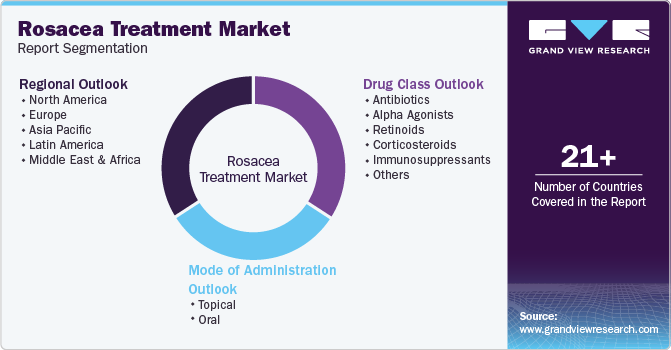
This report forecasts global, regional, and country revenue growth and analyzes the latest industry trends in each sub-segment from 2021 to 2033. For this study, Grand View Research has segmented the global rosacea treatment market report based on drug class, mode of administration, and region:
 To learn more about this report, Download Free Sample Report
 -
Drug Class Outlook (Revenue, USD Billion, 2021 - 2033)
-
Antibiotics
-
Alpha Agonists
-
Retinoids
-
Corticosteroids
-
Immunosuppressants
-
Others
-
-
Mode of Administration Outlook (Revenue, USD Billion, 2021 - 2033)
-
Topical
-
Oral
-
-
Regional Outlook (Revenue, USD Billion, 2021 - 2033)
-
North America
-
U.S.
-
Canada
-
Mexico
-
-
Europe
-
UK
-
Germany
-
France
-
Italy
-
Spain
-
Norway
-
Denmark
-
Sweden
-
-
Asia Pacific
-
Japan
-
China
-
India
-
South Korea
-
Australia
-
Thailand
-
-
Latin America
-
Brazil
-
Argentina
-
-
Middle East & Africa
-
South Africa
-
Saudi Arabia
-
UAE
-
Kuwait
-
-
Research Methodology
Segment Definition
Segment - Drug Class
Revenue capture definition
Antibiotics
Revenue generated from antibiotics prescribed for the treatment of rosacea, particularly papulopustular rosacea and inflammatory lesions. This segment includes topical and oral antibiotics such as doxycycline, minocycline, metronidazole, and other antibacterial agents used to reduce inflammation and control symptoms. Revenue from rosacea therapies primarily classified as antibiotics is attributed exclusively to this segment.
Alpha Agonists
Revenue generated from alpha agonist therapies used for the treatment of persistent facial erythema associated with rosacea. This segment includes products containing brimonidine, oxymetazoline, and other alpha adrenergic receptor agonists that reduce facial redness through vasoconstriction. All revenue associated with alpha agonist based rosacea treatments is assigned exclusively to this segment.
Retinoids
Revenue generated from retinoid therapies prescribed for rosacea management in selected patients to improve skin texture, inflammatory lesions, and associated dermatological symptoms. This segment includes topical and oral retinoid formulations utilized in rosacea treatment protocols. Revenue from retinoid based rosacea therapies is classified solely within this category.
Corticosteroids
Revenue generated from corticosteroid therapies prescribed for short term management of severe inflammatory symptoms or rosacea related complications under physician supervision. This segment includes topical corticosteroid formulations utilized in limited treatment settings. Revenue associated with corticosteroid use in rosacea treatment is allocated exclusively to this segment.
Immunosuppressants
Revenue generated from immunosuppressive therapies used in rosacea management when modulation of inflammatory responses is required. This segment includes topical and systemic agents prescribed to control persistent inflammation and treatment resistant symptoms. Revenue derived from immunosuppressant based rosacea therapies is reported exclusively within this segment.
Others
Revenue generated from all rosacea treatment classes not included under antibiotics, alpha agonists, retinoids, corticosteroids, or immunosuppressants. This includes antiparasitic agents such as ivermectin, combination therapies, emerging biologic approaches, laser assisted pharmacological treatments, and future therapeutic innovations. Revenue is assigned to this segment only when it does not belong to the predefined drug class categories.
Segment - Mode of Administration
Revenue capture definition
Topical
Revenue generated from rosacea treatments administered directly to the skin through creams, gels, lotions, foams, and other topical formulations. This segment includes topical antibiotics, alpha agonists, ivermectin, retinoids, corticosteroids, and other dermatological products indicated for rosacea management. Revenue is attributed to this segment when the therapy is delivered through topical administration.
Oral
Revenue generated from rosacea treatments administered orally in the form of tablets, capsules, or other ingestible formulations. This segment includes oral antibiotics, retinoids, immunosuppressants, and other systemic therapies prescribed for moderate to severe rosacea. Revenue from products delivered through oral administration is classified exclusively within this segment.
Estimation Model
The research methodology for estimating the rosacea treatment market incorporated a comprehensive combination of secondary and primary research techniques to ensure reliable market sizing and forecasting. Secondary research included the evaluation of company annual reports, investor presentations, financial statements, product catalogs, regulatory filings, dermatology association publications, clinical trial databases, healthcare journals, scientific literature, and government healthcare statistics. Information related to rosacea prevalence, diagnosis rates, prescription volumes, treatment adoption patterns, and product revenues was collected and analyzed across major geographic regions. The study also assessed market developments involving topical and oral therapies, emerging treatment options, pricing trends, reimbursement frameworks, and competitive positioning. Historical market performance and current industry trends were reviewed to establish baseline estimates. Data obtained from multiple secondary sources were cross verified to improve consistency and provide a strong foundation for subsequent market calculations and forecasting activities.
Primary research was conducted to validate secondary findings and refine market estimates through direct interactions with industry stakeholders. Interviews were carried out with dermatologists, healthcare professionals, pharmaceutical company executives, product managers, distributors, researchers, and industry consultants involved in the rosacea treatment ecosystem. These discussions provided insights into treatment utilization patterns, prescribing behavior, patient preferences, commercial challenges, pricing dynamics, and future growth opportunities. Market size estimation was performed using both top down and bottom-up approaches, where revenues were analyzed across drug classes, modes of administration, and regional markets. Market share assessments of key companies were incorporated to strengthen revenue calculations and competitive analysis. The final market estimates were validated through data triangulation, ensuring consistency between supply side and demand side assessments while enhancing the accuracy and reliability of the overall market forecast.
Delivered Customizations
This report has been delivered with the following In-depth customizations
Client Request
Customization Delivered
Value Adds
Rosacea Treatment Competitive Landscape & Pipeline Assessment
Conducted a targeted assessment of the global rosacea treatment landscape, evaluating marketed therapies, late-stage pipeline candidates, drug classes, mechanisms of action, clinical development progress, and competitive positioning. The study analyzed key companies including Galderma, AbbVie, Bayer, Bausch Health, Sol Gel Technologies, Mayne Pharma, LEO Pharma, Pfizer, and Aclaris Therapeutics, along with emerging treatment approaches focused on inflammatory lesion reduction and persistent facial erythema management.
Helped the client identify high potential therapeutic opportunities, assess competitive threats, benchmark product differentiation, and evaluate partnership, licensing, and acquisition prospects within the evolving rosacea treatment market.
Rosacea Treatment Technology & Product Benchmarking Study
Delivered a comprehensive benchmarking analysis of rosacea treatment technologies, focusing on topical formulations, oral therapies, drug delivery innovations, efficacy profiles, safety outcomes, and patient adherence factors. The assessment compared established treatment options with emerging therapeutic candidates, evaluating clinical performance, commercial potential, regulatory positioning, and differentiation strategies across leading dermatology companies.
Enabled the client to evaluate technology competitiveness, identify product development gaps, benchmark innovation strategies, and prioritize investments in next generation rosacea therapies and advanced dermatology treatment platforms.
Rosacea Treatment Manufacturing & Commercialization Feasibility Assessment
Conducted a strategic assessment of the rosacea treatment manufacturing and commercialization ecosystem, evaluating formulation development capabilities, active pharmaceutical ingredient sourcing, contract manufacturing partnerships, regulatory requirements, distribution networks, and market access considerations. The study analyzed manufacturing scalability, supply chain efficiency, commercial readiness, and regional market opportunities supporting global product expansion.
Supported strategic commercialization planning by identifying qualified manufacturing partners, mitigating supply chain risks, evaluating outsourcing strategies, and strengthening long term production scalability and market expansion readiness across key geographic regions.
Frequently Asked Questions About This Report
Proactive government initiatives, advanced formulations, and high disease prevalence are some factors contributing to the market growth.
Antibiotics segment led the market with the largest revenue share of 54.2% in 2025.
Some of the key players include AbbVie Inc., Bayer AG, Bausch Health Companies Inc., Nestlé Skin Health, Sol-Gel Technologies Ltd., Mayne Pharma Group Limited, LEO Pharma A/S, Pfizer Inc., Aclaris Therapeutics, Inc., Galderma
North America dominated the Rosacea Treatment market with the largest revenue share of 38.6% in 2025.
Asia Pacific is the fastest-growing region over the forecast period.
Based on mode of administration, the topical segment led the market with the largest revenue share of 62.4% in 2025.
The global rosacea treatment market size was estimated at USD 2.2 billion in 2025 and is projected to grow from USD 2.4 billion in 2026
The global rosacea treatment market is expected to grow at a compound annual growth rate of 7.3% from 2026 to 2033
About the Author(s)
Pharmaceuticals Research Team
Healthcare · PharmaceuticalsThis report was authored by the pharmaceuticals research team at Grand View Research - comprising two research analysts, one senior research analyst, and one industry expert - with specialized expertise in the pharmaceuticals segment of the healthcare industry. All findings are based on proprietary healthcare databases, executive interviews, and regulatory analysis, subject to internal peer review prior to publication.
Last Updated:
Speak to Analyst

Customize this report to your needs - add regions, segments, or data points, with 20% free customization.
Or view our licence options:


ISO 9001:2015 & 27001:2022 Certified
We are GDPR and CCPA compliant! Your transaction & personal information is safe and secure. For more details, please read our privacy policy.


