
- Home
- »
- Medical Devices
- »
-
Aesthetic Medicine Market Size & Share Report 2026-2033GVR Report cover

Aesthetic Medicine Market (2026 - 2033)
Size, Share & Trends Analysis Report By Procedure (Invasive Procedures, Non-invasive Procedures), By End Use (Hospitals, Clinics & Aesthetic Centers, Medspas), By Region (North America, Europe, Asia Pacific), And Segment Forecasts
Market Size, 2025
$98.8BMarket Estimate, 2026
$109.2BMarket Forecast, 2033
$240.0BCAGR, 2026–2033
11.9%Aesthetic Medicine Market Summary
The global aesthetic medicine market size was valued at USD 98.8 billion in 2025 and is projected to grow from USD 109.2 billion in 2026 to USD 240.0 billion by 2033, at a CAGR of 11.9% from 2026 to 2033. The North America market held the largest share of 32.4% of the global market in 2025. This growth can be attributed to the increasing adoption of minimally invasive and noninvasive procedures, coupled with growth in the population prone to experiencing signs of aging.
 Source: Grand View Research, IR Documents, Primary Interviews, Paid DatabasesTo learn more about this report,
 Download Free Sample Report
 Key Market Trends & Insights
- By procedure: The invasive segment held a significant share of 59.7% in 2025.
- By end use: The clinics & aesthetic centers segment held a significant share of 48.1% in 2025.
Regional Highlights
- Largest regional market: North America (32.4% revenue share, 2025)
- By country: The U.S. held the largest market share in 2025.
Market Size & Forecast
- Market size in 2025: USD 98.8 Billion
- Estimated market size in 2026: USD 109.2 Billion
- Projected market size by 2033: USD 240.0 Billion
- CAGR (2026-2033): 11.9%
Three ways to get this report
Buy it, customize it, or ask a question.Ask an Analyst
Analyst response in 1 business day
- AccessReport author, directly
- Reply timeWithin 1 working day
- No sales callDirect answer only
- FormatEmail reply
- CostFree, no cost
Get the Full Report
What the study covers
- FormatsPDF · Excel · Dashboard
- Timeline2026–2033 annual, 2025 base
- Coverage20+ countries, 5 regions
- Companies10+ key players profiled
Customize the Report
20% free customization
- IncludeCountries, segments, points
- TailorTo your product definition
- ExtendDeeper competitor detail
- OrA fully bespoke study
- Turnaround5–10 working days
As per the ISAPS report, approximately 17.42 million surgical procedures and 20.54 million non-surgical procedures were performed in 2025. Moreover, technological advancements, such as minimally invasive techniques, laser treatments, and injectables such as Botox and dermal fillers, have made cosmetic procedures safer and more accessible, encouraging more individuals to consider them.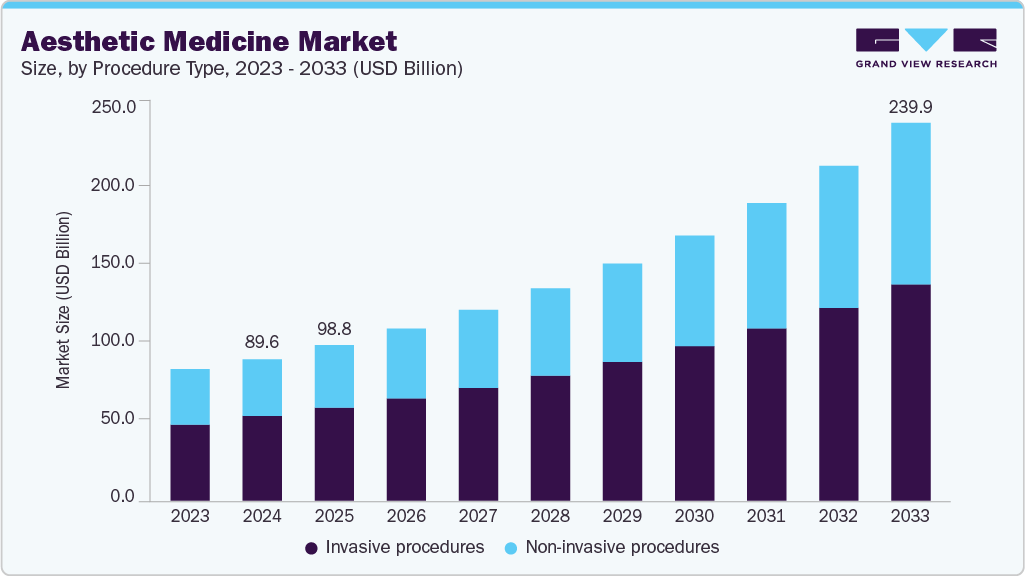 To learn more about this report, Download Free Sample Report
 In addition, the growth of healthcare tourism and the availability of well-trained specialists in emerging markets support the expansion of this market. The section below outlines the key factors driving the growth of aesthetic medicines, highlighting the rising demand for minimally invasive procedures, a growing generic population, and the rising use of aesthetic medicines by men due to changing beauty standards. It also examines the role of social media platforms in changing and idealizing beauty standards.
Rising Demand for Minimally Invasive Procedures
The market is driven by the increasing popularity of minimally invasive, non-surgical options such as botulinum toxin injections, dermal fillers, and laser treatments. Consumers opt for these procedures as they offer benefits such as shorter recovery times, lower risks, lower costs, and faster healing than traditional surgeries. Ongoing improvements in device technology and injectable products have also increased the safety and effectiveness of these treatments. In November 2025, Allergan Aesthetics showcased clinical data and expanded indications for BOTOX Cosmetic and hyaluronic acid dermal fillers at the American Society for Dermatologic Surgery (ASDS) Annual Meeting. The data highlighted high patient satisfaction and safety, as well as growing adoption of non-surgical injectable treatments.
Growing Geriatric Population Driving Demand for Anti-Aging Aesthetic Treatments
The increasing geriatric population across the globe is expected to drive the market. Major economies are undergoing a demographic shift due to a rapidly aging population, and the demand for cosmetic solutions is growing to combat the visible signs of aging and maintain a youthful appearance. This has led to a significant surge in demand for aesthetic medicines that effectively reduce wrinkles, fine lines, and other age-related concerns. In November 2025, Galderma presented data on a range of pioneering Restylane hyaluronic acid (HA) injectables, Restylane Lyft, Restylane Contour, and Restylane Skinboosters, which highlighted that these treatments effectively improved facial wrinkles, loss of firmness, and contour deficiencies associated with aging-related volume loss, with high patient satisfaction and sustained results.
Increased Social Media Influence Shaping Beauty Standards
The aesthetic medicine market is significantly driven by the rise of social media platforms such as Instagram, TikTok, Snapchat, and YouTube. The widespread use of photo editing tools and influencer content created new beauty ideals. This leads to an increasing demand for aesthetic enhancements to match these digitally enhanced appearances. Furthermore, aesthetic practitioners and companies use social media for marketing, patient education, and presenting before-and-after results, building consumer confidence and normalizing procedures such as botulinum toxin injections, dermal fillers, and skin rejuvenation treatments. For instance, in September 2025, Allergan Aesthetics launched “The One & Only” campaign featuring real-life people and stories and leveraged social media platforms to normalize and promote aesthetic treatments and injectable procedures among a wider audience.
Increasing Adoption of Aesthetic Procedures Among Men
The market is increasingly driven by the growing participation of men in cosmetic and aesthetic procedures. Changing societal norms, increased focus on personal grooming, and rising awareness of minimally invasive treatments have encouraged men to actively seek solutions for concerns such as facial aging, skin quality, and body contouring. For instance, in March 2026, Allergen Aesthetic revealed its findings from a global survey, ”Layered Beauty,” which highlighted a shift in patient profiles, including an increasing male population and evolving consumer behavior, with increasing adoption of aesthetic treatments across diverse patient groups and growing demand for personalized, long-term treatment plans.
Market Dynamics
The market is anticipated to witness lucrative growth due to the surging awareness and acceptance of aesthetic treatments. As society's attitude toward cosmetic procedures shifts, emphasis on physical appearance and self-care is growing. People are becoming more active, informed, and knowledgeable about utilizing aesthetic medicines to enhance their appearance and address cosmetic concerns.
Moreover, social media plays a vital role in influencing the purchasing decisions of millennials. However, peer recommendations have a significant impact. According to a case study published in 2022, titled "The Impact of Snapchat Use on Self-Image and Inclination Toward Cosmetic Procedures in Saudi Arabia," 80% of the population expressed interest in undergoing cosmetic procedures, influenced by social media. In addition, very few influencers control the majority of social media referral branding. Hence, ongoing client interaction is essential when a business advertises its goods on social media.
Laser & ultrasound devices used during aesthetic procedures involve radiation. Hence, these devices are highly regulated as radiation is associated with various risks, such as burns, bruises, and tissue damage. Laser device manufacturers are required to comply with the Federal Food, Drug, and Cosmetic Act (FFDCA), Chapter V, Subchapter C - Electronic Product Radiation Control in the U.S.
In addition, manufacturers of surgical lasers must comply with radiation safety performance standards in Title 21 Code of Federal Regulations (Subchapter J, Radiological Health) Parts, 1010 - Performance standards for electronic products: General, 1040.10 - Lasers & Products Incorporating Lasers, and 1040.11 - Specific Purpose Laser Products. Furthermore, manufacturers of ultrasound devices must comply with 1050.10 - Ultrasonic Therapy along with 1010 of Title 21 code. Hence, the stringent regulatory framework might impede market growth by creating challenges in the entry of new products into the market.
Market Concentration & Characteristics
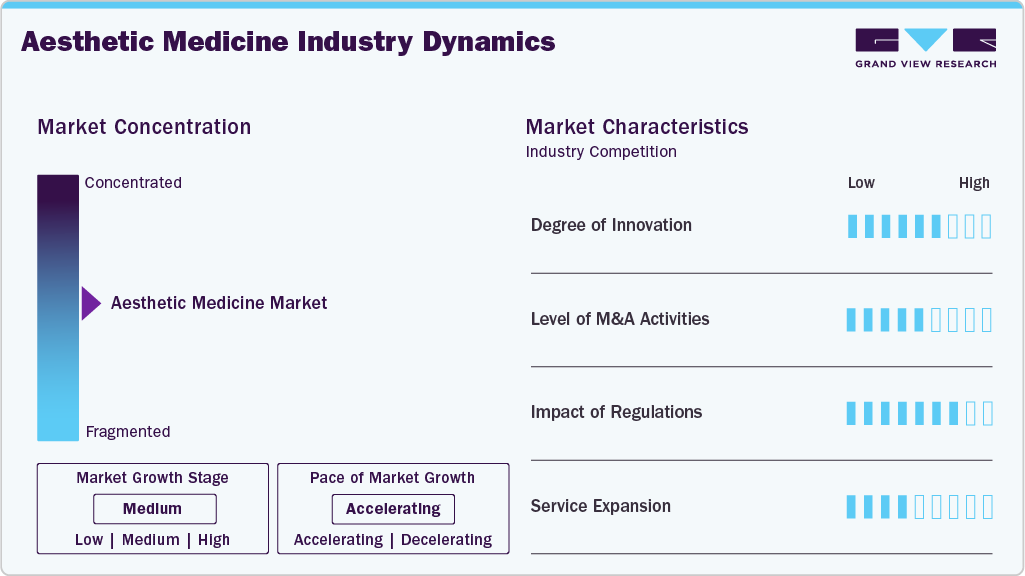
The chart below illustrates the relationships among industry concentration, industry characteristics, and industry participants. The industry is fragmented, with many service providers entering the market. There is a high degree of innovation, a moderate level of merger & acquisition activities, a high impact of regulations, and market expansion of the industry.
The industry demonstrates a high level of innovation, driven by rapid technological advancements and shifting consumer preferences. New techniques such as non-invasive body contouring, laser-based therapies, and regenerative medicine solutions are making treatments safer, faster, and more effective. According to the ISAPS survey, approximately 361,210 botulinum toxin procedures were performed in Germany in 2025. Furthermore, companies are investing heavily in R&D to develop devices and products that offer minimal downtime, greater precision, and more natural-looking results. Digital tools, including AI-based diagnostic platforms and virtual consultations, are also shaping patient experiences.
 To learn more about this report, Download Free Sample Report
 Several key market players are devising business growth strategies in the form of mergers and acquisitions. Through M&A activity, these companies can expand their business geographies. For instance, in July 2025, Waldencast acquired Novaestiq Corp. along with the U.S. rights to Saypha, a series of hyaluronic acid injectable gels, incorporating these products into the portfolio of Obagi Medical. This acquisition represents a strategic effort to expand Obagi Medical’s focus beyond just skincare.
Regulations significantly impact the industry by setting standards for safety, quality, and ethical practices. Strict approval processes for new devices, injectables, and procedures ensure patient safety but can slow down the introduction of innovative products. Different countries have varying rules, making it necessary for companies to adapt their strategies to each market. At the same time, strong regulatory frameworks help build trust among patients, as they feel more confident about the safety and effectiveness of treatments.
Key players adopt several other strategies, such as service line expansion, to maintain or strengthen their market presence. In August 2025, Thérapie Clinic announced its continued expansion with the launch of its first location in Wales. Known for offering advanced treatments such as laser hair removal, skin rejuvenation, injectables, and body contouring, the brand has been rapidly growing across the UK and Ireland. The move into Wales marks a significant milestone in its growth strategy, bringing world-class aesthetic services closer to Welsh clients seeking safe, effective, and affordable treatment. With a focus on accessibility and customer experience, the new clinic reinforces Thérapie Clinic’s position as a major player in the aesthetics industry while addressing the rising demand for non-surgical cosmetic procedures in the region.
Procedure Insights
Based on the procedure, the invasive segment held a significant share of 59.7% in 2025. Invasive aesthetic procedures have been in high demand since 2019, with the pandemic seemingly having little impact on the demand for these treatments. According to the ISAPS report, 17.4 million surgical procedures were performed by plastic surgeons in 2025. In addition, eyelid surgery has become the most prevalent surgical procedure, surpassing liposuction. This is followed by liposuction, breast augmentation, scar revision, and rhinoplasty. The prominent non-surgical treatments include botulinum toxin, hyaluronic acid (filler), hair removal, non-surgical skin tightening, and chemical peels. According to the American Society of Plastic Surgeons report 2025, breast procedures (implant placement for both primary and/or revisions, increased by 1.0% from 2025 (306,196) compared to 2023 304,181).
The non-invasive segment is expected to grow at a significant CAGR during the forecast period. Noninvasive refers to medical procedures or treatments that do not require the insertion of instruments into the body or the removal of tissue. These procedures are performed externally without breaking the skin or penetrating the body's surface. According to the ISAPS article published in 2025, approximately 20.54 million nonsurgical procedures were performed globally. The U.S. is positioned as the country with the highest number of plastic surgeons at 7,752, with 4.16 million procedures performed. One of the most popular noninvasive procedures is Botulinum Toxin, commonly known as Botox. It is used to treat various cosmetic and medical conditions, including wrinkles, facial lines, and muscle spasms.
End Use Insights
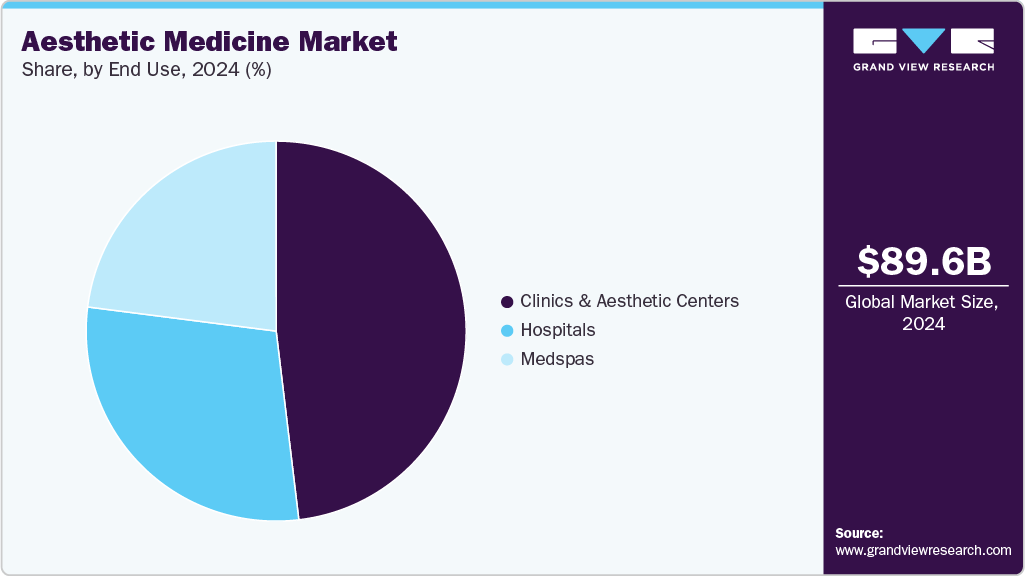
Based on end use, the clinics & aesthetic centers segment held a significant share of 48.1% in 2025. Clinics and aesthetic centers are essential facilities, particularly in reducing & removing scars. These specialized facilities provide comprehensive care beyond the acute phase managed by hospitals. While hospitals handle emergency care for injuries or conditions prone to scarring, patients often transition to clinics and aesthetic centers for ongoing scar management. Moreover, the increasing demand for scar treatment and the adoption of technological advancements by aesthetics-focused clinics & centers have driven growth. Equipped with state-of-the-art technology, they offer diverse cutting-edge scar treatment techniques, enhancing patient care and outcomes. This commitment to innovation aligns with the broader trend of prioritizing aesthetics and elevating physical appearance, driving the aesthetics medicine market.
 To learn more about this report, Download Free Sample Report
 The medspas segment is expected to grow at a significant CAGR during the forecast period. Medspas in aesthetic clinics are facilities that provide cosmetic treatments under the supervision of a licensed physician. Medspas are generally a combination of aesthetic medical centers and day spas that offer rejuvenation and corrective aesthetic treatments & products. The treatments that are provided in med spas include noninvasive body contouring (CoolSculpting, hot sculpting, butt/breast, and others.), facial injections (dermal fillers, botulinum, boosters), laser hair removal, skin rejuvenation (chemical peel, laser skin resurfacing, photorejuvenation, hydradermabrasion), IPL hair removal, laser tattoo removal, and laser scar removal. Furthermore, increasing adoption of advanced technology is driving segmental growth. In April 2025, Nextech, a well-known healthcare technology company, announced the launch of a new med spa platform designed specifically for medical spas to support medical compliance (ensuring they follow regulations and safety standards) and streamline operations.
Regional Insights
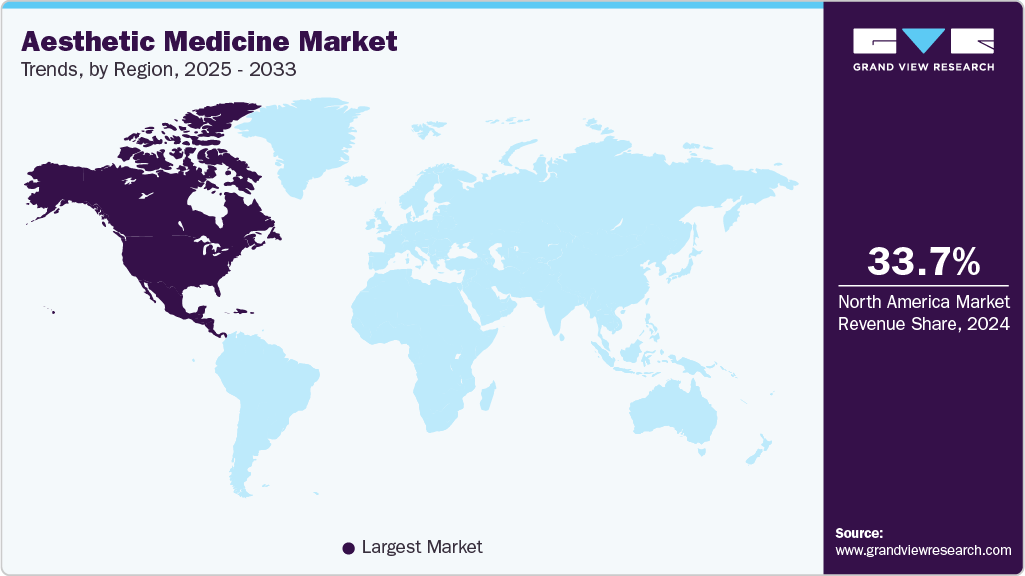
The North America aesthetic medicine industry dominated the global market with the largest revenue share of 32.4% in 2025 due to an increase in the aging population, which is creating a strong demand for treatments that address age-related concerns. As individuals grow older, they experience visible changes such as wrinkles, fine lines, sagging skin, and volume loss, which often affect confidence and quality of life. This has led to a rising preference for non-invasive and minimally invasive aesthetic procedures, including Botox, dermal fillers, and skin rejuvenation therapies.
 To learn more about this report, Download Free Sample Report
 U.S. Aesthetic Medicine Market Trends
The aesthetic medicine industry in the U.S.is expected to expand as the increasing societal emphasis on appearance fuels the demand for aesthetic procedures, contributing to market growth. This shift in cultural norms, combined with the growing awareness of the diverse cosmetic solutions accessible, has played a pivotal role in facilitating growth.
Asia Pacific Aesthetic Medicine Market Trends
The aesthetic medicine industry in the Asia Pacific is expected to witness significant growth during the forecast period. China, India, and Japan are developing economies and key revenue contributors to the market in the region. The Asia Pacific is expected to grow at a rapid pace with swiftly evolving economies. This can be attributed to the growing medical tourism industry, as it significantly drives the growth of the market in the Asia-Pacific. The region’s reputation for cost-effective yet high-quality medical care, combined with advanced surgical innovations in India and Thailand and cutting-edge pharmaceutical developments in Japan and South Korea, has positioned it as a global hub for cosmetic and aesthetic procedures.
The China aesthetic medicine industry held a significant revenue share in 2025. China’s contemporary culture greatly values the physical appearance of women and puts a strong emphasis on ideal beauty standards. Therefore, the country is a hub for aesthetic procedures. A major factor expected to drive this market is increasing workplace competition. The cosmetic procedures market in China is expected to witness lucrative growth during the forecast period. This can be attributed to the increasing number of local & global market players, rising beauty standards, and growing disposable income.
The aesthetic medicine industry in Japan is experiencing significant growth. The growth is driven by an aging population & anti-aging demand: as one of the world's most rapidly aging societies, Japan has a high demand for regenerative medicine and age-reversal treatments. There is a significant preference for "no-downtime" treatments. Non-invasive procedures, such as Botulinum Toxin (Botox) and Dermal Fillers, remain the key drivers of the market. The male demographic is a rapidly emerging growth area. Increased social acceptance has led to a rise in men seeking cosmetic and grooming enhancements to maintain a youthful appearance.
Europe Aesthetic Medicine Market Trends
The aesthetic medicine industry in Europe is experiencing strong growth, driven by several key factors. A significant driver is the increasing demand for non-invasive and minimally invasive procedures, such as Botox injections, dermal fillers, and laser therapies. These treatments offer reduced recovery times, lower risks, and more affordable options compared to traditional surgical procedures, making them appeal to a broader demographic.
The Germany aesthetic medicine industry held a significant revenue share and is experiencing significant growth, driven by the country's increasing demand for non-invasive and minimally invasive procedures, such as Botox, dermal fillers, and laser treatments. These treatments are gaining popularity due to their affordability compared to surgical options and their ability to deliver natural-looking results with minimal downtime. For instance, as per the International Society of Aesthetic Plastic Surgery (IASPS), a total of 1.30 million cosmetic surgeries were performed in 2025.
The aesthetic medicine industry in the UK is expected to grow significantly, driven by rising demand for minimally invasive and non-invasive procedures such as Botox and fillers, which offer quicker recovery and lower risk compared to surgery. Growth is further supported by rapid technological advancements in aesthetic devices, the increasing influence of social media and celebrity culture on appearance-related decisions, and the expanding availability of treatments through clinics and med-spas. In addition, improved regulatory clarity and wider professional adoption of approved aesthetic technologies are boosting consumer confidence and driving market expansion.
Latin America Aesthetic Medicine Market Trends
The aesthetic medicine industry in Latin America has experienced significant growth, driven by various factors such as the rise of the middle class. This increase in disposable income has led to a greater willingness to undergo aesthetic treatments. There has also been an increase in awareness and acceptance of such treatments, partly due to the pervasive influence of Western beauty standards. The rapid increase in the use of noninvasive cosmetic treatments such as Botox and dermal fillers has become highly popular among individuals looking for effective, quick methods to enhance their appearance without the need for surgery, and is anticipated to drive market growth.
The Argentina aesthetic medicine industry held a significant market share in 2025. The Argentina market is growing, benefiting from a confluence of socioeconomic factors and growing consumer demand for beauty enhancements. One prominent trend in the market in Argentina is the increasing preference for noninvasive cosmetic procedures, such as Botox injections and dermal fillers, which have gained significant popularity among consumers seeking effective yet minimally invasive ways to refresh their appearance.
Middle East and Africa Aesthetic Medicine Market Trends
The aesthetic medicine industry in the Middle East and Africa has witnessed notable growth, driven by a mix of cultural changes, economic growth, and enhanced access to state-of-the-art medical technologies. The growing acceptance of noninvasive cosmetic treatments, such as Botox, dermal fillers, and laser therapies, has gained significant traction among consumers desiring to improve their appearance without resorting to surgery, are a few factors accountable for market growth in the region.
The UAE aesthetic medicine industry market held a significant market share in 2025. The healthcare industry in the country is witnessing rapid growth, driven by various factors including the expansion of hospital networks, provision of specialized services, and a heightened demand for both reconstructive and elective surgical & nonsurgical procedures. This growth trajectory is indicative of the UAE's commitment to advancing its healthcare sector, ensuring residents have access to world-class medical facilities and services.
Key Aesthetic Medicine Company Insights
The market is fragmented, with the presence of many aesthetic medicine providers.The market players undertake several strategic initiatives, such as partnerships & collaborations, product launches, mergers & acquisitions, and geographical expansion to maintain their position and grow in the market.
Key Aesthetic Medicine Companies:
The following key companies have been profiled for this study on the aesthetic medicine market.
- The Cosmetic Clinic (SILK Laser Australia Limited)
- Therapie Clinic /Valterous Limited.
- SKINnovative
- Shea Aesthetic Clinic
- Sisu Clinic
- THE BANGKOK COSMETIC CLINIC
- Cutis Medical Laser Clinics
- Grand Plastic Surgery
- MUSE CITY CLINIC
- The Esthetic Clinics
Recent Developments
-
In January 2025, Shea Aesthetic Clinic announced the launch of its brand-new website, designed to offer visitors a more seamless, engaging, and informative experience. The updated platform reflects the clinic’s commitment to innovation, patient care, and accessibility by providing easy navigation, detailed information on treatments and services, and insights into the latest aesthetic advancements. Visitors can now explore a modern, user-friendly interface that highlights the clinic’s expertise, philosophy, and patient-centric approach. The launch marks a significant step in strengthening Shea Aesthetic Clinic’s digital presence, ensuring clients can conveniently connect, learn, and book services online.
-
In January 2025, Sisu Clinic secured a USD 15 million venture debt facility to support its global expansion plans. The funding has been provided by Structural Capital, a Menlo Park-based investment firm known for backing well-known consumer health and wellness companies such as Noom, Manscaped, and Beauty Counter. With this, Sisu Clinic aims to scale its network of clinics and strengthen its position in the international aesthetics market.
-
In December 2025, The Esthetic Clinic established itself as a premier destination for cosmetic surgery in India, attracting both domestic and international patients seeking high-quality aesthetic treatments. Renowned for combining advanced medical technology with expert surgical precision, the clinic offers a wide range of procedures, including plastic surgery, dental aesthetics, skin rejuvenation, and minimally invasive enhancements.
Aesthetic Medicine Market Report Scope
Report Attribute
Details
Market size in 2025
USD 98.8 billion
Market size in 2026
USD 109.2 billion
Revenue forecast in 2033
USD 240.0 billion
Growth rate
CAGR of 11.9% from 2026 to 2033
Actual data
2021 - 2025
Forecast period
2026 - 2033
Quantitative units
Revenue in USD million/billion and CAGR from 2026 to 2033
Report coverage
Revenue forecast, company ranking, competitive landscape, growth factors, and trends
Segments covered
Procedure, end use, region
Regional scope
North America; Europe; Asia Pacific; Latin America; Middle East and Africa
Country scope
U.S.; Canada; Mexico; Germany; UK; France; Italy; Spain; Norway; Denmark; Sweden; China; Japan; India; South Korea; Australia; Thailand; Brazil; Argentina; Saudi Arabia; South Africa; UAE; Kuwait
Key companies profiled
The Cosmetic Clinic (SILK Laser Australia Limited); Therapie Clinic /Valterous Limited; SKINnovative; Shea Aesthetic Clinic; Sisu Clinic; THE BANGKOK COSMETIC CLINIC; Cutis Medical Laser Clinics; Grand Plastic Surgery; MUSE CITY CLINIC; The Esthetic Clinics
Customization scope
Free report customization (equivalent up to 8 analysts working days) with purchase. Addition or alteration to country, regional & segment scope.
Pricing and purchase options
Avail customized purchase options to meet your exact research needs. Explore purchase options
Global Aesthetic Medicine Market Report Segmentation
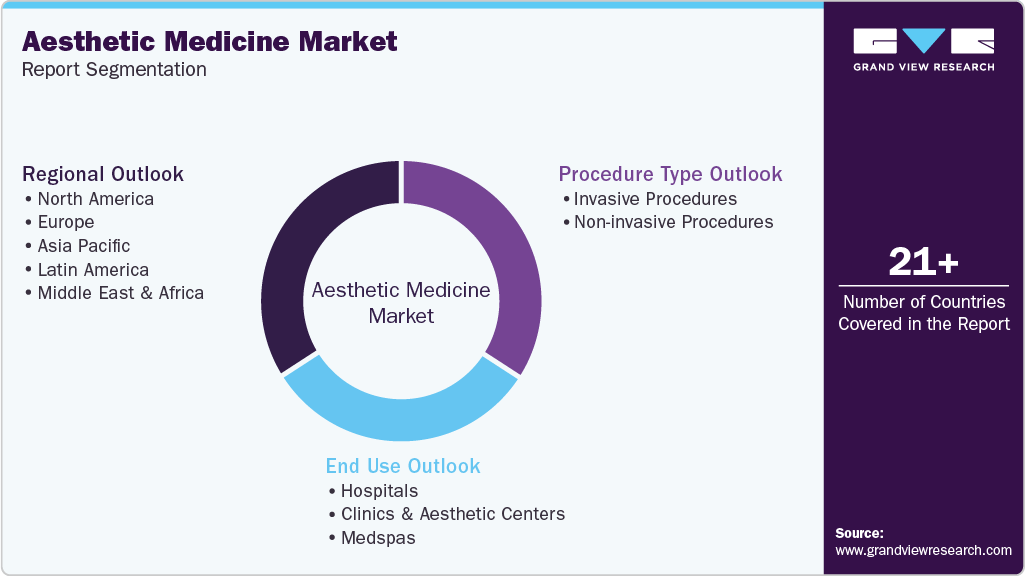
This report forecasts revenue growth at global, regional, and country levels and provides an analysis of the latest industry trends in each of the sub-segments from 2021 to 2033. For this study, Grand View Research has segmented the global aesthetic medicine market report based on procedure, end use, and region:
 To learn more about this report, Download Free Sample Report
 -
Procedure Outlook (Revenue, USD Million, 2021 - 2033)
-
Invasive Procedures
-
Breast augmentation
-
Liposuction
-
Nose reshaping
-
Eyelid Surgery
-
Tummy tuck
-
Others
-
-
Non-invasive Procedures
-
Botox injections
-
Soft tissue fillers
-
Chemical peel
-
Laser hair removal
-
Microdermabrasion
-
Others
-
-
-
End Use Outlook (Revenue, USD Million, 2021 - 2033)
-
Hospitals
-
Clinics & Aesthetic Centers
-
Medspas
-
-
Regional Outlook (Revenue, USD Million, 2021 - 2033)
-
North America
-
U.S.
-
Canada
-
Mexico
-
-
Europe
-
UK
-
Germany
-
France
-
Italy
-
Spain
-
Denmark
-
Sweden
-
Norway
-
-
Asia Pacific
-
China
-
Japan
-
India
-
South Korea
-
Australia
-
Thailand
-
-
Latin America
-
Brazil
-
Argentina
-
-
Middle East and Africa (MEA)
-
South Africa
-
Saudi Arabia
-
UAE
-
Kuwait
-
-
Frequently Asked Questions About This Report
The global aesthetic medicine market size was estimated at USD 98.8 billion in 2025 and is expected to reach USD 109.2 billion in 2026.
The global aesthetic medicine market is expected to grow at a CAGR of 11.9% during the forecast period and is expected to reach USD 240.0 billion in 2033
Some key players operating in the aesthetic medicine market include Allergan, Hologic (cynosure), Johnson & Johnson, Galderma, Lumenis, Solta Medical, Syneron candela, and Alma Laser.
Key factors include innovation in aesthetic devices in the past decade. The introduction of technically advanced products, such as non-invasive body contouring systems using controlled cooling technology is projected to create growth opportunities for the market in near future.
The invasive segment led with a 59.7% revenue share in 2025, while non-invasive is growing significantly.
The clinics & aesthetic centers segment held the highest market share of 48.1% in 2025. while medspas is growing significantly.
North America dominated the aesthetic medicine market with a share of 32.4% in 2025.
About the Author(s)
Medical Devices Research Team
Healthcare · Medical DevicesThis report was authored by the medical devices research team at Grand View Research - comprising two research analysts, one senior research analyst, and one industry expert - with specialized expertise in the medical devices segment of the healthcare industry. All findings are based on proprietary healthcare databases, executive interviews, and regulatory analysis, subject to internal peer review prior to publication.
Last Updated:
Speak to Analyst

Customize this report to your needs - add regions, segments, or data points, with 20% free customization.
Or view our licence options:


ISO 9001:2015 & 27001:2022 Certified
We are GDPR and CCPA compliant! Your transaction & personal information is safe and secure. For more details, please read our privacy policy.


