- Home
- »
- Clothing, Footwear & Accessories
- »
-
Jewelry Market Size, Share & Share, Industry Report, 2033GVR Report cover
![Jewelry Market Size, Share & Trends Report]()
Jewelry Market (2026 - 2033) Size, Share & Trends Analysis Report By Product (Necklace, Ring, Earring, Bracelet), By Material (Platinum, Gold, Diamond), By Distribution Channel (Offline Retail Stores, Online Retail Stores), By End User (Men, Women), By Region, And Segment Forecasts
- Report ID: GVR-3-68038-106-1
- Number of Report Pages: 170
- Format: PDF
- Historical Range: 2021 - 2025
- Forecast Period: 2026 - 2033
- Industry: Consumer Goods
- Report Summary
- Table of Contents
- Interactive Charts
- Methodology
- Download FREE Sample
-
 Download Sample Report
Market Size, 2025 (US$B)$381.5B Forecast, 2033 (US$B)$578.5B CAGR, 2026 - 20335.5% Jewelry Market Summary
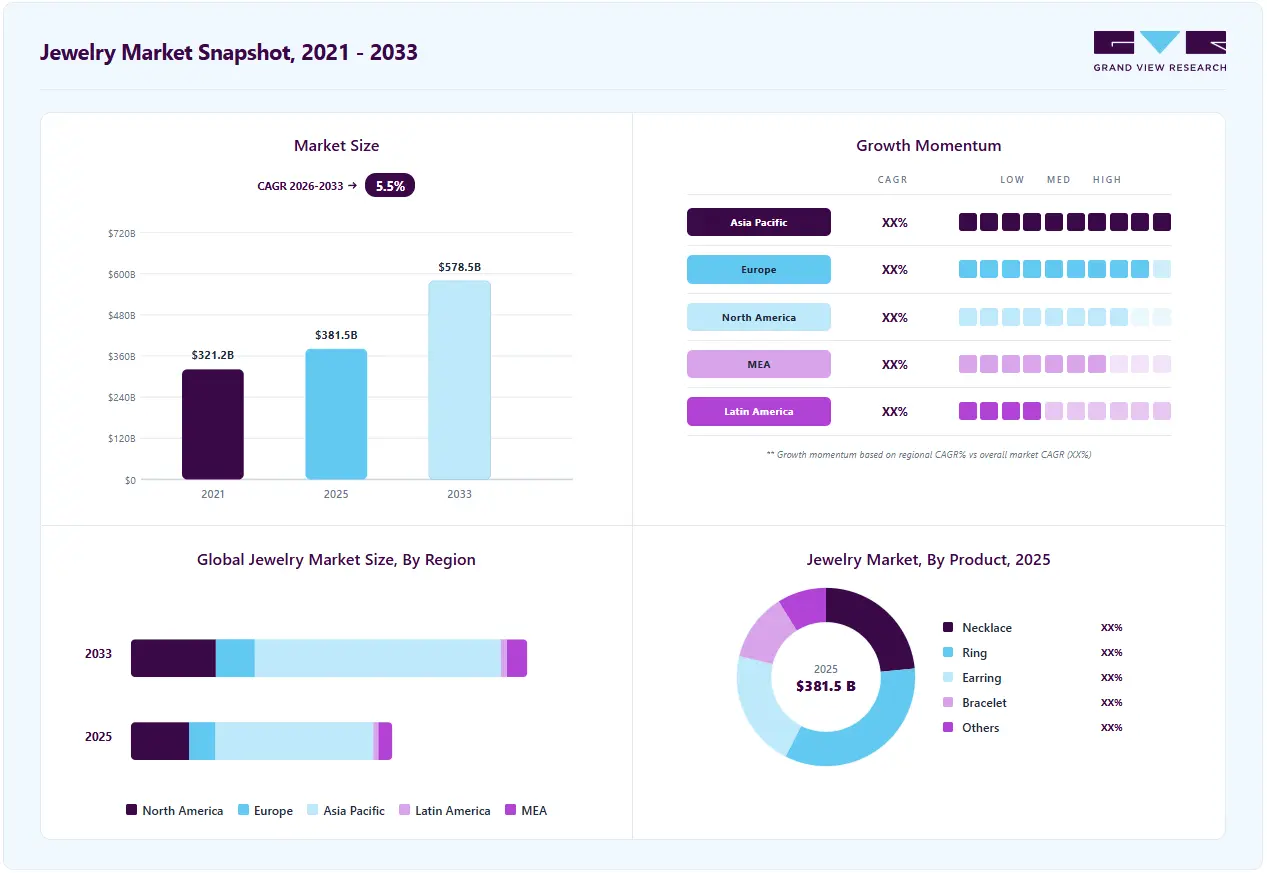
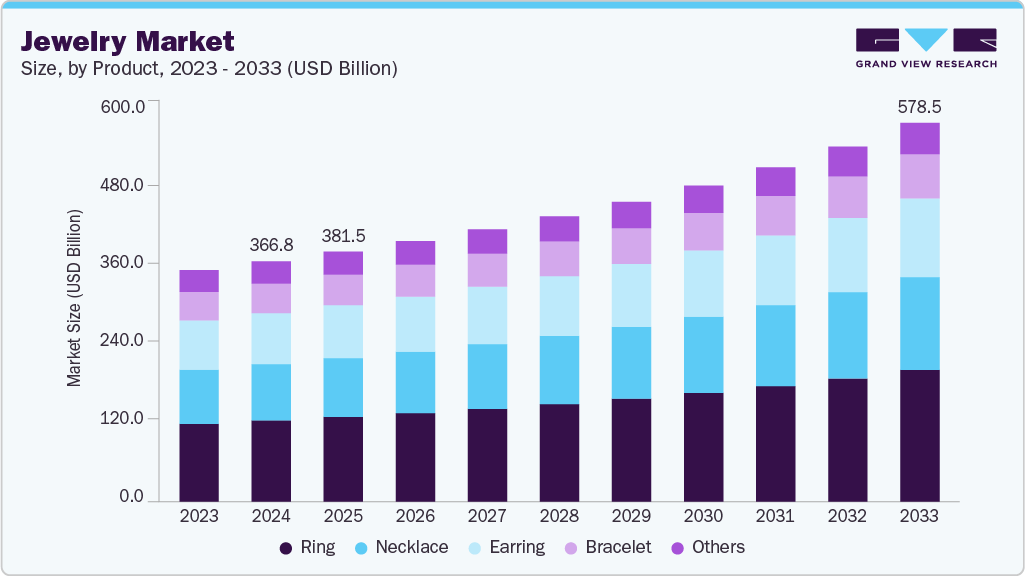
The global jewelry market size was estimated at USD 381.54 billion in 2025 and is expected to reach USD 578.45 billion by 2033, growing at a CAGR of 5.5% from 2026 to 2033. The market is primarily driven by rising disposable incomes, evolving fashion trends, and increasing demand for luxury and personalized accessories.
Key Market Trends & Insights
- Asia Pacific held the largest share of the global jewelry market in 2025, accounting for 60.4%.
- The Europe jewelry market is experiencing significant growth, projecting a CAGR of 5.1%.
- The ring market in the global jewelry market held the largest market share, accounting for 33.9% in 2025.
- By material, the gold jewelry market held the largest share, accounting for a share of 55.0% in 2025.
- By material, the diamond jewelry market in Europe is expected to witness the fastest CAGR of 5.5% during the forecast period.
Market Size & Forecast
- 2025 Market Size: USD 381.54 Billion
- 2033 Projected Market Size: USD 578.45 Billion
- CAGR (2026-2033): 5.5%
- Asia Pacific: Largest market in 2025
Market Dynamics
The jewelry market is benefiting from rising disposable incomes and expanding luxury consumption across emerging markets, particularly in India, the Middle East, and Southeast Asia. Increasing urbanization, growing middle-class populations, and cultural affinity toward gold and diamond jewelry are supporting demand across both daily-wear and ceremonial categories. At the same time, organized jewelry retailers are increasingly leveraging omnichannel strategies, digital customization tools, and direct-to-consumer platforms to improve accessibility and customer engagement. These developments are helping brands expand beyond traditional store-led sales models and capture younger digitally influenced consumers.
The shift is visible through both industry and company trends. The World Gold Council reported that India remained one of the largest contributors to global jewelry consumption in 2025 despite elevated gold prices, supported by festive and wedding-related purchases. In parallel, Richemont stated that nearly 76% of group sales in FY2025 came through direct-to-client channels, reflecting the growing role of digital and omnichannel engagement in luxury jewelry retail. Similarly, major jewelry brands are increasingly investing in e-commerce, virtual try-on technologies, and personalized collections to strengthen customer retention and expand geographic reach.
One of the biggest restraints for the global jewelry market is the sustained increase in gold prices, which continues to reduce affordability and suppress volume demand across price-sensitive consumer markets. While higher precious metal prices support market value growth, they also increase ticket sizes and discourage discretionary purchases, particularly among middle-income consumers. The impact is especially significant in countries such as India and China, where gold jewelry purchases remain highly linked to weddings, festivals, and investment-oriented buying behavior. As a result, consumers are increasingly shifting toward lightweight jewelry, lower-carat products, and smaller-ticket purchases to manage spending.
The affordability pressure is clearly reflected in industry data. According to the World Gold Council, global jewelry demand volumes declined to nearly 1,542 tonnes in 2025, representing one of the lowest levels in recent years, as record-high gold prices affected purchasing behavior across major markets. The organization further noted that elevated gold prices weighed on jewelry demand across most regions during 2025. In response, several jewelry retailers are increasingly focusing on lightweight collections, exchange programs, installment-based purchases, and lower-weight designs to sustain consumer demand amid rising precious metal costs.
Brand Share Analysis
The global jewelry market is characterized by a combination of long-established heritage brands, premium luxury houses, and fast-growing regional and digital-first players catering to diverse consumer segments and price points.
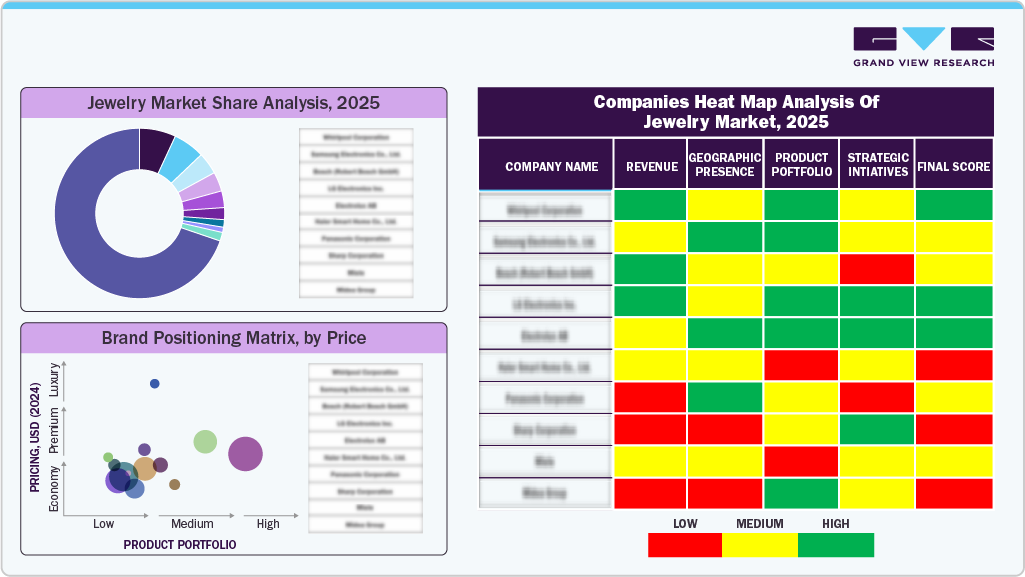
Established players such as Tiffany & Co., Cartier, Bulgari, and Van Cleef & Arpels dominate the premium and luxury segments through strong brand heritage, high-quality craftsmanship, and global retail networks. These brands benefit from high brand loyalty, iconic collections, and strong presence in key luxury markets across North America, Europe, and East Asia.
Mid-premium and branded mass-market players including Pandora, Swarovski, Chow Tai Fook, and Signet Jewelers command significant market share by offering accessible luxury, contemporary designs, and wide distribution across physical stores and e-commerce platforms. Their focus on branded collections, transparent pricing, and frequent new launches appeals to younger and aspirational consumers.
Regional and fast-growing players such as Titan (Tanishq), Malabar Gold And Diamonds Limited, and regional Middle Eastern jewelers are expanding rapidly in the Asia Pacific, the Middle East, and parts of Africa. These companies leverage strong local sourcing networks, customization for regional preferences in gold purity and design, and competitive pricing to address wedding-driven and investment-oriented demand.
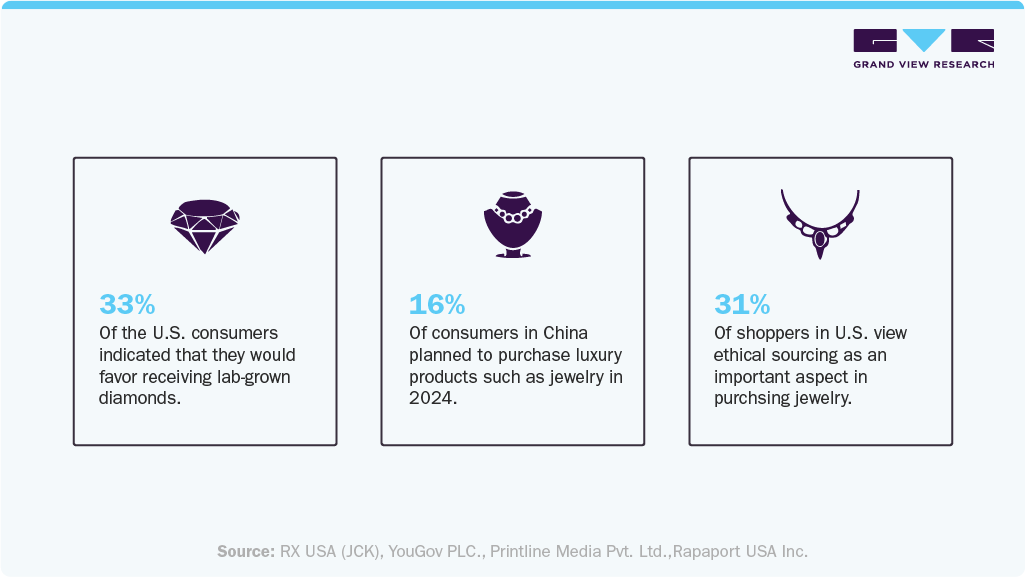
As consumer spending power increases and fashion-conscious populations grow, the demand for fine and fashion jewelry continues to rise. In addition, there is a growing emphasis on sustainability and ethical sourcing, prompting consumers to choose jewelry made from responsibly sourced materials. These trends, along with the influence of digital platforms and e-commerce, are reshaping the global jewelry market and driving its ongoing evolution.
The global jewelry market is driven by a combination of rising consumer demand for luxury and personalized items, along with rapid technological advancements. Innovations such as 3D printing and smart jewelry are drawing interest from tech-savvy consumers, offering new levels of customization and functionality. For instance, in June 2025, Platinum Guild International announced the introduction of its first 3D printed platinum jewelry collection under ‘Tùsaire’ collection. The product line likely to feature jewelry made from platinum and titanium, including necklaces, bracelets, rinsh and earrings.
The imitation jewelry market is driven by fashion-led consumption, frequent design refresh cycles, and affordability compared to precious jewelry. Demand is typically strongest in urban consumers and younger buyers who prefer trend-based accessories for daily wear and occasions. Growth is also supported by e-commerce, influencer marketing, and the rise of fast-fashion styling.
Moreover, collaborations between renowned designers and major fashion brands are enhancing brand value and market visibility. Moreover, social media platforms and influencer marketing are playing a pivotal role in shaping consumer preferences and boosting online sales. Leading companies are increasingly adopting sustainable practices and digital tools to cater to evolving consumer expectations and remain competitive in the dynamic global market. The wholesale jewelry market serves as the backbone of distribution, supplying retailers, online sellers, and regional traders with finished goods and components.
The costume jewelry market focuses on non-precious materials, allowing brands to deliver frequent new collections and wide style variety at accessible prices. Demand is closely tied to fashion cycles, celebrity trends, and seasonal events, with high purchase frequency compared to fine jewelry.
Consumer Insights for Jewelry
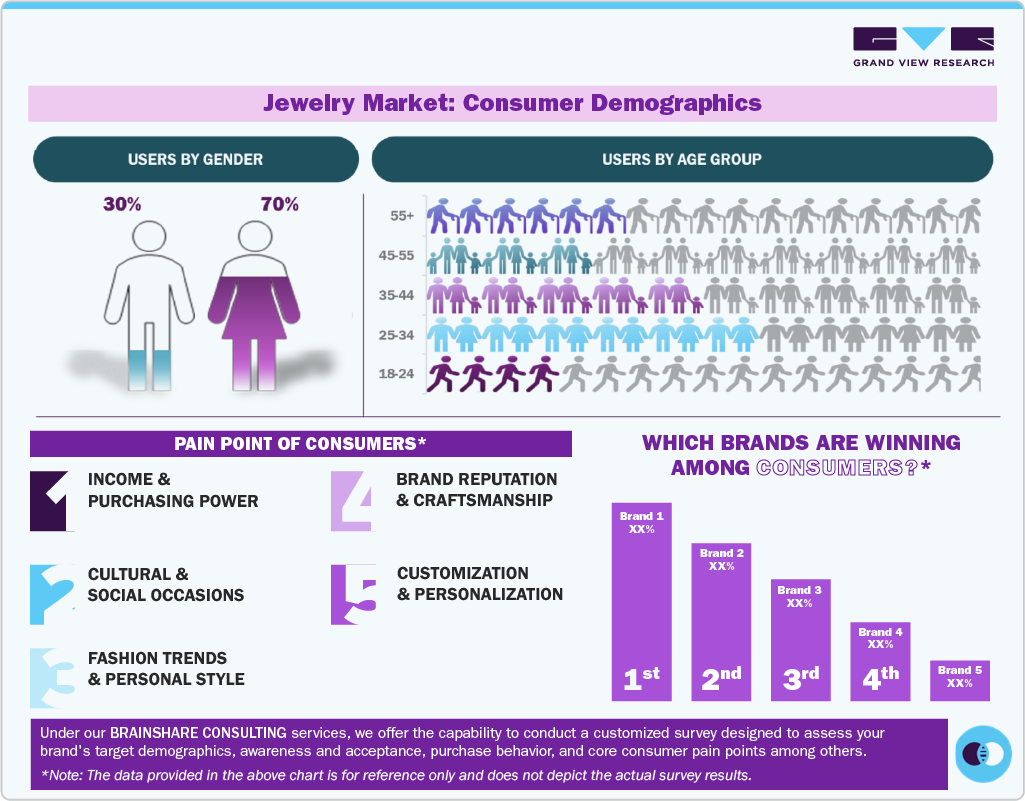
The global jewelry market shows distinct pricing patterns across segments. Fine jewelry, crafted from precious metals and gemstones, commands premium prices ranging from USD 500 to several thousand, driven by material quality and brand reputation. Demi-fine jewelry, using semi-precious stones and lower-karat gold, typically ranges from USD 50-500, appealing to trend-conscious consumers. Fashion or costume jewelry is more affordable at USD 10-100, influenced by trends and mass production, while custom and personalized pieces range from USD 100-1,500 depending on design complexity and materials. Regional preferences, cultural significance, sustainability, and online sales channels further shape pricing dynamics across markets.
Product Insights
The rings market accounted for the largest share of 33.9% of the revenue in 2025. The global jewelry market, especially for rings, is influenced by multiple key drivers such as increasing disposable income, rising demand for luxury and customized pieces, and the deep-rooted cultural importance of rings in engagements, weddings, and other milestones. A growing shift toward sustainable and ethically sourced materials is also playing a major role in shaping consumer choices. Moreover, global fashion trends, celebrity endorsements, and the rapid growth of online retail platforms are enhancing product visibility and accessibility, fueling sales and expanding the market worldwide.
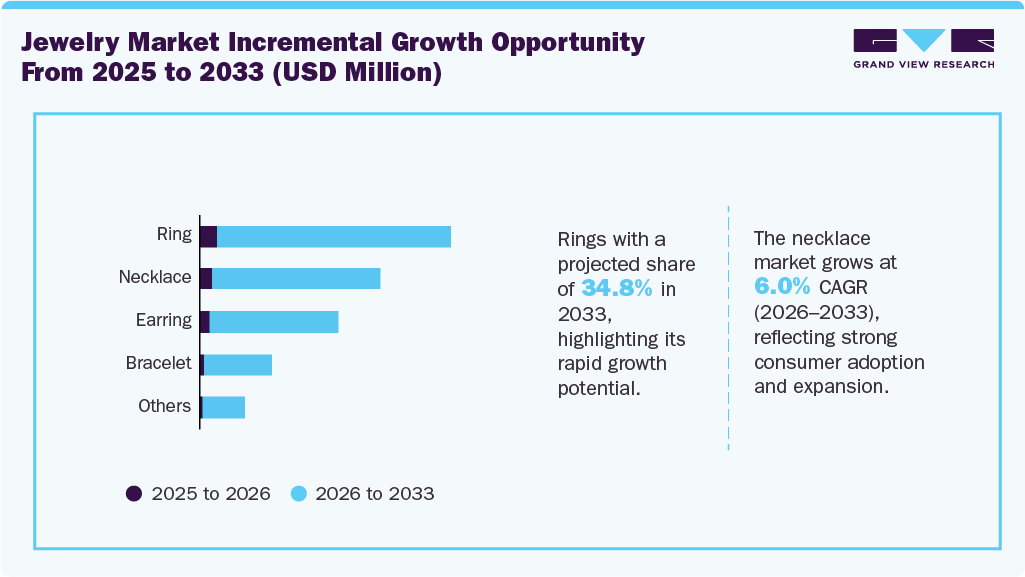
The necklace market is projected to grow at the fastest CAGR of 6.0% from 2026 to 2033. The necklace segment in the global jewelry market is propelled by shifting fashion preferences, a growing appetite for statement and personalized pieces, and increasing disposable incomes across emerging and developed markets. Cultural traditions and gifting practices, particularly during holidays, weddings, and milestones, continue to drive demand worldwide. For instance, a survey published by YouGov in June 2025, about 33% of men in the UK purchased necklaces & chains for themselves. The expansion of online retail and influencer marketing has increased the visibility of designer and personalized necklaces, while heightened consumer awareness around sustainability is driving brands toward ethical and transparent sourcing practices.
The earring market is projected to grow at a CAGR of 5.3% from 2026 to 2033. Recent years have witnessed prominent old fashion trends making a comeback. Hoop earrings, for instance, are gaining traction once again, with brands such as Stones & Silver witnessing high sales of these products at recent trade shows around the world.
The bracelet market is projected to grow at a CAGR of 4.8% from 2026 to 2033. Bracelets can comprise numerous components made of jewels, rocks, crystals, metals, pearls, plastic, and shells. This fashion accessory is available in a wide variety of options, designs, and styles. Men’s bracelets are typically made of gold, palladium, or platinum.
The chalcedony earrings market sits within the broader colored gemstone jewelry space, where demand is influenced by design aesthetics, gemstone availability, and consumer interest in semi-precious stones. Chalcedony is often positioned as an elegant, affordable alternative to higher-priced gemstones, especially in pastel or translucent styles.
Material Insights
Gold jewelry industry accounted for the largest share of 55.0% of the revenue in 2025. The gold jewelry market is underpinned by gold’s cultural significance, aesthetic appeal, and investment value. Demand is driven by a combination of traditional and modern designs across yellow, white, and rose gold, with major contributions from markets such as India, China, and Italy. According to the data published in October 2025, gold holds a special importance in the Indian culture and is purchased during various auspicious occasions such as Dhanteras & Diwali. The cultural aspect includes religious beliefs, traditional & festivals. Contemporary styling trends are further increasing the popularity of lightweight and adaptable gold jewelry.
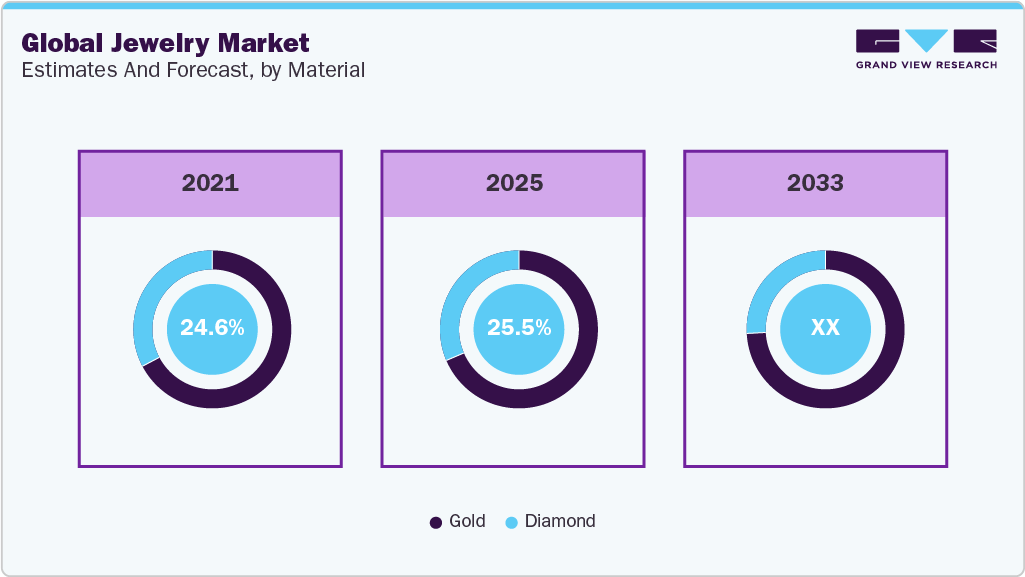
The diamond jewelry industry is projected to grow at the fastest CAGR of 5.5% from 2026 to 2033. The global diamond jewelry market is fueled by its strong association with luxury, romance, and enduring value. Cultural traditions surrounding engagements, weddings, and milestone celebrations remain central to diamond jewelry demand. Technological advancements in diamond certification and grading have reinforced consumer confidence, while the expanding appeal of lab-grown diamonds among younger, eco-conscious buyers is transforming the competitive landscape. According to a 2025 survey conducted by The Plumb Club among 2,000 U.S. consumers aged between 25 and 60, 84% of the respondents are aware of lab-grown diamonds.
Distribution Channel Insights
The jewelry sales through the offline retail stores accounted for the largest share of 83.9% of the global revenue in 2025. Offline retail channels, including jewelry stores, department stores, and hypermarkets, remain integral to the global jewelry market due to their ability to offer personalized service, in-person product assessment, and immediate purchase fulfillment. Dedicated jewelry stores provide a premium shopping experience through expert consultation, customized offerings, and exclusive collections. In contrast, department stores and hypermarkets cater to the mass-market segment by offering a broad selection of affordable fashion jewelry in easily accessible locations. According to the data published in November 2024, 70% of the D2C jewelry brands operate both offline and online, but the offline stores receive 20% more conversions compared to the online stores. These physical retail outlets also benefit from longstanding consumer trust, brand recognition, and the tactile experience that remains important for many jewelry buyers worldwide. In December 2024, Indian jewelry brand Tanishq, part of the Tata Group, launched its largest flagship boutique in the Dubai Gold Souk Extension, spanning 5,000 sq ft and showcasing over 10,000 meticulously crafted pieces, from everyday elegance to bespoke bridal collections.
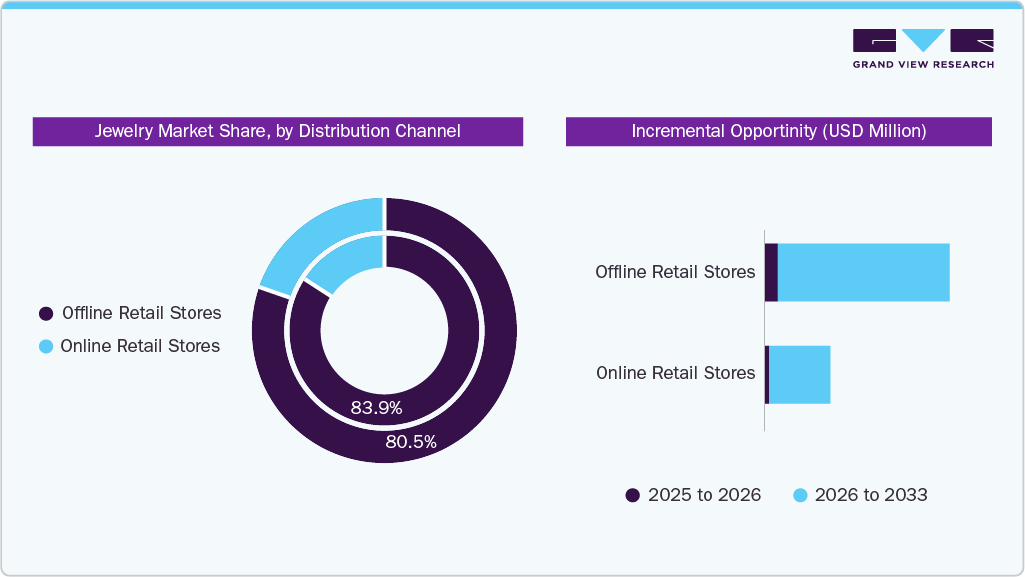
The jewelry sales through the online retail stores are projected to grow at the fastest CAGR of 8.0% from 2026 to 2033. Online retail channels are witnessing rapid expansion in the global jewelry market, driven by rising internet access, growth in mobile commerce, and shifting consumer buying behavior. Consumers are increasingly attracted to the convenience of online browsing and purchasing, as well as the availability of a wider assortment of designs, brands, and price ranges. Enhanced digital features, including virtual try-on tools, high-quality visuals, customization capabilities, and real-time customer feedback, are further strengthening the online shopping experience. According to the data published in July 2025, about 60% of jewelry purchases made by millennials in India are via online channels, preferring customized designs.
End User Insights
The women jewelry market accounted for the largest share of around 71.9% of the revenue in 2025. The use of jewelry among women in India is driven by cultural traditions, with gold and diamond pieces symbolizing status, wealth, and auspiciousness during weddings and festivals. Growing fashion consciousness and exposure to global trends are increasing demand for contemporary, lightweight, and versatile designs for daily wear. Branded collections, celebrity endorsements, and social media influence inspire aspirational purchases. Easy financing options and widespread availability through both offline and online channels further encourage women to invest in jewelry for both adornment and personal expression.
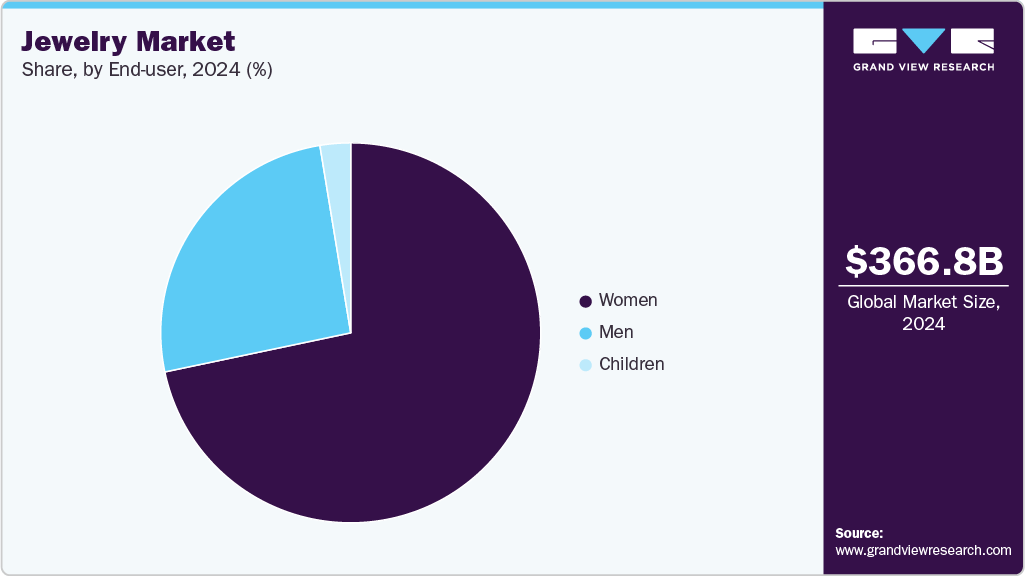
The men’s jewelry market is projected to grow at the fastest CAGR of 4.8% from 2026 to 2033. Men’s jewelry demand is growing as cultural perceptions evolve, with men increasingly viewing jewelry as a form of personal identity and self‑expression rather than a gender‑specific accessory. Younger consumers, in particular, are embracing pieces such as chains, rings, and bracelets as everyday fashion statements, moving beyond occasional or ceremonial use. This shift reflects a broader return to jewelry as a meaningful form of adornment and legacy, with many choosing pieces that resonate with their personal style and story. As a result, men’s jewelry is becoming a mainstream and expanding segment within the global market. According to the data published in May 2024, as per a survey conducted among 1,002 men in the U.S., about 78% believe that men’s jewelry is becoming increasingly mainstream.
The children’s jewelry market is projected to grow at the fastest CAGR of 4.8% from 2026 to 2033. Children are increasingly interested in fashion and personal expression, and jewelry is a fun way to showcase their style. Personalized pieces with names, birthstones, or special symbols hold sentimental value for both children and their parents. Modern children's jewelry prioritizes safety with hypoallergenic materials and secure closures, ensuring comfort and peace of mind.
Regional Insights
North America jewelry market accounted for the market share of 22.2% in 2025. The North American jewelry market is fueled by increasing interest in fashion-forward and statement pieces, with consumers seeking jewelry that complements personal style and lifestyle. Rising awareness of sustainable and ethically sourced materials is influencing brand choice and purchase decisions. Male jewelry adoption and casual, everyday wear trends are expanding the consumer base beyond traditional buyers. Additionally, innovations in smart and tech-integrated jewelry are attracting tech-savvy and younger demographics, further boosting market growth.
U.S. Jewelry Market Trends
The U.S. led the North American jewelry market in 2025, holding the largest market share with 92.5% of the region’s total revenue. The U.S. jewelry market is primarily driven by rising disposable income and increasing consumer preference for luxury and personalized jewelry. Millennials and Gen Z are fueling demand for ethically sourced and sustainable pieces. E-commerce growth and digital marketing are expanding reach and convenience. Additionally, trends such as customization, branded collaborations, and gemstone popularity continue to influence buying behavior. According to the data published in August 2025, ItaliaChains surveyed 5,000 verified customers and discovered that Americans spend an average of USD 477 per year on jewelry.
The jewelry market in Canada is projected to grow at a CAGR of 6.0 from 2026 to 2033. Jewelry holds a cherished place in Canadian hearts, with its abundant presence adorning necks, wrists, ears, and fingers. The popularity of jewelry items like diamonds has remained remarkably consistent over the years, driven by a confluence of factors including cultural heritage, fashion trends, and personal significance
Europe Jewelry Market Trends
The jewelry market in Europe is projected to grow at a CAGR of 5.1% from 2026 to 2033. Europe jewelry market is fueled by a mix of tradition, style awareness, and a growing demand for personalized and ethically sourced pieces. Shoppers prioritize craftsmanship and design, showing strong interest in both luxury and affordable fashion jewelry. Celebratory occasions like weddings, anniversaries, and holidays sustain steady purchases. Moreover, digital platforms and influencer marketing are broadening access and influencing contemporary jewelry trends across the region.
The jewelry market in the UK is projected to grow at the fastest CAGR of 5.9% from 2026 to 2033. Jewelry demand in the UK is shaped by a combination of tradition, contemporary fashion trends, and a rising focus on sustainable luxury. Shoppers are attracted to both established heritage brands and emerging designers offering distinctive, narrative-driven pieces. Purchases are strongly influenced by seasonal trends, cultural celebrations, and social occasions such as weddings. Furthermore, the increasing appeal of customizable and gender-neutral designs is redefining preferences across different age groups. According to the survey published by YouGov in June 2025, about 17% of men in the UK bought jewelry such as chains, bracelets, and earrings for themselves
The jewelry market in the Germany is projected to grow at a CAGR of 5.5% from 2026 to 2033. The increasing demand for designer jewelry, including rose gold and pink diamond engagement rings, is the main factor of driving the growth of this segment. These rings are highly preferred for engagements among a majority of the people in the country.
Asia Pacific Jewelry Market Trends
The Asia Pacific led the global jewelry market and accounted for the largest market share of 60.4% in 2025. The Asia Pacific jewelry market is driven by rising disposable incomes and a growing middle-class population seeking luxury and lifestyle products. Cultural traditions and festivals, such as weddings and religious celebrations, significantly boost demand. Increasing urbanization and exposure to global fashion trends are shaping consumer preferences.
The jewelry market in India is projected to grow at the fastest CAGR of 6.5% from 2026 to 2033. The market is one of the world’s largest, supported by strong cultural demand tied to weddings, festivals, and gifting. Gold remains the dominant category, while diamond and lightweight daily-wear jewelry are gaining traction among younger, urban consumers. Organized retail, hallmarking adoption, and modern designs are shaping how the market is evolving.
The jewelry market in China is shaped by large-scale consumer demand, strong gifting culture, and a mix of heritage brands and fast-growing contemporary players. Gold jewelry is significant, while diamonds and branded designer pieces see demand in premium urban segments. Digital-first retail, live commerce, and social platforms play an outsized role in discovery and conversion.
Digital commerce and social media marketing are expanding reach and convenience for buyers. Additionally, companies are also initiating new ventures in the region to establish and strengthen their jewelry presence. For instance, in May 2025, Shanghai inaugurated the International Jewelry Fashion Functional Zone in Huangpu District, aiming to establish the city as a global jewelry and fashion hub. The initiative includes a comprehensive three-year development plan featuring 24 strategic tasks across six key categories, such as brand incubation, designer talent cultivation, and immersive retail experiences.
Central & South America Jewelry Market Trends
Central & South America jewelry market is projected to grow at the fastest CAGR of 2.1% from 2026 to 2033. The growing middle-class population coupled with the growing popularity of local and multinational brands in the region, is expected to drive the jewelry market in the region. In addition, jewelry sales in branded stores is increasing owing to the exclusive designs and collections offered at these stores
Middle East & Africa Jewelry Market Trends
Middle East & Africa jewelry market is projected to grow at the fastest CAGR of 5.0% from 2026 to 2033. The Middle East hosts numerous jewelry exhibitions and trade shows every year, which is expected to positively impact the market.
In January 2026, Ithra Dubai unveiled the Dubai Gold District, a purpose‑built global hub for gold and jewelry retail, bullion trading, and wholesale activity designed to strengthen Dubai’s position as a leading global center for gold and jewelry trade. A flagship feature of the new district is expected to be the world’s first “Gold Street,” a street constructed using gold elements intended as a major attraction and retail destination.
Key Jewelry Companies:
The following key companies have been profiled for this study on the jewelry market.
- Cartier
- Graff Diamonds Limited
- Damas Jewellery
- Titan Company
- Malabar Gold And Diamonds Limited.
- De Beers Group
- LVMH
- Swarovski
- Kalyan Jewellers
- Pandora
Recent Developments
-
In June 2025, De Beers introduced Ombré Desert Diamonds, its first flagship “beacon” jewelry concept in over a decade, showcasing multi-stone pieces inspired by desert hues to reignite interest in naturally colored diamonds. The company also introduced Origin, De Beers Group, a polished diamond program offering full provenance via blockchain-backed traceability, enriching consumer connection through origin, rarity, and social-impact storytelling.
-
In May 2025, Shanghai inaugurated the International Jewelry Fashion Functional Zone in Huangpu District, aiming to establish the city as a global jewelry and fashion hub. The initiative includes a comprehensive three-year development plan featuring 24 strategic tasks across six key categories, such as brand incubation, designer talent cultivation, and immersive retail experiences.
-
In December 2024, Indian jewelry brand Tanishq, part of the Tata Group, launched its largest flagship boutique in the Dubai Gold Souk Extension, spanning 5,000 sq ft and showcasing over 10,000 meticulously crafted pieces, from everyday elegance to bespoke bridal collections.
Jewelry Market Report Scope
Report Attribute
Details
Market value size in 2026
USD 397.72 billion
Revenue forecast in 2033
USD 578.45 billion
Growth rate (Revenue)
CAGR of 5.5% from 2026 to 2033
Actual data
2021 - 2025
Forecast period
2026 - 2033
Quantitative (Revenue) units
Revenue in USD Million/Billion, and CAGR from 2026 to 2033
Report coverage
Revenue forecast, company ranking, competitive landscape, growth factors, and trends
Segments covered
Product, material, distribution channel, end user
Regional Scope
North America; Europe; Asia-Pacific; Central & South America; Middle East & Africa
Country scope
U.S.; Canada; Mexico; Germany; UK; France; Italy; Spain; China; India; Japan; Australia & New Zealand; South Korea; Brazil; Argentina; South Africa; Saudi Arabia; UAE
Key companies profiled
Cartier; Graff Diamonds Limited; Damas Jewellery; Titan Company; Malabar Gold And Diamonds Limited.; De Beers Group; LVMH; Swarovski; Kalyan Jewellers; Pandora
Customization scope
Free report customization (equivalent up to 8 analysts’ working days) with purchase. Addition or alteration to country, regional & segment scope.
Pricing and purchase options
Avail customized purchase options to meet your exact research needs. Explore purchase options
Global Jewelry Market Report Segmentation
This report forecasts revenue growth at the global, regional, and country levels and provides an analysis of the latest industry trends and opportunities in each of the sub-segments from 2021 to 2033. For this study, Grand View Research has segmented the global jewelry market report based on product, material, distribution channel, end user, and region:
-
Product Outlook (Revenue, USD Million, 2021 - 2033)
-
Necklace
-
Ring
-
Earring
-
Bracelet
-
Others
-
-
Material Outlook (Revenue, USD Million, 2021 - 2033)
-
Platinum
-
Gold
-
Diamond
-
Others
-
-
Distribution Channel Outlook (Revenue, USD Million, 2021 - 2033)
-
Offline Retail Stores
-
Supermarkets & Hypermarkets
-
Jewelry Stores
-
-
Online Retail Stores
-
-
End User Outlook (Revenue, USD Million, 2021 - 2033)
-
Men
-
Women
-
Children
-
-
Regional Outlook (Revenue, USD Million, 2021 - 2033)
-
North America
-
U.S.
-
Canada
-
Mexico
-
-
Europe
-
Germany
-
UK
-
France
-
Italy
-
Spain
-
-
Asia Pacific
-
China
-
India
-
Japan
-
South Korea
-
Australia & New Zealand
-
-
Central & South America
-
Brazil
-
Argentina
-
-
Middle East & Africa
-
Saudi Arabia
-
South Africa
-
UAE
-
-
Delivered Customizations
This report has been delivered with the following In-depth customizations
Client Request
Customization Delivered
Value Adds
Cross-Segmentation Analysis of Jewelry Products, Materials, End Users & Regional Demand
Detailed cross-segmentation analysis of the global jewelry market across necklaces, rings, earrings, bracelets, and other jewelry products, mapped against gold, diamond, platinum, and other material categories across North America, Europe, Asia Pacific, Latin America, and Middle East & Africa. The analysis also examines demand shifts by gender, age group, occasion-based purchasing (bridal, gifting, festive, and everyday wear), luxury versus fashion jewelry positioning, consumer spending patterns, cultural preferences, and online versus offline buying behavior.
Identifies where demand is concentrated across high-value luxury/fine jewelry versus affordable fashion jewelry, and helps separate investment-led buying from style-led and gifting-led buying. It is especially useful for tracking how rings and gold dominate the market, while necklaces are positioned for faster growth and culturally driven demand in weddings, gifting, and milestone occasions.
Brand Share Analysis in the Jewelry Market Ecosystem
Comprehensive benchmarking of the global jewelry ecosystem across heritage luxury houses, regional leaders, and digitally enabled brands. The competitive set can include Cartier, Graff Diamonds Limited, Damas Jewellery, Titan Company, Malabar Gold & Diamonds, De Beers Group, LVMH, Swarovski, Kalyan Jewelers, Pandora, and BVLGARI, with comparison across brand equity, price positioning, craftsmanship, material mix, retail footprint, and omnichannel capabilities.
Helps identify which brands compete primarily through exclusivity and heritage versus those expanding through affordability, design innovation, influencer marketing, and digital-first engagement. The study also uncovers consolidation opportunities, white spaces in premium fashion jewelry, and evolving competition from lab-grown diamond specialists and personalized jewelry brands.
Retail Channel, Pricing Structure & Consumer Purchase Journey Mapping
Strategic assessment of how jewelry products perform across offline retail stores, branded boutiques, department stores, online marketplaces, and direct-to-consumer platforms. The analysis evaluates price segmentation from entry-level fashion jewelry to ultra-premium luxury collections, while also examining customer buying triggers such as gifting, weddings, festivals, investment purchases, and everyday wear.
Enables companies to understand where physical retail remains critical for trust-based and high-ticket purchases, while digital commerce is accelerating product discovery and impulse buying. The analysis also highlights how financing options, customization services, virtual try-on technology, and social commerce are reshaping the modern jewelry purchasing journey.
Frequently Asked Questions About This Report
Some key players operating in the global jewelry market include Cartier, BVLGARI, Damas Jewellery, Titan Company Limited, Malabar Gold & Diamonds, and De Beers Group.
Key factors driving growth in the global jewelry market include increasing consumer preference for personalized and luxury jewelry, growing disposable incomes, and rising demand for branded and sustainable products. Market expansion is further supported by digital transformation in retail, global fashion trends, and the popularity of fine jewelry in special occasions such as weddings, engagements, and gifting.
The global jewelry market size was estimated at USD 381.54 billion in 2025 and is expected to reach USD 397.72 billion in 2026.
The global jewelry market is expected to grow at a compound annual growth rate (CAGR) of 5.5 % from 2026 to 2033 to reach USD 578.45 billion by 2033.
The ring market accounted for a revenue share of 33.85% in 2025, driven by strong demand for engagement, weddings, and fashion rings. This growth was further supported by increasing disposable incomes and a rising preference for personalized jewelry.
About the authors:
Author: GVR Clothing, Footwear & Accessories Research Team | Last Updated:


Share this report with your colleague or friend.
Need a Tailored Report?
Customize this report to your needs — add regions, segments, or data points, with 20% free customization.


ISO 9001:2015 & 27001:2022 Certified
We are GDPR and CCPA compliant! Your transaction & personal information is safe and secure. For more details, please read our privacy policy.