
- Home
- »
- Biotechnology
- »
-
Genomics Market Size, Share & Growth Report, 2026-2033GVR Report cover

Genomics Market (2026 - 2033)
Size, Share & Trends Analysis Report By Application (Functional Genomics, Pathway Analysis), By Deliverables (Products, Services), By End Use (pharmaceutical & biotechnology companies, hospital & clinic), By Region, And Segment Forecasts
Market Size, 2025
$21.8BMarket Estimate, 2026
$22.6BMarket Forecast, 2033
$72.5BCAGR, 2026–2033
18.2%Genomics Market Summary
The global genomics market size was valued at USD 21.8 billion in 2025 and is projected to grow from USD 22.6 billion in 2026 to USD 72.5 billion by 2033, at a CAGR of 18.2% from 2026 to 2033. North America dominated the market with a revenue share of 42.3% in 2025. Market growth is supported by the expanding application of genomics across precision medicine, drug discovery, genetic disease research, and agricultural and industrial biotechnology.
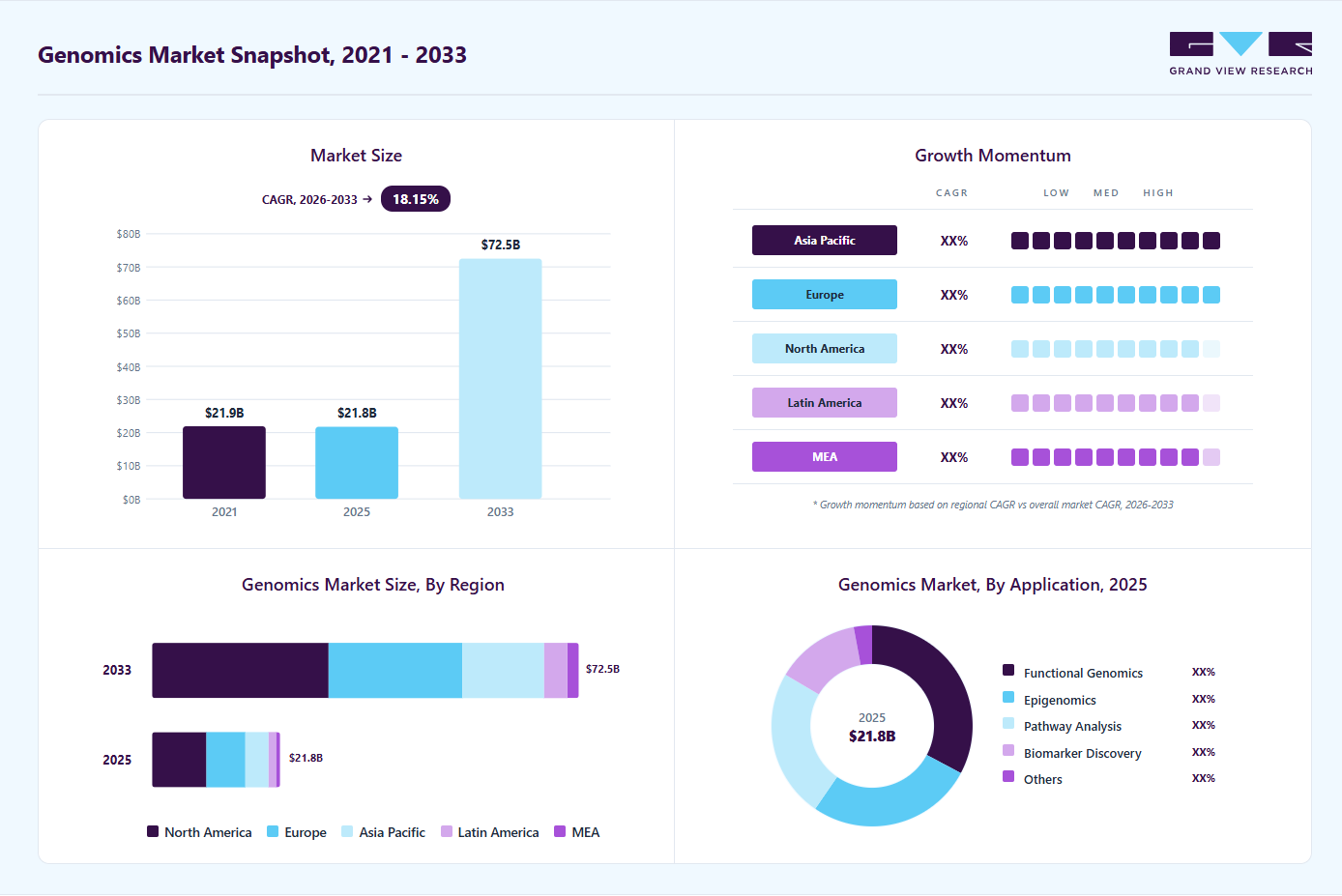 Source: Grand View Research, IR Documents, Primary Interviews, Paid DatabasesTo learn more about this report,
 Download Free Sample Report
 Key Market Trends & Insights
- By application: Functional genomics segment held the largest market share of 32.8% in 2025.
- By deliverables: Product segment held the largest market share of 70.0% in 2025.
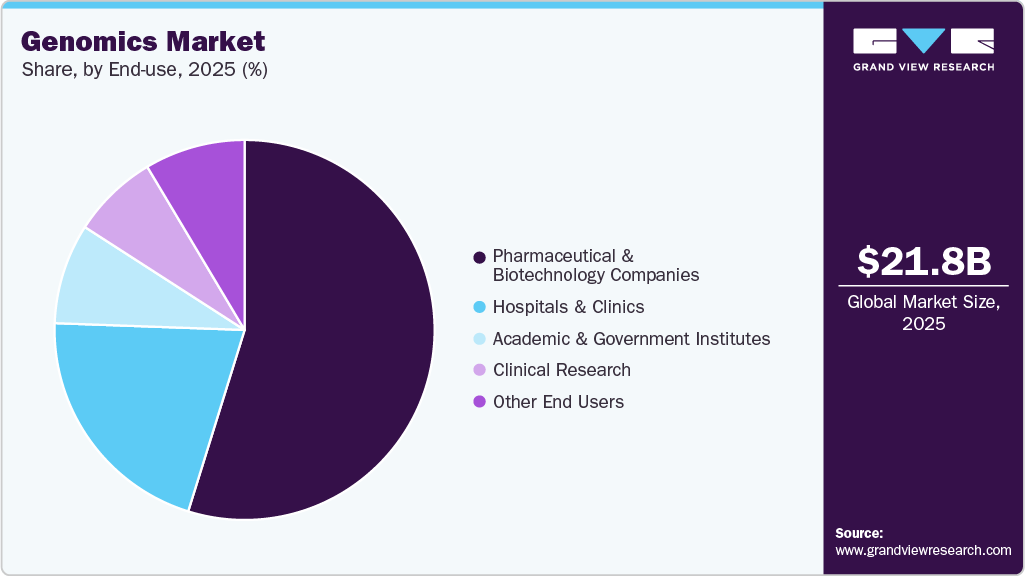
- By end use: Pharmaceutical and biotechnology companies segment held the largest market share of 54.8% in 2025.
Regional Highlights
- Largest regional market: North America (42.3% revenue share, 2025)
- Fastest-growing regional market: Asia Pacific (highest CAGR, 2026-2033)
- By country: The U.S. held the largest market share in 2025.
Market Size & Forecast
- Market size in 2025: USD 21.8 Billion
- Estimated market size in 2026: USD 22.6 Billion
- Projected market size by 2033: USD 72.5 Billion
- CAGR (2026-2033): 18.2%
Three ways to get this report
Buy it, customize it, or ask a question.Ask an Analyst
A direct answer, usually in 1 working day
- AccessReport author, directly
- Reply timeWithin 1 working day
- No sales callDirect answer only
- FormatEmail reply
- CostFree, no cost
Get the Full Report
What the study covers
- FormatsPDF · Excel · Dashboard
- Timeline2026–2033 annual, 2025 base
- Coverage20+ countries, 5 regions
- Companies10+ key players profiled
Customize the Report
20% free customization
- IncludeCountries, segments, points
- TailorTo your product definition
- ExtendDeeper competitor detail
- OrA fully bespoke study
- Turnaround5–10 working days
Advances in sequencing, genome editing, bioinformatics, and data analytics are enabling more efficient genetic analysis and supporting the development of personalized healthcare, engineered biological systems, and data-driven research applications.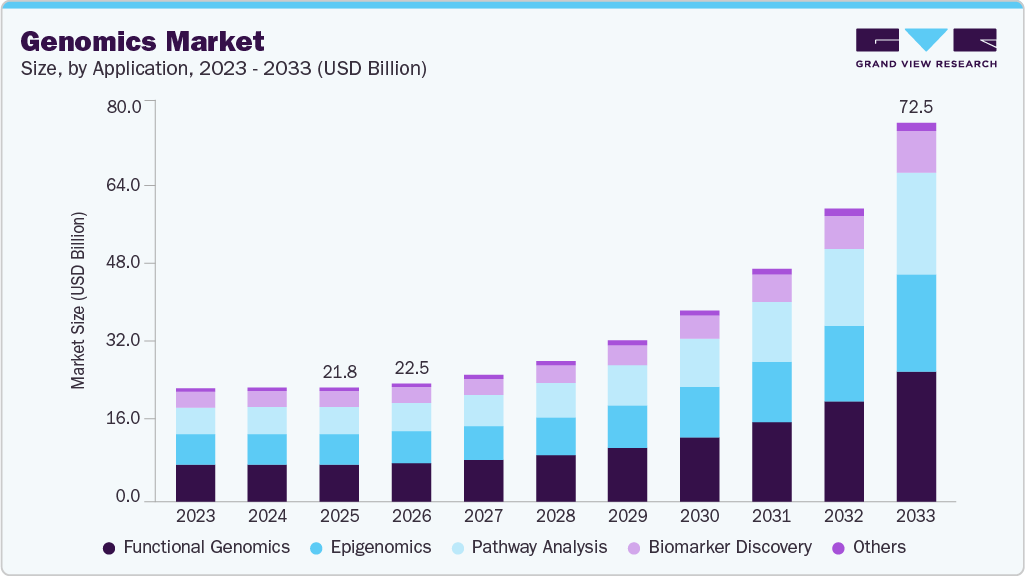 To learn more about this report, Download Free Sample Report
 Growing Clinical Applications of Genomics
The increasing adoption of genomics in clinical diagnostics, oncology, and rare disease management is driving growth in the genomics market. In clinical diagnostics, next-generation sequencing (NGS) and other molecular testing technologies enable the detection of genetic disorders, inherited conditions, and disease-associated variants, supporting earlier diagnosis and more informed clinical decision-making. The integration of genomic testing into diagnostic workflows is improving disease risk assessment, prognosis, and treatment selection, while supporting the broader adoption of personalized and preventive healthcare. Growing use of NGS-based testing and companion diagnostics is further expanding the role of genomics in routine clinical practice.
In oncology, genomic technologies are increasingly used for tumor profiling, biomarker identification, and targeted treatment selection. Comprehensive genomic analysis can help characterize tumor heterogeneity, identify clinically relevant mutations, assess potential treatment response, and monitor disease progression. The expanding use of precision oncology, combined with pharmaceutical company partnerships and genomics-focused clinical trials, is increasing demand for sequencing platforms, reagents, and bioinformatics solutions. In rare disease diagnosis, whole-exome sequencing (WES) and whole-genome sequencing (WGS) are helping identify disease-causing genetic variants in patients for whom conventional diagnostic approaches may be inconclusive. Greater clinician awareness, expanded newborn screening programs, and government initiatives supporting rare disease diagnosis are further encouraging the adoption of genomic testing. Collectively, these applications are expanding the clinical utility of genomics and strengthening its integration into modern healthcare systems.
Growing Precision Medicine Adoption
The growing adoption of precision medicine and personalized healthcare is a key driver for the genomics market's expansion. Genomic information enables healthcare providers to develop treatment strategies based on an individual’s genetic profile, potentially improving therapeutic response and reducing the risk of adverse effects. Advances in sequencing technologies, bioinformatics, and data analytics are facilitating the integration of genomic data into clinical workflows and expanding personalized treatment approaches across oncology, cardiology, rare diseases, and other therapeutic areas. Increasing awareness among healthcare professionals and patients regarding the benefits of individualized care is further supporting the adoption of genomic testing and precision medicine.
Pharmaceutical and biotechnology companies are also increasingly incorporating genomics into targeted drug development, companion diagnostics, and patient stratification for clinical trials. Genomic-based patient selection can help identify populations more likely to respond to specific therapies, supporting more efficient clinical development and potentially reducing development timelines and costs. In parallel, investments in precision medicine programs, supportive regulatory initiatives, and the expansion of genomics-based diagnostic services are creating a favorable environment for market growth. As genomic data becomes increasingly integrated into drug discovery and clinical care, its role as a foundation of personalized healthcare is expected to strengthen over the forecast period.
Market Dynamics
The genomics market is expanding as precision medicine gains adoption and demand for genomic information increases across clinical diagnostics, biomedical research, and drug development. Growing applications in oncology, rare disease diagnosis, reproductive health, infectious disease surveillance, and pharmacogenomics are broadening the clinical and research use of genomic technologies. At the same time, advances in next-generation sequencing and other sequencing platforms are improving the speed, accuracy, and accessibility of genomic analysis. Declining sequencing costs and rising investments in genomics research and life sciences are further supporting adoption across healthcare and research settings.
The integration of artificial intelligence (AI), bioinformatics, and advanced data analytics is also creating new opportunities for the genomics market by enabling efficient analysis and interpretation of increasingly complex genomic datasets. These technologies are supporting variant identification, biomarker discovery, disease profiling, and treatment selection, while improving the utility of genomic information in clinical and research workflows. Continued technological innovation, expanding genomics applications, and increasing investment in genomic infrastructure are expected to sustain market growth over the forecast period.
Declining sequencing costs and advancements in next-generation sequencing (NGS) technologies are improving the accessibility, speed, accuracy, and cost efficiency of genomic testing. These developments are expanding the use of genomics across precision medicine, cancer diagnostics, rare disease diagnosis, and drug discovery. Lower sequencing costs are also enabling broader adoption among healthcare providers, research institutions, and pharmaceutical companies. For instance, in November 2025, U.S.-based SOPHiA GENETICS and Complete Genomics launched integrated AI-driven precision oncology workflows designed to improve the efficiency and accessibility of cancer genomic profiling.
Technological innovation across the NGS workflow is further enhancing sequencing throughput, automation, accuracy, genomic coverage, and data interpretation. The integration of AI-based bioinformatics is helping researchers and healthcare providers process increasingly complex genomic datasets and translate sequencing results into actionable insights. These capabilities support applications across personalized medicine, population health, and clinical research. For instance, in February 2026, U.S.-based Ultima Genomics launched its UG200 sequencing series and Solaris 2.0 workflows to increase sequencing throughput, genomic coverage, and operational efficiency. Continued improvements in sequencing performance and workflow scalability are expected to broaden the adoption of genomics across clinical and research settings.
Data privacy, security, and ethical concerns pose significant constraints on the genomics market due to the sensitive and potentially identifiable nature of genetic information. The growing use of genomic databases, cloud-based bioinformatics platforms, and artificial intelligence (AI)-driven genomic analytics increases concerns related to informed consent, data breaches, unauthorized access, and the potential misuse of genetic information. Differences in data protection requirements, ethical standards, and regulatory frameworks across countries further increase compliance requirements and operational complexity for healthcare providers, research institutions, and genomics companies.
These concerns can affect patient willingness to participate in genomic testing and research programs and may limit the sharing of genomic data required for research and clinical applications. The need for stronger governance and responsible data-sharing practices is therefore becoming increasingly important as genomic datasets expand. For instance, in November 2024, the World Health Organization (WHO) introduced global ethical principles for the collection and sharing of human genomic data, emphasizing privacy protection, equitable access, transparency, and responsible collaboration in genomic research. Continued efforts to strengthen genomic data governance will be important for building public trust and supporting the broader adoption of genomics technologies across clinical and research settings.
The increasing adoption of artificial intelligence (AI), machine learning, and cloud-based bioinformatics platforms presents a significant growth opportunity for the genomics market by improving the speed, accuracy, and scalability of genomic data analysis. AI and machine learning algorithms can support the identification of genetic variants, disease biomarkers, and potential treatment responses from complex genomic datasets, strengthening applications in precision medicine and clinical decision-making. At the same time, cloud-based platforms provide scalable infrastructure for genomic data storage, processing, sharing, and collaboration, enabling research institutions, hospitals, and pharmaceutical companies to manage increasingly large and complex datasets.
The integration of these technologies is expanding the application of genomics across cancer diagnostics, rare disease analysis, drug discovery, and companion diagnostics. For instance, in January 2026, U.S.-based 10x Genomics, Inc. collaborated with the Cancer Research Institute to launch an AI-driven immuno-oncology initiative combining single-cell and spatial biology technologies to accelerate cancer immunotherapy and vaccine discovery. Such initiatives highlight the growing convergence of genomics, AI, and advanced biological data analysis. Continued development of AI-enabled bioinformatics and cloud-based genomic platforms is expected to improve data interpretation, accelerate research workflows, and create new opportunities for market growth.
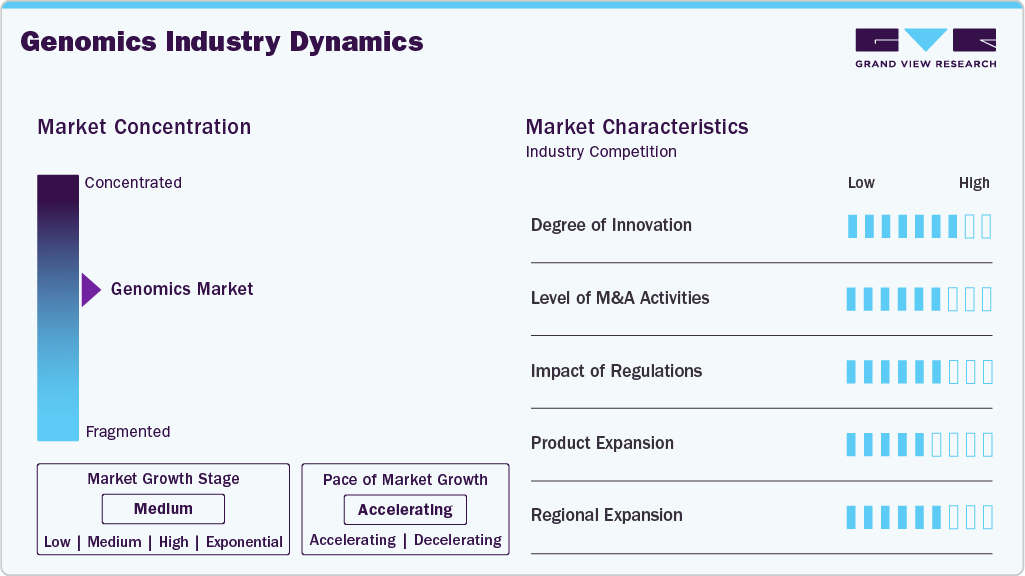
Market Concentration & Characteristics
Innovation intensity in the genomics industry remains high, supported by rapid advances in next-generation sequencing, single-cell genomics, and AI-enabled genomic data analysis. Improvements in sequencing accuracy, speed, throughput, and scalability are expanding the use of genomics across clinical diagnostics, biomedical research, drug discovery, and precision medicine. Companies are increasing investments in research and development to improve platform performance and develop solutions for emerging applications. Strategic partnerships, platform upgrades, and the integration of genomics with precision medicine are further accelerating technological development and creating competitive differentiation across the market.
Regulatory frameworks governing the genomics industry continue to evolve as governments and regulatory bodies seek to balance technological innovation with patient safety, data privacy, and ethical considerations. Guidelines covering genetic testing, genomic data protection, clinical validation, and the responsible use of genetic information are becoming increasingly important as genomic technologies enter routine clinical and research applications. At the same time, supportive policies and efforts to harmonize regulatory requirements can facilitate commercialization and cross-border adoption of genomics technologies. Differences in regulatory standards across countries, however, continue to create compliance requirements for companies operating in multiple markets.
 To learn more about this report, Download Free Sample Report
 The ongoing development of sequencing platforms, reagents, bioinformatics software, and genomic data analysis solutions drives product expansion in the genomics market. Companies are broadening their product portfolios to address increasing demand from research institutions, clinical laboratories, pharmaceutical companies, and precision medicine programs. Product development is increasingly focused on improving sequencing accuracy, reducing turnaround times, increasing throughput, and providing scalable workflows that can accommodate growing genomic datasets. The expansion of solutions across clinical and research applications is expected to create additional opportunities for market participants.
Regional expansion is increasing across both developed and emerging economies as investments in healthcare infrastructure, genomics research, and advanced sequencing technologies increase. Government initiatives supporting genomic research and precision medicine are helping establish new opportunities in developing markets, while established markets continue to expand clinical applications and research capabilities. Companies are strengthening their geographic presence through strategic partnerships, local manufacturing and distribution, research collaborations, and relationships with healthcare institutions. These initiatives are enabling market participants to access emerging demand and extend genomics technologies across a broader range of regional markets.
Analyst Perspective
The genomics market is expanding as advancements in sequencing, bioinformatics, single-cell analysis, and genomic interpretation broaden applications across research, diagnostics, drug development, and precision medicine. Declining sequencing costs, higher throughput, and growing adoption of next-generation sequencing are making genomic analysis more accessible and expanding use beyond academic research. AI integration is improving the analysis of complex genomic datasets and enabling faster identification of biomarkers and disease-associated variants. However, data management, regulatory requirements, reimbursement, and clinical interpretation remain key adoption challenges. Future growth will focus on scalable sequencing platforms, integrated bioinformatics, clinical applications, and technologies that translate genomic data into actionable insights.
Application Insights
The functional genomics segment accounted for the largest revenue share of 32.8% in 2025, owing to the growing use of functional genomic approaches to investigate gene function, biological mechanisms, and phenotypic changes associated with specific diseases. These technologies are also contributing to cancer research and the development of gene-based therapies by enabling researchers to assess how genetic alterations influence disease pathways. For instance, in December 2025, Ochre Bio and Lexogen entered into a strategic partnership to develop a large-scale human liver functional genomics dataset using advanced sequencing and transcriptomics technologies. Such initiatives highlight increasing commercial interest in high-quality genomic datasets for drug discovery and translational research.
The pathway analysis segment is expected to grow at the fastest CAGR over the forecast period. The increasing use of pathway-based approaches in therapeutic research is creating new opportunities as drug developers seek a more comprehensive understanding of the molecular interactions that underlie disease progression. The growing adoption of clinical genomics and personalized medicine is further increasing the relevance of pathway analysis, as genomic information can be used to characterize signaling pathways, molecular networks, and disease mechanisms. This broader systems-level understanding is supporting the identification of potential therapeutic targets and enabling more precise approaches to treatment development.
Deliverables Insights
The product segment dominated the genomics market with a revenue share of 70.0% in 2025 and is expected to grow at the fastest CAGR over the forecast period. Genomics products primarily comprise instruments and systems used for nucleic acid synthesis and sequencing, as well as consumables and reagents required throughout genomic workflows. Growing adoption of personalized medicine and declining costs of DNA sequencing, driven by advances in next-generation sequencing (NGS) technologies, have encouraged the development of increasingly sophisticated, application-specific products. Product innovation is also intensifying competition within the market. For instance, in October 2025, Genomics Ltd. launched Mystra, an AI-enabled human genetics platform designed to accelerate drug target discovery and clinical development by integrating large-scale genomic data with advanced analytics. Such developments reflect the growing integration of genomics and artificial intelligence within biopharmaceutical R&D.
The service segment is expected to maintain steady growth through 2033, supported by the high cost of genomic instruments, the specialized expertise required, and end users' preference for outsourcing complex activities. NGS-based services account for a significant share, supported by growing use of Whole Genome Sequencing (WGS) and sequence databases for disorder screening and prognosis. At the same time, demand is increasingly shifting toward data processing, interpretation, and analysis, as converting genomic data into clinically or commercially meaningful insights becomes an important part of genomic workflows.
End-use Insights
The pharmaceutical and biotechnology companies segment dominated the genomics industry with a revenue share of 54.8% in 2025, owing to the growing use of genomic information in drug discovery, target identification, biomarker development, and precision medicine. The growing adoption of spatial genomics and transcriptomics is further enabling researchers to examine gene expression within specific cellular and tissue environments, thereby supporting more detailed disease characterization and therapeutic development. Pharmaceutical and biotechnology companies are also investing in population-scale genomic research to strengthen their understanding of disease biology and treatment response. For instance, in October 2025, Helix announced plans to present new population-scale genomic research at the ASHG 2025 Annual Meeting, highlighting continued commercial investment in large-scale genomic datasets for research, diagnostics, and precision medicine.
 To learn more about this report, Download Free Sample Report
 The hospital and clinic segment is expected to grow at a substantial pace during the forecast period as genomic sequencing becomes increasingly integrated into clinical decision-making. Healthcare providers are using genomic testing to support disease diagnosis, risk assessment, treatment selection, and patient management, particularly in oncology and rare diseases. Advances that shorten sequencing turnaround times are further improving the practicality of genomic testing in clinical settings. For instance, in October 2025, researchers reported a breakthrough enabling whole-genome sequencing to be completed within hours, highlighting the potential of faster sequencing workflows to accelerate clinical adoption.
Regional Insights
North America dominated the genomics market with a revenue share of 42.3% in 2025, supported by the strong presence of genomics technology providers, widespread adoption of advanced sequencing platforms, and substantial investment in genomic research. The region has a mature healthcare and life sciences ecosystem, enabling the integration of genomics into clinical diagnostics, drug discovery, and precision medicine. In addition, funding from government agencies, academic institutions, and private organizations continues to support large-scale genomic studies and technology development. The combination of established research capabilities, advanced healthcare infrastructure, and growing clinical applications is strengthening the region’s position as a major center for genomics innovation and commercialization.
 To learn more about this report, Download Free Sample Report
 The U.S. genomics market accounted for the largest share of North America in 2025 and is expected to maintain strong growth through the forecast period. Increasing adoption of next-generation sequencing, expanding use of genomics in clinical diagnostics and precision medicine, and sustained biopharmaceutical R&D spending are supporting market development. Continued public and private funding for population-scale genomic research is also expanding the availability of genomic data for research and healthcare applications. For instance, in December 2025, Illumina and MyOme entered into a strategic investment partnership to support MyOme’s clinical trial using whole-genome sequencing, reflecting continued commercial investment in genomic technologies and their translation into clinical research.
Europe Genomics Market Trends
The Europe genomics industry is witnessing strong growth, supported by increasing adoption of next-generation sequencing, rising investment in precision medicine, and the integration of genomic technologies into clinical research and diagnostics. The region benefits from established life sciences capabilities and a strong network of academic institutions, biotechnology companies, and healthcare providers. Government-funded research programs, public-private collaborations, and supportive policies are further expanding genomic research and commercialization. Increasing use of genomics for disease diagnosis, therapeutic development, and population health management is also broadening the addressable market. These factors, combined with growing awareness of personalized healthcare, are strengthening Europe’s role as an important market for genomic innovation.
The UK accounted for a significant share of the Europe genomics industry in 2025, supported by its established research ecosystem and increasing application of genomic technologies in clinical care. Continued investment in precision medicine, clinical genomics, and advanced sequencing is creating opportunities across healthcare and life sciences. Collaboration among universities, research organizations, biotechnology companies, and healthcare institutions is further supporting the development and translation of technology into clinical applications. Government initiatives and public-private partnerships are also contributing to the expansion of genomic research and strengthening the UK’s position within the European market.
France is expected to register remarkable growth over the forecast period as genomic technologies gain wider acceptance across clinical diagnostics, personalized medicine, and biomedical research. Increasing use of next-generation sequencing is expanding the capabilities of healthcare and research institutions, while government support for genomics is encouraging further investment in infrastructure and innovation. Partnerships between academic organizations and biotechnology companies are also facilitating the development and application of genomic technologies. Growing recognition of genomics as a tool for disease prevention, diagnosis, and targeted treatment is expected to support market expansion further.
Germany is expected to experience significant growth over the forecast period, driven by the increasing adoption of advanced sequencing technologies and the growing integration of genomics into clinical diagnostics and personalized healthcare. Strong public and private investment in research is supporting the development of genomic capabilities across academic, clinical, and biotechnology settings. Collaboration between research institutions and industry participants is also facilitating the translation of genomic discoveries into practical applications. As healthcare providers increasingly recognize the value of genomic information in disease management and drug development, Germany is expected to remain an important contributor to Europe’s genomics ecosystem.
Asia Pacific Genomics Market Trends
The Asia Pacific genomics industry is projected to grow at the fastest CAGR of 19.0% over the forecast period. Rapid expansion of genomic research and healthcare capabilities across the region is creating a favorable environment for market development. Increasing use of sequencing technologies in disease research, molecular diagnostics, and precision medicine is being supported by rising healthcare expenditure and investments in genomic infrastructure. China, Japan, South Korea, and other emerging economies are strengthening their genomics ecosystems through government-backed research programs, private-sector investment, and collaborations between academic and industry organizations. In addition, improving access to advanced healthcare technologies and growing awareness of personalized treatment approaches are expanding the adoption of genomic solutions across clinical and research settings.
China's genomics market is expected to grow strongly over the forecast period, supported by the country's expanding biotechnology sector and increasing focus on genomic medicine. Government-backed initiatives aimed at strengthening biomedical research and healthcare innovation are encouraging investment in sequencing infrastructure and genomic applications. At the same time, partnerships between biotechnology companies, hospitals, and research institutions are facilitating the translation of genomic research into diagnostics and therapeutic development. The increasing use of genomic technologies in cancer research, disease screening, and drug discovery is further broadening commercial opportunities.
The genomics market in Japan is also expanding, supported by its advanced healthcare system and established research capabilities. Investments in precision medicine and personalized healthcare are accompanying the growing use of genomic testing in clinical research and diagnostics. Public and private research institutions are increasingly collaborating to develop genomic applications, while improvements in sequencing and data analysis are expanding the scope of clinical and pharmaceutical research. These developments are strengthening Japan's role as an important market in Asia Pacific.
Middle East & Africa Genomics Market Trends
The MEA genomics industry is projected to grow significantly over the forecast period as genomic technologies gain wider relevance across healthcare and biomedical research. Investments in healthcare modernization, advanced diagnostic infrastructure, and research capabilities are creating a stronger foundation for genomics adoption. Governments across the region are also placing greater emphasis on genomic research and precision healthcare, while healthcare providers are gradually incorporating sequencing and molecular testing into clinical workflows. Increasing applications in disease diagnosis, personalized treatment, and drug development are further expanding demand. Improvements in healthcare access and the development of specialized genomic facilities are expected to support broader adoption, particularly in countries with active national healthcare transformation programs.
The Saudi Arabia genomics market is projected to witness substantial growth, supported by the country's focus on healthcare modernization and the development of advanced biomedical capabilities. Government initiatives aimed at strengthening genomic research and precision medicine are encouraging investments in sequencing infrastructure and related technologies. Increasing use of genomic testing in disease diagnosis and clinical research is also creating new opportunities for healthcare providers and biotechnology companies. In addition, the development of specialized research capabilities and collaborations across the healthcare ecosystem is helping expand the application of genomics beyond research into clinical and therapeutic settings.
The genomics market in Kuwait is anticipated to expand steadily as healthcare institutions increasingly adopt molecular and genomic technologies. Investments in healthcare infrastructure and growing emphasis on advanced diagnostics are creating opportunities for sequencing-based applications. Government support for biomedical research is also contributing to the development of local genomic capabilities, while increasing awareness of personalized healthcare is encouraging interest in genomic testing. Applications spanning disease screening, clinical diagnosis, and treatment planning are expected to broaden the role of genomics within Kuwait's healthcare system over the forecast period.
Key Genomics Company Insights
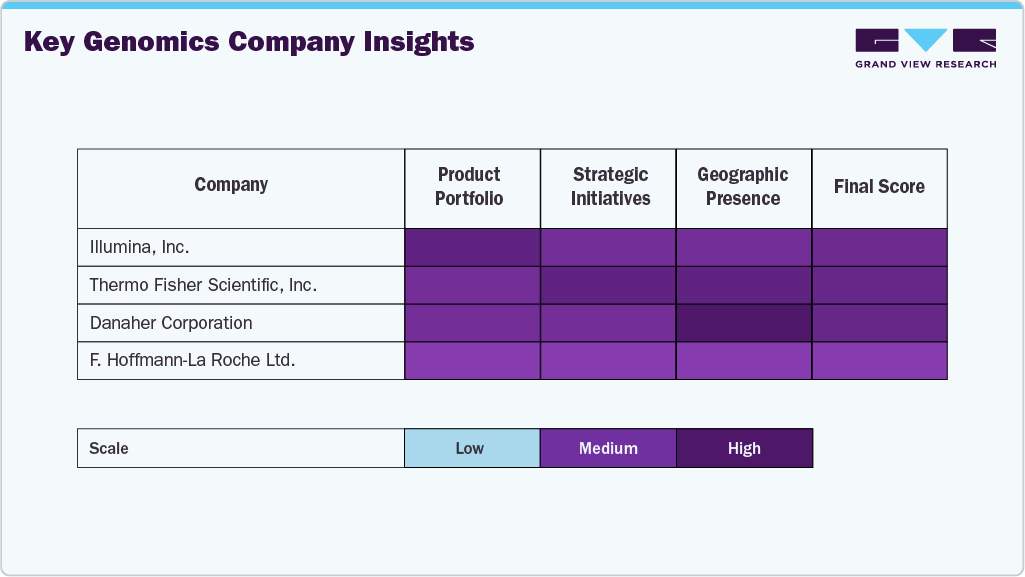
The global genomics market is highly competitive, comprising specialized sequencing companies and diversified life sciences firms. Illumina, Inc. maintains a strong position through its broad portfolio of next-generation sequencing (NGS) platforms, reagents, and bioinformatics solutions. Thermo Fisher Scientific, Inc. benefits from its integrated Life Sciences Solutions portfolio, serving genomics research, diagnostics, and biopharmaceutical development. Danaher Corporation also has a significant presence in life sciences, supporting sample preparation, nucleic acid extraction, and sequencing workflows.
Other prominent participants include BGI Genomics, QIAGEN N.V., Oxford Nanopore Technologies, and Pacific Biosciences of California, Inc. BGI Genomics has established capabilities in large-scale sequencing and genomic analysis, while QIAGEN offers solutions spanning NGS, PCR, and sample preparation. Oxford Nanopore differentiates itself through portable, scalable sequencing technologies, whereas PacBio focuses on high-accuracy long-read sequencing for complex genomic applications.
 To learn more about this report, Download Free Sample Report
 Agilent Technologies, Inc., Bio-Rad Laboratories, Inc., and F. Hoffmann-La Roche Ltd. further strengthen the competitive landscape through genomics, molecular testing, and companion diagnostic solutions. Companies are increasingly pursuing product innovation, strategic collaborations, and acquisitions to expand technological capabilities and reach emerging applications. AI-enabled genomic analysis, single-cell technologies, and advanced sequencing platforms are expected to remain important areas of competition as demand expands across research, diagnostics, and precision medicine.
Key Genomics Companies
The following key companies have been profiled for this study on the genomics market.
-
Illumina, Inc.
-
Thermo Fisher Scientific, Inc.
-
Danaher Corporation
-
F. Hoffmann-La Roche Ltd.
-
Agilent Technologies, Inc.
-
BGI Genomics
-
QIAGEN N.V.
-
Oxford Nanopore Technologies
-
PacBio.
-
Bio-Rad Laboratories, Inc.
Competitive Benchmarking
Operating Strategies
Competitive Edge
Weaknesses
Established Players (Illumina, Inc., Thermo Fisher Scientific, Inc., Danaher Corporation, etc.)
- Expansion of integrated genomics and molecular diagnostics portfolios.
- Strategic acquisitions and partnerships to strengthen sequencing and bioinformatics capabilities.
- Investment in automation, precision medicine, and AI-enabled genomic analysis platforms.
- Strong global commercial presence and established customer base.
- Broad product ecosystems spanning sequencing, diagnostics, and consumables.
- High R&D capabilities with advanced technological infrastructure
- High operating and technology development costs.
- Regulatory and reimbursement challenges across multiple regions.
- Dependence on large-scale laboratory and institutional customers
Emerging Players (Oxford Nanopore Technologies, PacBio, Bio-Rad Laboratories, Inc, etc.)
- Focus on next-generation and long-read sequencing innovation.
- Expansion through research collaborations and regional market penetration
- Advanced sequencing technologies with differentiated capabilities.
- Faster innovation cycles and specialized genomics expertise
- Limited profitability and comparatively smaller commercial scale.
- Competitive pressure from established genomics leaders
Recent Developments
-
In July 2026, Illumina expanded its Billion Cell Atlas program by adding AI-driven drug discovery partners. The Atlas, launched in January 2026, had already sequenced more than 350 million cells and generated over six petabytes of genomic data, supporting genetic target discovery, disease-mechanism research, and AI model development.
-
In June 2026, Roche launched the AXELIOS 1 next-generation sequencing platform, based on its SBX technology. The platform is designed to enable same-day whole-genome sequencing in research workflows, with results available within hours, and to support applications across genomics and clinical research.
-
In May 2026, Myriad Genetics launched the Prolaris + AI Test, combining genomic profiling with AI-driven digital pathology to support personalized prostate cancer management. The test provides independent molecular and AI-based risk metrics to help clinicians identify patients suitable for active surveillance and personalize follow-up intensity.
Genomics Market Report Scope
Report Attribute
Details
Market size in 2025
USD 21.8 billion
Estimated market size in 2026
USD 22.6 billion
Projected market size by 2033
USD 72.5 billion
Growth rate
CAGR of 18.2% from 2026 to 2033
Base year for estimation
2025
Historical data
2021 - 2024
Forecast period
2026 - 2033
Quantitative units
Revenue in USD million/billion and CAGR from 2026 to 2033
Report coverage
Revenue forecast, company ranking, competitive landscape, growth factors, and trends
Segments covered
Application, deliverables, end use, region
Regional scope
North America; Europe; Asia Pacific; Latin America; Middle East & Africa
Country scope
U.S.; Canada; Mexico; UK; Germany; France; Italy; Spain; Norway; Denmark; Sweden; China; Japan; India; South Korea; Australia; Thailand; Brazil; Argentina; Saudi Arabia; South Africa; UAE; Kuwait
Key companies profiled
Illumina, Inc.; Thermo Fisher Scientific, Inc.; Danaher Corporation; F. Hoffmann-La Roche Ltd.; Agilent Technologies, Inc.; BGI Genomics; QIAGEN N.V.; Oxford Nanopore Technologies; PacBio.; Bio-Rad Laboratories, Inc.
Customization scope
Free report customization (equivalent to up to 8 analysts working days) with purchase. Addition or alteration to country, regional & segment scope.
Pricing and purchase options
Avail of customized purchase options to meet your exact research needs. Explore purchase options
Global Genomics Market Report Segmentation
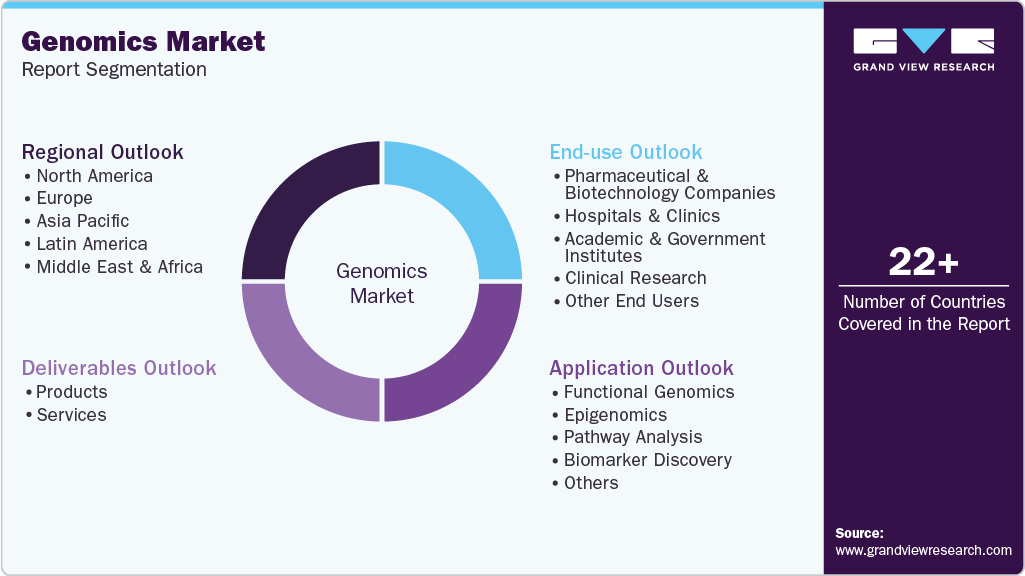
This report forecasts revenue growth at the global, regional & country levels and provides an analysis of the latest industry trends across sub-segments from 2021 to 2033. For this study, Grand View Research has segmented the global genomics market report based on application, deliverables, end use, and region:
 To learn more about this report, Download Free Sample Report
 -
Application Outlook (Revenue, USD Million/Billion, 2021 - 2033)
-
Functional Genomics
-
Real-time PCR
-
Transfection
-
SNP Analysis
-
Mutational Analysis
-
Microarray Analysis
-
RNA Interference
-
-
Epigenomics
-
Bisulfite Sequencing
-
Microarray Analysis
-
Chromatin Immunoprecipitation (ChIP & ChIP-Seq)
-
Methylated DNA Immunoprecipitation (MeDIP)
-
High Resolution Melt (HRM)
-
Chromatin Accessibility Assays
-
-
Pathway Analysis
-
Microarray Analysis
-
Bead-based Analysis
-
Proteomics Tools (2-D PAGE; yeast 2-hybrid studies)
-
Real-time PCR
-
-
Biomarker Discovery
-
DNA Sequencing
-
Microarray Analysis
-
Real-time PCR
-
Mass Spectrometry
-
Statistical Analysis
-
Bioinformatics
-
-
Others
-
-
Deliverables Outlook (Revenue, USD Million/Billion, 2021 - 2033)
-
Products
-
Instruments/Systems/Software
-
Consumables & Reagents
-
-
Services
-
NGS-based Services
-
Core Genomics Services
-
Biomarker Translation Services
-
Computational Services
-
Others
-
-
-
End-use Outlook (Revenue, USD Million/Billion, 2021 - 2033)
-
Pharmaceutical & Biotechnology Companies
-
Hospitals & Clinics
-
Academic & Government Institutes
-
Clinical Research
-
Other End Users
-
-
Regional Outlook (Revenue, USD Million/Billion, 2021 - 2033)
-
North America
-
U.S.
-
Canada
-
Mexico
-
-
Europe
-
UK
-
Germany
-
France
-
Italy
-
Spain
-
Denmark
-
Sweden
-
Norway
-
-
Asia Pacific
-
Japan
-
China
-
India
-
South Korea
-
Australia
-
Thailand
-
-
Latin America
-
Brazil
-
Argentina
-
-
Middle East & Africa
-
South Africa
-
Saudi Arabia
-
UAE
-
Kuwait
-
-
Frequently Asked Questions About This Report
Pharmaceutical and biotechnology companies segment led the market with market share of 54.8% in 2025.
Major players in the genomics market include F. Hoffmann-La Roche Ltd..; Agilent Technologies, Thermo Fisher Scientific, Inc.; Bio-Rad Laboratories, Inc.; 23andMe, Inc.; Illumina, Inc.; Myriad Genetics, Inc.; Foundation Medicine, Inc.; Danaher, Pacific Biosciences; Oxford Nanopore Technologies; and BGI.
Technological advancements in genetic tools, as well as molecular diagnostics, is one of the key driving force that has accelerated investment by genomic companies in the market.
Asia Pacific is the fastest-growing region over the forecast period.
The functional genomics segment led with a 32.8% revenue share in 2025.
Product segment dominated the market with a share of 70.0% in 2025 and is the fastest-growing segment.
The global genomics market size was valued at USD 21.8 billion in 2025 and is estimated at USD 22.6 billion for 2026.
The global genomics market is expected to grow at a CAGR of 18.2% from 2026 to 2033, reaching USD 72.5 billion by 2033.
North America dominated with a 42.3% revenue share in 2025.
Genomics Market By Country
- U.S. Genomics Market
- Thailand Genomics Market
- Spain Genomics Market
- France Genomics Market
- Sweden Genomics Market
- China Genomics Market
- Australia Genomics Market
- Canada Genomics Market
- Italy Genomics Market
- India Genomics Market
- Denmark Genomics Market
- Norway Genomics Market
- South Korea Genomics Market
- Mexico - North America Genomics Market
- Japan Genomics Market
- Germany Genomics Market
- South Africa Genomics Market
- Kuwait Genomics Market
- U.K. Genomics Market
- Argentina Genomics Market
- Uae Genomics Market
- Saudi Arabia Genomics Market
- Brazil Genomics Market
About the Author(s)
Biotechnology Research Team
Healthcare · BiotechnologyThis report was authored by the biotechnology research team at Grand View Research - comprising two research analysts, one senior research analyst, and one industry expert - with specialized expertise in the biotechnology segment of the healthcare industry. All findings are based on proprietary healthcare databases, executive interviews, and regulatory analysis, subject to internal peer review prior to publication.
Last Updated:
Speak to Analyst

Customize this report to your needs - add regions, segments, or data points, with 20% free customization.
Or view our licence options:


ISO 9001:2015 & 27001:2022 Certified
We are GDPR and CCPA compliant! Your transaction & personal information is safe and secure. For more details, please read our privacy policy.


